

Just two cameras total, but two good ones nonetheless
The Infinix Note Edge is equipped with a relatively plain camera system, sporting a single rear camera and a no-frills selfie shooter. It doesn’t set too high a bar for itself, but it just might be a cameraphone in disguise. Ok, now we may be overselling it a little.
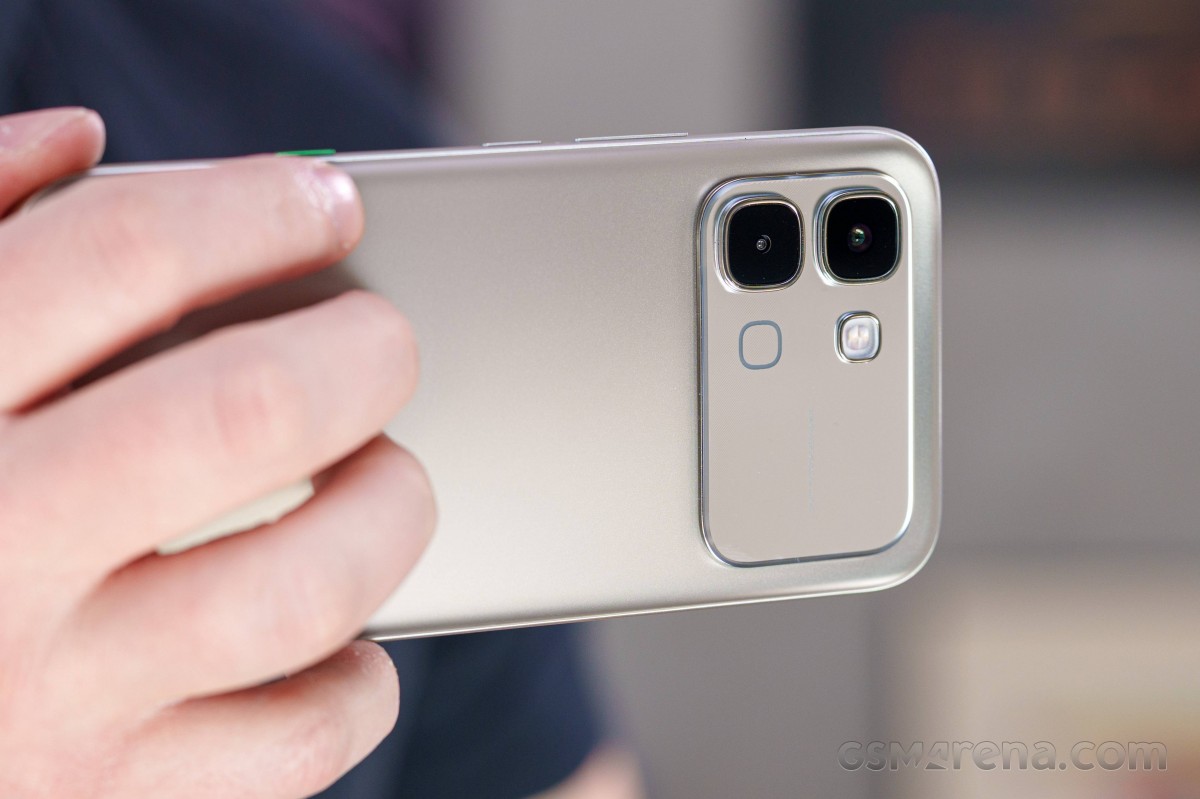
On the back, there’s a 50MP 1/2.0″ GalaxyCore sensor with a QuadBayer type color filter array – nothing too fancy, but not too bad either. It’s paired with a lens whose specs differ depending on whom you ask. The focal length equivalent is reported as 23mm in the photos’ EXIF data, but 25mm in hardware scanning apps, which is a relatively significant difference in coverage – our side-by-side comparisons with more reliable references indicate the latter is true. The images also state an f/1.7 aperture while Infinix’s specs insist on f/1.8 but that’s close to irrelevant.
The selfie camera is using another GalaxyCore imager – a conventional 13MP RGB unit. There’s more of a consensus on its lens – 24mm focal length, f/2.2 aperture, no autofocus.
Rear camera: 50MP GalaxyCore GC50D1 (1/2.0″, 0.8µm-1.6µm); 23/25mm, f/1.7/1.8, PDAF (9cm – ∞); 1440p30/1080p60 video recording.
Front camera: 13MP GalaxyCore GC13A0 (1/3.1″, 1.12µm); 24mm, f/2.2, fixed focus; 1440p30/1080p60.
The Note Edge has an extra button in addition to the volume rocker and the power key. They call it the One-Tap Button, which is ironic given that it only accepts a long press action (and it’s a click type of action). It’s not overly customizable, but it can launch the camera app if that’s what you assign it to do, and once in the camera it can be used to take a picture (or start/stop video recording). It’s not a two-stage button, just a button.
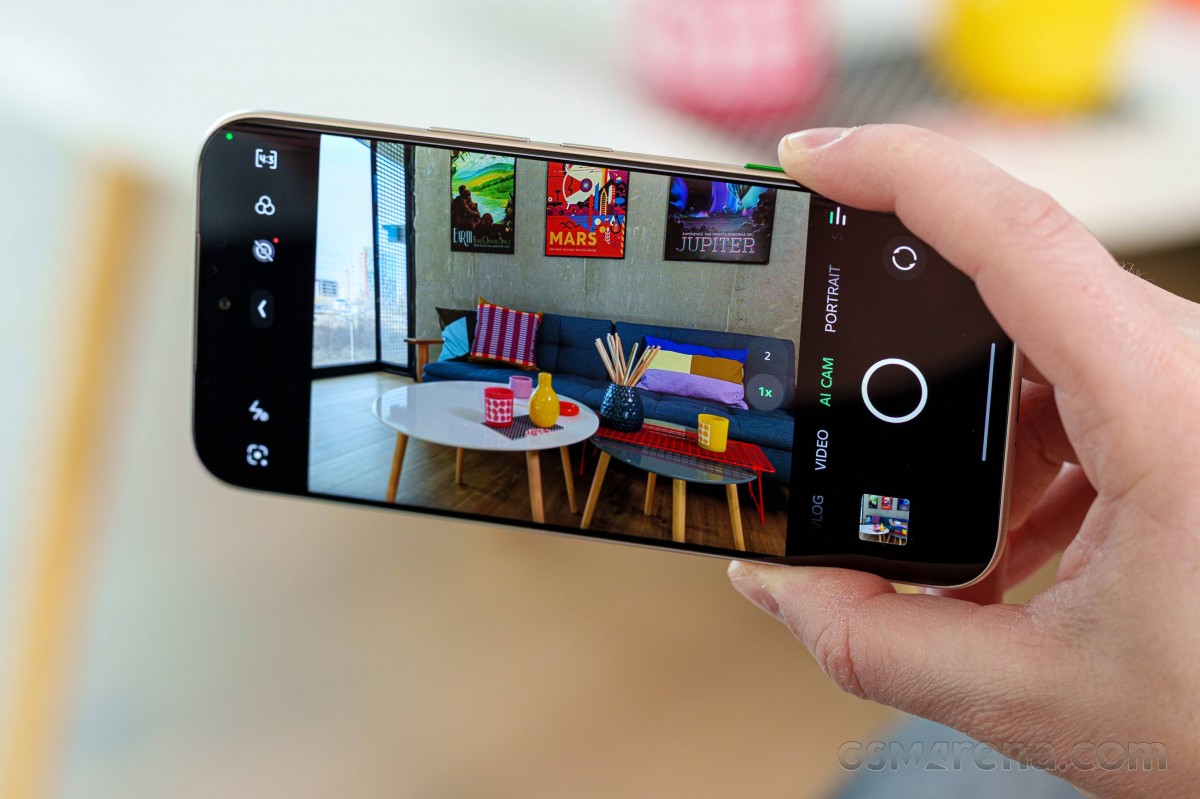
Daylight photo quality
The Note Edge takes pretty solid photos at 1x. It captures very good detail and renders it without heavy processing, though it could use a nudge in clarity and microcontrast. White balance is mostly accurate, with only a faint greenish tinge here or there. Saturation is a little conservative, but also not an issue. Overall, there aren’t the most expressive shots, certainly, but they’re not half bad either.








Daylight samples, main camera (1x)
Photos of people at 1x zoom don’t give us much to complain about either. Skin tones are lifelike, facial detail is good. The Portrait mode’s subject isolation works reasonably well and the background blur looks alright.








Human subjects, main camera (1x): Photo mode • Portrait mode
The 50MP full-res mode brings a drop in dynamic range with some significant highlight clipping. There’s no more detail than in the 12.5MP shots either.




Daylight samples, main camera (1x), 50MP
Images turn somewhat hazy at 2x but we’d still call them acceptable in terms of detail. Global properties remain unchanged.








Daylight samples, main camera (2x)
Selfies
Selfies on the Note Edge are more or less ‘wow!’. They are sharp and packed with detail, skin tones are lively, dynamic range is great. Sure, indoor white balance may be a little off on occasion, but it’s a small misstep in an overall excellent performance.




Selfie samples
Low-light photo quality
Low-light photos at 1x are very good for the class. They’re well exposed and have great shadow development and highlight preservation at the same time. White balance is accurate and colors have some extra pop – that third scene is even going overboard with it. When it comes to detail, there’s some extra grittiness in some darker scenes or specific textures, but the overall result is very good.








Low-light samples, main camera (1x)
You probably wouldn’t want to be looking at the 2x zoom shots at 1:1 – detail is quite blotchy. They do look good from afar.








Low-light samples, main camera (2x)
Video quality
The Note Edge records video up to 1440p with both cameras and in that resolution it maxes out at 30fps. You get a 60fps option too, only that’s limited to 1080p. If you want electronic stabilization, that would mean a 1080p30 cap. There’s no Pro video mode and no HDR recording option.
You can check out the playlist below, which includes multiple video samples.
The phone’s daylight videos are reasonably sharp at 1x zoom if you shoot in the 1440p mode, but in that case you get a lot of camera shake. The 1080p counterparts are quite stable, but also too soft for our liking. The 1080p and 1440p clips have essentially the same magnification, only the 1080p ones cover a narrower field of view. 2x zoom is fairly usable too, with the same trade-off. Colors and dynamic range are quite good though, so there’s that.
It’s also worth pointing out that while the stabilization does a very good job when you’re standing in one place, it’s still not impeccable when faced with walking shake. Still though, the unstabilized 1440p footage shot while walking is unwatchable.




Infinix Note Edge video screengrabs, daylight: 1x, 1440p • 2x, 1440p • 1x, 1080p • 2x, 1080p
The phone remains relatively composed at night too, with usable results at both 1x and 2x, though the 1080p 2x is notably softer than the 1440p 2x (there’s also the matter of combatting the 1440p mode’s shake, of course).




Infinix Note Edge video screengrabs, low light: 1x, 1440p • 2x, 1440p • 1x, 1080p • 2x, 1080p
Camera quality verdict
The Infinix Note Edge took us a little by surprise with its unassuming camera system. Its selfie camera punches well above its weight and delivers standout stills. The rear camera shots great photos at its native focal length during the day and continues to do so after dark, and it’s got usable 2x performance. There’s no going around the fact that an ultrawide camera is simply missing though, and video stabilization comes at the cost of resolution.