
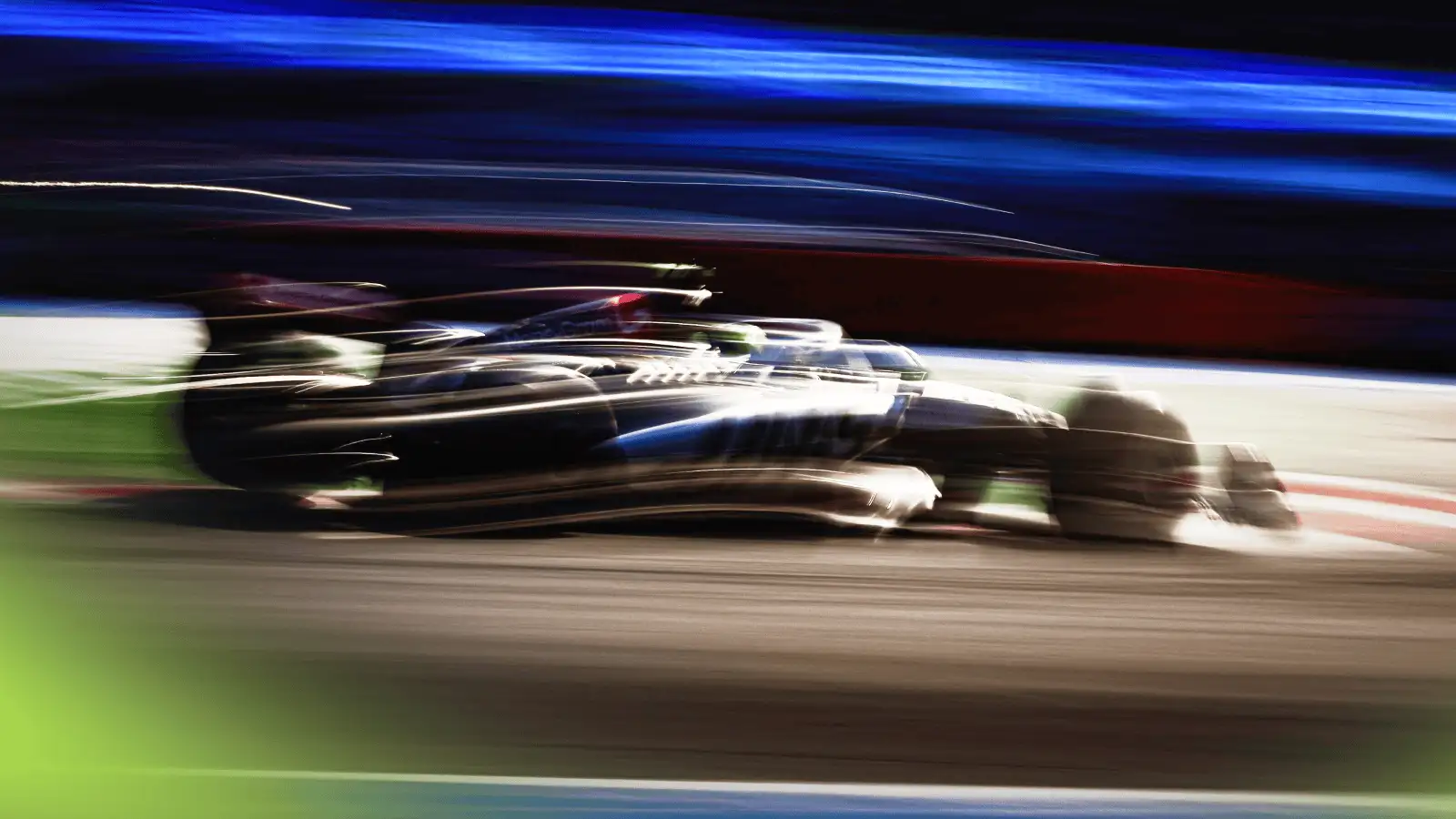
The gap between first and 22nd in Q1 at the Australian Grand Prix could be as much as 1.8 seconds given the new cars with their active aerodynamics and the use of energy management.
Excluding the bottom two drivers, Liam Lawson and Esteban Ocon, it was less than seven-tenths last year as Formula 1’s final season running ground-effect aerodynamic cars began in Melbourne.
Damon Hill makes shocking Q1 prediction for Australian GP
Want more PlanetF1.com coverage? Add us as a preferred source on Google to your favourites list for news you can trust
The F1 2026 season heralds the arrival of a brand-new set of technical regulations as Formula 1 not only embraces all-new cars, but also a new engine formula.
The cars, which are 20 centimetres shorter than the 2025 edition and 30kg lighter, will incorporate active aerodynamics for the first time, while Formula 1’s engine regulations are also changing.
The new power units will run on sustainable fuel with an increase in electrification to a 50/50 split with the internal combustion engine.
But while Formula 1’s powers-that-be had hoped that the new cars would create closer racing, that may prove to be a long-term goal as the new cars, while fun to drive according to several drivers, require serious management, both with the movable wings and engine deployment.
The opening shakedown in Barcelona, a behind-closed-doors outing in which the teams could all run for three of the five days, saw the field split by five seconds. The test wasn’t about setting times, it was about getting in laps and learning about the cars.
More on Ferrari’s performance at the Barcelona shakedown
F1 results: Unofficial numbers from the Barcelona shakedown
Shakedown conclusions: Mercedes back in the light, Red Bull finds peace, key Newey question
Given the newness of it all, former F1 driver Johnny Herbert has predicted that the gap in Q1 between the 22 cars at the season-opening Australian Grand Prix could be as high as 1.3s.
“1.3,” Herbert told The Race’s Stay on Track podcast, “quite a big difference front to back. 1.2, 1.3.”
However, his fellow pundit Damon Hill believes it will be even bigger.
“I’m going to say 1.8,” he declared.
Herbert responded with a shocked laugh, “I do think it will be quite a big difference.”
Hill added: “So we will come back to that. Australia. Q1. What is the front-to-back delta?”
The 1996 World Champion went on to explain that the drivers face huge challenges, especially in the early rounds, as they get to grips with active aerodynamics.
“They’ve got a lot to learn,” Hill said as the drivers prepare for the first of two three-day tests in Bahrain, “so it will be about playing with the options.”
“Learn about the toolbox,” added Herbert. “This is a new toolbox and they’ve got to work out what they need to use.”
Hill picked up: “It is really going to be interesting this new regulation. I think we are all going to be scratching our heads as well.
“Someone is going to work it out earlier than the other people as to what the tricks are, what the options are, with this active wings, active downforce.”
Then there’s also the new engines that will be powered by a 50/50 split between combustion and electrical power, and the engine management required to deploy either boost or overtake mode.
“Charging it up and deploying it,” he simply said of the power unit learnings.
The drivers will be back on track, Williams included, in Bahrain on 11 February for the start of a three-day test before a second outing also in Bahrain.
From there it is on to Melbourne for FP1 on 6 March.
Want to be the first to know exclusive information from the F1 paddock? Join our broadcast channel on WhatsApp to get the scoop on the latest developments from our team of accredited journalists.
You can also subscribe to the PlanetF1 YouTube channel for exclusive features, hear from our paddock journalists with stories from the heart of Formula 1 and much more!
Read next: Does Mercedes have three to four seconds in W17 left to unleash?