
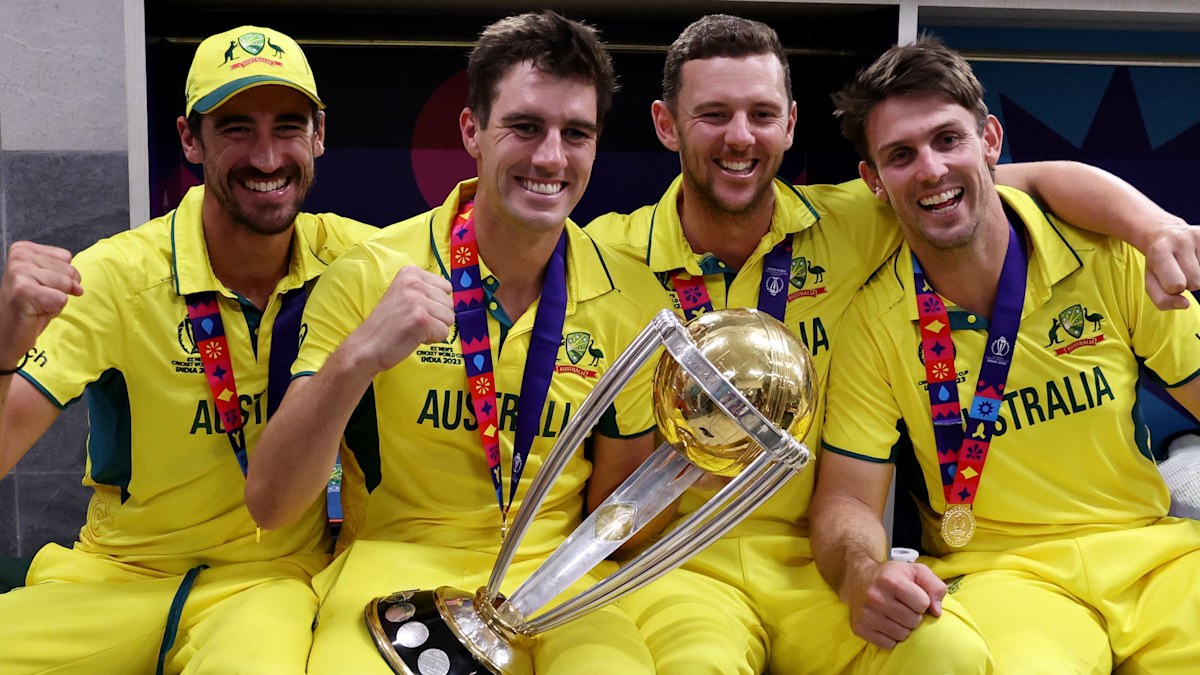
Five years ago Australia reached the Everest of T20 international cricket when an Aaron Finch led side won the World Cup final.
It was a famous victory considering Australia were rank outsiders to return from Dubai as champions.
Michael Vaughan had said in the lead-up that he didn’t give Australia much chance, which led to Adam Zampa captioning the winning Instagram post with the exact quote.
READ MORE: Jake Paul’s fiancée wins emotional Winter Olympics gold
READ MORE: How Broncos handled ‘elephant in the room’ at season launch
READ MORE: Aussie champ’s classic interview after Super Bowl ‘perfection’
Since it was Australia’s one and only T20 World Cup win, that victory is still spoken about frequently before every tournament.
From that winning side David Warner, Finch, Steve Smith, Matthew Wade, Pat Cummins, Mitchell Starc and Josh Hazlewood are missing from this edition. Retirements, injury and selection calls have all played their part in evolving the squad.
The narrative is the same as it was when Vaughan went out on a limb. Australia again isn’t being given much of a chance.
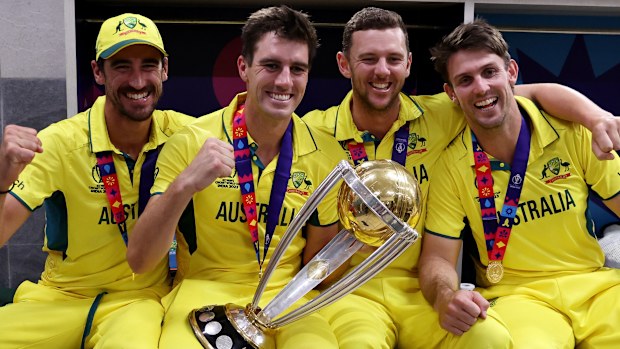
Mitchell Starc, Pat Cummins, Josh Hazlewood, Mitchell Marsh. Getty
India are the heavy favourites to lift the trophy in a tournament the sub-continent heavyweights are co-hosting with Sri Lanka.
But under this Andrew McDonald regime, Australia are always a chance in big tournaments, despite not featuring in the last two T20 World Cup finals.
Here’s the burning questions for Australia ahead of its first match against Ireland on February 11.
Will Australia’s fitness be the Achilles heel?
Pat Cummins missed out on this squad with his back problems and Josh Hazlewood was also a late withdrawal due to his hamstring.
That’s two big outs and it’s only compounded by the injury clouds for other players.
Nathan Ellis comes into the tournament off the back of a hamstring problem, as does his Hobart Hurricanes teammate Tim David.
Ellis told media on Monday that “touch wood” he’ll be available for the Ireland match. He was then “conscious” of jinxing himself when asked if he’d last the tournament.
“I feel really good, it was a very precautionary (process),” he said.
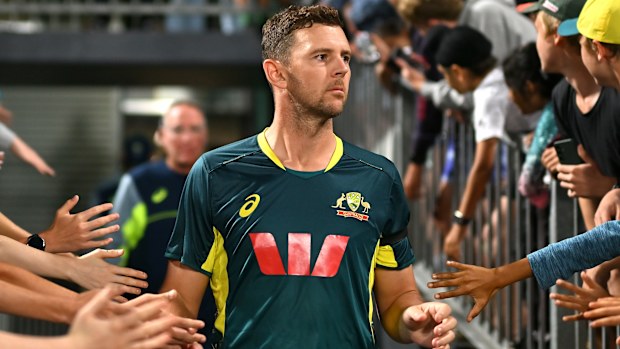
Josh Hazlewood. Getty
“There was something there at the end of the Big Bash and we’ve taken a really cautious approach. I’m feeling really good at the moment, we’ve got three games in a really short period of time at the start of the tournament but touch wood I’m really confident I’ll be fit and strong and hopefully playing every game of this World Cup.”
The fast bowler described Hazlewood as a “big miss” and flagged there will be changes in the game plan.
Sean Abbott was put in the squad as cover for Hazlewood and he was injured in the same match as Hazlewood last year. Abbott did return for the Sixers in the back end of the Big Bash, so that’s less of a concern.
How does Australia handle the absence of the big three?
Cummins and Hazlewood are out for this tournament. Starc is also gone following his retirement from T20 cricket last year.
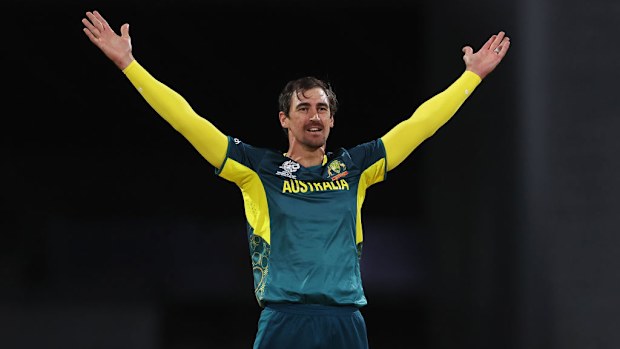
Mitchell Starc is no longer a T20 player for Australia. ICC via Getty Images
Their combined absence adds up to a loss of 182 T20I appearances and 224 wickets.
It’s a huge void to fill and leaves Ellis, Xavier Bartlett and Ben Dwarshuis as the frontline pacemen with Abbott the travelling reserve.
Between them they’ve played 93 international games, leaving a gulf of experience.
While their numbers are impressive, it will be a big task to step up to the plate set by three of Australia’s greatest.
Ellis was confident the games played between him, Bartlett, Dwarshuis and Abbott will leave them in good stead.
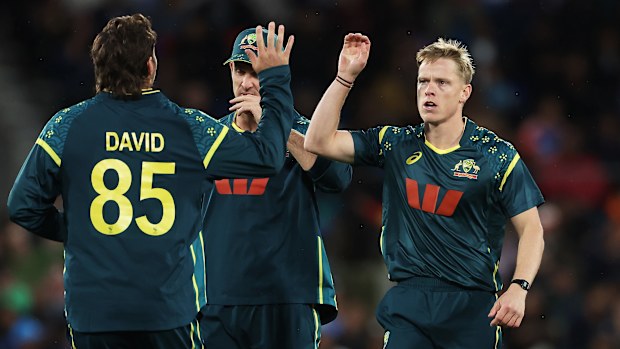
Nathan Ellis celebrates with team mates after taking the wicket of Abhishek Sharma. Getty
“It’s massive … we’ve had 18 to 24 months of cricket together where the big three haven’t been playing and have had bigger workloads in the Test arena. So we’ve had time to form connections and relationships on and off the field as a bowling unit,” he said.
“I think we work together really well, we’ve all got different skillsets and can gel together on the night in different phases of the game.
“… It’s not going to be a foreign space for us without those two bigger names. Obviously a squad with Hoff and Cummo is a strong squad but I feel without them we’re just us well placed to go deep.”
Does Smith’s omission put Renshaw under unfair pressure?
If Australia fails with the bat, the big talking point will be around Steve Smith and how he wasn’t selected.
The World Cup winner scored 299 runs at 59.80 in the last six BBL matches and the belief was he may have done enough.
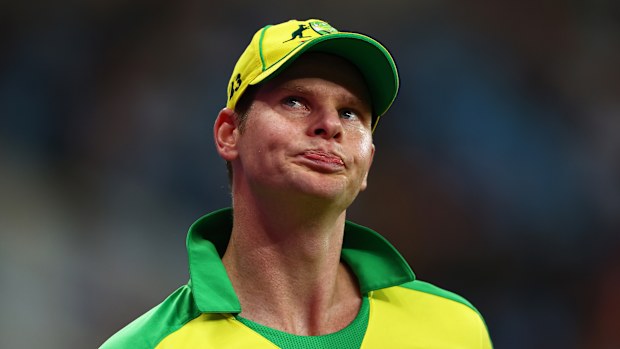
Steve Smith. Getty
However, with Mitch Marsh and Travis Head preferred as openers, Smith missed out.
Matt Renshaw is likely to bat in the middle order, with Pat Cummins explaining last week the selection decision was down to Renshaw’s ability to play the role better.
That in turn will no doubt put Renshaw under the pump for runs, although with his experience he should be more than capable of handling the heat.
Equally, the pressure will turn on the selectors if plans go awry.
Renshaw struggled against Pakistan in the three-match T20 warm-up series and all eyes will be on his contributions.
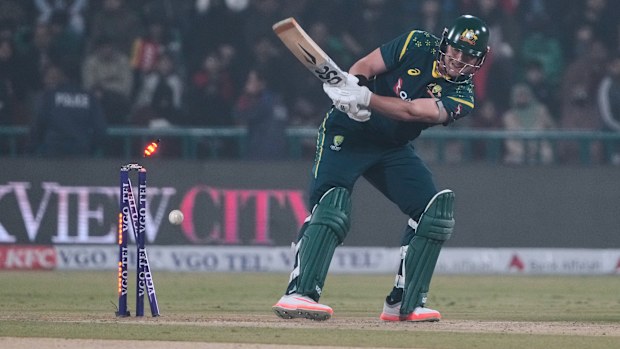
Australia’s Matt Renshaw is bowled out by Pakistan’s Shaheen Shah Afridi. AP
Does the T20 World Cup need to be every two years?
There’s no doubt in today’s cricketing landscape, the shortest format of the international game takes precedence over ODI cricket.
The T20 World Cup is now every two years as opposed to the four for the ODIs.
Since 2021, this is now the fourth T20 World Cup and that makes for a lot of cricket.
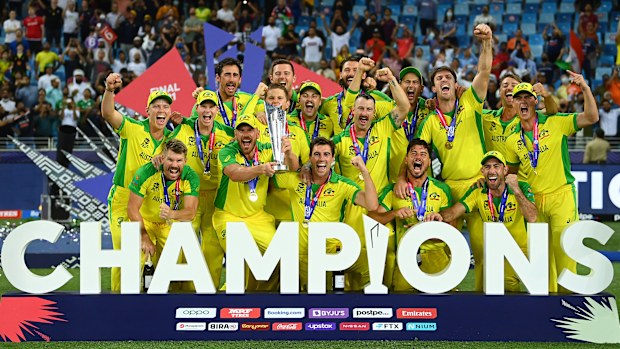
Australia lifts the T20 World Cup in 2021. Getty
Does it take the magic out of the spectacle?
From an Australian perspective it certainly feels like it. Australia has never truly embraced the shorter format as much as it has Test cricket.
But you only have to look at the crowds during the tour of the West Indies to show that’s not the case all around the world.
Throughout the Test matches the crowd numbers were low but it then picked up during the T20s.
The ICC isn’t incompetent when it comes to making money and clearly the demand must be there to warrant a tournament so frequently.
But it was clear during an interview with The Grade Cricketer that Cummins isn’t totally on board with how often they come around.
“This is the one we’ve been waiting for,” he said sarcastically.
In 2028, Australia will host the next T20 World Cup. That will be the same year the format features at the Los Angeles Olympics, a significant moment for the sport.
You’d argue the Olympics could be used as the pinnacle of T20 cricket.
In 2023, Mark Taylor told Wide World of Sports the ICC should drop the World Cup that year.
It appears that won’t happen and that’s a missed opportunity.
With T20 cricket formats coming around so frequently, a tournament victory feels less significant.
But as long as pockets are lined, it won’t matter.