
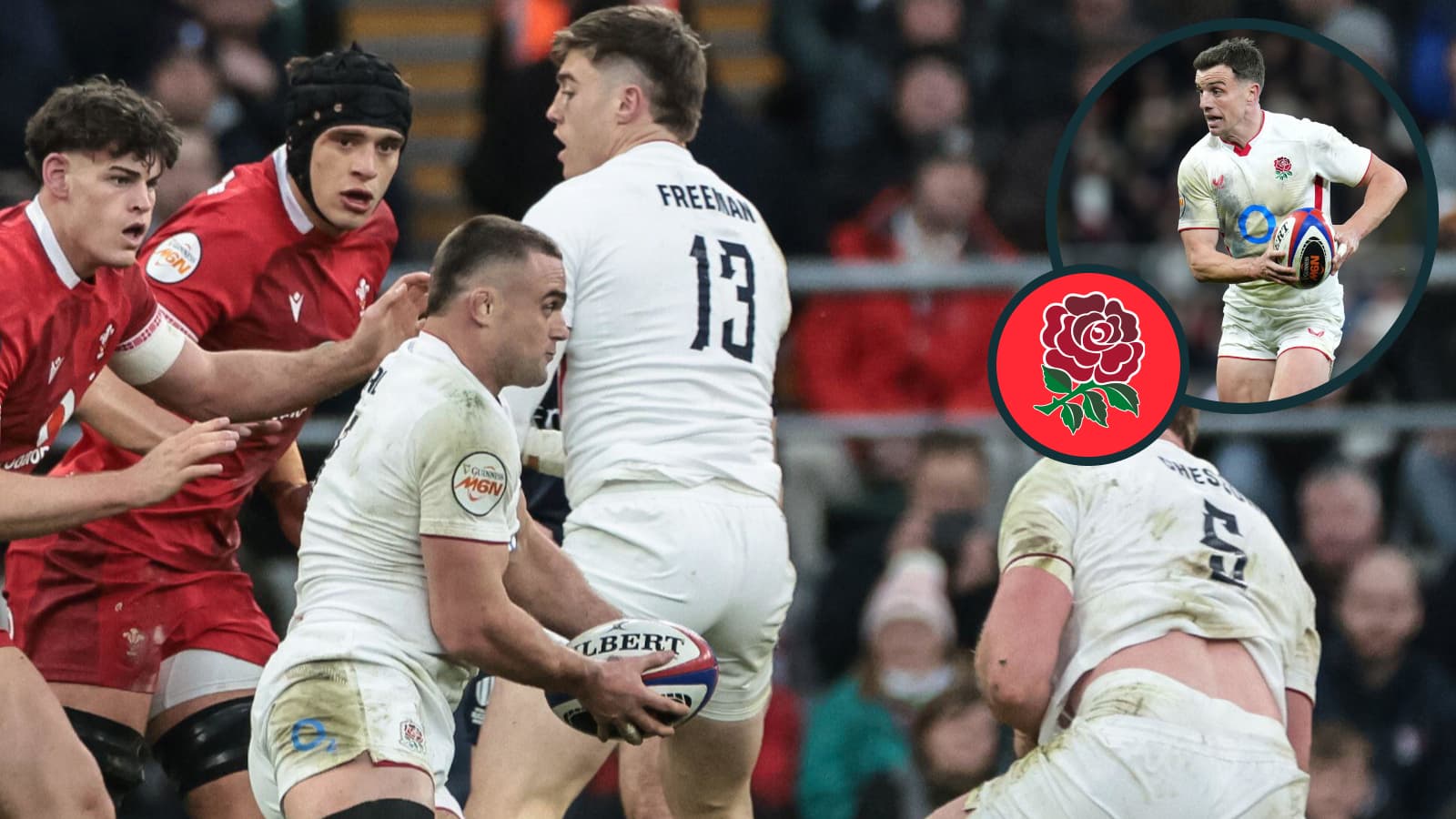
Whilst the rugby world has spent the last decade obsessed with the structured pods of the Irish system or the individual flair of the French, the England of 2026 has quietly engineered something entirely different under the guidance of Steve Borthwick and attack coach Lee Blackett, moving away from the kick-chase drudgery of years past toward a high-velocity offensive identity that deserves closer examination.
If Ireland’s attack was once a metronome and France’s is a sniper’s nest, England’s is a fluid dynamic, a study in rhythm and overload and the relentless recycling of athletes that breaks the moderated push defences that have become standard in the Test game through a cycle of fixing and wrapping that manufactures mismatches where they shouldn’t exist.
At the centre of this revolution are three men, the engine of Ben Earl, the precision of Tommy Freeman, and the cognitive mastery of George Ford, and understanding how they interact reveals why England’s 48-7 dismantling of Wales at the Allianz Stadium was a diagnostic test for a system that’s rewriting how attacking rugby functions at the highest level, albeit against a Welsh side already compromised by injury, discipline failures, and defensive cohesion that had long since fractured.
The anchor: Straightening to fix the push
The greatest enemy of any wave attack is lateral drift, because if an attacker moves toward the touchline they effectively do the defender’s job for them, which is why every English possession begins with a carrier, often a heavy-hitting forward or a point runner, running a line that’s aggressively square and attacking the inside shoulder of the defender.
This fixing action forces the push to a dead stop because you cannot slide effectively if you’re being threatened by a direct punch through your inside channel. The anchor provides the dent required to initiate the wave, forcing the defence to plant their feet and commit multiple tacklers to a single point.
The first wave: Tommy Freeman and the end of the drift
If the anchor provides the dent, Freeman provides the direction, and his transition to the 13 shirt is the most significant selection click of the 2026 era. Freeman possesses a rare square-hips running style that means when he receives the ball in the 13 channel, he doesn’t look for the corner, he attacks the seam and commits defensive numbers.
His primary tactical function in the wave is straightening the seam, and his ability to act as a dual-threat pivot was the poison that killed the Welsh defensive belt because by straightening the line and then tipping the ball to support runners he ensures that England is always attacking soft shoulders – as elite coaches say, tightening the belt (imagine pushing the middle of a belt – the sides move inwards).
Against Wales, Freeman was England’s standout carrier with well over 150 metres and multiple line-breaks, statistics that only exist because he fixed defenders repeatedly throughout the match, forcing them to stop their lateral drift and honour his direct threat rather than sliding comfortably across the field.
The second wave: Ben Earl and the relentless wrap
Whilst the first ruck is being formed, England is already initiating the second wave, and this is where Earl becomes the secret engine. Earl is currently one of the most dynamic wrapping forwards in world rugby, and in traditional systems a number eight carries and remains part of the ruck but in the wave Earl is a free-form ghost.
The hallmark of this system is what you might call the Earl loop, where Earl clears a ruck and sprints behind the next pod to reappear as a viable option on the opposite shoulder of the fly-half within seconds, creating a numerical tide that leaves defences scrambling.
When they try to reset they find that the maths doesn’t add up, they’re matching England’s pods man-for-man only for Earl to arrive as the plus-one from a position that logic says he has no right to be in.
It’s a manufactured overlap created by cycling players faster than the defensive system allows for folding, and the cumulative effect is exhausting for opposition defences who find themselves constantly chasing shadows and trying to reset against a tide that never stops coming.
The nerve centre: George Ford’s late pulse
The wave only works if the valve is open, and Ford is that valve, standing aggressively flat to the line and processing defensive data at lightning speed to execute distribution trades that vary so late in the tackle pulse that defenders are left tackling shadows. Ford’s genius in 2026 is his lightning-decision speed because he doesn’t decide his play at the start of the phase, he decides it at collision minus half a second.
This means he can execute the league-style flat pass that fires 15-metre horizontal bullets bypassing the drift to hit the outside wave before the defence can transition from push to scramble. Or the short pop when the defence stays square to honour the wave and Ford uses a subtle pop-pass to a trailing forward hitting the tunnel between defenders. Or the attacking kick where Ford treats his right boot as a distribution tool with chips and low-trajectory grubbers that are identical to his passing motion, meaning the backfield pendulum cannot get a read and by the time he kicks the ball is already in the dead zone behind the front line.
This variation keeps defences honest because they cannot commit fully to any single defensive principle without leaving themselves vulnerable to the others, and Ford’s ability to make these decisions at the last possible moment is what makes the entire system function at the speed it does.
Manufacturing the mismatch: The hybrid edge
The ultimate goal of the wave is to produce the mismatched seam, because by the time the third or fourth wave hits the defensive line is frayed.
We saw Borthwick push this to its conclusion against Wales with Earl occasionally operating in the centres and young flankers like Henry Pollock appearing on the wing, putting dynamic high-power engines against fatigued small-frame defenders. When the wave hits the 15-metre seam, it’s not about finding a gap that exists, it’s about manufacturing one through fatigue and exhaustion.
A tired prop-forward forced to push laterally to cover the numbers is suddenly left one-on-one with a steaming Earl or Pollock and the wave has stripped away the prop’s defensive cover leaving them isolated and facing a mismatch they have no hope of winning. This is the genius of the system, that it doesn’t rely on individual brilliance or lucky breaks but instead creates the conditions for success through relentless pressure and superior fitness.
The kind of tactical discipline that ensures England is always attacking with numbers in positions where the defence cannot possibly maintain their structure.
Let’s examine this in numbers:
The reload gap: Earl is currently operating at a 1.8-second “reload” time (the time between hitting a ruck and becoming an active runner again), nearly double the speed of the Welsh back-row (3.4s).
Defensive fixation: Freeman fixed 14 defenders during the 80 minutes, nearly triple the Test average of 5.5, effectively killing the Welsh drift 14 separate times.
Release Latency: Ford makes his distribution decisions at an average of 1.2 metres from the tackler, compared to the 2.5-metre average for other Test fly-halves, denying defenders the “read-time” to adjust.
Overload Frequency: England completed 24 active “wraps” across the match, creating a manufactured “+1” scenario on over 40% of their open-side phases.
The new England identity
What England has done is move away from the power game and the kicking game that defined their recent past, the territorial pressure through kicking and the deep-lying tactical kicker and the crash-ball midfield and the static pods of forwards who existed primarily to ruck.
They’ve found a rhythm game built on numerical overload through wrapping and a flat-standing late-pulse distributor and a midfield that straightens the line and fixes seams and forwards who function as fluid wrap runners and link players.
Want more from Planet Rugby? Add us as a preferred source on Google to your favourites list for world-class coverage you can trust.
In Earl, they have the tireless engine who can appear in impossible positions and make the mathematics of defence look inadequate. In Freeman they have the precision instrument that keeps the line straight and forces defences to honour the direct threat rather than drifting comfortably. And in Ford they have the brain that ensures the tide always finds the weakest point in the wall through decisions made at the last possible moment when defenders have already committed to the wrong choice.
As the Six Nations progresses, the question for opposition coaches is no longer how do we stop their carry, but how do we stop the tide? And the answer might be that you don’t, because eventually the water always finds a way through.
England’s system is designed to ensure that the cracks appear not through individual mistakes but through the cumulative weight of wave after wave after wave, until the defensive structure simply cannot hold any longer, as Wales found to their cost on Saturday, and New Zealand to theirs in November.
It’s an exciting time to be an England fan.