
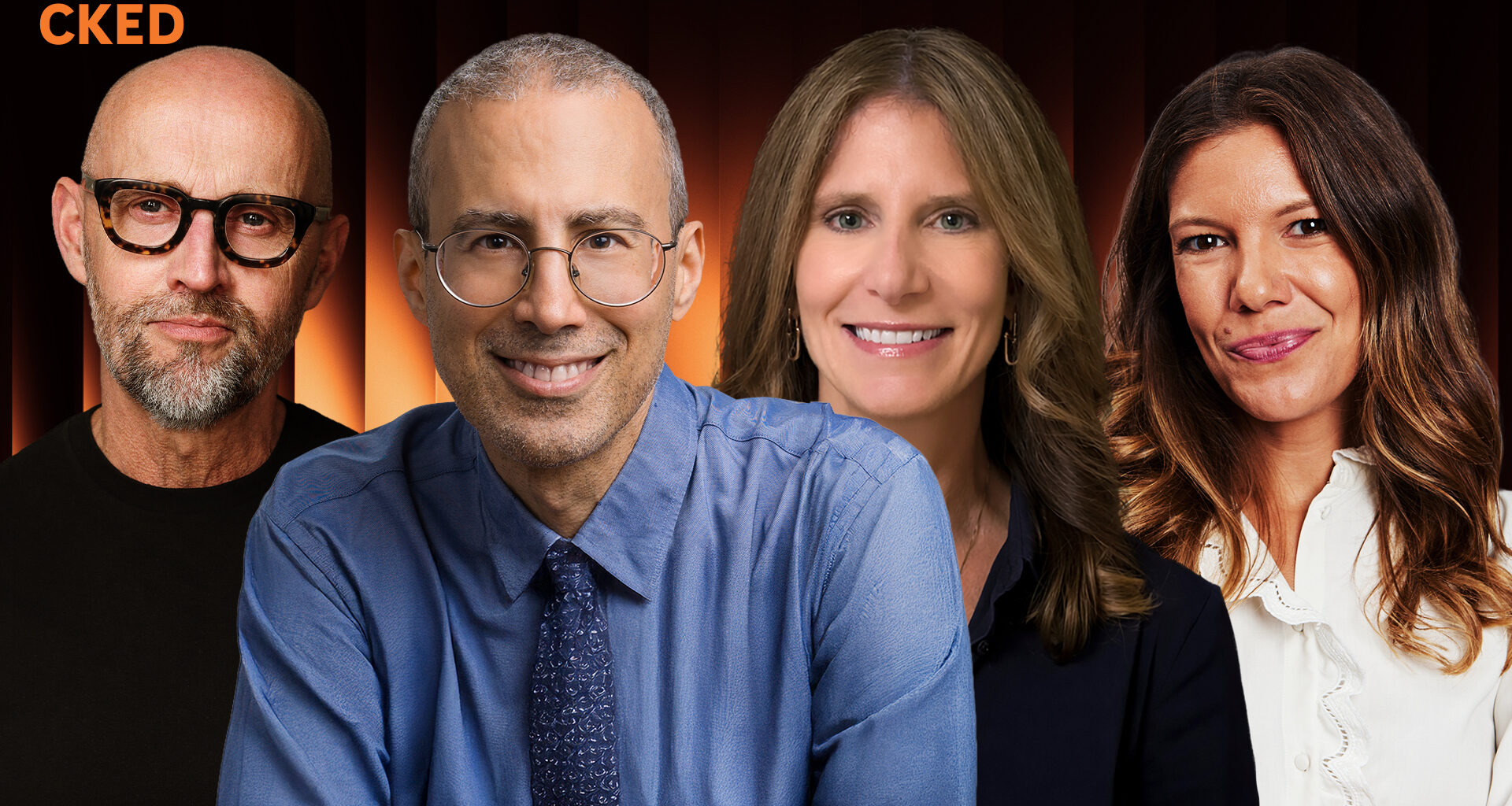
From weightlifting to welfare systems, two voices explore how longevity can extend health without deepening inequality.
Longevity science usually enters the public imagination through extremes. On one end, there are billionaire biohackers chasing marginal gains with blood tests, wearables and supplements stacked like a pharmacy shelf. On the other hand, there’s a quieter fear: a future filled with people living longer, but not necessarily living better. Frail, isolated and expensive to care for.
The latest episode of Longevity.Technology UNLOCKED deliberately sidesteps both caricatures. Instead of asking how long humans can live, it keeps returning to a more uncomfortable and more ethical question: how well do we live, and who gets to live well?
Hosted by Dr Nina Patrick and Phil Newman, the episode brings together two voices that don’t always share airtime, but arguably should. Dr David Barzilai, a physician and longevity medicine consultant, approaches aging through evidence, clinical outcomes and restraint. Carolyn Ringel, working at the intersection of ethics, policy and aging research, zooms out to the systems and values shaping who benefits from that science.
What unfolds in the podcast is not a pitch for immortality, but a reframing of longevity as a social project, one that lives or dies on trust, access and design.
The conversation begins with daily habits, almost disarmingly so. Asked what people can do now, Barzilai doesn’t reach for a futuristic therapy. He points to resistance training.
“One simple routine people could do every day is simply to lift weights,” he says, citing data showing a roughly 30% reduction in mortality.
The reasoning isn’t aesthetic or aspirational, but functional. Longevity, in Barzilai’s framing, is about being able to carry your own luggage, hike without fear of falling or pick up a grandchild without pain. It’s not preparation for some distant future. It’s “an investment for right now and an investment for the future.”
Ringel’s response doesn’t contradict him. It completes the picture. “We also need to make sure that we rest our bodies,” she adds, pointing to sleep as both a biological necessity and an ethical one. Repair, she reminds us, happens when we stop performing. Together, their answers quietly dismantle the idea that longevity requires extreme discipline or joyless optimization. Even pleasure matters. Stress reduction, social connection and indulgence in moderation all count because, as Barzilai notes, “it’s our overall pattern.”
That emphasis on patterns becomes critical once the discussion turns explicitly to ethics. Longevity research, Ringel argues, is often treated as morally suspect in ways other medical fields are not.
“Geroscience and longevity research really shouldn’t be treated any differently than any other kind of medical research,” she says. The same questions about safety, equity, long-term impact and access apply everywhere.
Drawing on the philosopher John Rawls, Ringel proposes a useful thought experiment: design a longevity policy behind a veil of ignorance. If you didn’t know your income, race or health status, what kind of system would you build? The answer, implicitly, wouldn’t hinge on exclusivity.
Barzilai offers a scientific counterpart to that ethical lens. In a space crowded with hype, he urges people to ask basic but grounding questions: Is this human data or a Petri dish result? Are we measuring something meaningful or just something easy to market? For him, the most honest metric is what geriatric medicine calls intrinsic capacity, our ability to function in daily life. Biomarkers fluctuate. Independence, energy and resilience tell a clearer story.
Access is where ethics and evidence collide most sharply. Critics worry that longevity tools – advanced imaging, continuous monitoring, experimental drugs – will widen inequality. Ringel is wary of solutions that begin with restriction.
“The way to make sure everyone has access is to work on expanding access,” she argues, starting with inclusive research and ending with prevention. She points to decades of data showing that social connection, such as friendships, community and purpose, can be as powerful as any intervention. “My mahjong group doesn’t cost me anything,” she notes. In that light, longevity looks more like shared tables and public spaces, rather than state-of-the-art labs and facilities.
This framing also punctures a persistent myth that longevity means adding years of sickness at the end of life. “We’re talking about extending the period of time when we’re vital, engaged members of society,” Ringel says. Barzilai names the clinical goal behind that idea: compressing morbidity. The aim is not to stretch decline, but to delay it so illness occupies a shorter chapter, not the entire final act.
Even when the conversation touches cutting-edge territory – rapamycin, partial epigenetic reprogramming, right-to-try laws – the tone remains cautious rather than breathless. Barzilai stresses standards, informed consent and the physician’s duty as a fiduciary. Ringel emphasizes education and warns against confusing empowerment with uncritical freedom. Progress, both suggest, depends less on speed than on trust.
Perhaps the most quietly radical insight comes near the end. Longevity, Ringel argues, is not only about medicine. Housing, transportation and multigenerational living are also forms of healthcare. If people remain healthier for longer, societies can rethink how generations support one another and how aging fits into civic life.
In that sense, the episode doesn’t promise a longer life. It asks us to redesign the middle and to do so collectively. Stripped of hype, longevity becomes less about escaping aging and more about refusing to accept suffering, isolation and inequity as inevitable. That may be the most ethical intervention of all.
Catch new episodes of Longevity.Technology UNLOCKED every Monday, with conversations featuring the researchers, founders and thinkers redefining how we age. Listen on Apple Podcasts, Spotify and YouTube.
READ MORE: The longevity journey of Agingdoc David Barzilai – from commentary to clinic