
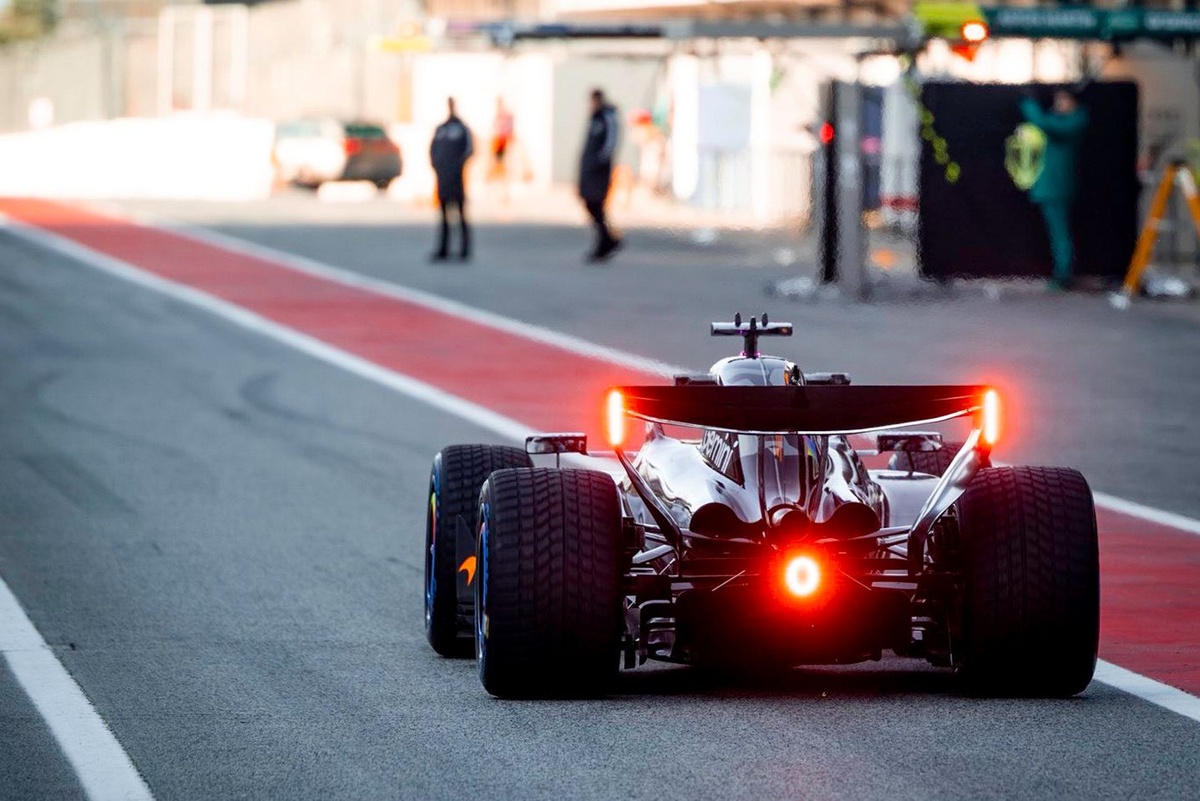
It’s rare that a theatre chooses to accept audience members for a rehearsal. Devotees and die-hard fans might yearn to consume the behind-the-scenes experience of a show in the making and, indeed, some playhouses do allow the public to view streams of rehearsals in full flow. Yet, the undercurrent of superstition within the theatre industry tends to make this a rarity.
Testing used to be like this. A small press attache might be invited along in certain circumstances, only to later return from a cold day at Silverstone with a timesheet and a handful of blurry snaps, but these were little more than – yes, rehearsals. It was a chance for a team, usually with a group of test-only track operators, to throw a car around in secret. The notion of broadcasting an F1 test was anathema to the ways of the championship back then.
Cue today, and note the pangs of disappointment from select members of F1’s fanbase that broadcasters will only televise the final hour of testing in Bahrain’s opening week. Starved of any on-track running, aside from the far-away footage gathered by those positioned in the hills around the Barcelona circuit during the week of shakedown-ing, there’s a large subset of the viewership that wants to see these 2026 machines hit the road and do some laps.
It doesn’t matter that testing is actually quite boring, and has little of interest beyond the first (and possibly last) hour; folks just want to see some cars going fast. At least the final hour of the first three days in Bahrain will be broadcast, so people will get to see something ahead of the full-broadcast experience of week two.
Testing isn’t really the behind-closed-curtain rehearsal any more. It’s a work-in-progress show, the kind that stand-up comics will try in smaller venues to test the waters with their new observations. This writer remembers seeing Stewart Lee do a very lengthy routine in a WIP night for the latest series of his BBC show Comedy Vehicle, humorously ‘sidetracked’ in listing the various food stains that might have accrued over the garb of professional foghorn Rod Liddle in great relish. The subsequent routine aired was somehow even longer; if an F1 car can remain reliable for a similar duration, then it certainly bodes well…
Instead, Barcelona had operated as the rehearsal – thanks to the expanded TV offerings, we’ll be seeing elements of the full production before the season ‘curtains-up’ in Melbourne. Thus, it’s probably worthwhile to help the viewers decode what they’ll see.
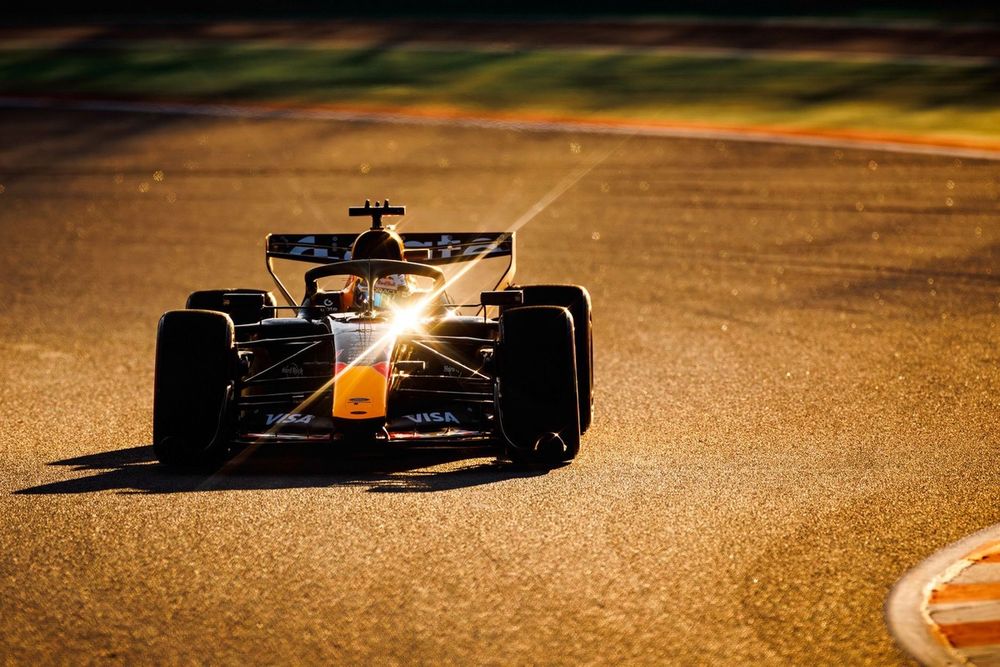
Bahrain testing offers the viewing public the first chance to see 2026’s cars in action
Photo by: Red Bull Content Pool
The opening day will commence with a series of installation laps, purely to test that everything’s in running order. Between Barcelona and Bahrain, as with every race on the calendar, the cars will largely have been taken apart and put back together – and thus it’s prudent to ensure there’s been no finger-trouble with the assembly.
Much of the subsequent action will run like a Friday practice session. If there’s any new bodywork to test, the teams will append their aero rakes to the car to observe the pressure field around the car, with an additional daubing of flow-vis paint to check that the flow patterns correlate to those seen in the teams’ simulation tools. Plus, there’ll be some reliability-focused long-runs, some constant-speed tests, and some additional fiddling with the new active aero set-up to check everything works as expected.
And that’s just the aero work. While teams will arrive in Bahrain armed with a series of power unit maps, fleshed out during dyno tests and through the Barcelona shakedown, more track testing will allow those maps to be refined. This is a distinct component of the new regulations, as they will define how the cars can be piloted and what the drivers need to do to adapt.
“An easy example: Baku, the castle section, low speed section. There’s no point deploying electrical energy in between corners. That’s going to do nothing in terms of straightline speed, so you really don’t want to be deploying any electrical energy at a certain point of the track” Ayao Komatsu
As it stands, the 2026 driving process is fascinating – or, to those who want a utopian world of flat-out racing, bleak. While past seasons have tended to bring relatively little variance from lap-to-lap between drivers, particularly in the races where tyre degradation has not been much of an obstacle, 2026’s new engine rules will reintroduce that. Let’s try to break that down, rather than be oblique about it.
Although the interaction between race drivers and their engineers can be granular to some degree, and it’s not uncommon to hear engineers note the corners where a driver is losing time to those around them, there’s going to be much more granularity over the lap as a whole. Over a race weekend, the engineering teams will have to determine which areas of the circuit are best to deploy the electrical systems, which sections are best for harvesting, and which areas offer neither.
Speaking to media after Bahrain, Haas team principal Ayao Komatsu used the example of the Azerbaijan Grand Prix’s Baku circuit – where, naturally, deployment of the electrical power makes the most sense at the final part of the main straight.
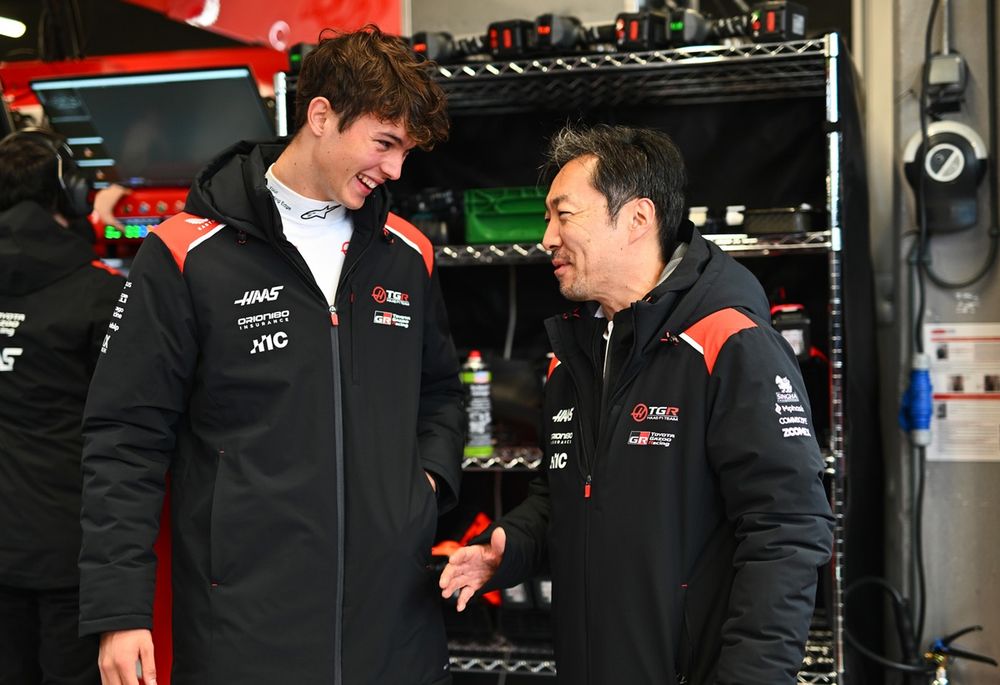
Komatsu says the energy recovery element will require drivers to change their approach significantly
Photo by: Haas F1 Team
“In a simplistic sense, the main thing is we’re trying to deploy so much electrical energy, but what we can recover is really not enough,” Komatsu explained. “Therefore, you really have to recover energy very well and not to waste the energy you recover in order to be able to deploy properly.
“If you are wasting that energy on an out-lap or even during the race in certain parts of the track, you haven’t got energy to deploy. So everybody is on a very, very tight situation in terms of, let’s say, making best use of the limited energy you can recover. That’s the biggest difference compared to previous years.
“Over a certain percentage of a throttle (about 75%) there’s no choice by regulation – you’ve got to deploy the MGU-K, the electrical energy. So do you want to go over that threshold?
“Let’s say an easy example: Baku, the castle section, low speed section, right? There’s no point deploying electrical energy in between corners. That’s going to do nothing in terms of straightline speed, so you really don’t want to be deploying any electrical energy at a certain point of the track.
“But if you accidentally do that, go on the throttle a little bit too much, and then deploy MGU-K or MGU-K to basically engage the turbo, then by the time you go to the main straight, you haven’t got the necessary electrical energy available, right? So then you pay a big price.
Read Also:
“Like, for instance, preparing for the qualifying lap in Barcelona, it’s very, very important how you go through those last couple of corners. If you don’t carry enough speed out of Turn 14 at Barcelona, by the time you come to the start-finish line, you don’t have enough speed, right? So your qualifying lap is already ruined.
“But if you’re trying to get the speed up, but then have too much throttle, again, you are deploying towards the end of the out lap, so you just waste the battery on the timed lap. You see what I mean? So there’s a very clear conflict of demand, what the driver needs to achieve, the system needs to achieve, so you’ve got to get it right.”
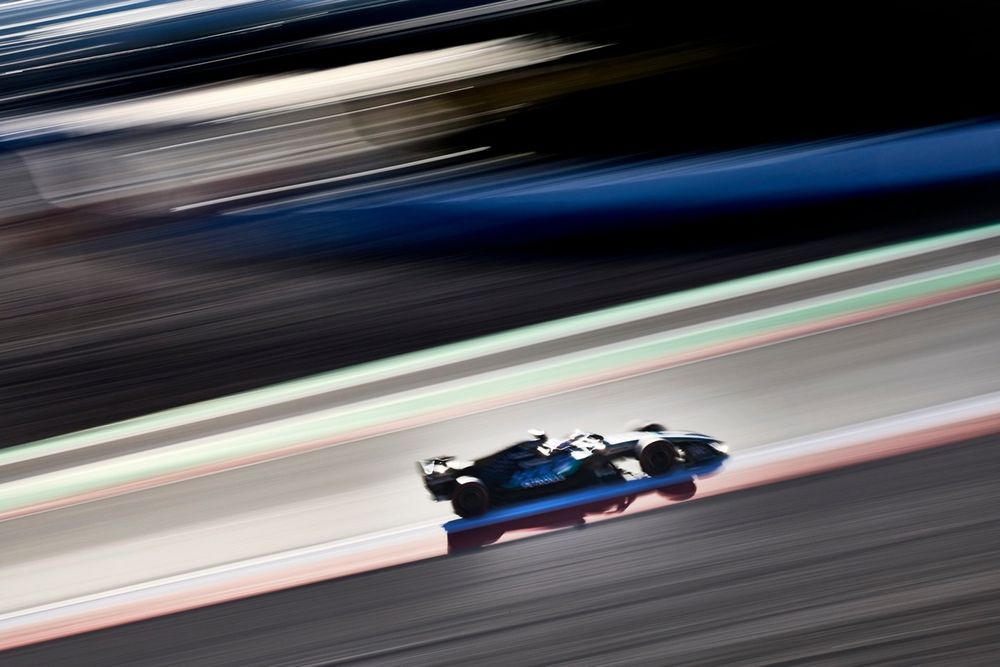
Mercedes’ 2026 power unit has been touted as the strongest on the grid so far
Photo by: Mercedes AMG
What that means is, returning to the Baku example, a driver is likely to be recovering energy through the slower corners around the ‘castle section’ of the course, and in the final pair of ‘proper’ corners at Turn 15 and 16. To ensure the battery is topped up for deployment along the straight, the drivers will likely have to navigate the Old Town section at no more than 75% throttle to ensure the MGU-K does not engage. And, even once they’re out of Turn 16, there’ll be a delay through the sweepers before they can finally hit the floor with the pedal – otherwise, they’ll be out of maximum power before they reach the start-finish line.
This is something you’ll likely see in Bahrain. It might be a little bit less critical at the Sakhir venue, since the corners are slow enough to harvest energy and many of the in-between bits (From Turn 4 to 8, then Turn 11-13) lend themselves to not being taken at full throttle. The run from Turn 13 to 14 won’t be taken at full power either, but the slow speed of the final corners should ensure the drivers have enough energy for the start of the lap without having dipped into the reservoir on the out-lap.
There will be other circuits on the F1 calendar where there’s no shortage of harvesting opportunities (Monaco being one), and others where harvesting is very difficult indeed (Monza). While drivers provisionally take those slower zones of the course at less than full throttle, a braver soul might deploy some energy to pass at a less-conventional place and accept the consequences of spending too much energy a bit later on.
The most successful teams will be the ones who map the circuit out most effectively with their deployment times, while having drivers with the mental acuity to juggle that while racing
We should see some of that in testing; at the very least, drivers may be spotted running at a little under 75% throttle and in a lower gear to avoid either deployment or to help the harvesting process.
The most successful teams will be the ones who map the circuit out most effectively with their deployment times, while having drivers with the mental acuity to juggle that while racing. Pair that with an efficient car – one that’s not too draggy and an active aero package that can dump that air resistance to ensure less power is consumed along the straights – and there’s a good chance that success should follow.
It might take a bit of getting used to the weird quirks of racing in 2026, and some will never be convinced – but it could deliver a very chaotic start to the championship season. Imagine a theatre production staffed entirely by improvisational comedians – you can do all the rehearsals in the world, but you’ll still have no idea what might unfold in the tour’s opening show…
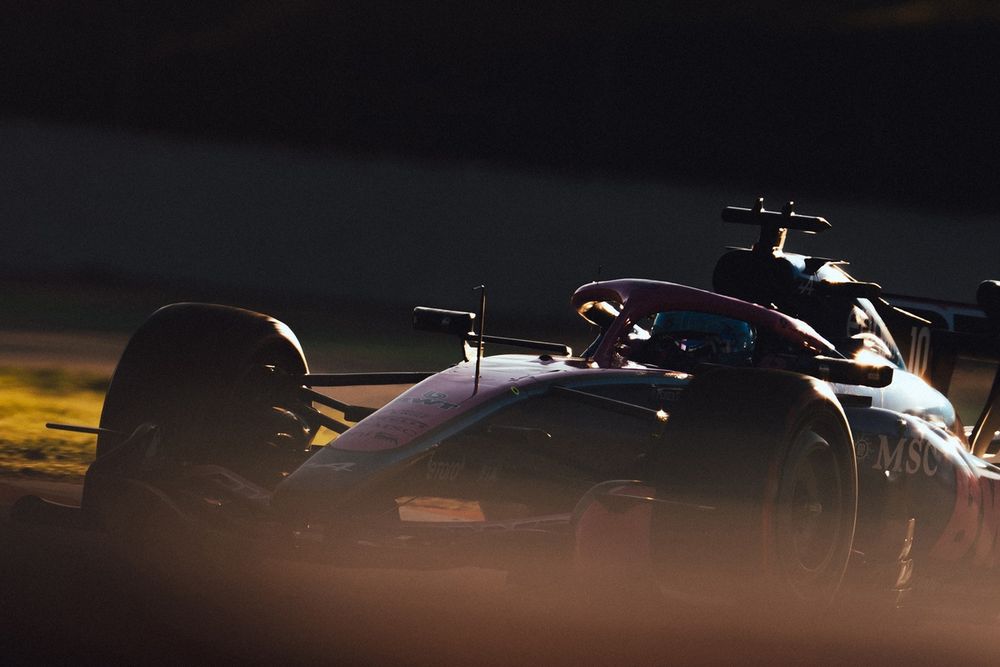
It might take a little time to get used to the style of racing expected in 2026
Photo by: Formula 1
We want to hear from you!
Let us know what you would like to see from us in the future.
– The Autosport.com Team