
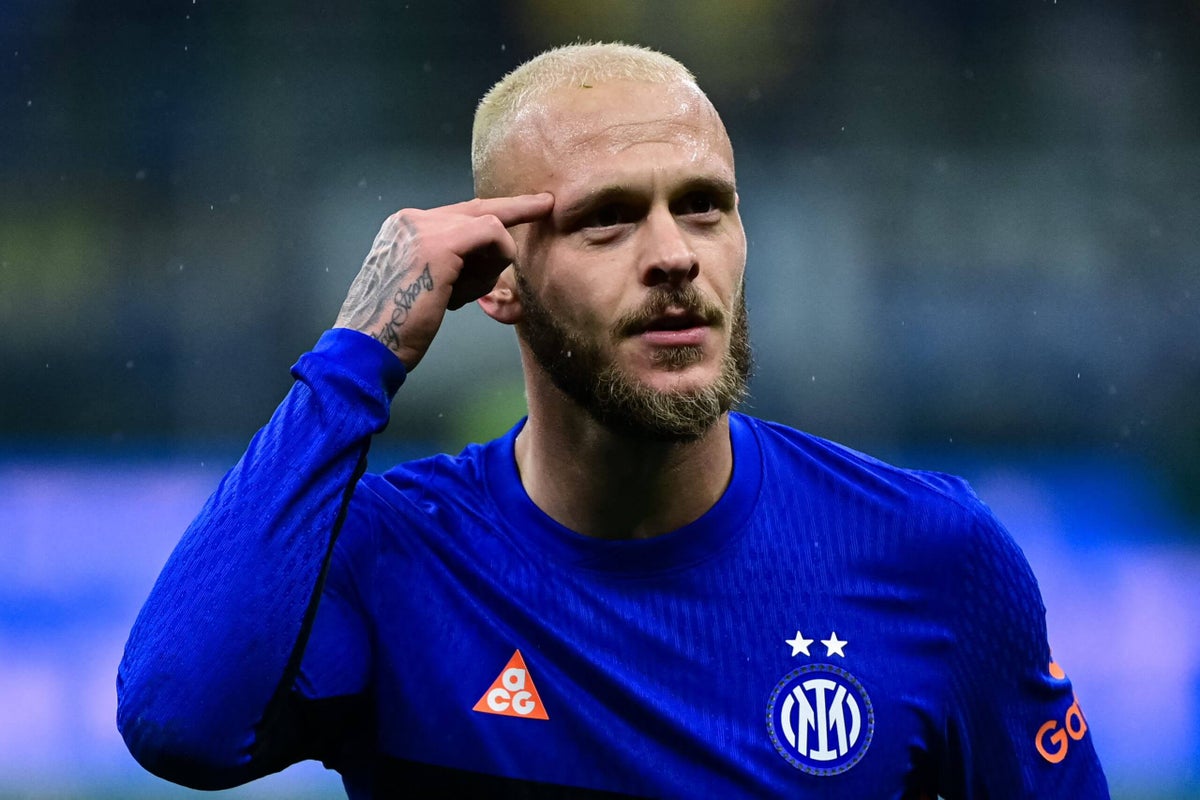
Thirds. Three quarters. Half wingers. Fifths. Is this football or fractions?
The literal translations of roles in Italian football are enough to remind you that the influence of data analysts and number crunchers came way before Michael Lewis’ book Moneyball ended up on the desks of those Americans who have spent the past 15 years buying up clubs in Il bel paese.
The Italy team who won football gold in the 1936 Olympic Games was made up, predominantly, of university students in order to comply with the amateurism of the Olympic movement. They were wannabe economists and lawyers.
One of them, Annibale Frossi, later of Inter, was so shortsighted he had to wear spectacles while playing. Recognising he had an eye for goal despite those vision issues, coach Vittorio Pozzo organised for the lenses of Frossi’s glasses to be shatterproof and the sides to have an elasticated band so they fitted snug to his head, like swimming goggles. Opponents made fun of him. Mario Varglien of Juventus tore them off in one Derby d’Italia and broke the frames with repeated stamps of his boots.
It did not stop this nerd, and others like him, from winning and shaping the game.
Frossi is the intellectual who, in the newspaper columns he liked writing in his spare time in later life when an executive at auto company Alfa Romeo, made the argument that the perfect game should end goalless; a strange position for a former striker to take and one that established a stereotype about Italian football.
Verona’s nil-nil with Pisa on Friday was definitely not perfect, and Lord knows what Frossi would have made of his old team’s 5-0 win at Sassuolo on Sunday. Inter were, by the admission of their coach and players, far from perfect too. Sassuolo were even further from it.
“Only a few months ago, we were in Serie B,” their coach Fabio Grosso remarked to DAZN. “They were Champions League finalists.”
As Inter’s rivals are yet to tire of reminding them, they lost that final, 5-0 to Paris Saint-Germain. Federico Dimarco, in particular, experienced a living nightmare in its first half.
Such is coverage of the modern game these days, everything Inter accomplished in the competition last season — the win against Arsenal in the league phase, the quarter-final defeat of Bayern, beating Barcelona in the semis — was diminished as a fluke, as if reaching the Champions League final for the second time in three years was, once again, a case of remarkable luck when the road to it was as hard as the path to the 2023 edition was supposedly ‘easy’.
Dimarco’s standing suffered, too. He was belittled, as were his team-mates. They were judged on one very bad night when the world was watching, not the year. Not over careers.
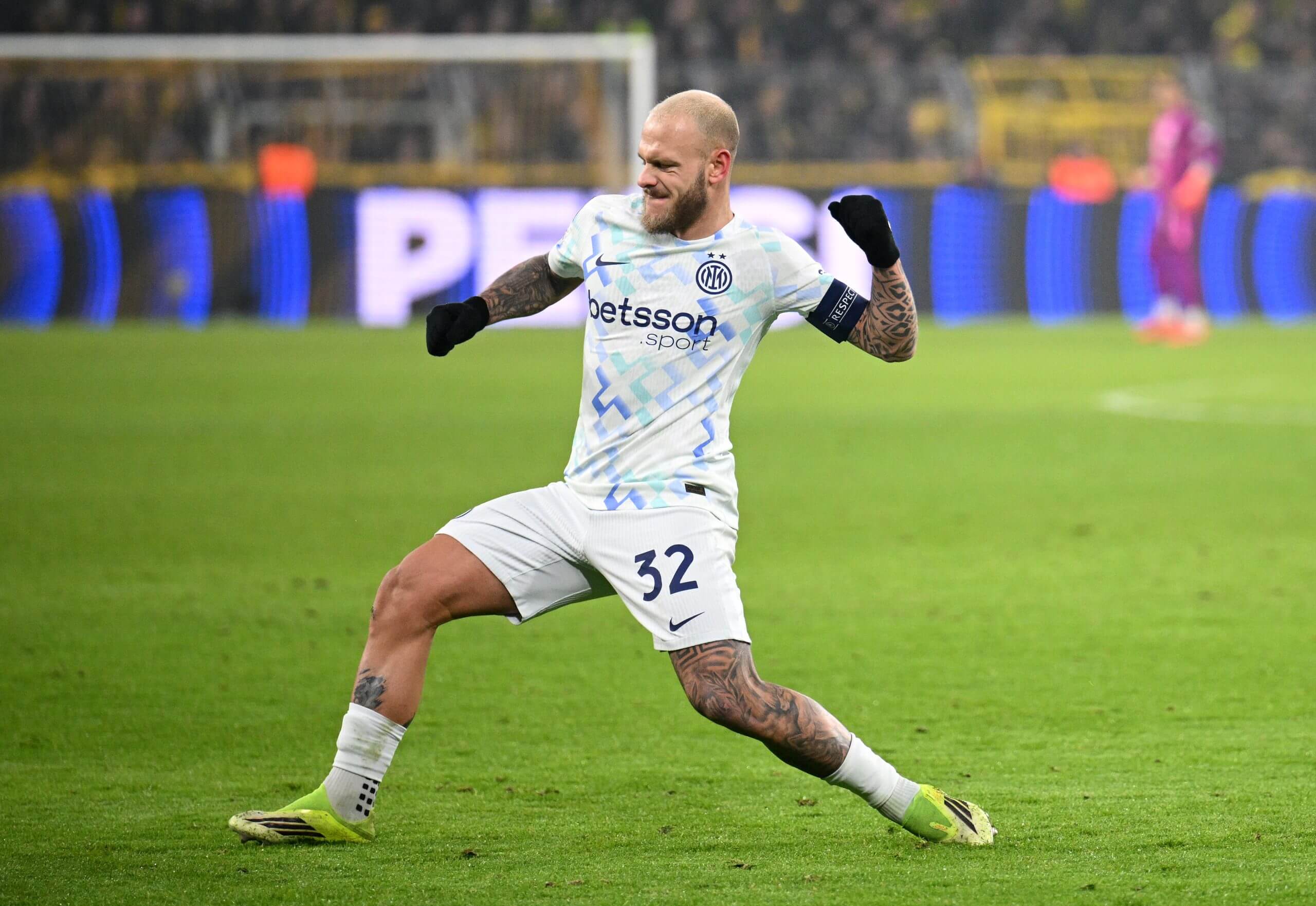
Federico Dimarco celebrates scoring against Dortmund in the Champions League last month (Stuart Franklin/Getty Images)
How Dimarco has come back from that disappointment is one of the stories of the season in Serie A.
If Inter reclaim the title they relinquished to Napoli on the final day of last season, much of the credit will go to him.
“Maybe I’m getting carried away, but do you feel like the best ‘fifth’ in the world right now?” DAZN reporter Giovanni Barsotti asked Dimarco at Sassuolo’s foggy Mapei Stadium. The No 1 fifth in football — outstanding among the players who make a back five a fantastic five, a mid-five, a front-five; the flying wing-backs!
While AI-generated memes on X reimagined Dimarco as Marcelo in a Real Madrid jersey, he humbly replied: “I feel like nobody.”
And yet Dimarco had been involved in five memorable moments on the night; a goal-line block on Ismael Kone at 0-0, a corner that landed on Yann Bisseck’s head for the opener, a free kick that hit the crossbar, a cross for Marcus Thuram to steer home and double that lead, another corner for Manuel Akanji’s first goal in an Inter shirt, making it four. Dimarco, for the hell of it, tried to score direct from a corner. He even tried a shot from the halfway line.
You’ll note the decisiveness from set pieces.
Hakan Calhanoglu’s intermittent presence this season has forced Inter to wean themselves off a years-long dependency on the Turkey midfielder. Piotr Zielinski has covered for him, when needed, as a deep-lying playmaker and their designated penalty taker. Dimarco has assumed responsibility for other dead-ball situations.
Inter have scored 13 goals from corners this season; Juventus, who are second on the list, have almost half that figure. Even Lautaro Martinez’s 14th league goal of the season came from a long throw-in that got flicked on by Thuram. Serie A may not yet be the set-piece-filled Premier League (even if an Italian banker, Gianni Vio, was the original set-piece specialist) but Inter do appear to have learnt from their recent Champions League meeting with Arsenal.
When Dimarco turned to the dugout as if to credit one of coach Cristian Chivu’s assistants Angelo Palombo with a corner routine, Sky Italia’s touchline reporter Matteo Barzaghi claimed to overhear Chivu say: “It’s not a corner, it’s a penalty.” Only in this instance, the spot was out by the flag.
This trend under Chivu still doesn’t tell the whole Dimarco story.
He is up to 11 assists for the season, nearly double the tally of the next best creator in Serie A (Nico Paz of Como) and already close to the record by a ‘defender’ in the division (13 by Massimo Oddo for Lazio 20 years ago) with 14 games remaining. The number of chances he has created (62!) is far and away the most in Serie A (13 more than Kenan Yildiz of Juventus and 22 ahead of Paz, who are both No 10s).
It calls to mind an observation made by Antonio Gagliardi, a former instructor at the Italian Football Federation and assistant to Roberto Mancini (Saudi Arabia), Andrea Pirlo (Juve) and Chivu (Parma), that the modern game is less about positions and roles and more about a player’s function in their team.
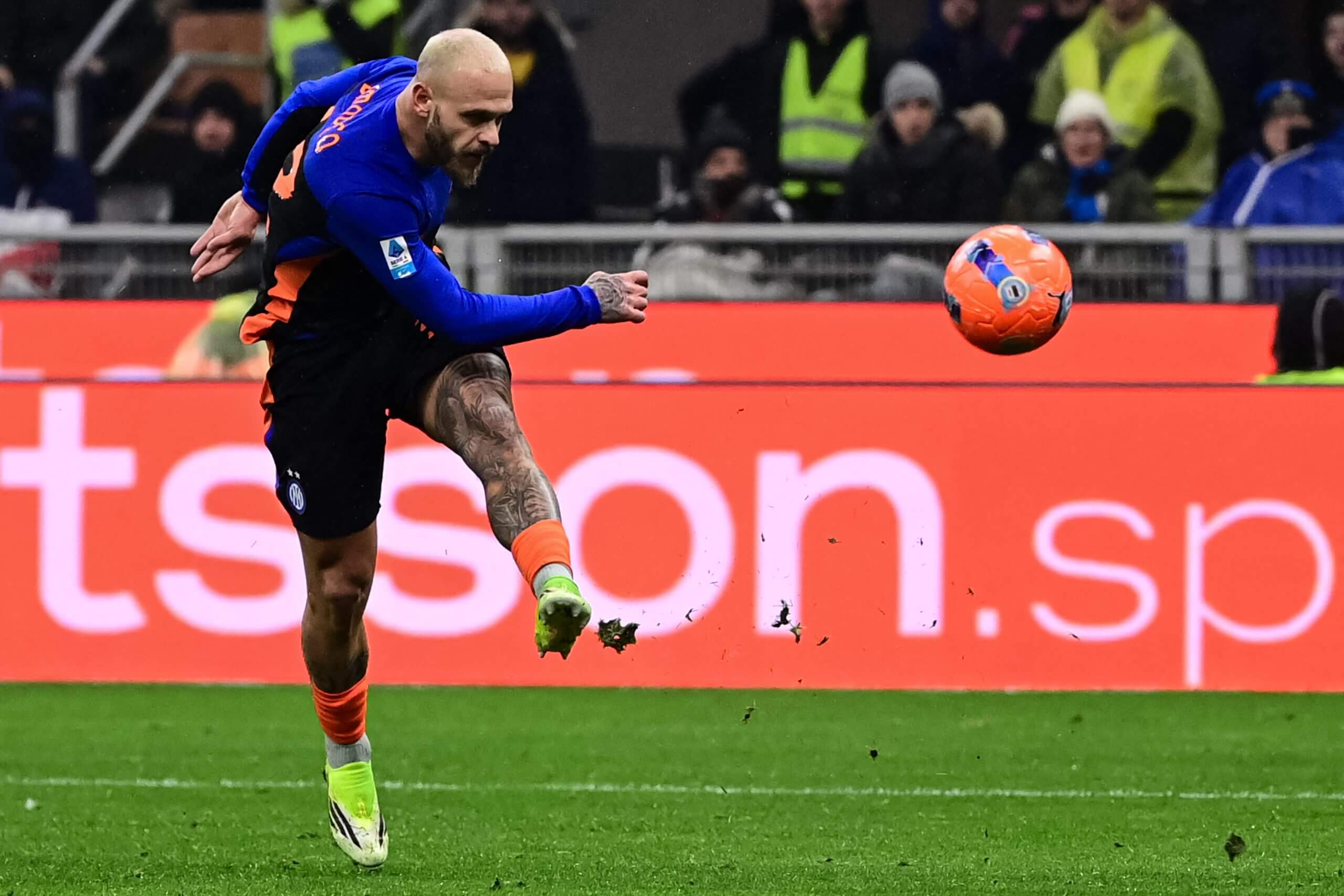
Dimarco is a potent attacking force for Inter (Piero Cruciatti/AFP via Getty Images)
In other words, being a team’s creator isn’t limited to a specific area of the pitch. You don’t have to play through the middle or between the lines of attack and midfield to perform a function long associated with a No 10. Trent Alexander-Arnold showed at Liverpool that you can do it from the zone traditionally linked with the full-back.
Dimarco is proving it can be done as a wing-back, a ‘fifth’, and given the peculiarity of this position to Italian football, where more teams play variations of 3-5-2 than anywhere else on the planet, he probably is, specifically, the best ‘quinto’ in the world right now with his darting, undercutting runs, first-time take-ons and exquisite deliveries.
“When you do well in football, you’re a fenomeno. When you don’t do well, you’re c**p,” Dimarco said with jaded wisdom. “I’m focusing on my team’s objectives for the season.”
Inter are closing in on a third league title in five years. It could be a bid for their fifth in six if results elsewhere had gone differently on the final day of the season in 2022 and 2025.
They are eight points clear, having played a game more than Milan, who were supposed to face Como in the Australian city of Perth this past weekend, only for the event to be cancelled and the match moved back to Italy and rescheduled for next week. Nevertheless, Milan are still very much Down Under in terms of the championship and need Juventus to do them a favour against Inter in Saturday’s Derby d’Italia at San Siro.
Intimidatingly, Inter have won 11 league games out of 12, dropping points only in the 2-2 home draw with title holders Napoli. Dimarco scored the opener that night a month ago as Inter twice got themselves in front only for Scott McTominay to peg them back each time.
McTominay remains Serie A’s reigning MVP at least for another couple of months. Don’t be surprised if Dimarco succeeds him in May.