
Former pro basketball players, including those who played in the NBA, are unsurprisingly making efforts to play NCAA Division I men’s basketball, given the money that can be made through NIL. Now former pros from other leagues—including the NFL—are following suit.
The old saying in law “the exceptions swallow the rule” is key to understanding why former pros are going back to school and why that trend will accelerate in the months ahead.
The legal justification for limiting college sports participants to students who are not former professionals took a hit once the NCAA made eligibility exceptions for former European hockey and basketball athletes and more recently for former G League players. The more exceptions to a rule made, the less necessary and less defensible that exclusion seems.
In other words, the exceptions swallow the rule.
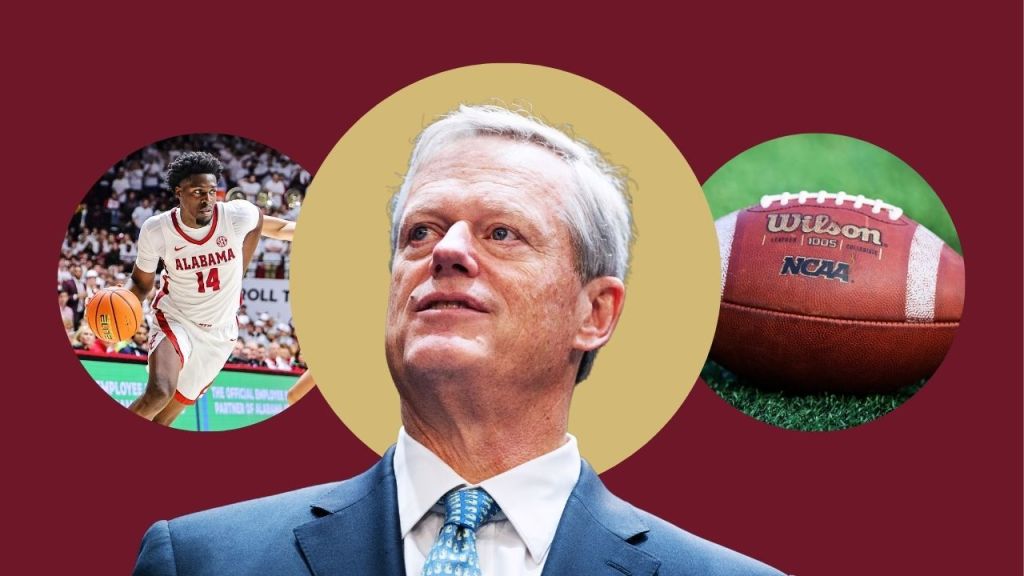
This dynamic is apparent in Charles Bediako’s attempt to play for the University of Alabama basketball team this spring. The player’s efforts had been successful until Monday night, when a judge in Alabama denied Bediako a preliminary injunction to play the remainder of the 2025-26 season.
Bediako played two seasons at Alabama (2021-22 and 2022-23) and then embarked on a pro basketball career. He wasn’t drafted by an NBA team in 2023 and never played in an NBA regular season game, but he did sign two-way contracts allowing him to play in part for an NBA team and in part for that team’s G League affiliate. To be clear, a two-way contract is an NBA contract and can be converted to a standard NBA deal.
Last month Tuscaloosa County Circuit Court Judge James H. Roberts granted Bediako a temporary restraining order that blocked the NCAA from enforcing eligibility rules that forbid former pros from playing the same sport in college. Bediako, a 7-foot center, has played in five games for the Crimson Tide. Roberts has since recused himself from the case, and on Monday, Circuit Court Judge Daniel F. Pruet denied Bediako’s bid to play the remainder of the season. Bediako could appeal the ruling, but for now the former pro can’t continue his collegiate career.
In a statement shared with Sportico, NCAA president Charlie Baker said, “College sports are for students, not for people who already walked away to go pro and now want to hit the ‘undo’ button at the expense of a teenager’s dream.”
Bediako’s case is novel but likely a harbinger of future litigation.
Amari Bailey, who appeared in 10 games for the Charlotte Hornets in 2023-24 after playing one season at USC, is now visiting colleges. He’s signaled he would pursue litigation if denied a chance to play by the NCAA.
The NCAA has permitted former G League players—who, like NBA players, are unionized employees—to return to D-I hoops. Baylor center James Nnaji, who was the 31st pick in the 2023 NBA Draft but didn’t play in the NBA, is one of those players. The NCAA views a player who signed an NBA contract as meaningfully different from one who played in another pro league—even one who was drafted by an NBA team and played in the NBA’s developmental league.
In the months ahead, judges in other jurisdictions, studying similar athlete fact patterns as the one presented by Bediako and Bailey, might reach conflicting conclusions about eligibility.
Conflicting rulings have occurred in cases first brought by Vanderbilt quarterback Diego Pavia and, later, by dozens of other seasoned college athletes who challenge the NCAA eligibility rules. (The NCAA limits athletes to play in one sport to four seasons of intercollegiate competition—including junior college and D-II competition—within a five-year period.)
Judges have disagreed about these athletes’ legal arguments and reached contrasting rulings; some players are given the chance to play and earn NIL and revenue-share money, while others have been denied. The Pavia line of litigation could lead to athletes extending their collegiate careers for years, a relevant point for a Bediako line of cases, given that it could offer some more time in college.
Some judges might agree with the NCAA that players in Bediako’s and Bailey’s situations shouldn’t return to college hoops since they signed NBA contracts. After all, there’s no legal “right” to play college sports, and reasonable rules generally withstand legal scrutiny.
Judges could find the NCAA’s exclusion of players who signed NBA contracts sensible considering that college sports are typically played by degree-seeking students who ordinarily spend four or five years in school and then move on to another phase of life, usually a job or grad school. Former pro players populating college sports could make college sports seem more like the minor leagues, which might undermine the popularity of college sports among fans and impact accompanying business opportunities. Former pros taking spots away from freshmen and other college students could also annoy some judges.
But other judges might disagree with the NCAA. They could find more persuasive how the NCAA has allowed other former pros to continue playing a sport in college. Judges could reason the NCAA interpreting rules to allow pros from some leagues, but not others, is hypocritical and arbitrary. That’s especially the case since judges in the Pavia line of cases have recognized college athletes in power conferences as members of a distinct labor market who sell their athletic services to schools.
To that point, the trajectory of former pros looking to return to college should have been apparent in 2024, when 19-year-old Ontario hockey player Rylan Masterson sued the NCAA and 10 universities over a “boycott” of Canadian Hockey League players. Until the NCAA lifted the rule in late 2024, CHL players were NCAA ineligible, because they are deemed “professional athletes” and thus not amateurs.
Masterson’s complaint depicted the NCAA’s ban of CHL players as hypocritical given that former pro hockey players in Europe were playing for college hockey teams. The complaint emphasized Vancouver Canucks defenseman Tom Willander, the 11th overall pick in the 2023 NHL Draft. Willander played for a pro hockey team in Sweden before joining Boston University in 2023. It also stressed that tennis players can earn up to $10,000 per calendar year in prize money but not lose their NCAA eligibility.
The exclusion of former NBA players was recently complicated by the NCAA allowing former European pro basketball players to play. Brooklyn Nets rookie guard Egor Demin, who was the eighth pick in the 2025 NBA Draft, played for BYU in 2024-25 after having played for Real Madrid—a pro team that features NBA prospects and former NBA players—on a six-year contract. The NCAA construed his Real Madrid compensation as actual and necessary expenses.
The prospect of conflicting court rulings on former NBA players is problematic for the NCAA as a national, membership organization. NCAA rules are supposed to govern all member schools and conferences equally. A landscape where some, but not all, colleges are able to feature former NBA players would give some schools a decisive competitive advantage.
If the problem of non-uniformity sounds familiar, it’s because it describes the NCAA’s decision in June 2021 to permit NIL.
That decision is sometimes erroneously linked to the U.S. Supreme Court’s decision in NCAA v. Alston, which had nothing to do with NIL and concerned education-related payments. The decision instead reflected how California, Florida and other states were propelled by Ed O’Bannon’s successful case over the uncompensated use of college players’ likenesses in video game to adopt NIL statutes. Those statutes, many of which were set to go into effect on July 1, 2021, made it illegal for a college, conference or the NCAA to deny a college athlete’s eligibility on account of them using their right of publicity, which guarantees the right to control one’s identity rights including for endorsements and sponsorships.
To stop NIL, the NCAA would have had to sue more than a dozen states and win. Otherwise, athletes at some schools could sign endorsements and others not. The NCAA instead backed down to ensure uniform rules.
The incentive scheme for former pro players to seek to play will be hard for the NCAA to combat. Playing college sports these days can be lucrative. Players can sign NIL deals plus be paid through revenue sharing. The House settlement allows participating colleges to directly pay athletes a share of up to 22% of the average power conference athletic media, ticket and sponsorship revenue. As explored in Pavia’s litigation, college athletes can earn millions of dollars a year.
There are other benefits, too. Unlike G Leaguers and other minor leaguers, college athletes can see the growth of their personal brands by being on a high-profile team that plays games broadcast by ESPN and covered closely by national and local media. Players in college can also further hone their skills in hopes of attracting the interest of pro teams.
For men’s basketball players, playing in the NBA is obviously the goal. The minimum salary for an NBA player is $1,272,870, and players on two-way contracts are slotted to earn $636,435. Players can also earn six- and seven-figure salaries abroad. But many talented players come up a bit short and find themselves employed in the G League, where the standard salary for the 2025-26 season is $45,000, or playing in other minor leagues. College play can now pay a lot more and prove much more marketable, given that media largely ignores the minor leagues.
This isn’t just about basketball, either. Don’t be surprised if a former NFL player whose career has stagnated seeks to return to college, where he might earn millions of dollars. NFL commissioner Roger Goodell recently said he supports NCAA eligibility rules but cautioned the NFL doesn’t decide those rules. A player not quite good enough for the NFL could ply his trade in the United Football League, where the annual salary for 2026 is $64,000, or the Canadian Football League, where top salaries are in the mid- to high-six figures. As with basketball, playing in college could pay a lot more.
The same principles are in play for other sports, including women’s basketball, baseball, hockey and soccer. Some college athletes in those sports can earn considerable income. Even if NIL and revenue-share opportunities are modest, the chance to play again in college could be attractive for life and educational reasons.
Throughout the 2020s, the NCAA has lobbied Congress for legal protections, but those efforts haven’t yielded results. Perhaps the thought of former pros populating college sports and taking spots away animates Congress to act, but the track record isn’t promising.
The more likely outcome: More pro athletes return to colleges and judges issue conflicting rulings that eventually lead to the NCAA allowing similarly situated players to return.