
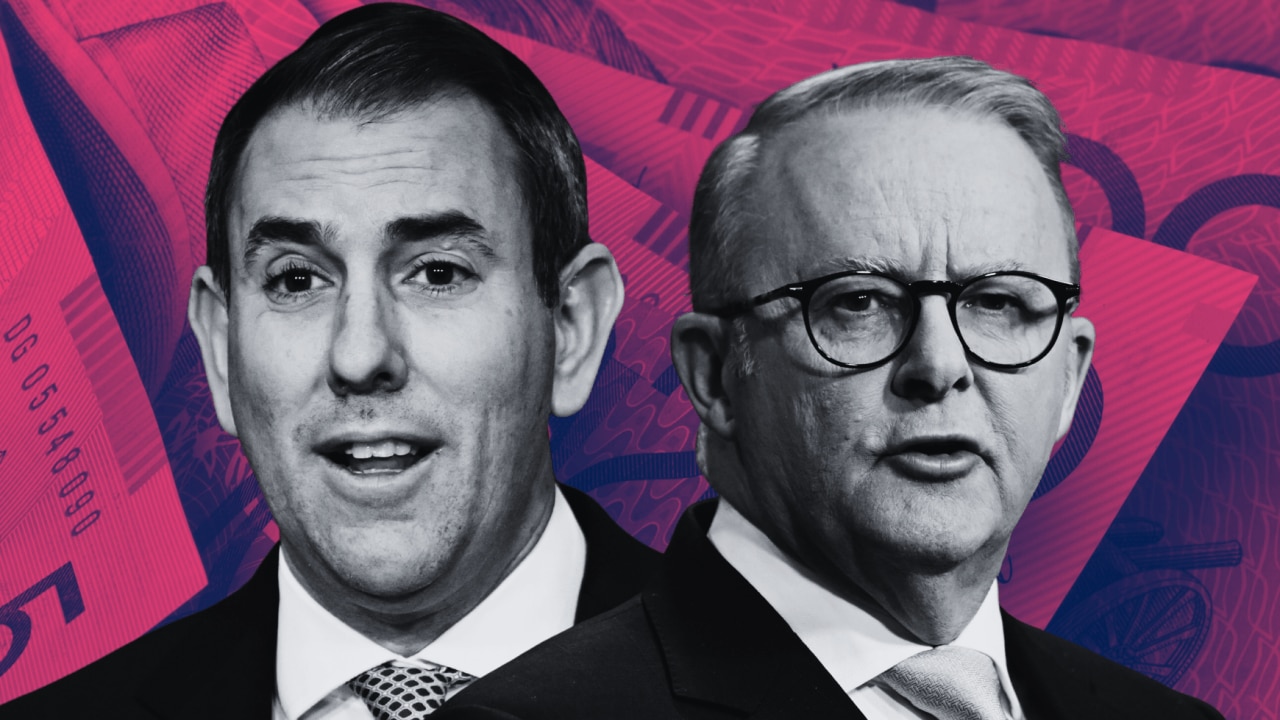
Voters have blamed the Albanese government for rising interest rates amid concerns about fiscal policy fuelling inflation.
The Reserve Bank of Australia (RBA) lifted the interest rate to 3.85 per cent in its recent board meeting, pushing up mortgages by about $1,200 per year on average.
Sky News Pulse, conducted by YouGov between February 3-9, found voters blame both the federal government and Reserve Bank of Australia for the interest rate hike.
30 per cent of people blamed the government most for the interest rate rise, with a further 35 per cent saying responsibility was shared between the government and RBA.
Just seven per cent blamed the RBA alone, and 9 per cent pointed their finger at banks and lenders.
Mortgage holders were more likely to blame the government, with 32 per cent nominating the government and 35 per cent saying both the government and RBA.
Labor voters were more forgiving, with 17 per cent placing blame for the interest rate hike solely on the government, compared to 49 per cent of Coalition voters.
The findings come after the RBA lifted the cash rate by 0.25 percentage points to 3.85 per cent on February 3.
The decision has added around $1200 per year to repayments for the average mortgage holder.
It marked the first rate rise since 2023, after inflation again pushed above the central bank’s 2–3 per cent target band, with headline CPI running at 3.8 per cent.
Treasurer Jim Chalmers has repeatedly rejected claims that government spending contributed to the rate rise, arguing the pressure was coming from private demand.
“The board’s statement … does not mention government spending. It makes it very clear the pressure on inflation is coming from private demand,” he said after the hike.
But that position was challenged by the Reserve Bank Governor Michele Bullock, who said that public spending was part of the inflation problem.
When asked by Liberal MP Simon Kennedy if government spending affected the bank’s decisions, Ms Bullock said: “It does, as does private. It’s part of aggregate demand.”
Ms Bullock later added that government programs such as energy rebates could flow directly into household spending.
“What it often does is it transfers money to people, and it gives them money to spend… It’s all part of aggregate demand,” she said.
Meanwhile, economists have been increasingly vocal in calling for tighter fiscal policy, warning elevated public spending has complicated the RBA’s fight against inflation.
AMP chief economist Shane Oliver said “the best thing” the government could do to help bring inflation down would be to cut spending.
“You’ve got to go back to World War II to see public spending as a share of the economy around these levels,” Mr Oliver recently told Sky News.
Government spending as a percentage of GDP has sat at an average of 22 per cent since the 1960s.
But this has ballooned out to about 28 per cent since the high levels of government spending during the pandemic, which did not abate following lockdowns.
EQ Economics managing director Warren Hogan warned that if governments failed to restrain spending, the RBA could be forced to push rates higher.
“If the governments of Australia do nothing, I think the RBA is going to have to take the cash rate above where it was a year ago — above 4.35 (per cent),” Mr Hogan said.
Sky News Pulse will release complete political polling data, including primary vote and two-party preferred data at 5am on Wednesday. Join SkyNews.com.au for more.