
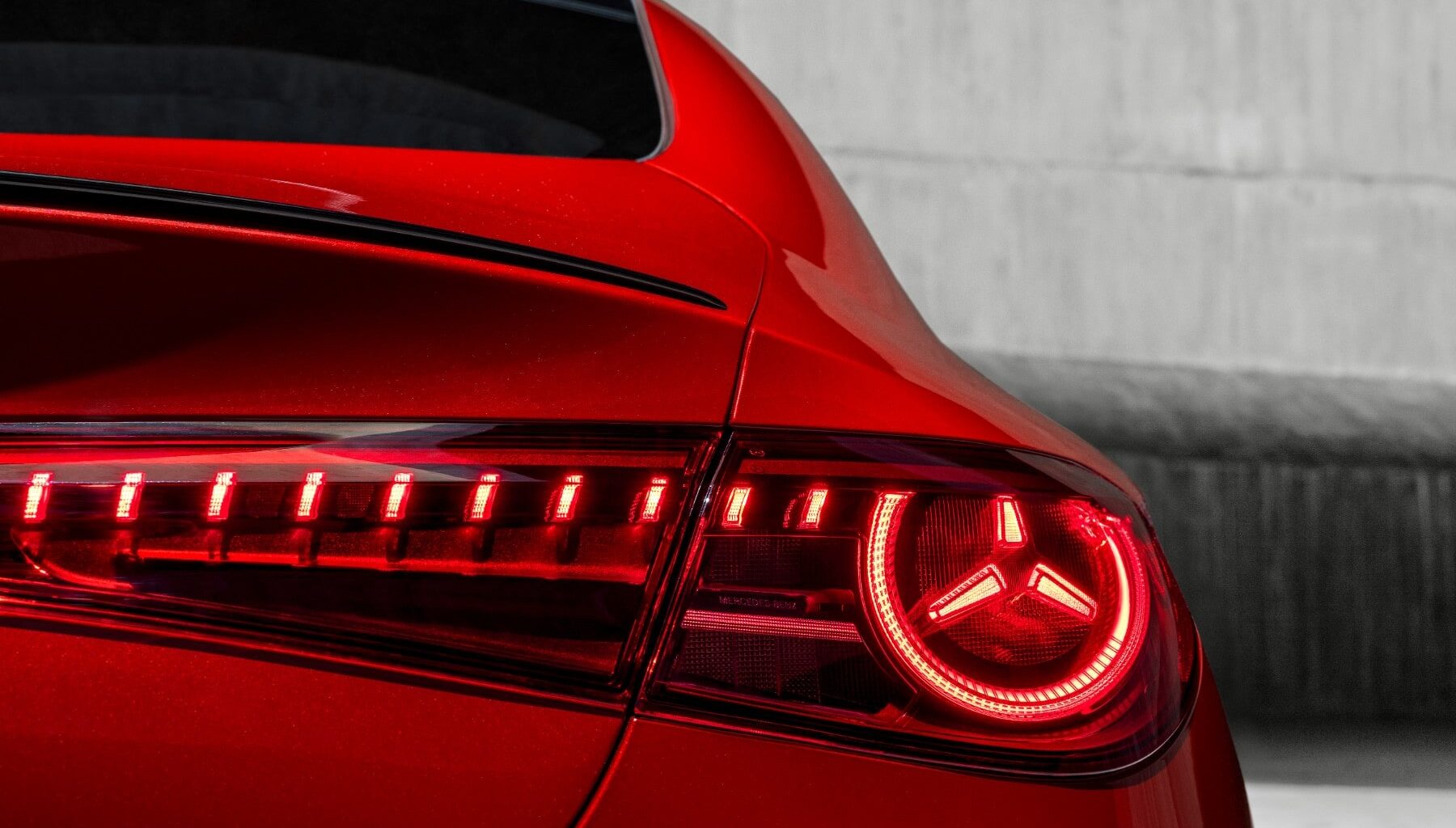
In 2023, Mercedes CEO Ola Källenius announced four models based on the Mercedes Modular Architecture, which were set to form the Stuttgart-based manufacturer’s new compact-class lineup: the CLA as a four-door coupé, a shooting brake derivative of the CLA, and two SUV models to succeed the EQA and EQB. There was no longer a place in the plans for the A-Class or the B-Class. Källenius did not want to abandon the compact segment entirely but preferred to focus on saloons and SUVs, which promise higher margins—and not on a traditional compact model or a van.
However, Mercedes has since reconsidered its plans for the A-Class. The current model, which will continue to be produced until 2027, will now have a successor. “It will be a standalone model on the MMA platform, something that hasn’t existed before,” Development Chief Jörg Burzer told Automobilwoche. Mercedes now plans to offer five MMA model series instead of four.
While the new model will succeed the A-Class, it will not be a traditional compact car. As Automobilwoche reports, it is set to be “a crossover model that combines the advantages of an SUV with those of a compact van.” Burzer declined to comment on the car’s design but provided some insights into the manufacturer’s plans. “Our thinking here is: alongside models with a long wheelbase specifically for Asia and considerations for models even more tailored to the USA, we also want to continue offering a highly attractive entry-level model based on the MMA architecture for Europe,” said the Technical Director.
MMA enables battery-electric vehicles and hybrids
On the sidelines of the facelifted S-Class premiere in Stuttgart at the end of January, Mercedes CEO Ola Källenius had already hinted at the model, stating that after discussions with European dealers and initial design drafts, he had decided to proceed with a new edition.
However, beyond the fact that the model is expected to launch in 2028 and will be based on the MMA, little else has been confirmed. While it is likely that it will also be a battery-electric model—given that the MMA was developed with electric drivetrains in mind—it is a mixed platform. Both the CLA and the GLB are also planned as hybrids. Whether the A-Class successor will utilise both drivetrain types remains unknown.
As a potential production location, Automobilwoche suggests the Hungarian plant in Kecskemét. The current A-Class is still being produced in parallel with the electric CLA at the Rastatt plant, but will be relocated to Hungary by the first quarter of 2026, ahead of its production end in 2027. With the electric GLB, Kecskemét is already prepared for the MMA.
In the interview, Burzer also more or less confirmed the—hardly surprising—end of the EQS. “By the end of the decade,” an all-electric S-Class is set to arrive. “At that point, we will offer both drivetrain types in the S-Class,” said the manager. “We have learned an enormous amount from the electric EQS. How we will implement this exactly will be communicated at a later date. Ultimately, we want the S-Class to have a powertrain portfolio that enables electromobility as well as electrified internal combustion engine technology. I don’t want to reveal exactly what the platform will look like yet—but it will be visually and technically highly attractive.”
Burzer left open whether there will be a dedicated electric and combustion-engine platform or a mixed platform. Mercedes is currently pursuing both approaches in parallel: the MMA models will be offered as battery-electric vehicles (BEVs) and hybrid electric vehicles (HEVs), while, for example, the GLC consists of two model ranges under this name—the familiar combustion-engine hybrid and, since IAA 2025, the GLC with EQ technology, which has been visually aligned more closely with the combustion-engine model but is based on an electric platform.
The fact that the recently updated S-Class appears less innovative to some observers and has merely been brought up to the level of the CLA in certain functions is not a problem for Burzer but rather the new reality. “The world has changed. In the past, you could wait six or seven years for an innovation—until the S-Class arrived,” says the Development Director. “Rolling out everything from one model downwards no longer works today. Innovation cycles are simply too short for that.”
automobilwoche.de (A-Class), automobilwoche.de (full interview with S-Class statements, both in German)