

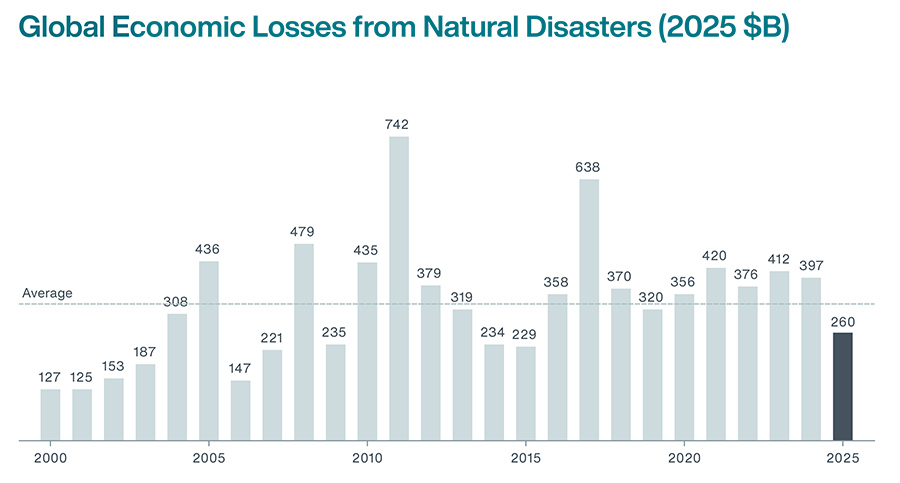
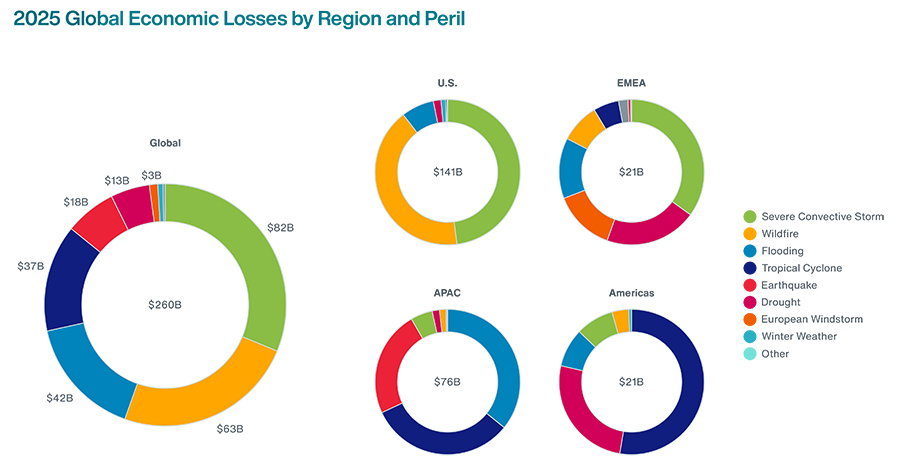
Global economic losses from natural disasters fell to around $260 billion in 2025 – the lowest level in a decade, according to research by Aon. Yet while the total may have dropped, major events around the world still caused widespread destruction and highlighted gaps in preparedness and insurance coverage.
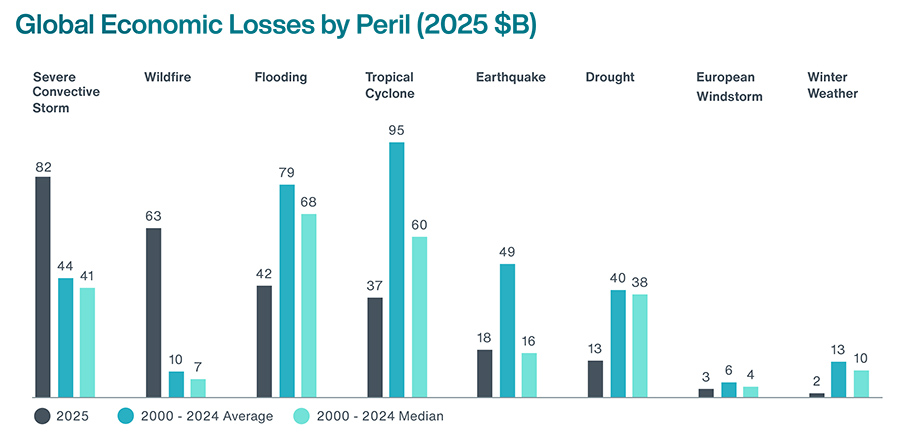
The costliest disaster of the year struck the United States in January, when the Palisades and Eaton wildfires ravaged Los Angeles. The fires consumed more than 14,000 acres, destroying or damaging over 17,000 homes and buildings across Pacific Palisades and the foothills of Altadena and Pasadena. Tens of thousands of residents were forced to evacuate, many temporarily losing their homes.
Aon estimates that the combined damage from these wildfires reached $58 billion. Other costly US events in 2025 included major storms and tornadoes, which together caused $18 billion in damage.
March 2025 saw Myanmar struck by a 7.7-magnitude earthquake in Mandalay. The tremors were felt as far afield as Thailand, southwest China, and Vietnam. Thousands of lives were lost, countless others injured, and more than one million people were displaced. The total economic impact is estimated by Aon at $16 billion, making it the third-costliest disaster of the year.
Source: Aon Catastrophe Insight
In July, northern China experienced the devastating North China Floods, as heavy monsoon and storm rains caused rivers and reservoirs to overflow. Areas around Beijing and Hebei province were particularly hard hit. Over 100,000 residents were evacuated, and tens of thousands of homes were damaged or destroyed. Aon estimates the economic toll at $14 billion.
Other significant disasters included Hurricane Melissa in the Caribbean and cyclones Ditwah and Senyar in Asia.
Source: Aon Catastrophe Insight
Insurance coverage remains limited
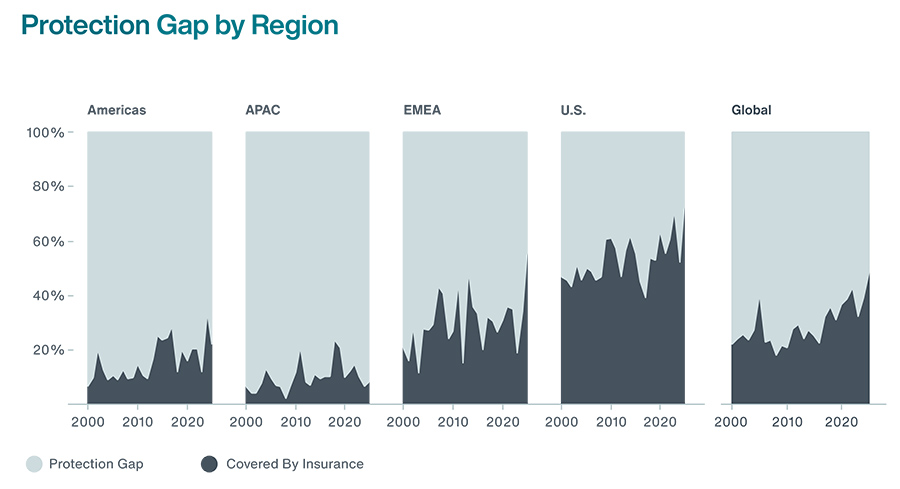
Aon’s analysis highlights a stark difference in how natural disaster losses are absorbed globally. In the United States, a large portion of economic damage is insured, and government relief often supplements recovery. In many Asian countries, however, the majority of losses remain uninsured, leaving citizens, municipalities, and local authorities to bear much of the financial burden.
In 2025, less than half of the $260 billion in global damages was covered by insurance.
Source: Aon Catastrophe Insight
Europe sees below-average losses
Europe experienced a relatively mild year, with total losses remaining below the long-term average. The most expensive events were summer storms and heatwaves that swept across Spain, Portugal, France, Italy, and parts of Central Europe. In Spain and Portugal, temperatures climbed above 45 degrees Celsius. Aon estimates the economic impact of this extreme weather at $7 billion.
Globally, Aon recorded 49 natural disasters causing more than $1 billion in losses – fewer than in 2024 and well below the record 71 such events in 2023.
Climate and natural hazards move up the agenda
Despite the recent decline in losses, governments and businesses are increasingly prioritizing climate and natural hazard risks. In the private sector, these risks now rank among the top ten future business threats – significantly higher than in previous years.
Source: Aon Catastrophe Insight
“Organizations can no longer treat climate and weather risks as a side issue,” says Sonja Janicijevic, Risk Consultant at Aon. “Investing in insight, preparation, and collaboration helps companies not only limit damage but also better protect employees and fulfill their societal responsibilities in a changing climate.”
Technology and smart data are seen as crucial tools for managing these risks. By leveraging analytics, organizations can better understand vulnerabilities, implement targeted measures, and insure against potential losses.