
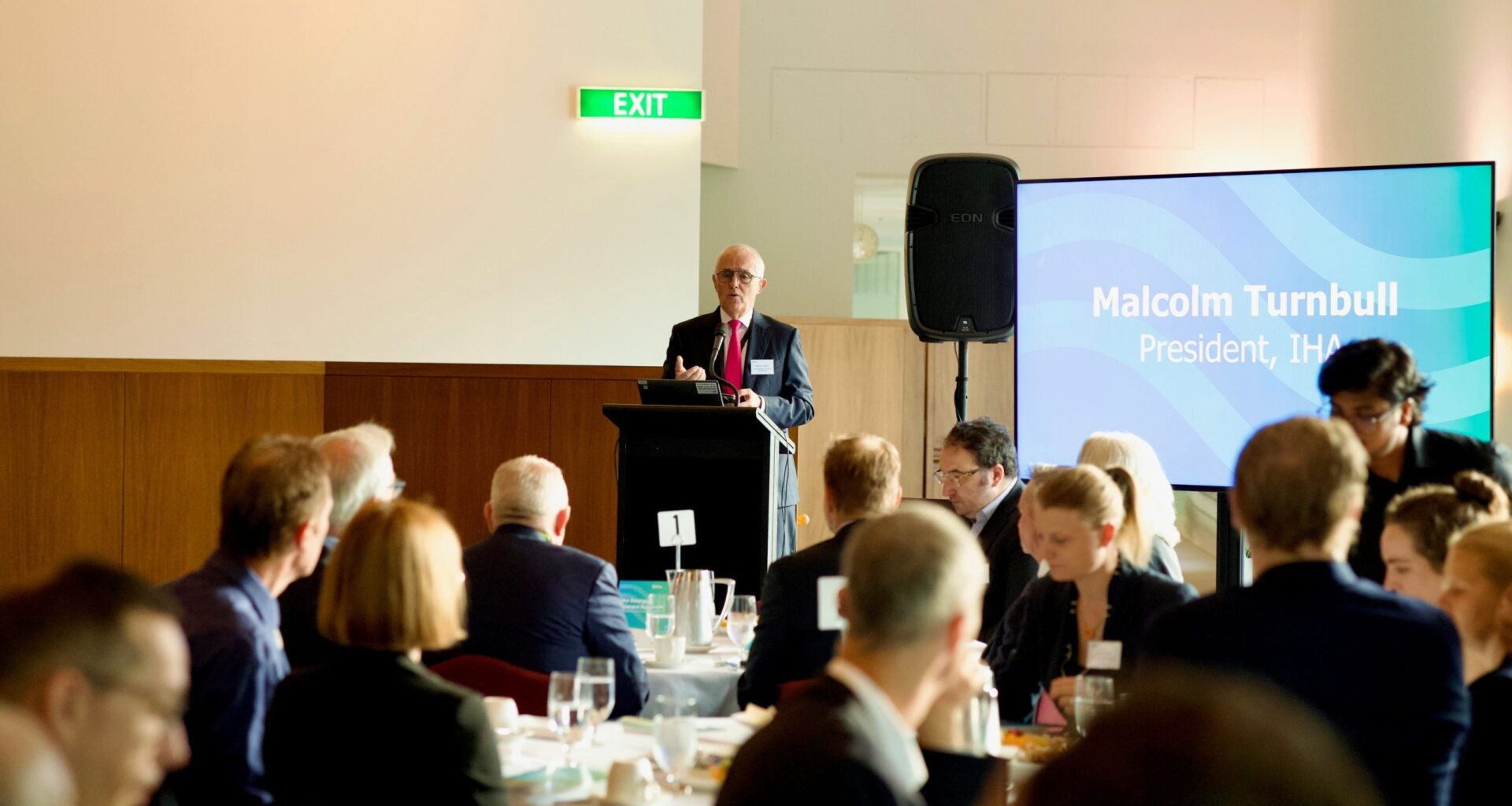

Image courtesy of the International Hydropower Association
Australia’s clean energy transition could fall short without rapid development of long-duration energy storage, according to a new industry roadmap released by the International Hydropower Association (IHA) and its Australian members.
The plan outlines steps to accelerate pumped storage deployment as coal and gas generation retires and renewable output increases across the National Electricity Market (NEM). It was launched at a bipartisan industry and policy event in Canberra attended by IHA President and former prime minister Malcolm Turnbull and Energy Minister Chris Bowen.
Turnbull said pumped storage would be critical to maintaining reliability and affordability during the transition.
“Let me be clear: if we want a successful clean energy transition and affordable electricity for Australians, we’re going to need more pumped storage. It’s not optional – it’s essential. Pumped storage is the only proven technology that can store energy at the massive scale our grid requires,” he said. “We have strong projects ready to go, but they need the right policy settings and market signals to get built. This meeting is about providing government with a clear, actionable roadmap. The technology works. The economics work. What we need now is decisive action.”
The roadmap notes that variable renewable generation – particularly solar – is now the lowest-cost source of new electricity in Australia. However, it argues that long-duration storage is needed to balance supply when renewable output is low and to absorb surplus generation.
Pumped storage is presented as a complement to battery systems, providing multi-day discharge capability and system stability. According to the Australian Energy Market Operator’s draft 2026 Integrated System Plan, Australia may require 27 GW of storage by 2030 and 55 GW/618 GWh by 2050 to maintain reliability.
The document calls for explicit planning for storage durations of eight hours or more, reforms to market signals that value firming capacity, improved financing frameworks, streamlined approvals, workforce development, and coordinated transmission investment.
The policy paper, An Energy Secure Australia, sets out six priority areas for governments:
Embed long-duration storage in national planning with capacity targets and timelines
Reinforce market signals through tailored market design and federal mechanisms
Promote risk-sharing investment models to attract private capital
Streamline approvals using recognised sustainability frameworks
Fund early-stage development to reduce project risk
Prioritise strategic transmission infrastructure
The IHA said the current pipeline of pumped storage projects could generate around 20,000 construction jobs and 1,300 operational roles, alongside supply-chain activity.
The roadmap release coincides with a milestone for Hydro Tasmania’s proposed redevelopment of the Tarraleah hydropower scheme. The first stage of construction tendering has begun, seeking proposals for construction and generation equipment supply for a planned 190 MW power station. The redevelopment aims to produce 30% more electricity using the same water resources.
Australia has joined more than 170 national and subnational governments and organisations in signing the Grid and Energy Storage Pledge, committing to expand energy storage and grid infrastructure by 2030. The roadmap argues that pumped storage will be central to meeting these commitments alongside battery deployment.
Industry representatives at the Canberra event said market forces alone are unlikely to deliver the required scale of pumped storage, and that supportive policy frameworks will be needed to translate recommendations into investment and construction.
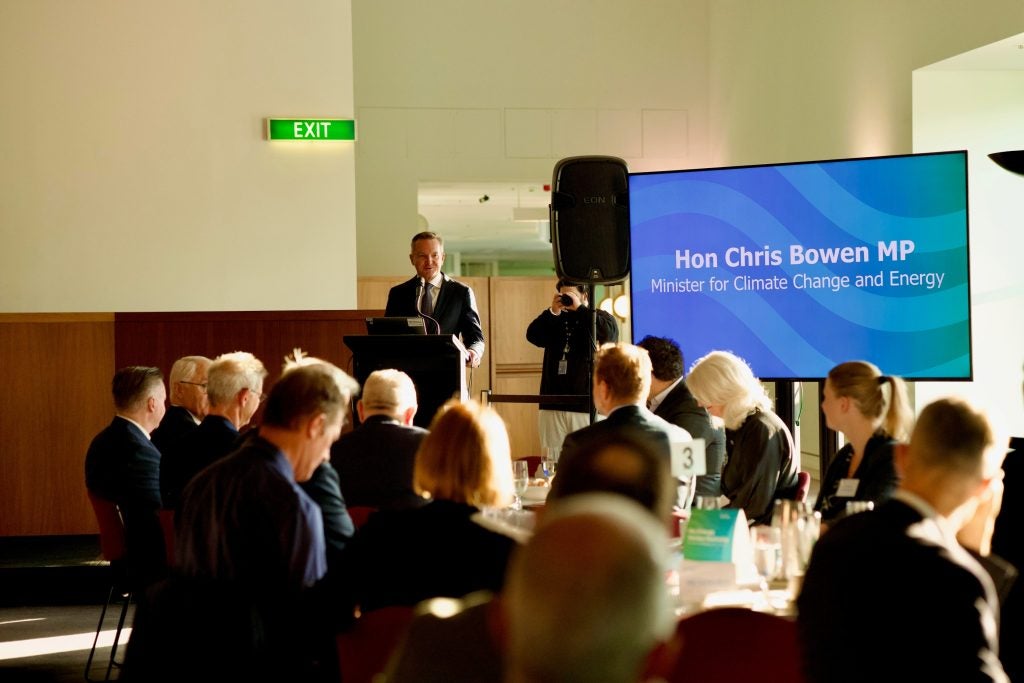 Image courtesy of the International Hydropower Association

Sign up for our weekly news round-up!