
But the real story is the part that remains untouched. More than US$8.6 trillion in African mineral deposits still lie undeveloped. This is roughly two and a half times the continent’s entire annual GDP.
The gap is not caused by a lack of minerals. It is caused by a lack of conversion. Africa has the geology, but not yet the systems that turn minerals into infrastructure, industrial capacity, and manufacturing industries.
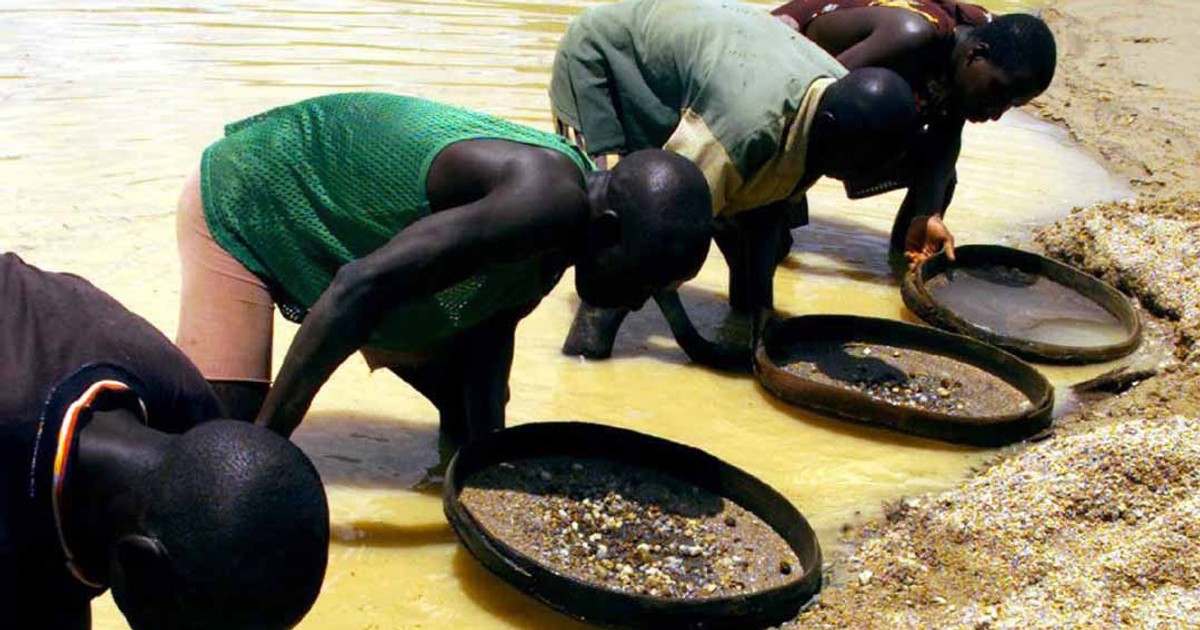
For decades, African economies have exported raw minerals and then imported the finished products made from those same materials.
AFC points out that most minerals are exported on Free on Board terms, meaning African producers pay to move raw ore from the mine to the port. Finished goods return on Cost, Insurance and Freight terms, meaning countries pay again to bring processed materials back in.
AFC summarises this clearly: “Africa effectively pays twice.” This system ensures that most of the value generated from African minerals is captured outside the continent.
The numbers make this clear. Iron ore worth US$2.8 trillion at the mine gate becomes US$25.4 trillion once processed into steel. Bauxite worth US$874 billion becomes US$5.2 trillion when refined into alumina, and up to US$15.4 trillion when smelted into aluminium.
Africa currently earns only a small share of that expanded value.

Processing minerals requires scale. A steel plant, a ferro-alloy smelter or an aluminium refinery can only survive if there is reliable, predictable, long-term demand.
Africa has this demand, but it is scattered across borders. One country may have idle processing capacity, while neighbouring countries import the very same products at high cost.
AFC notes that “demand exists, but it is dispersed.” As a result, African beneficiation is often too small, too expensive or too vulnerable to external shocks.
Because African processing capacity is limited, many mineral producers depend on foreign industrial cycles to stay profitable. This is especially clear in manganese, where Africa is a leading supplier but relies heavily on China’s steel industry.
In 2024, a major manganese operation in Gabon had to suspend production temporarily due to weaker Chinese steel output, even though Africa itself continues to need steel for roads, housing, ports and energy projects. Similar pressures affect cobalt, nickel and other minerals tied to global demand swings rather than African priorities.
![Raw minerals continue to leave Africa, while the continent imports finished products made from those same resources. [Cynthia R Matonhodze/Bloomberg via Getty Images]](data:image/svg+xml;charset=utf8,%3Csvg%20xmlns%3D'http%3A%2F%2Fwww.w3.org%2F2000%2Fsvg'%20width%3D'790'%20height%3D'445'%20data-ring-placeholder%3D'1'%3E%3C%2Fsvg%3E "Raw minerals continue to leave Africa, while the continent imports finished products made from those same resources. [Cynthia R Matonhodze/Bloomberg via Getty Images]")
The AFC argues that Africa’s biggest economic opportunity lies in the minerals it has not yet developed. Unlocking this opportunity depends on several deep structural shifts.
Africa needs far stronger geological data. The continent consistently delivers high exploration success rates but still receives far less exploration funding than Australia or Canada.
AFC calls geoscience data “strategic infrastructure,” as important as roads or power lines for attracting investment.
Infrastructure must do more than support mining. Reliable power, efficient rail, modern ports and well-planned industrial zones determine whether processing is competitive. Without these, beneficiation plans remain stuck at feasibility stage.
Regional value chains are essential. Individually, national markets are too small to support large processing plants. When aggregated across regions, they become economically viable.
Africa must also position itself carefully within global supply chains. As major economies attempt to reduce reliance on single suppliers, Africa’s broad range of minerals gives it an advantage, but only if it chooses specific points where it can genuinely compete.
There is also a need to refocus on minerals central to Africa’s own development. These include iron ore, ferro-alloys, phosphates, potash, copper and aluminium, not just the minerals prioritised by Western “critical minerals” lists.
The opportunity is continental in scale
The AFC report reframes African minerals as inputs for Africa’s own industrial future rather than simply as export commodities.
The US$29.5 trillion figure is impressive, but the true transformative potential lies in the US$8.6 trillion of undeveloped deposits that could support manufacturing, infrastructure growth, food security and energy systems.
The central question is no longer whether Africa has enough mineral wealth. It is whether Africa will build the infrastructure, regional markets and industrial systems needed to convert that wealth into lasting prosperity.