
When Matt Graham wobbled just before the final jump on the moguls course in Livigno on Tuesday, there was a sharp intake of breath.
Everyone at the base of the mountain knows the cost of a mistake in the vast majority of snow sport events.
Bones. Ligaments. Tendons: All are at risk of breaking, with dreams and hearts following soon after.
Get the latest:
Winter Olympics day four: Aussie moguls stars begin campaigns
Stay across the highs and lows of the Games with the ABC Sport Daily podcast and ABC Sport.
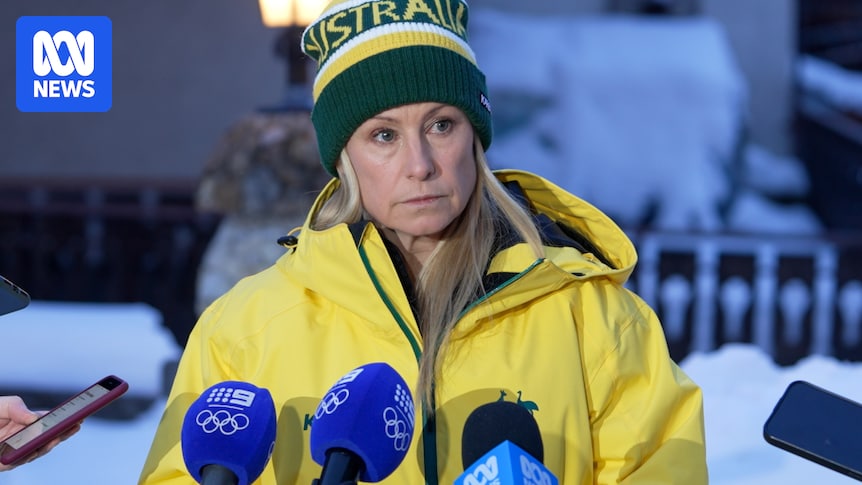
“Unfortunately, with winter sport, injuries happen along the way,” Australian chef de mission Alisa Camplin-Warner said.
“With 53 athletes doing relatively high risk sports, it’s not something that’s unusual, I’m afraid to say.”
Graham got through, throwing himself over the jump with a assurity that years of often painful experiences gives him — his badly broken collarbone and shoulder is what cost him so dear at the 2022 Games.
A nearby journalist turned to me in the mix zone and said “at least he got down” the word [safely] unsaid but clearly understood.
As we were talking, a helicopter took off and exited the valley.
It turned out it was carrying Australian snowboard cross rider Cam Bolton, being airlifted to hospital in Milan after suffering a neck injury in training the day before.
Australia’s 2026 Winter Olympics are turning into an injury nightmare, with two athletes withdrawn from competition following injury in one fell swoop.
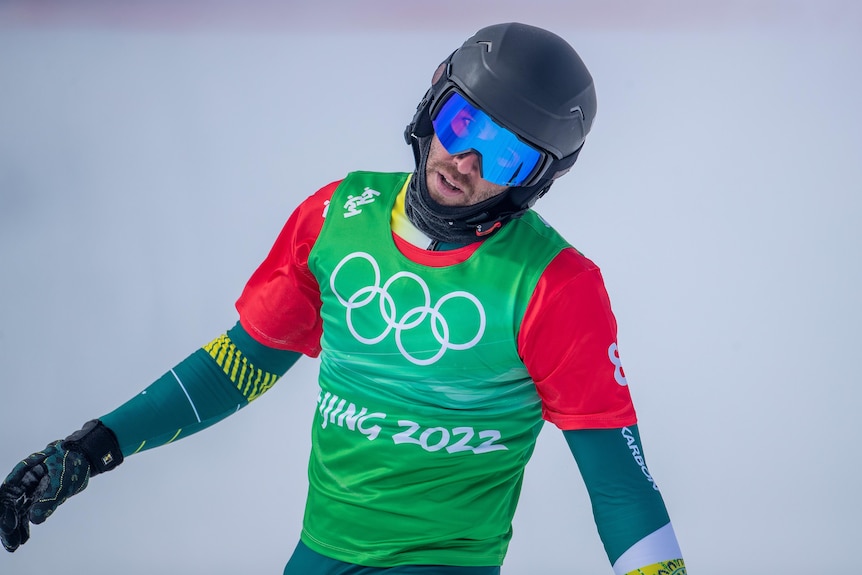
Bolton has been ruled out of the Winter Olympics after sustaining two stable neck fractures. (Getty Images: Tim Clayton/Corbis)
Bolton sustained what was described as a serious injury during a fall on course at training on Monday 9 February.
It turned out that two stable neck fractures were identified by scans on Tuesday (local time) after he complained of continuing pain.
“Cam wanted to make sure his teammates understood what was happening and that he was he was fine, doing well and being looked after well,” Camplin-Warner said.
“So, yeah, the wellbeing requirement, the fact that we’ve got two psychologists and two wellbeing managers, plus myself and a deputy chef on the team, is there to cater and prepare for that.”
That news came as it was revealed that snowboard half pipe rider Misaki Vaughan was also ruled out of the Games with a concussion.
Read more about the Winter Olympics:
She fell hard during training on Monday 9 February and failed a Head Injury Assessment on Tuesday.
She can’t compete for seven days. Her dream is over.
“Every season you do have a few injuries,” a clearly affected Camplin-Warner told media.
“We’ve had a few in short succession for the team.
“But everybody understands that sometimes these things happen and that the level of care and support is really strong.”
That’s the thing with winter sports.
They have the habit and tendency to break you.
This news has come off the back of Laura Peel’s “significant” knee injury.
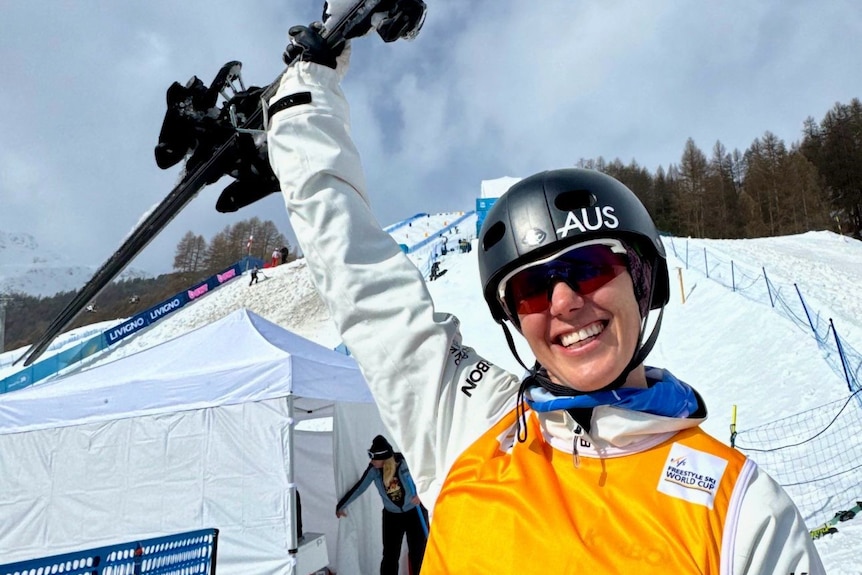
Laura Peel is one of the best aerial skiiers int he world. (Supplied: OWIA/Chris Hocking)
There have been no more details about the severity of the four-time Olympian’s condition but the absence of any details is arguably worse than being given a clear prognosis.
“So Laura’s doing a progressive and stage criteria based process to give her every opportunity to return to the field of play,” Camplin-Warner said.
“Each day she’s making progress against that.
“We’re trying to give her the time and space.
“The aerial team haven’t even arrived yet, so, we don’t need to rush her.
“And that’s really important that her and the medical team are following a good sound framework.
“And importantly for us, I think, is to back off and let it go through it, So she’s got the same level of support around her.”
The general feeling around the camp in Livigno is that she will be hard pushed to make it to the top of the aerials ramp in any sort of condition to compete, let alone win a medal.
Then there’s Daisy Thomas.
Aussie skier suffers heavy fall in training
Thomas was said to have landed awkwardly on her previously injured right knee on the last jump of the run.
The MRI showed “minor additional damage” although the Australian Olympic Committee said that symptoms had settled “quickly” over a 48 hour period.
However, she is still going to be monitored ahead of the big air competition, set to get underway on Februray 14.
As is 2018 silver medallist Jarryd Hughes.
The 30-year-old fractured his navicular bone in his foot 10 months ago and can still barely walk, indeed the fact that he is strapped to a snowboard is the only way he can move properly at all.
Top medal hopes Jakara Anthony and Val Guseli both had injuries in the years leading to these Games that risked their participation.
The sad and unfortunate fact is that winter sports are dangerous.
The athletes involved are taking a risk every time they strap on their skis or skates or boards, just look at Lindsey Vonn.
Camplin-Warner knows this.
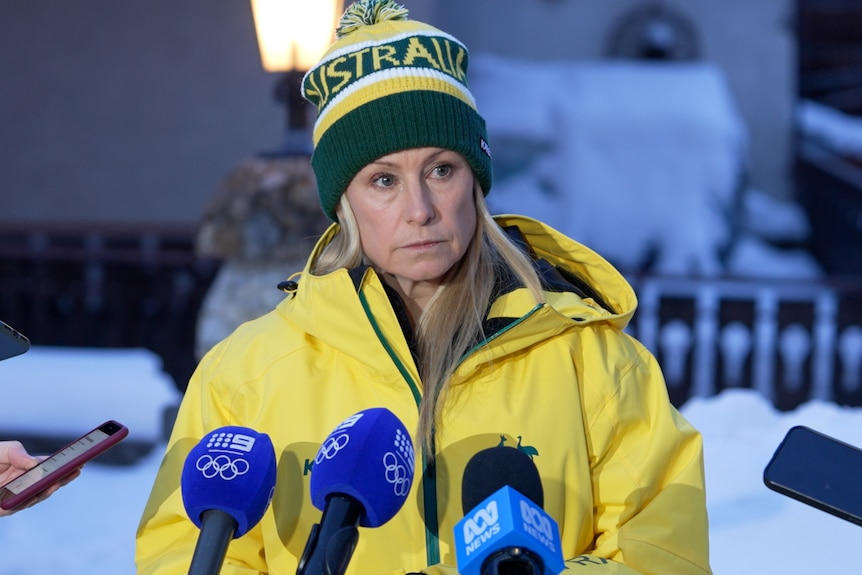
Alisa Camplin Warner said her heart breaks for the injured athletes. (ABC Sport: Hamish Harty)
She tore her ACL just a few months before the 2006 Turin Games where she won a bronze medal.
When she won her gold medal in Salt Lake City, doctors were stunned to discover that she had broken both her ankles in the weeks leading up to the event.
Nobody knows the gruelling, unseen toil that these athletes have gone through to get to these Games better than Camplin-Warner.
Nobody takes their burden on her shoulders more.
It’s that empathetic nature that makes her such a great chef de mission.
“My heart breaks on their behalf,” Camplin-Warner said.
“I know how much work goes into an Olympic dream.
“It’s a huge emotional achievement when you’ve earned your spot and you want to take the field of play.
“But that’s why well-being and welfare is such an important part of supporting athletes in this day and age.
“I think in the case of the athletes we had [ruled out] today you’ve got conclusive medical protocols that have led to this decision that the athletes fully understand.”