
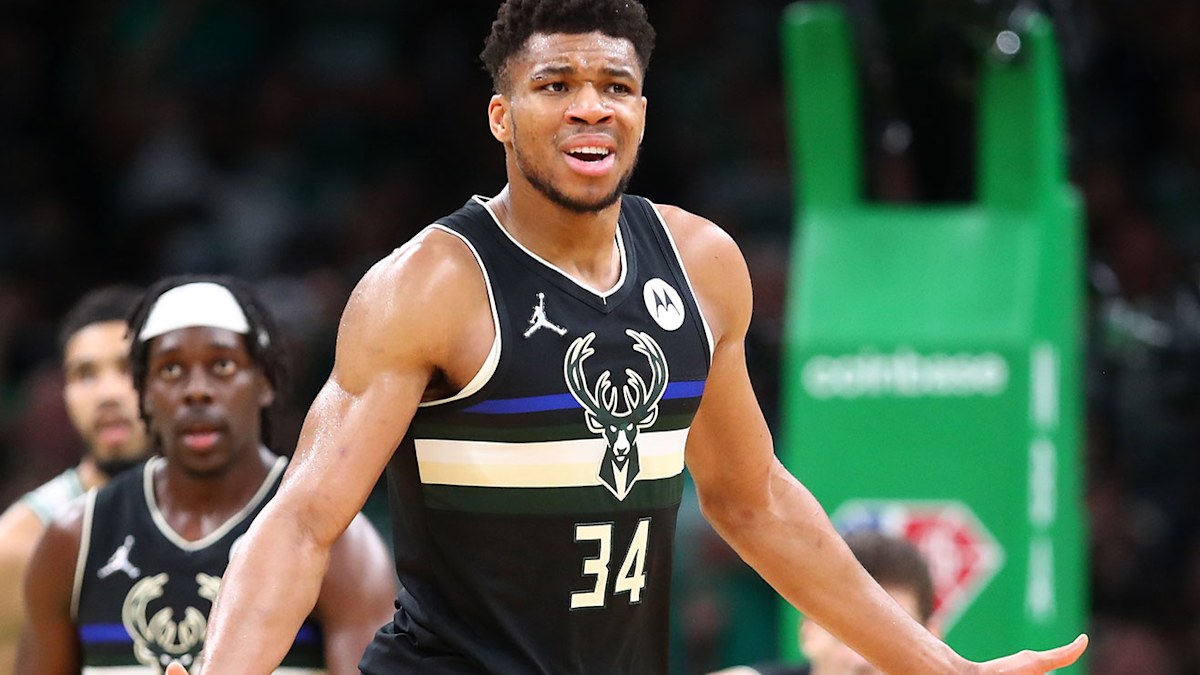
Milwaukee Bucks superstar Giannis Antetokounmpo made a peculiar announcement last week.
A day after the Bucks stated they would not trade the former MVP before the trade deadline, the Greek star took to social media to proudly announce that he had become a shareholder in Kalshi, a major prediction market with a wide array of sports trading opportunities.
“The internet is full of opinions. I decided it was time to make some of my own,” Antetokounmpo posted on social media. “Today, I’m joining Kalshi as a shareholder.”
READ MORE: How Broncos handled ‘elephant in the room’ at season launch
READ MORE: Aussie champ’s classic interview after Super Bowl ‘perfection’
READ MORE: Rugby stars in awe of ‘superhuman’ 13-year-old
Antetokounmpo was the subject of widespread rumours ahead of the NBA trade deadline.
At the beginning of the season it was said he would sit tight with the Bucks, but most in the NBA knew the trade was a foregone conclusion.
When it would happen was the pivotal point in most people’s minds. Before the deadline or in the coming off-season.
Giannis Antetokounmpo of the Milwaukee Bucks Getty
The Bucks decided to keep the two-time MVP for now, all but ending his chances of joining another team before the end of the season.
In the days leading up to the deadline, Kalshi had several posts on X highlighting its event contracts on Antetokounmpo’s trade market and the fluctuating odds connected to the teams believed to be in the mix for his services.
The market drew more than $US23.3 million ($32.8m). It only fell short of the NBA champion market by a few hundred thousand, with $23.6 million traded.
Some commentators raised concerns about the Greek star’s ownership of a stake in a sports prediction market company, while being an active player in the NBA.
However, the current collective bargaining agreement allows it.
The current deal between owners and players, struck in 2023, states players can hold minor stakes of less than one per cent in sports betting or fantasy companies, even if those organisations offer NBA wagering.
It’s understood this rule likely includes prediction markets.
Prediction markets provide an opportunity to trade — or wager — on the result of future events. They rose to prominence in politics, but the array of typically yes-or-no questions includes everything from the weather to the Oscar for best picture.
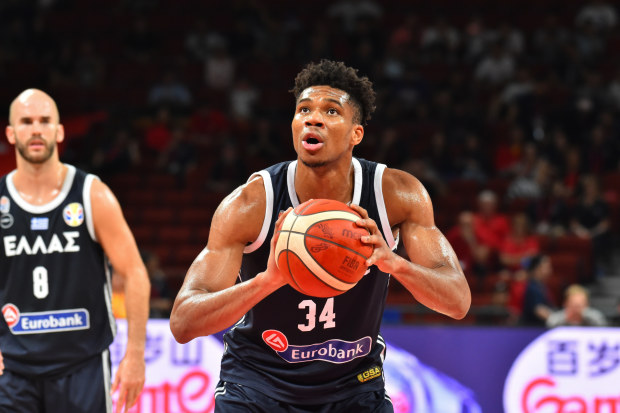
Giannis Antetokounmpo of Team Greece. NBAE via Getty Images
The markets are comprised of event contracts, with the prices connected to what traders are willing to pay, which theoretically indicates the perceived probability of an event occurring.
The buy-in for each contract ranges from $0 to $1 each, reflecting a zero per cent to 100 per cent chance of what traders think could happen.
It’s not known when Giannis tipped his money into Kalshi but the company raised capital several times in 2025.
Reports in the US state it started with a $US185 million round in June, followed by $US300 million in October and $US1 billion in December.
Antetokounmpo isn’t the only player tied to Kalshi, with Kevin Durant reportedly participating in a funding round.

Giannis Antetokounmpo. Getty
Reporters in the US speculated that Giannis may have fuelled trade rumors to draw attention to the announcement of his new partnership.
Ahead of the deadline he dominated the headlines, with ESPN’s Shams Charania reporting the two-time MVP was listening to offers and “ready for a new home.”
Kalshi explicitly bans users from betting with insider information, but it appears to be a challenge for the industry.
When the US captured Venezuelan President Nicolás Maduro, an anonymous trader on Polymarket — another prediction market — made more than $US400,000 after betting that Maduro would soon be out of office, raising suspicions of potential insider trading because of the timing of the wagers and the trader’s narrow activity.
More recently, a new account made $US169,993 on Super Bowl LX half time show bets, in what some deemed as suspicious activity.
The rapid growth of such companies has made them difficult to ignore in the commercial space.
Kalshi’s valuation skyrocketed from $US2 billion in June to roughly $11 billion by December.
The company took in more than $US900 million in trading volume on Super Bowl LX.
– with AP