
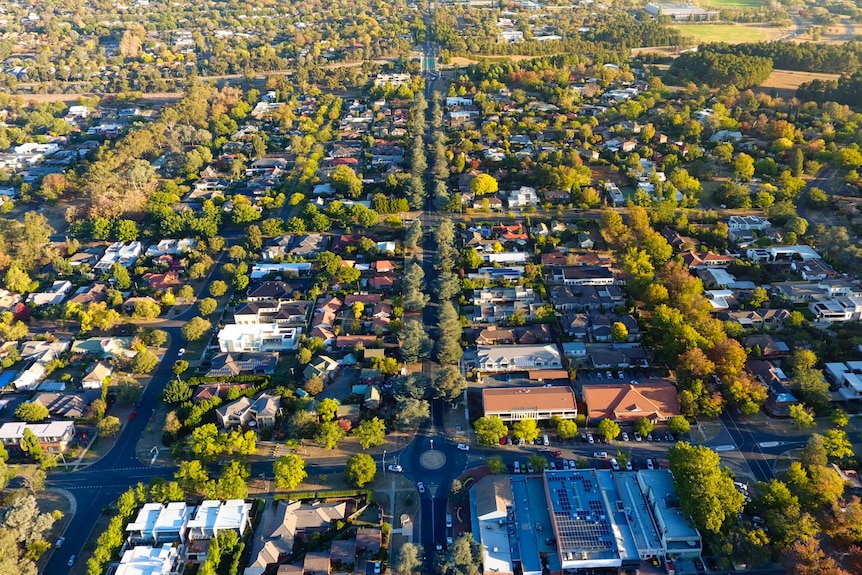
The ACT government wants to build more medium-density housing in Canberra suburbs to give residents more housing choices and accommodate a growing population.
But with a changing climate some worry the city’s infrastructure, including stormwater systems, does not have the capacity.
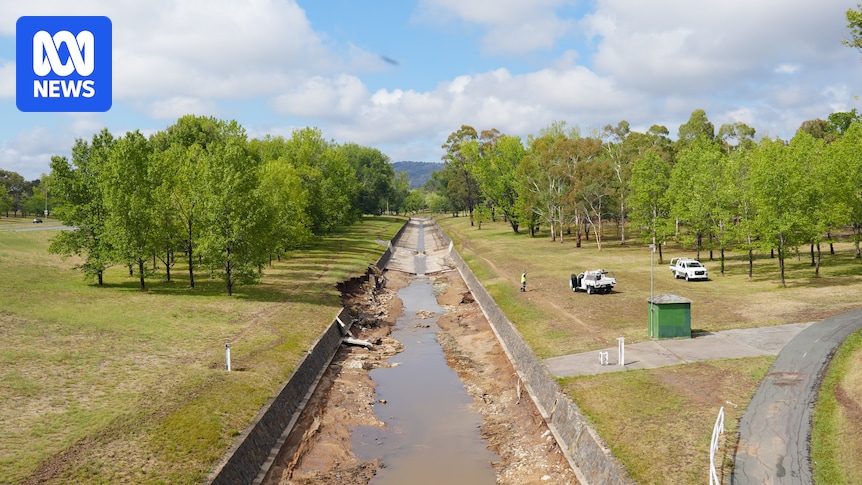
On Saturday severe thunderstorms and flash flooding caused extensive damage to Yarralumla Creek, a concrete floodway in the Curtin area.
It highlights one of the problems Curtin Residents Association vice president Julia Tresidder told an ACT Legislative Assembly inquiry into the need for more medium-density, or “missing middle”, housing in the capital.
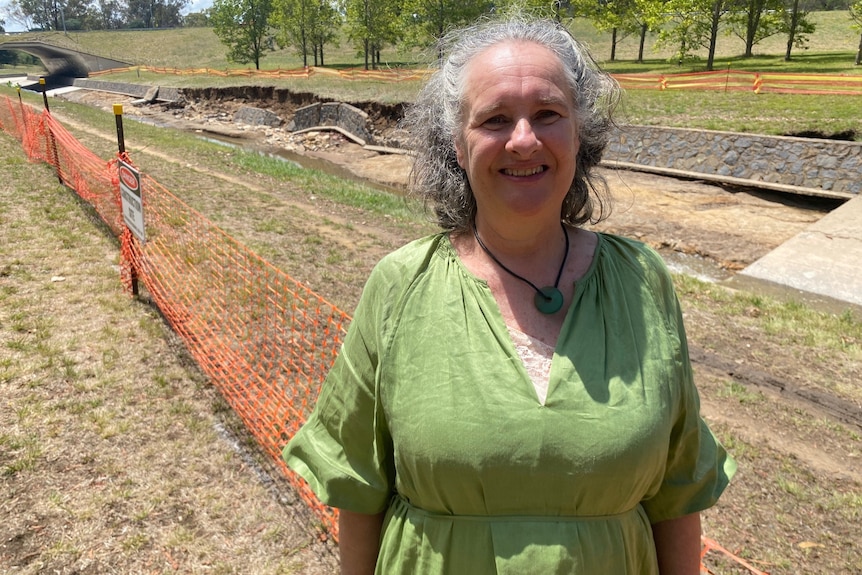
Julia Tresidder of the Curtin Residents Association says stormwater infrastructure must be upgraded to support increasing housing density. (ABC News: Harry Frost)
“The [stormwater] infrastructure needs upgrading to keep up with more and more people living here,” Ms Tresidder said.
“We’re about to get some new housing, we’re about to get some build-to-rent developments, [so] I think the planners have to remember that we need 40 per cent of blocks to be permeable, to absorb some of the run-off when we get these kind of sudden rainstorms.
“I mean, we had no rain in January almost, and then all of a sudden we had two months’ [worth] in one evening, and you can see the damage it’s done.”
When higher-density dwellings are built in suburbs it means there are more hard surfaces in the area — and those less-porous surfaces are unable to hold water run-off from storms.
Peter Coombes of Urban Water Cycle Solutions, an Engineers Australia Fellow, said while densification had been a major policy position to address population growth for quite some time, questions about infrastructure in the areas were important.
Peter Coombes of Urban Water Cycle Solutions says the government must consider the capacity of its stormwater infrastructure when densifying suburbs. (ACT government)
“It’s been a bit of a magic pudding until you start asking questions about ‘Well, can you densify on the same infrastructure you had before?’ which is the pressing question,” Dr Coombes said.
“Stormwater infrastructure, the pipes and pits, have always been considered to be a set-and-forget infrastructure.
“They don’t attract the level of maintenance and upgrades that they need to.”
He said in many areas of Canberra the stormwater system is already at or over capacity.
“My analysis that was done nearly a decade ago said quite clearly that there’s some areas you couldn’t densify beyond what was already there, and could not be developed, unless you looked at local solutions,” Dr Coombes said.
“Stormwater had to be in that planning policy mix before you develop new areas and before you densify some of those areas.”
“If you’re trying to densify and you’re taking the old-school view of ‘We can manage it down the bottom of the catchment’, it’s simply not going to work.”
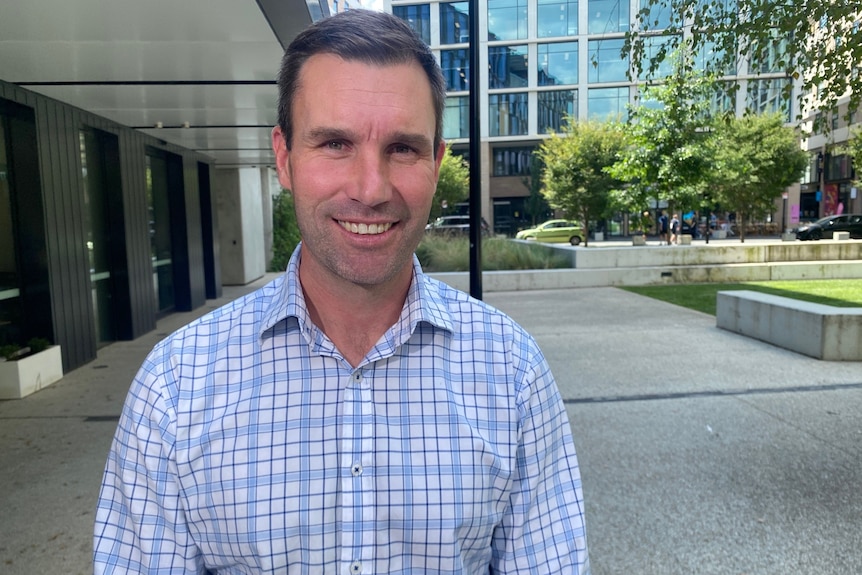
James Bennett of the City and Environment Directorate says new planning rules require developers to include porous areas. (ABC News: Harry Frost)
James Bennett of the ACT City and Environment Directorate said the government had introduced planning requirements for new builds that mean developers must plan stormwater management and run-off on their sites.
“There’s a requirement for developments to have permeable surfaces, and planting areas to hold that water within their sites,” Mr Bennett said.
“Then for water that leaves the block and goes into the stormwater network we’ve got a rolling program of infrastructure studies, capacity upgrades, and targeted interventions to make sure that we’re managing those stormwater impacts across the network.”