
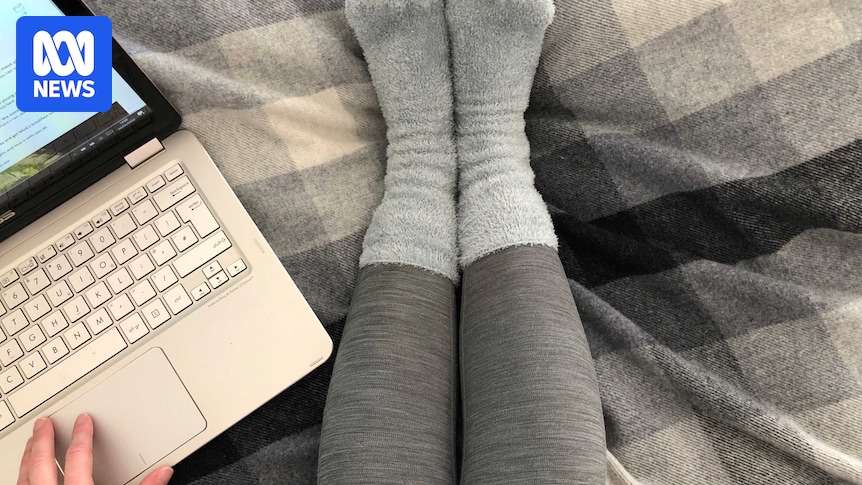
In a post-COVID era that has allowed flexible working arrangements to flourish, more of us are enjoying the freedom of not having to go into the office every day.
For many of us it’s a chance to don our comfy pants (or pyjamas, no judgement), and more easily tackle the daily juggle of work, school runs and never-ending chores.
But like most good things, there’s a catch. Working remotely can also feel incredibly isolating.
The spontaneous human interactions that brighten our workdays can become elusive, or worse, non-existent.
The loneliness ailment
The impact this has on our work and personal lives might be more profound than we realise.
According to Michelle Lim, associate professor, psychologist and CEO of national research organisation Ending Loneliness Together, loneliness can lead to poor mental and physical health.
“Being lonely can make us feel less creative, less motivated and more likely to become sick.”
Dr Lim says nearly one in three Australians feel lonely at any given time, and one in six feel that way persistently.
“Feeling lonely at work can be a distressing experience,” she says.

Michelle Lim says loneliness can lead to poor mental and physical health. (Supplied: Michelle Lim)
Dr Lim also notes that people can still feel lonely in a workplace with colleagues around.
“Sometimes we may not relate to people we work with and that can lead us to feeling socially disconnected.”
Researcher Dinethi Yasodara Jayarathna is investigating wellbeing among hybrid workers for her PhD at the Psychosocial Safety Climate Global Observatory at the University of South Australia in Adelaide/Tarntanya.
“Workplace loneliness is an interesting area that we don’t touch much, it’s about the lack of quality relationships with colleagues,” Ms Jayarathna says.
She says isolation and “invisibility” are common themes for people working remotely.
“Hybrid employees described feeling overlooked, forgotten in meetings, and left out of casual chats that once made them feel like part of a team.”
So, what can we do about it?
Connection and consistency
Even though we can’t gather around the water cooler for some casual banter when working remotely, we can still fill our cups virtually.
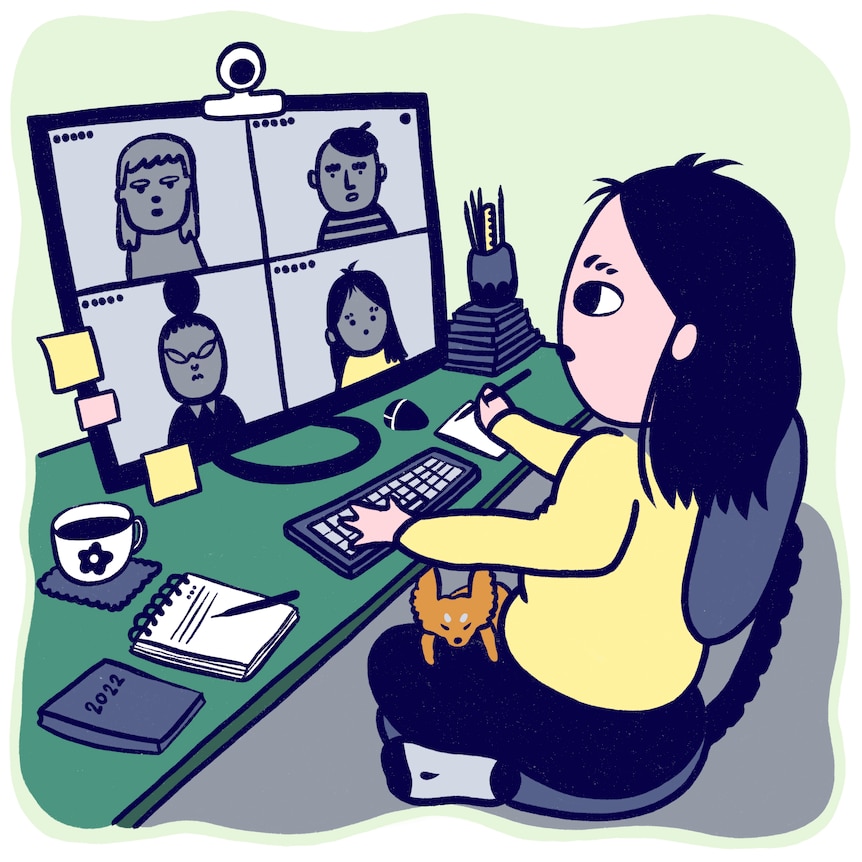
Experts say there are simple but effective ways to tackle loneliness while working remotely. (ABC News: Kim Lam)
The experts say the keys to staving off loneliness are connection and consistency.
Chat threads, phone calls or, better yet, video calls are great ways to stay connected.
If you get on well with a colleague, consider using these technologies to share a coffee break together, allowing you both to socialise and recharge.
“A 10-minute call [can give] both of you energy,” Ms Jayarathna said.
Dr Lim says meaningful contact needs to happen routinely.
“We need to do these things not just as a tokenistic way of reaching out, but more embedded into the work routine.”
Ms Jayarathna also suggests hosting a weekly or fortnightly social catch-up, which could include religious celebrations and other cultural events that bring people together.
“I saw a big difference when these different cultural events took place within companies — it helps people get connected,” she says.

Dinethi Yasodara Jayarathna is studying wellbeing among hybrid workers. (Supplied: University of South Australia)
As well as juggling her PhD, motherhood and working from home, Ms Jayarathna also spends time in Sri Lanka where she is a senior lecturer at the University of Kelaniya.
She says many hybrid workers in Sri Lanka benefit from regular coordinated team office days where they share communal meals and celebrate other social events.
If you or anyone you know needs help:Suicide Call Back Service on 1300 659 467Lifeline on 13 11 14Aboriginal & Torres Strait Islander crisis support line 13YARN on 13 92 76Kids Helpline on 1800 551 800Beyond Blue on 1300 224 636Headspace on 1800 650 890ReachOut at au.reachout.comMensLine Australia on 1300 789 978QLife 1800 184 527
However, if your team can’t physically get together, you can still host virtual events with food.
Check in with yourself
Both experts advise checking in with yourself regularly, when you are working in isolation, and taking note of how you’re feeling.
Ms Jayarathna is developing a leaflet to help hybrid workers recognise signs of struggle including burnout, technostress and isolation.
“It’s so important for you to understand that ‘now I need a break’, or ‘I need a virtual coffee with my friend for 10 minutes.'”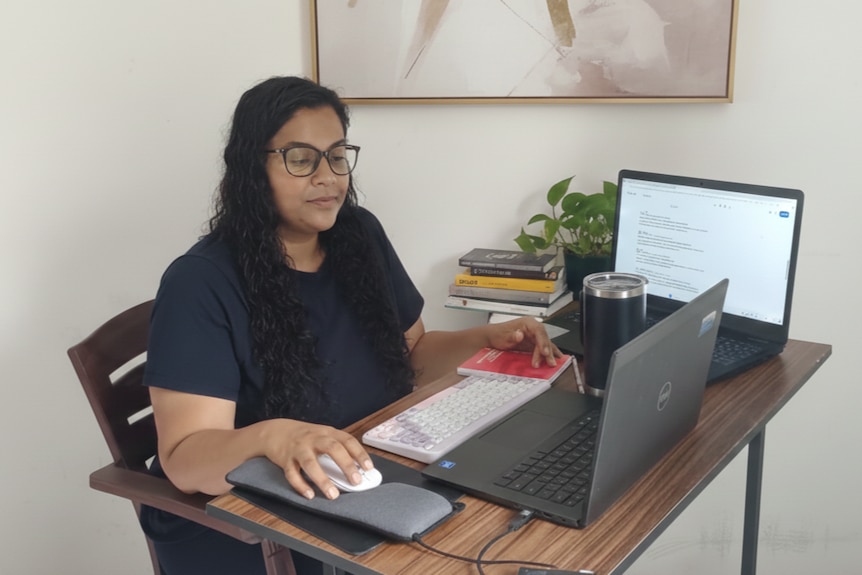
Dinethi Yasodara Jayarathna is developing a leaflet to help hybrid workers easily recognise signs of burnout. (Supplied: Dinethi Yasodara Jayarathna)
Dr Lim says people shouldn’t dismiss loneliness as a trivial issue or make the mistake of categorising it as a mental illness.
“Loneliness isn’t depression. And just because you feel lonely, doesn’t always mean you need intensive support.”
If you’re struggling to find meaningful connections at work, Dr Lim suggests connecting with other friends instead.
“Your family, your friends, your neighbours, the wider social network of people that you choose are people that you can invest your time and energy in.
“It’s really a focus on the quality of connections … when you have a very robust, healthy social connection [outside of work], that can really buffer you.”

Michelle Lim says loneliness should not be dismissed as a trivial issue. (Adobe Stock)
Top tipsVirtual coffees
Making yourself a cuppa? Consider turning it into a virtual catch-up opportunity with a colleague so you can share your coffee break together. All you need is a phone, or better yet, your meeting camera.
Chat groups
Informal chat groups with colleagues can help facilitate casual banter, virtually. Find some common interests (such as recipe ideas) and start a thread. It’s one way to ensure not every correspondence we receive is official and impersonal.
Coordinated team days in the office
Where possible, try to coordinate your visits to the office with other team members. Include social activities, such as sharing a coffee or meal together.
Pay attention to how you’re feeling
Make a habit of checking in with yourself. If you notice feelings of fatigue, loneliness or lack of motivation, it’s time to pause and fill your cup.
Step away from the computer regularly
Just because you are home, it shouldn’t mean you don’t get a break. Going outside, listening to music, calling a loved one, or even having a snack can help us reset. It’s all about breaking up the screen-staring and doing something enjoyable.