
JBL is entering the practice amp space with a new product range that blends portable speakers, traditional amplification and artificial intelligence. Called BandBox, the line-up includes two models, BandBox Solo and BandBox Trio, both scheduled to go on sale in Australia on 15 February 2026.
Rather than positioning the BandBox range purely as consumer speakers, JBL is targeting musicians who want fewer cables, less external gear and more flexibility when practising or jamming. The defining feature is what JBL calls Stem AI, an on-device system that can separate vocals and instruments from any song in real time. Once a track is streamed to the speaker over Bluetooth, users can reduce or remove elements such as vocals, guitar or drums, effectively turning any song into a customised backing track.
This approach reflects a broader shift in music practice, where players increasingly learn parts by playing along with original recordings rather than relying on static backing tracks. Because the processing happens on the device itself, the feature works without an internet connection and responds instantly, allowing musicians to adjust the mix as they play.
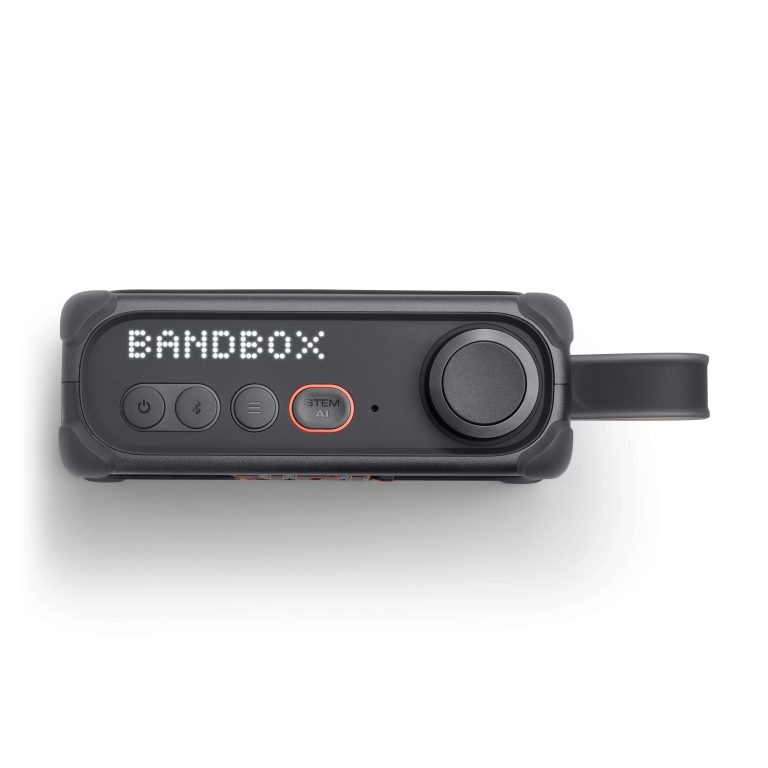
JBL BandBox Solo
Sound quality is central to the design. JBL says the speakers are tuned not just for music playback, but specifically for instruments and vocals. The aim is to deliver enough clarity and low-end response to make practice sessions feel closer to a live performance, whether at home, outdoors or in informal rehearsal spaces.
BandBox Solo is the smaller of the two models and is clearly aimed at individual players. It includes a single guitar or microphone input and is designed for guitarists, singer-songwriters and solo performers who want a compact setup. Users can stream a song, remove the original guitar part using Stem AI and play along themselves, or simply use the unit for warm-ups and basic practice.
Many of the deeper features are controlled through the JBL One app, which offers a selection of amp models and built-in effects such as chorus, phaser and reverb. A tuner, metronome, drum machine and looper are also included, reducing the need for pedals or additional hardware. There is support for wired headphones, allowing silent practice, and a USB-C connection lets users record directly into a digital audio workstation. A small LED pixel display on the unit provides visual feedback when adjusting settings.
BandBox Trio expands the concept for group use. It adds four instrument inputs and a built-in four-channel mixer, making it suitable for small bands, duos or jam sessions. Physical controls on the unit allow players to adjust levels and effects without relying entirely on the app, which may appeal to musicians who prefer hands-on control.
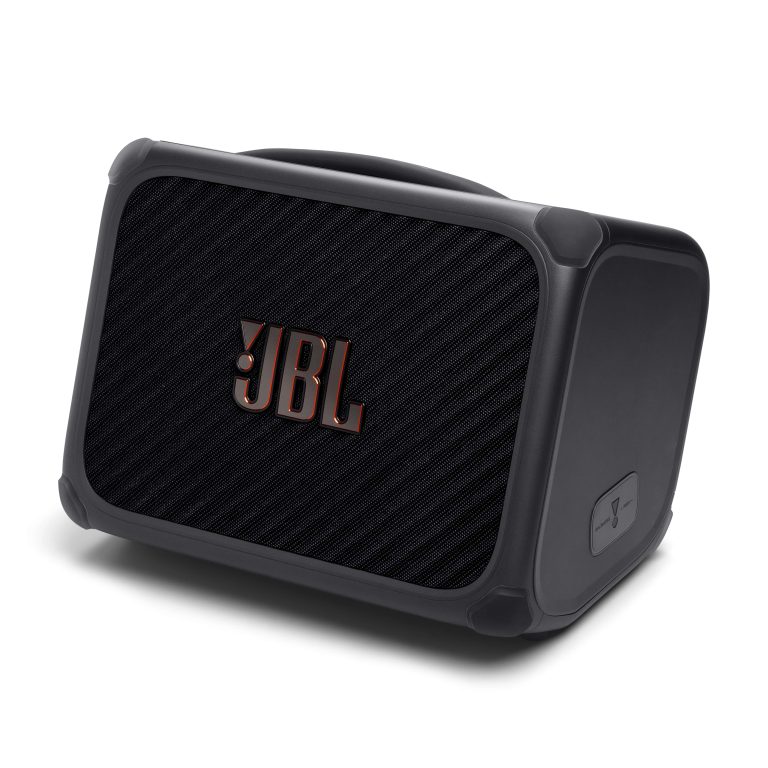
JBL BandBox Trio
The Trio also introduces a replaceable battery system rated for up to 10 hours of use, which is designed to support longer sessions away from power points. Its speaker configuration includes a larger woofer and twin tweeters, delivering significantly higher output than the Solo. Like the smaller model, it supports USB-C recording and can double as a monitor speaker when connected to other PA equipment.
AI tools are becoming more common in music software, but JBL’s decision to embed real-time stem separation directly into a portable amp is a notable move. It lowers the barrier for musicians who may not use complex recording software but still want more control over how they practise and perform.
Both BandBox Solo and BandBox Trio will be sold exclusively through jbhifi.com.au and jbl.com.au when they launch. Whether they gain traction will likely depend on how well musicians embrace the idea of an all-in-one, AI-assisted practice tool replacing more traditional amp and pedal setups.