
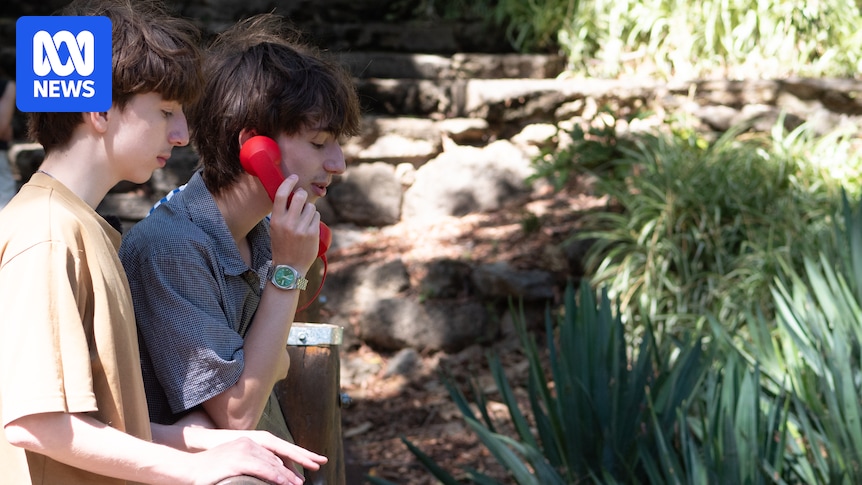
Australia’s longest running arts event, the Perth Festival, opened at the weekend with outdoor music, a series of light sculptures and social media videos in which people share “what rests in their hearts” using an old red phone on a bridge.
For decades, the Perth Festival (previously known as Perth International Arts Festival) has opened with a large-scale free public event, reaching an all-time high in 2015 when the artistic director found more than $5 million to bring two giant puppets to the Perth CBD, drawing 1.4 million visitors to the city streets.
In 2018 and 2019, Boorna Waanginy: The Trees Speak, opened the festival with a sound and light projection on the tree canopy of Perth’s Kings Park celebrating Noongar culture, and attracted more than 100,000 people over four days.
In subsequent years, more opening events were planned but derailed by COVID restrictions, and since the pandemic Perth Festival openings have been smaller in scale.
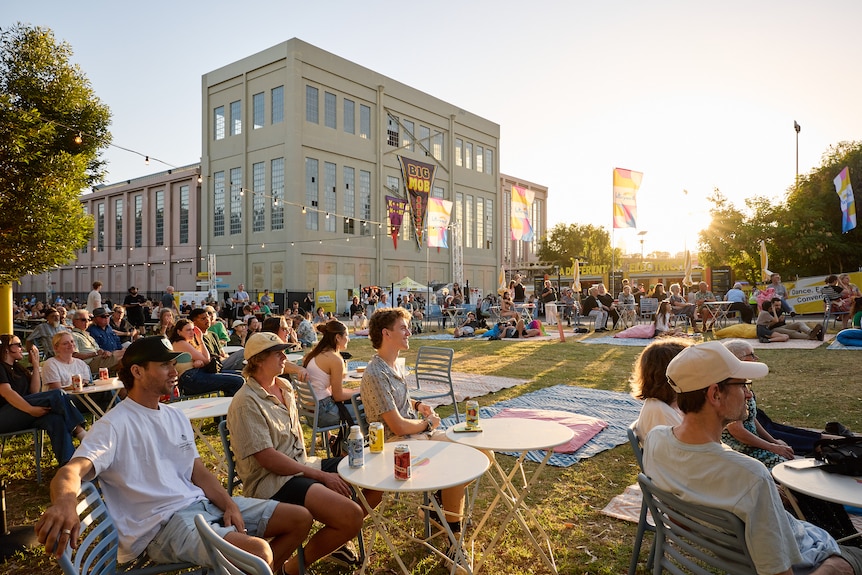
Crowds at Casa Musica, outside the East Perth power station, enjoy a free performance. (Supplied: Perth Festival/Jessica Wyld)
This year the opening event has gone online, with the festival commissioning British artist Joe Bloom to bring his video series A View from a Bridge to Perth.
The concept is a kind of Humans of New York in video form. Perth participants talk into an old-fashioned telephone handset while standing on a bridge.
From a distance, Bloom talks to his subjects to draw out their story (although his voice is removed in the edit) while filming them from a long distance, slowly panning out as they go on.
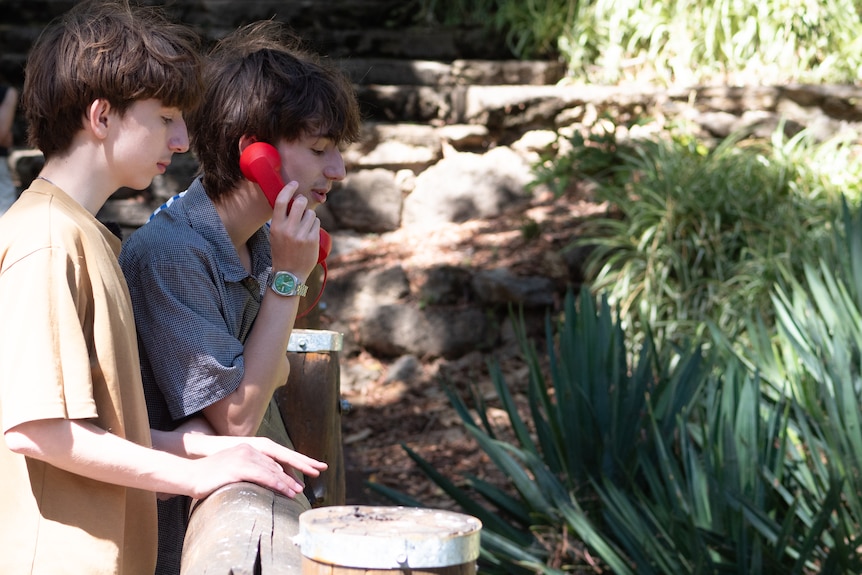
Teenage triplets record their interview with Joe Bloom in the A View from a Bridge project. (ABC News: Emma Wynne)
The videos are then edited into 3-minute stories and published on Instagram.
Speaking to the ABC when the program was announced, artistic director Anna Reece agreed it was a long way from a free concert that people could take a picnic to and enjoy with their friends.
“I can’t pretend that the festival’s, you know, going to make everyone happy, especially if that’s your experience and what you’ve loved about a festival,” she said.
“Joe Bloom’s got hundreds of thousands of followers, he has millions of hits and I just love the idea that we add to his collection.
“He’ll spend a week filming our beautiful bridges, our everyday people, capture their stories and so we’ll create this wonderful collection of Western Australian stories and places but it will be beamed back to the rest of the world to see.”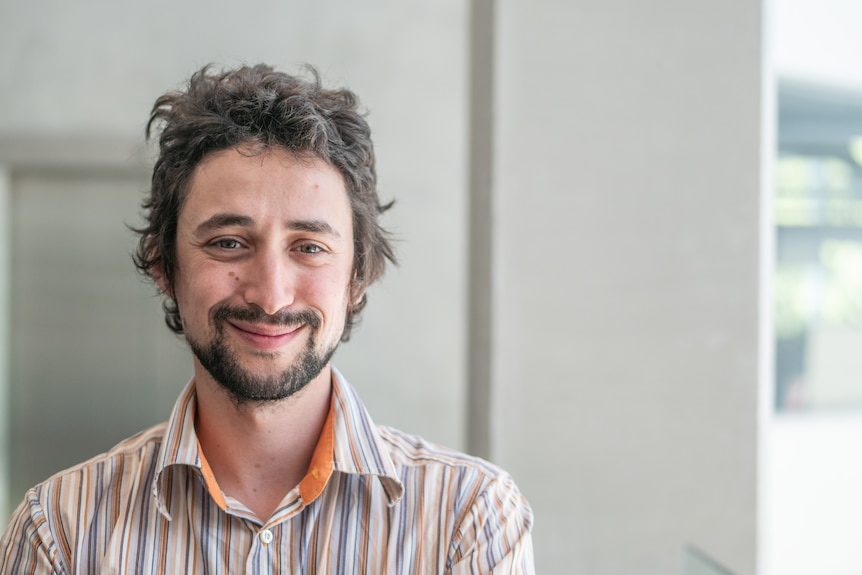
Joe Bloom describes the video series as “a sort of a moving painting”. (ABC News: Emma Wynne)
Lifting the red receiver
A View from a Bridge is described on the program as comprising an old red telephone on a bridge that “invites you to lift the receiver, look out at the view and share what rests in your heart”.
Loading Instagram content
In fact, the red receiver was connected to a mobile phone so it allowed easy connection between Bloom and his subject. A number of the interviews were pre-arranged, with participants meeting Bloom and his producer Molly Hackney to talk through the process and fit them with a lapel microphone.
Filming was completed in January and the stories have now begun to roll out online, starting with Richard Walley speaking from the Kings Park treetop walk about his experience, as an Indigenous child, seeing his friends being removed from their families.
The second is the story of mother whose son died at four months old, and the decision to donate his organs, saving other babies’ lives.
Bloom, who is also known for his paintings, described the pieces as “a sort of a moving painting because it’s one fixed image and throughout 3 minutes, things are coming in and out, but one thing that remains the same is that there’s a person standing in the centre of it holding this bizarre old red phone and telling a story”.
Over the two years Bloom has been filming his stories, he has garnered a following of more than 600,000 on the project’s Instagram account and is now planning a podcast to give the interviews a longer life.
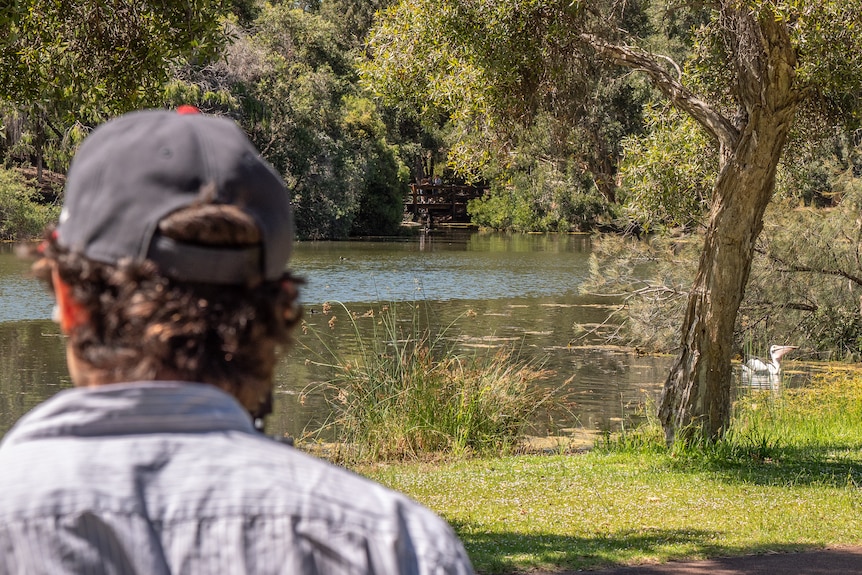
Joe Bloom says your horizons are broadened when you stand on a bridge. (ABC News: Emma Wynne)
He said the reason he filmed people standing on bridges was because it seemed to fit with the stories he was trying to draw out.
“Maybe it’s a bit gimmicky to say but when you’re on a bridge one’s horizons are broadened right?” he told Jo Trilling on ABC Radio Perth.
“You could be in a really busy city — really tall buildings or trees and cars everywhere — and you go to a bridge and stand in the middle and not only are your horizons broadened in the physical sense but also in this metaphysical brain space.
“You’re not in a place, you’re between places.
“It’s an in-between space where I think our brain allows us a bit more time and space really to just sort of open up and be free and to look up around you and feel small.”
Many days for picnics
For people who prefer their free festival experiences to be offline, Reece points out that “what we’re offering now is many days for many picnics to be held, to come down to a whole bunch of different locations across the festival, across the city, to really soak up the summer and arts and culture that takes over all these beautiful places”.
These include Casa Musica, the outdoor music venue by the Swan River at the East Perth power station, which has a series of free music performances every Thursday to Sunday during the festival, as well as a light projection designed by Bibbulmun Noongar/Budimia Yamatji artist Lance Chadd Tjyllyungoo.
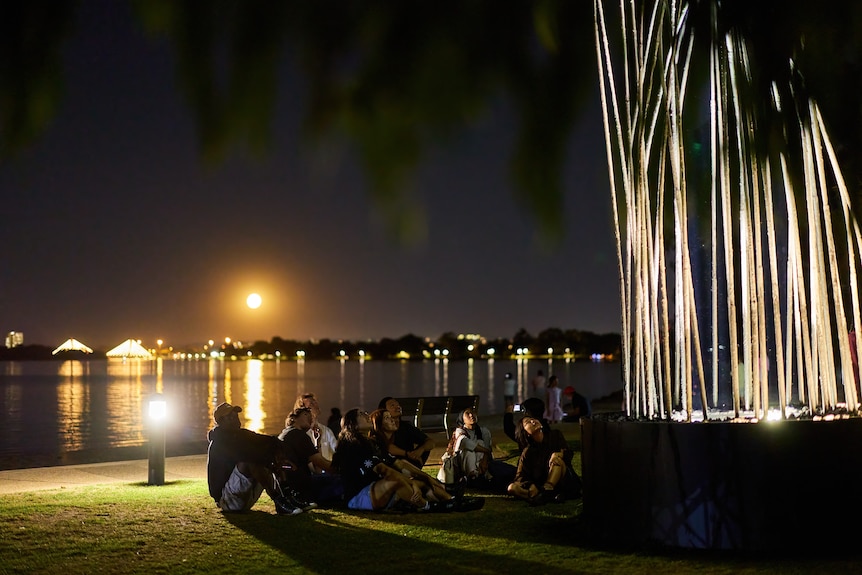
One of the 11 light sculptures that make up Karla Bidi. (Supplied: Perth Festival/Jessica Wyld)
Also running through the festival is Karla Bidi, a series of light sculptures placed at 11 locations along the Derbarl Yerrigan (Swan River), symbolising the fires Noongar people would light in pre-colonial times to welcomes visitors to country and offer light, safety and warmth.
Each sculpture has a soundscape created by First Nations artists under the guidance of Noongar elders. The show runs every evening until March 6.