
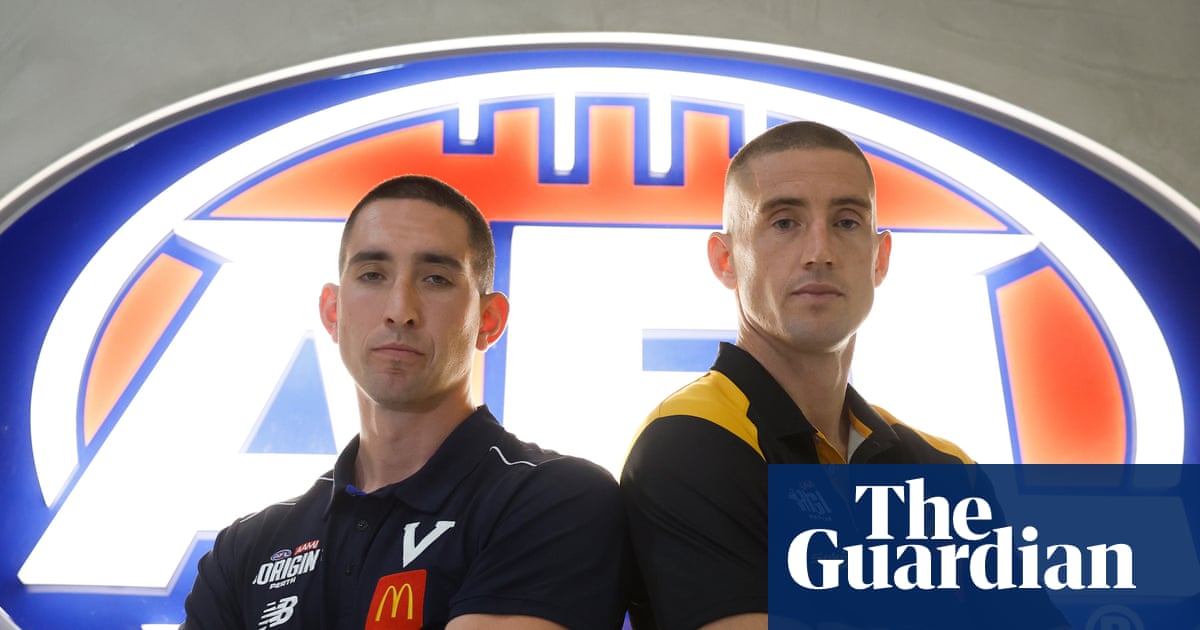
The AFL’s state of origin game has come with a marketing blitz, a lobster charter off Rottnest Island, some champions saying all the right things and vague and fading memories of the concept’s glory years.
There’s a dearth of sporting offerings at this time of year. The T20 World Cup, the fourth in five years, is too bloated and too politically riven to really capture our attention. Watching some begoggled Finn pelting down a mountain at 120kmph has a certain ghoulish appeal, but it’s not exactly in the Australian sporting marrow.
In footy, February is a time for puff pieces and flogging memberships. A state game fills that hole, at least in theory. This is the only time where it could be staged with any sort of credibility. Play in the middle of the season (and midweek) like it was in the 80s, and they’d struggle to cobble together functional teams. Play it at the end of the season, and it would be a drunken shambles.
But every time the AFL throws up or recycles another idea like this, and every time there’s a wildcard fixture, a tacked-on round, or another analysis show, it begs the question – who actually asked for this? As always, the commercial imperative to monetise and monopolise every timeslot and dead spot is at the forefront.
A newspaper article from the first state of origin match between Western Australia and Victoria in 1977. Photograph: Paul Kane/AFL Photos/via Getty Images
That’s fine. But there are other factors at play here. The first is an administration that’s increasingly NRL-conscious. Peter V’Landys and Andrew Dillon couldn’t be more different personalities and operators, just as rugby league and Australian rules football are the cultural, demographical and geographical antithesis of one another. You’d think the AFL would look at the NRL’s Origin games and concede they could never compete.
But there’s also a hint of pining for the past, of restoring a ship that’s long since sailed. The AFL season is increasingly predictable and formulaic, a competition where the same clubs tend to contend each year. I wonder if this is an attempt to recreate what once was – an era of suburban tribalism and state versus state.
There’s a growing sense that footballers are no longer tied to their club, but that they’re part of a program. When things get too hard, a player like Charlie Curnow can walk out of his club for a lifestyle change. A state jumper is therefore a throwback to a simpler and more honest time.
In the 80s and early 90s, state football meant something. It didn’t always mean the same things to the same players, or to the same states. But it was rich with meaning and drama. And it showcased how differently football could be played in different leagues and conditions. To generalise, the Victorians often played on muddier grounds and were often more reliant on brute force. The South Australians cultivated a highly skilled running game. The Western Australians were often stacked with Aboriginal talent, and they would run the bigger-bodied Victorians off their feet.
Jason Dunstall and Tony Lockett during an AFL State of Origin match between Victoria and South Australia at the MCG, 1989. Photograph: Getty Images
But by the time Adelaide and Fremantle entered the competition, it had lost much of its appeal. There were outliers of course. The buildup to the 1989 game at the MCG, with Tony Lockett, Jason Dunstall and Dermott Brereton in the same forward line, was unlike almost any game I can remember from that era. The 1994 clash between South Australia and Victoria was one of the best games of football ever played. The next year is remembered for a dying and blind Ted Whitten being driven around the MCG.
For all the former players spruiking the magnificence of that era however, (and there’s a few of those on the payroll this week), you’ll find another one who found it all a chore. Dermott Brereton says there was a lot of “cheating” going on in those matches, insofar that players who didn’t always excel at winning their own ball at club level would lurk ahead of the play, knowing they’d get silver service. Peter Daicos always seemed to get a raw deal from Victorian selectors and was contemptuous of the format in his biography. Lockett, Gary Ablett and Wayne Carey had some memorable moments. But they’d all pull out of games at the drop of a hat.
So what are we left with on Saturday? A bit of WhatsApp banter for the players? A game that fans and high-performance managers watch through their fingers, hoping their best player isn’t carted off? The stadium will be full and the scores will be high, but it still won’t mean anything. And when it doesn’t mean anything, we’re left with an exhibition game, a footballing version of a Nick Kyrgios doubles match. That should suffice for the middle of February 2026. The doubt is whether it works next February and the February after that.