
Australia’s legally defensible foreign policy decisions are eroding community trust at home, weakening intelligence-sharing and leaving the nation increasingly exposed to hidden threats, Carl Gopalkrishnan.
AUSTRALIA KEEPS MAKING foreign policy and security decisions that are legally defensible and diplomatically orthodox — and then underestimating how much those decisions damage community trust at home. That erosion of trust is a central reason why authorities later say “we had no intelligence”.
Unless we change how decisions are made, by creating a new connective process between the Department of Foreign Affairs and Trade (DFAT), Home Affairs, the Australian Federal Police (AFP) and the Australian Security Intelligence Organisation (ASIO) that treats narrative and social risk as real security risk, we will keep driving harm underground and making ourselves less safe.
The AFP confirmed that Israeli President Isaac Herzog would not be subject to arrest in Australia because of head-of-state immunity.
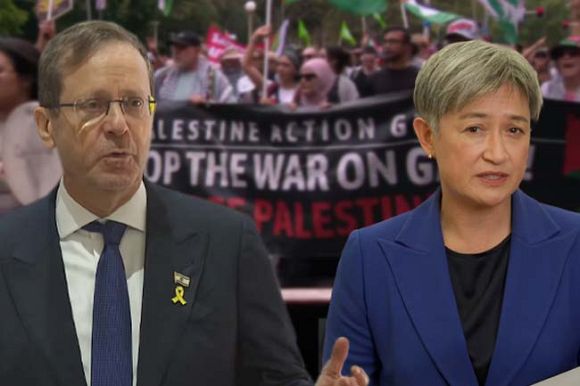
Like many others, including senior MPs, I strongly disagree with the decision to invite Herzog at this moment and don’t say that lightly.
It is important to acknowledge the real grief of the Jewish community, just as it is essential to acknowledge the accumulated grief and trauma being carried by Palestinians and by many other communities who are experiencing a surge in racism, polarisation and fear.
These harms are intersecting, not separate. Treating them as if they can be neatly compartmentalised – into “foreign policy over there” and “community safety here” – is collapsing into itself.
When meaning shifts faster than institutions
“No intelligence” is as much a breakdown of trust and relationships as it is an intelligence failures.
A critical backdrop to this is that many communities are already seriously disengaging from sharing information with law-enforcement and government agencies and peak bodies that once mediated between communities and government.
This means agencies increasingly risk flying blind by operating without accurate community intelligence. When authorities later say they had “no intelligence”, as with a recent terrorist attempt in Perth, that is a serious breakdown of trust and relationships.
In that context, this visit feels like a critical narrative harm inflection point. Whatever the legal space for the decision, it risks putting another nail in the coffin of community trust in Home Affairs’ engagement efforts or sharing information with AFP, further shrinking what remains of community intelligence in multicultural and wider communities where both far-right and ideologically motivated threats are watching quietly.
As we saw with the Perth bombing attempt, neither ASIO nor the AFP had any “intelligence” to prevent that attack. What troubles many of us is that it is not simply a policing problem but a relational and institutional wall of silence.

How harm moves underground
What is missing from our current arrangements is a clear-eyed understanding of the nature of the threat today. As people come to feel that institutions will not protect them or listen to them, they turn inward — toward social media, informal networks, rumour and sometimes darker online spaces where bad actors are waiting.
Poorly designed hate-speech laws risk amplifying this dynamic and have rapidly driven conversations underground where they fester beyond any mediating influence. That creates conditions in which hidden, unchallenged narratives grow quickly and isolated individuals — already anxious, mistrustful or marginalised — become more vulnerable to radicalisation.
The decision not to treat all visitors to Australia the same may be the final point of no return for many in terms of institutional trust — which is a high domestic cost to pay for a foreign policy decision.
A missing connective layer
This is why we urgently need a new, standing connective process sitting between DFAT, Home Affairs, AFP and ASIO.
Not another committee and not a layer of PR. What is needed is a small, permanent capability that treats narrative and social risk as seriously as legal or security risk and that can translate foreign-policy decisions into domestic impact in real time.
Such a mechanism would need to do three things that no existing structure does well:
Bridge foreign policy and domestic safety.
It would systematically assess how visits, statements and alignments are likely to land inside Australia – across different communities, online ecosystems, protest dynamics and far-right mobilisation – and feed that analysis back into decision-making.
Hold narrative risk alongside security risk.
At present, only kinetic or legal risks are treated as “real”. This body would treat loss of trust, community fracture and cumulative narrative harm as measurable risks that should shape timing, framing, engagement and contingency planning.
Rebuild the conditions for community intelligence.
If agencies repeatedly say “we had no intelligence”, that is not just an intelligence failure; it is a trust failure. A connective layer should be tasked with repairing relationships, creating safe channels for information and ensuring that communities are not simply treated as targets of messaging but as partners in safety.
Those with experience working in government know there are ways to avoid a lengthy culture change project. With clear ministerial leadership, an immediate operational taskforce could be established quickly which cuts across silos, speaks fluently to DFAT, Home Affairs, AFP and ASIO, and is capable of listening to, and speaking back with, communities without bureaucratic or political baggage.
The point is not to paralyse decision-making, but to make it more intelligent. Right now we are too often guided by risk managers and legal teams working within inherited, 20th-century assumptions about how power, information and communities operate.
Recent criticism of the term “social cohesion” is important, but it wanes in comparison to the urgent need for genuinely innovative thinking across policy. In terms of community safety today, trust, meaning and social connection must underpin how we write and interpret statutes and protocols.
Until we modernise that mindset, we will keep making legally defensible choices that leave us socially exposed, vulnerable and without trust in anyone’s definition of intelligence.
Carl Gopalkrishnan is an Australian artist and policy practitioner with long-standing experience in multicultural policy, social cohesion and community engagement.
Support independent journalism Subscribe to IA.


Related Articles