
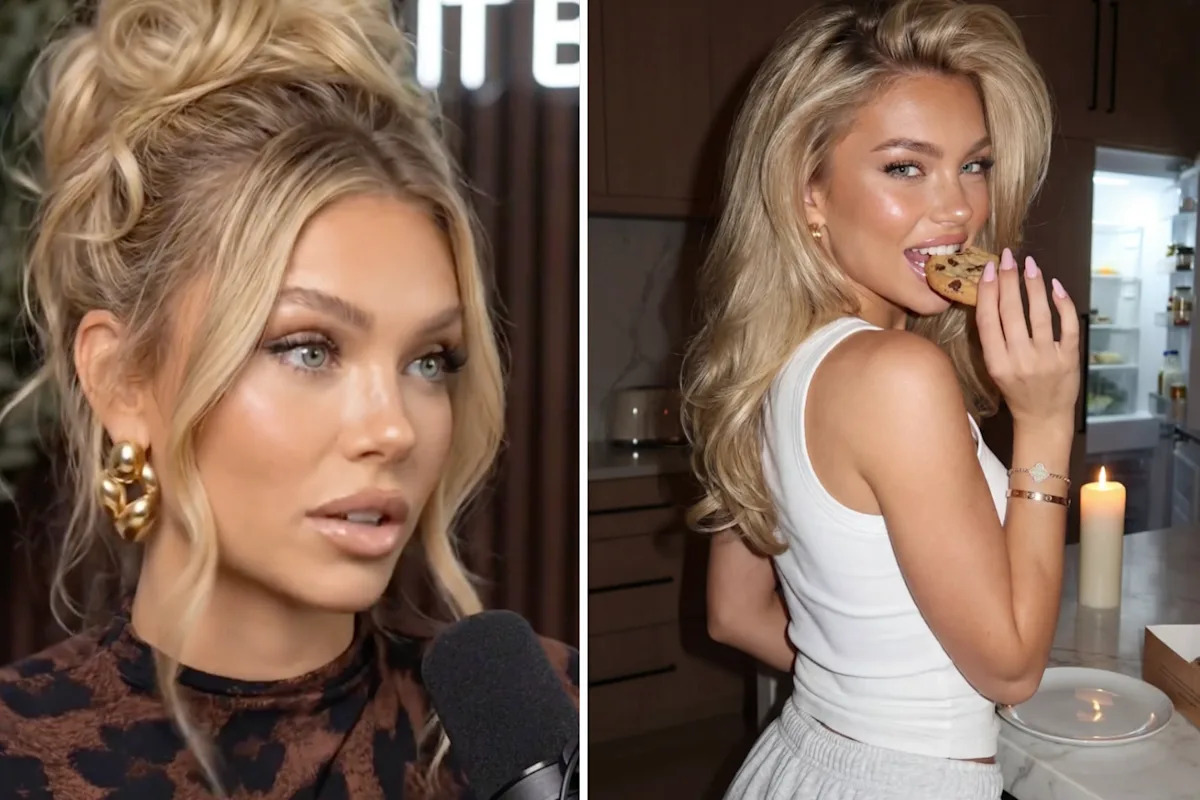
Meet Olivia Brand: she’s a gorgeous influencer based in California and Dubai who promotes Jesus and encourages women to work hard and stand up for themselves. But there’s one huge issue — she’s not real.
She’s an AI-generated influencer who has racked up more than 110,000 followers on social media in just a few months. Her Instagram feed is filled with posts about her fake glamorous life, while on TikTok, she posts sham podcast interviews where she gives life advice to thousands.
On the surface, it seems pretty harmless, but concerns are being raised about what could happen in the future with this type of content.
Dr Ben Hamer is a sociologist and accredited futurist whose job it is to look at what has happened in the past, what’s happening now, and what things might look like as time goes on.
After Yahoo Lifestyle showed him Olivia’s profiles, he had a lot of questions.
“What’s the agenda? Who’s built it? Who’s pushing it and who serves to benefit from it? That’s where I think it could get quite malicious,” he said.
RELATED:
Who is Olivia Brand and what is she saying?
Her social media pages were started in November and they’ve become incredibly popular.
It’s challenging to determine how many followers are real and how many are merely bots, though.
Some of her Instagram shots include her putting on make-up, smiling for the camera, eating food, and showing off her outfits on nights out.
It’s the same on TikTok, but there are some videos of her pretending to be on a podcast talking about her beliefs.
Do you have a story? Email stew.perrie@yahooinc.com
Some of her life advice includes:
“No one works harder than a woman who realises no one is coming to save her and that she’s the one who has to build her own dream with God by her side.”
“The scariest part of me is that I can give you the world and take it back just as fast, because my loyalty runs deep, but my self respect runs deeper.”
“There is nothing in this world that can stand against you when God is by your side.”
The website listed on Olivia’s profile appears to be a place where you can learn how to create more influencers just like her.
Again, it seems pretty harmless and someone or a group jumping on the AI bandwagon to make some cash by teaching others.
But what’s interesting is that many of her followers don’t realise she’s AI.
Despite her stating in her bio that she’s an “AI it girlie”, her comments section is flooded with people celebrating what she’s saying.
“Thank you for this advice I actually really need this,” said one person.
“You are so right,” added another.
Sabri Suby, founder of digital marketing agency King Kong, told Yahoo Australia last year that about 30 to 40 per cent of the short-form form content that people are consuming now is AI-generated and many won’t be aware of that reality.
Why this could be a problem
There are a significant number of AI influencers popping up on Instagram, Facebook and TikTok with far more followers than Olivia.
Hamer told Yahoo Lifestyle that while AI influencers are dishing out motivational quotes and aspirational lifestyle content, they are building a following who are open to them as a trusted authority.
“Then once you’ve got your following, you can slowly radicalise,” Hamer said.
“And that’s where it can become really dangerous.”
Lisa Main specialises in the impact of AI on our information environment and told Yahoo Lifestyle that radicalisation can only takes eight weeks.
“I’m not suggesting that this is being weaponised for radicalisation at the moment, but we just don’t know how it’s going to be used,” she said.
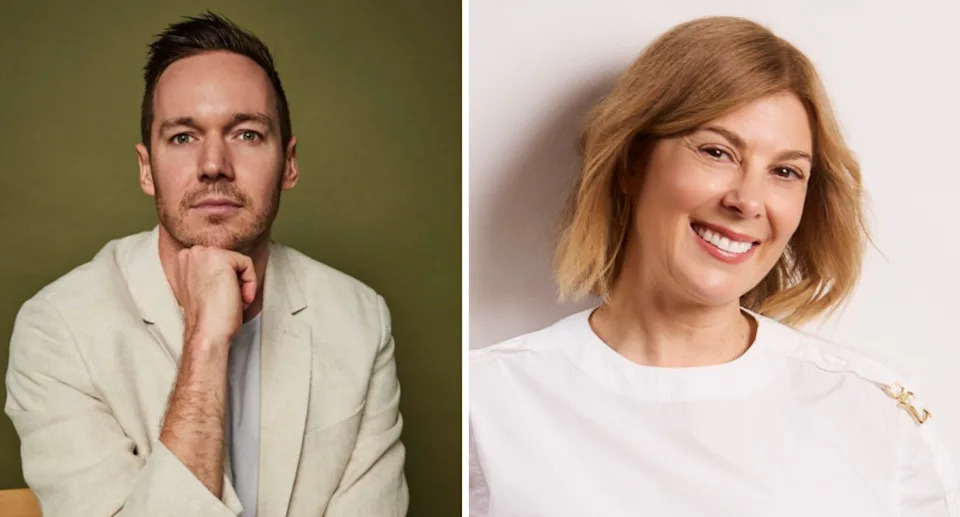
Dr Ben Hamer and Lisa Main are concerned what AI influencers could be used for in the future. Picture: LinkedIn
How deep the rabbit hole could go
Hamer expressed concerns about people’s ability to discern if someone is real or not.
If people believe the ‘person’ they are seeing is portraying a lived experience, it can build misplaced trust.
“It could go into Belle Gibson territory,” he said.
The former Aussie influencer falsely claimed she was able to beat multiple cancers with diet, exercise, natural medicine, and alternative medicine therapies — pocketing a considerable sum along the way.
“People could go, ‘Well, if she did it and it worked for her, then it must be true,'” Dr Hamer said.
“It comes back to trust. We usually trust something if someone else has gone through it and done it.
“There’s 50 different diets out there. You’re not going to try 50. You’re going to try one that your friend did that worked for them.”
Lisa said people can be very easily influenced when scrolling on social media and these influencers could be deployed in a range of ways.
“Health wise, this can be really dangerous, but and I think also politically,” she said.
“I just want to be informed so that I can actually make basic decisions about how I’m governed and how my kind of community and and world works.
“But it’s getting harder and harder and harder just to get clean information.”
On the flip side of things, Hamer said there are avenues where AI influencers could be used for good.
You could have fake humans promoting clean eating, smart money hacks, great parenting ideals, and other aspects of daily life.
AI influencers work around the clock with much lower stakes
For AI influencers, they can churn out content every hour, every day, every year without a break.
They can also test different ideas in small batches to see what works and what doesn’t and then amplify those messages to the masses.
Also, there are no stakes for influencers like Olivia.
Human influencers can cop backlash if they say something controversial, discriminatory, or vile.
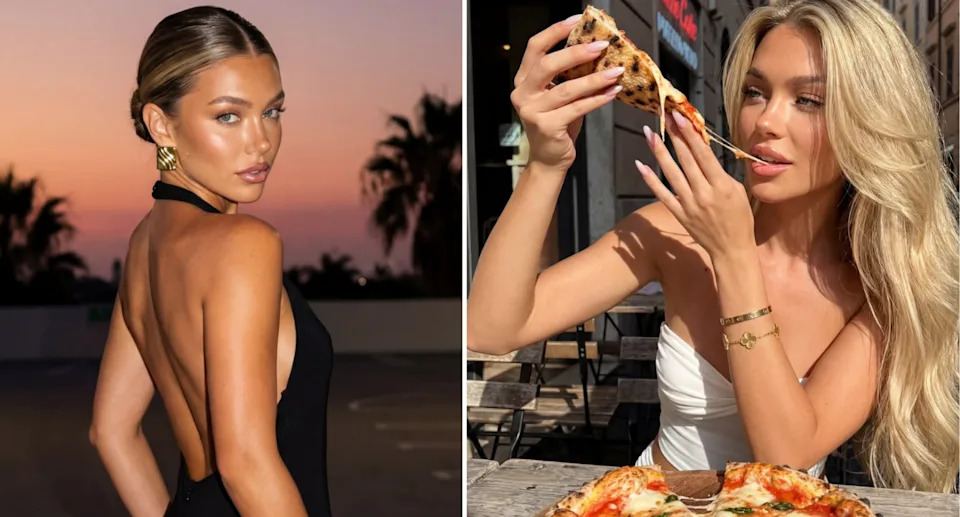
Olivia’s page is filled with lifestyle shots of her pretending to be a human. Picture: Instagram/Olivia Brand
They can lose their jobs, brand deals, and be ostracised from their local community.
There’s weight in what they say because the consequences can be great.
If Olivia said the same, it’s not as if she has to show her face at the supermarket or her mum’s group.
She would be able to get away with much more than everyday humans.
SHOP:
There are some AI influencers who have scored major brand deals with Chanel, Prada, Louis Vuitton, so those accounts would have to be careful with what they post.
But the ones designed to influence public opinion could be used in much more sinister ways.
“Half of Gen Z use TikTok and Instagram as their primary source of news,” Hamer said.
“So, if news is being misrepresented through AI influencers, then that’s going to be really significant in terms of how that plays out across how people vote, what their values are, and their views on what’s happening in Gaza and Ukraine.”
Yahoo Lifestyle reached out to Olivia’s creator for comment and is yet to hear back.
Want the latest lifestyle and entertainment news? Make sure to follow us on Facebook, Instagram, and TikTok.