
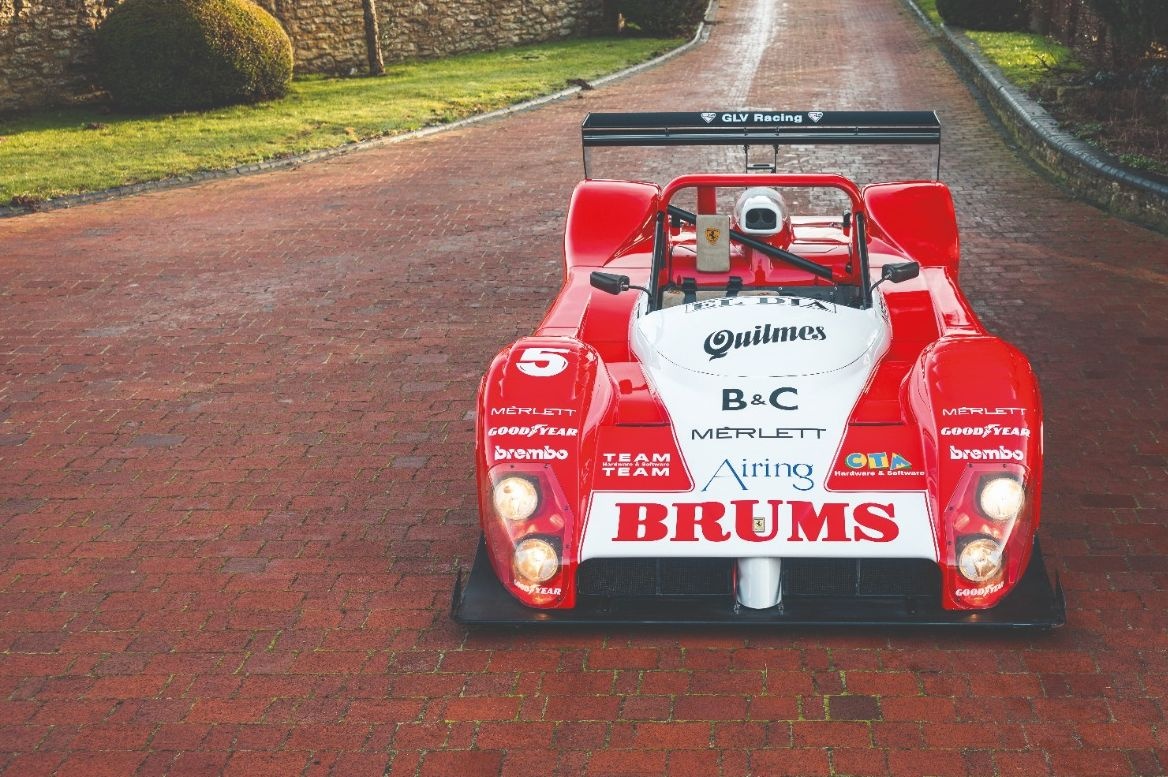
To claim the Ferrari 333SP is somehow forgotten in the pantheon of the prototypes to carry the Prancing Horse emblem wouldn’t be quite right. The scream of its Formula 1-derived V12 has to be instilled in the psyche of anyone who witnessed the car racing in the 1990s or early 2000s. It was pretty easy on the eye, too.
Yet to say that it is overlooked in light of the euphoria surrounding today’s 499P would be absolutely correct. Which is somewhere between a downright shame and a travesty.
Ferrari’s 333SP didn’t win the Le Mans 24 Hours outright like its successor in that line of Ferrari sports-racing cars, though it did triumph at its equivalent in North America, the arena for which it was conceived: it claimed but a single Daytona 24 Hours victory among a run of near-misses.
There were also no world championship titles at a time when there weren’t such things, just significant end-of-season silverware garnered in both its original battleground and later on in Europe. But its legacy stretches beyond those successes and the 51 top-level victories it notched up: the 333SP helped shape the sportscar racing landscape at a global level.
It might also be overlooked because there were no works-run 333SPs through the car’s life, which stretched from 1994 to its final, fleeting outings as late as 2003. But then the 333SP wasn’t developed to be run by the factory. The only Ferrari prototype between the 312PB of 1971-73 and the 499P was built for customers to race, which explains the very essence of its importance.
The seed of the idea for Ferrari to develop its first prototype in more than 20 years came not from within the heavy iron gates of Maranello, but from a privateer. The architect of the 333SP programme was Gianpiero Moretti, the archetypal gentleman driver who’d competed predominantly in North America since the late 1970s.
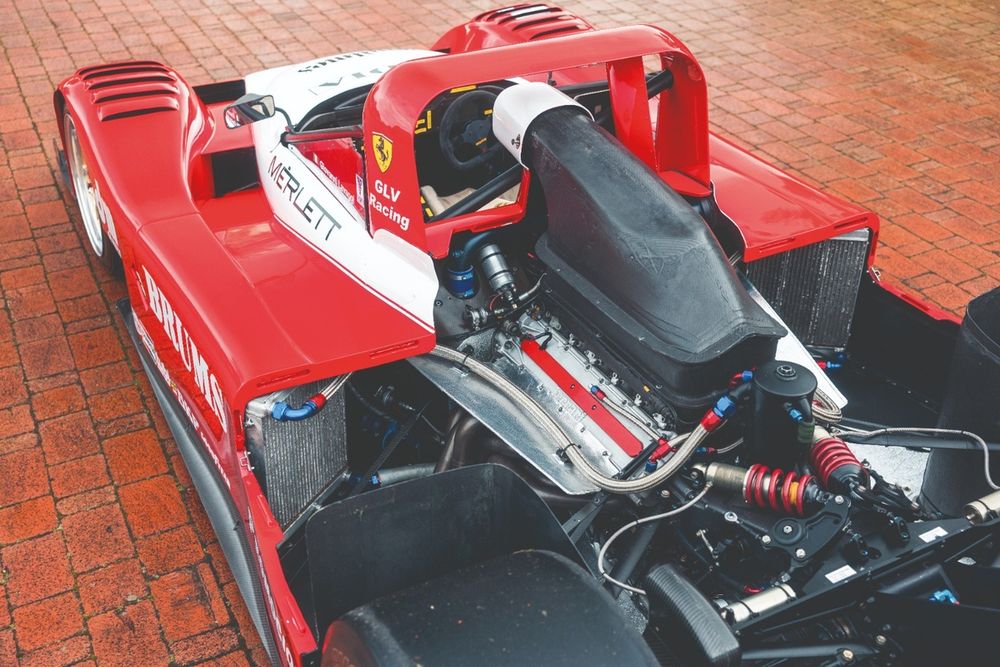
333SP stood out for ease of maintenance and durability and F1-derived V12 was super-reliable, with 5000km rebuild schedule
Photo by: Girardo
Back at the start of that decade he’d raced a Ferrari 512S and now the boss of the MOMO accessory company, best known for its steering wheels, had the ambition to return to the cockpit of one of the Italian manufacturer’s cars in the twilight of his career.
“Whenever Gianpiero saw the MOMO logo next to the Ferrari badge, whether it was on the car or on the transporter, he had a big smile on his face,” recalls Kevin Doran, whose eponymous team ran Moretti’s 333SPs from 1994 until he hung up his helmet in 1998. “He was the one who had the dream: he should be regarded as the father of the 333.”
The dream was fired by IMSA’s World Sports Car category, a suitably budget replacement given the dark economic times for the original GTP class. It would take over from 1994 after the first WSCs raced alongside the outgoing cars in 1993.
There’s an irony that the senior executive who gave the green light was the man who had axed Ferrari’s involvement in sportscar racing 20 years before
Moretti waved the new rules for open-top cars in front of the powers that be at Maranello and found an ally in Piero Lardi Ferrari, vice-chairman of the company and the only surviving heir of its founder, Enzo. Moretti, who died aged 71 in 2012, told this author in an interview during the inaugural season of the car that he got the go-ahead in the space of a month in 1993.
“I took the regulations to Ferrari and asked them to think about it,” he said. “That was in February and in March they decided to build the car.”
There’s an irony that the senior executive who gave the green light was the man who had axed Ferrari’s involvement in sportscar racing 20 years before. Luca di Montezemolo, company founder Enzo’s right-hand man before being handed the reins of the F1 team as sporting director, had persuaded his boss that the Prancing Horse needed to focus on F1 if it was to rekindle its glory days. Now back as company president, he oversaw its return to sportscar racing.
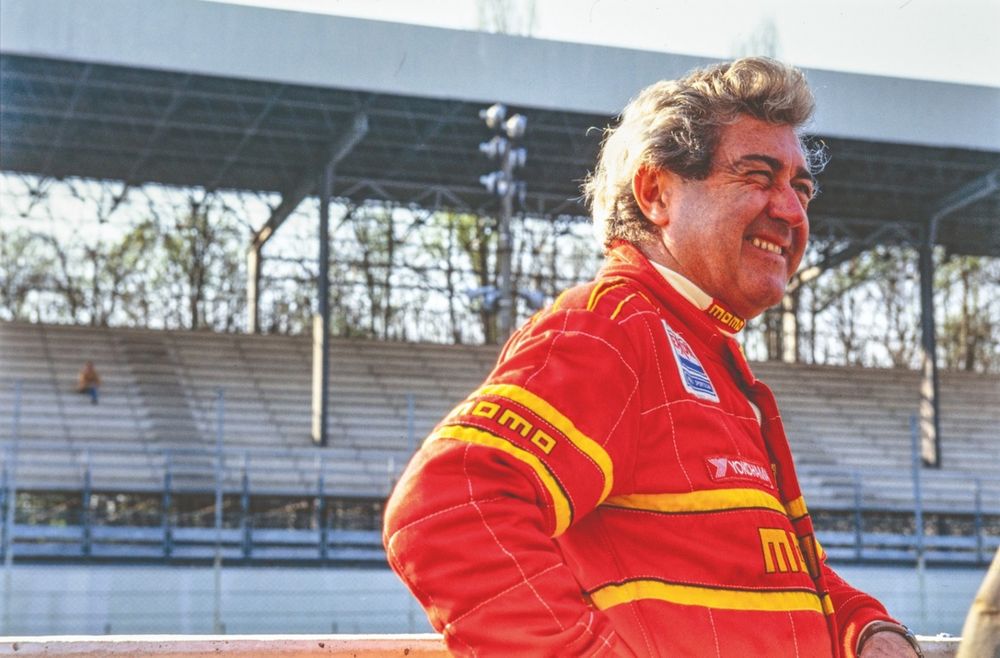
Gentleman racer Moretti dreamed up and drove forward the 333SP project
Photo by: Maggi & Maggi/Getty Images
Ferrari had produced the F40LM for the stillborn GTC class of what at the time was known as the World Sports-Prototype Championship at the urging of its French importer. When Ferrari turned out to be the only manufacturer interested, the car developed by Michelotto Engineering ended up making half a dozen appearances in IMSA’s GTO category in 1990.
That was before di Montezemolo returned to Ferrari, but now, back at Maranello in the top job, he had overseen the introduction of the Ferrari Challenge one-make series in 1993. In the same year as the 333SP went live in competition, Ferrari also sanctioned a return to Le Mans in the GT2 class with another Michelotto-developed car, the 348 GTC.
“We are returning to our original thinking,” said Lardi Ferrari in the same Autosport article explaining this revival of interest in sportscar racing. “Through history Ferrari produced cars its customers could race. President di Montezemolo is very sensitive to Ferrari’s history.”
Ferrari immediately set to on the new prototype: the carbon-composite monocoque was designed in-house and Dallara Automobili was retained to do pretty much everything else. Bar the engine, of course. The car was powered by a four-litre V12 derived from the 1992 F1 unit, which also provided the base, in 4.7-litre form, for the powerplant in the soon-to-be-released F50 supercar. The capacity of each cylinder gave the car its type number in a Ferrari tradition that the 499 follows. The SP stands for speciali prototypi.
There was a snag or two that weren’t lost on some of Ferrari’s potential competitors, and not just that the race engine had different cylinder heads to the road version. The cost-conscious WSC class called for production-based engines and, when the 333SP won on its debut at the Road Atlanta IMSA round in April 1994, the F50 was still some way from market.
Even long-time IMSA man Mark Raffauf, then the sanctioning body’s rules boss, concedes that the car was illegal under the letter of the law. “Technically, that is correct,” he replies, to the ‘yes or no’ question. But then IMSA had been highly supportive of Moretti’s efforts to persuade Ferrari to do the car. It was hardly likely to quibble over such details.
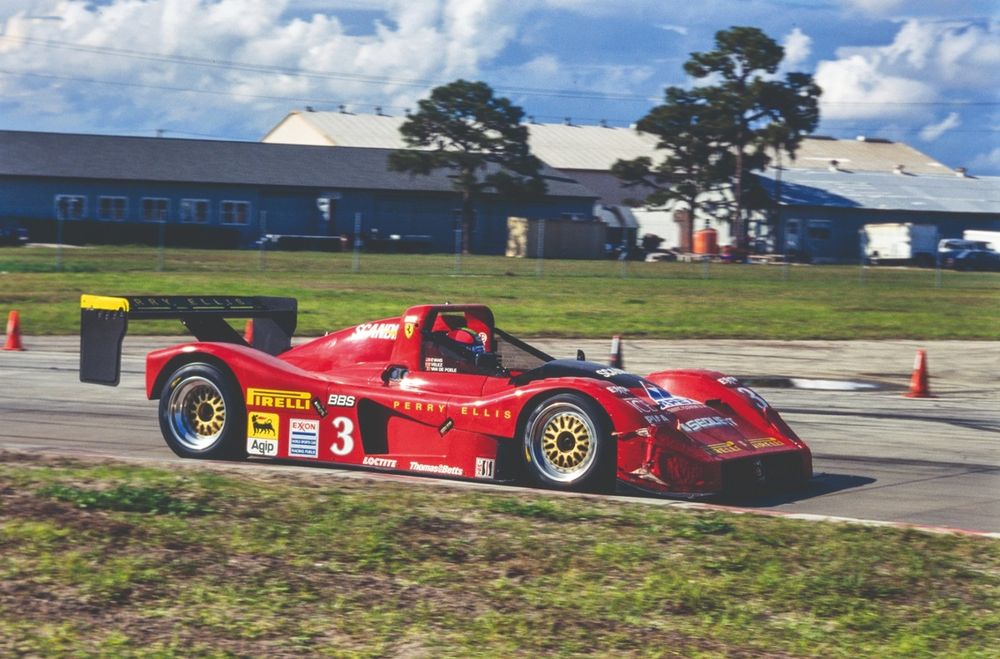
Ferrari 333SP took the first of three Sebring 12 Hours victories in 1995
Photo by: Murenbeeld/lat/getty images
“When Gianpiero was trying to convince Ferrari to build a WSC, I travelled over to Italy with him a couple of times, and sat around the lunch table with him, di Montezemolo and Lardi Ferrari talking about it,” recalls Raffauf, who picks the 333SP as his all-time favourite racing car. “I’m biased because I played a part in the conception of that car.”
IMSA knew that Ferrari brought two things that were vital to its relaunch in difficult times – kudos and car count. The kudos came not just because it was a Ferrari: the 333SP was also the first purpose-designed WSC car to hit the track. There were just eight WSCs on the grid for the start of the 1994 IMSA series, and none of them could be described as new.
Some were based on something else, while the vast majority had started out as such: they were GTP or GTP Lights – nee Camel Lights – machinery with the roofs lopped off. The Ferrari added five cars to a ragtag grid from the get-go and would remain a staple of the series up to its demise at the end of 1998 after IMSA adopted the Professional SportsCar Racing moniker.
“There’s no way we would have achieved what we did without that car. It was instrumental in the development of WSC” Gianpiero Moretti
Moretti reckoned that WSC would have lasted “one year, maybe two” without the Ferrari. Raffauf, meanwhile, stresses the importance of the car in IMSA’s history. “There’s no way we would have achieved what we did without that car,” he explains. “It was instrumental in the development of WSC.”
The Ferrari also played a part in relaunching prototype competition in Europe. Sportscar racing’s first European revival in the wake of the demise of world championship sportscar racing and Group C had been centred on GT machinery.
The International Sports Racing Series had been launched with a short run of pilot races in 1997. The 333 was a major player as the series grew and morphed through its SportsRacing World Cup and FIA Sportscar Championship iterations. “My job would have been a lot harder without it,” explained series boss John Mangoletsi of the Ferrari prototype in Autosport circa 2002.
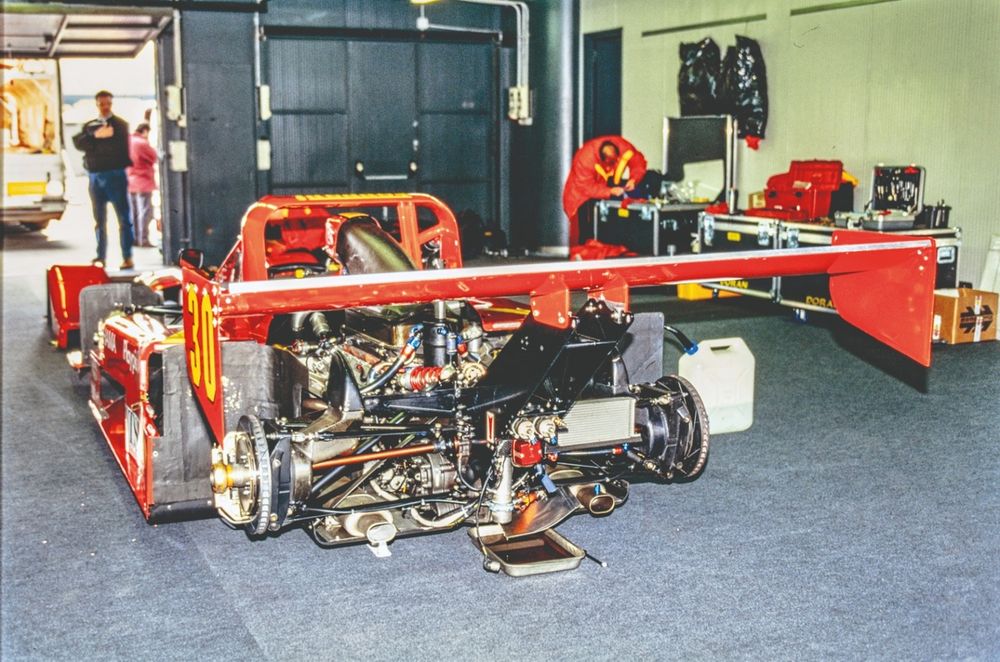
The car’s $1million price tag included two engines and spares package for a season
Photo by: Maggi & Maggi/Getty Images
The Ferrari won four straight titles between 1998 and 2001 in what the industry always referred to as the Mangoletsi series. Over in North America, drivers of the Ferrari claimed a solitary title, though in addition to the victory at Daytona in 1998, the 333SP took the laurels at the other big one, the Sebring 12 Hours, on three occasions.
Much of its success must be put down to the ease with which it could be run. The 333SP wasn’t a piece of Italian exotica unsuited to the rough and tumble of IMSA, but a proper customer car fit for purpose. It probably should have been, given its $1million (£650,000) price tag, which admittedly included two engines and a spares package to run the car for the season.
And because Dallara had designed and developed it: the Italian organisation was at the time coming to dominate F3, establishing its long-held position as the predominant builder of customer single-seaters.
“Dallara knew how to build a customer car, which was crucial,” says renowned designer Tony Southgate, who joined the 333 programme in the summer of 1993 as a consultant. “They are the ones who deserve the pat on the back. There was nothing fancy about it: it was easy to maintain and nothing wore out.”
That included the F1-based engine that revved to 11,000rpm in its initial guise. Doran describes the whole package as “a privateer’s dream”. And of the engine, he says: “It was incredibly reliable. We had a 5000km rebuild schedule and most of them went the full distance. In all the years we ran the 333, I can only remember a couple of engine-related DNFs.”
One of those came in the car’s first attack on Daytona in 1995: Ferrari had opted to wait until after the 24-hour race and Sebring before blooding the car in competition the year before. A problem with titanium valve seats in the high-tech V12 blighted the 333’s challenge, the fine sand of Daytona Beach implicated in Ferrari’s malaise that weekend.
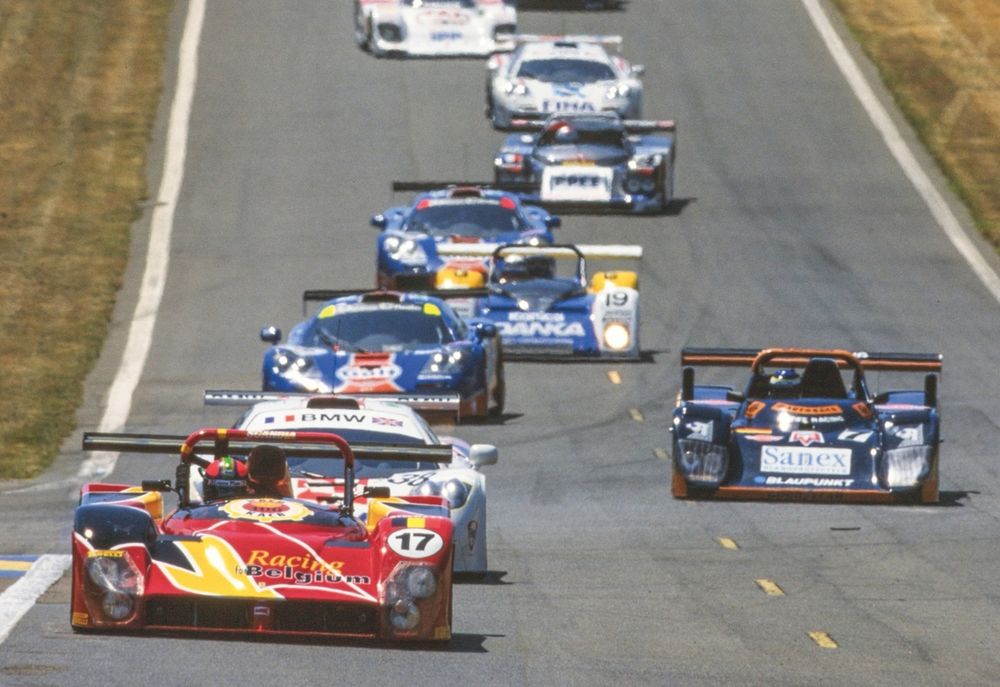
The #17 car had the pace to win 1996 Le Mans; gearbox problems struck, then it crashed out
Photo by: Murenbeeld/LAT/Getty Images
A year later, Ferrari came close to winning at Daytona. Future CART Indycar star Max Papis established his name in the US with a charge on his sportscar debut in the MOMO entry he shared with Moretti, Didier Theys and Bob Wollek, falling a minute short in his pursuit of the winning Riley & Scott.
Two years later in 1998, it was fittingly Moretti who took the chequered flag to give the Ferrari its lone victory at what was now a round of the United States Road Racing Championship as sportscar racing across the Pond splintered. The veteran had taken the start and only returned to the cockpit of a car he shared with Mauro Baldi, Didier Theys and Arie Luyendyk for the final half-dozen laps. He would then win at Sebring and Watkins Glen before hanging up his helmet.
Moretti also claimed the best finish for the Ferrari at Le Mans, an admittedly distant sixth place secured with Papis and Theys the previous year. The 333 never delivered in France. Euromotorsport had been the first to take the car to the 24 Hours in 1995, its campaign derailed by the rev-limiter race organiser the Automobile Club de l’Ouest forced it to run.
Ferrari didn’t want the 333SP at Le Mans that year, but Massimo Sigala, who shared with Rene Arnoux and Jay Cochran, pulled some strings to get the endurance engine required
Problems with the Heath Robinson affair in qualifying restricted the car to 17th on the grid, and then the bracket holding the flywheel trigger broke after a handful of racing laps, cutting the ignition and stranding the car.
Ferrari didn’t want the 333SP at Le Mans that year, but the well-connected Massimo Sigala, who shared with Rene Arnoux and Jay Cochran, pulled some strings to get the endurance engine required. A year later in 1996, the 333SP was there with the blessing of Maranello.
It produced an ACO-spec engine, developed to run an air-restrictor (IMSA then controlled power with rev limits), and Southgate came up with a Le Mans kit to increase straightline speed. It was paid for by Scandia Motorsports, the leading IMSA Ferrari team fielding two cars at the French enduro. There should have been three Ferraris present, but Moretti had missed out because his entry fee failed to come through on time.
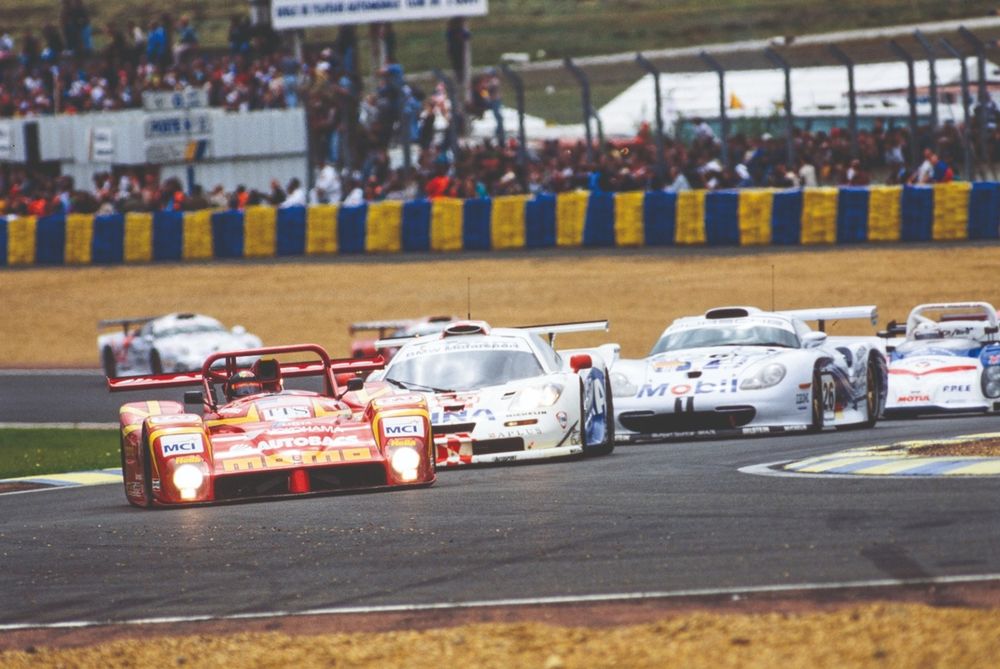
Best Le Mans finish was sixth place for Moretti/ Theys/Papis in 1997
Photo by: LAT/Getty Images
There were any number of pundits ready to put Ferrari among the favourites for Le Mans victory even before Eric van de Poele ended up quickest at the prequalifying day in April. Twice over: he set one time good enough for the top spot in a Scandia car fitted with IMSA-spec bodywork and then went four seconds quicker in the other carrying the new low-downforce kit.
The Belgian was on provisional pole come Wednesday of race week, but Scandia didn’t run on the Thursday and slipped to third. The order to do so came from on high: di Montezemolo wanted to keep expectations under control.
Gearbox problems did for the lead Scandia entry fielded under the Racing for Belgium banner that van de Poele shared with Marc Goossens and Eric Bachelart. The last-named would crash out the repaired car on Sunday morning. The sister machine didn’t get that far. Scandia boss Andy Evans beached it in the gravel at Mulsanne Corner early in the race, managed to dig his way out, and then ran the thing out of fuel.
“We definitely had the car to win that year,” remembers van de Poele. “The car was one of the fastest, no discussion.”
The 333SP is perhaps best remembered for its successes at Sebring, the first two coming with Scandia before Moretti added the third. Van de Poele, Evans and Fermin Velez triumphed on the car’s debut in the 12 Hours in 1995 (the year the last-named won the title), with Evans, Velez, Stefan Johansson and Yannick Dalmas repeating the trick two years later.
Both times it was 333SP #003, the car photographed here, that did the business. It was built around one of the first batch of monocoques produced at Maranello before Dallara took over the supply. Michelotto would subsequently be put in charge of the programme, overseeing the build and service of the cars from 1996. It would end up producing more than half the run of 40 333SPs.
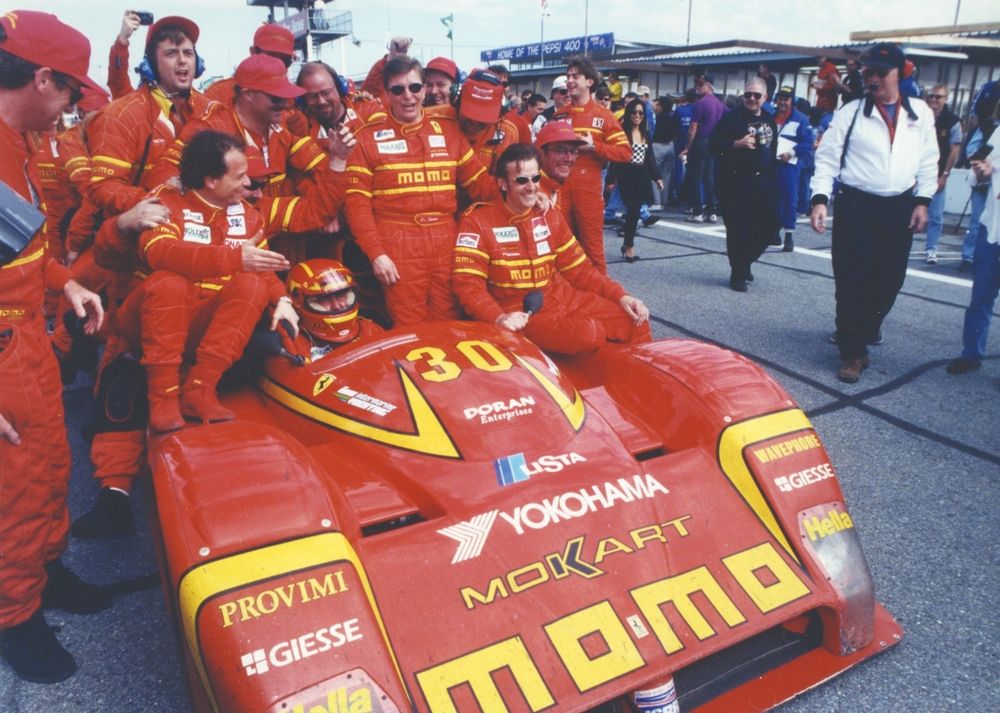
Moretti was behind the wheel for the 333SP’s sole victory at Daytona
Photo by: ISC Images & Archives/Getty Images
This Ferrari came back to Europe with Giovanni Lavaggi’s GLV Racing squad, which took the 333SP’s final victory at the 2001 Monza 1000Km FIA Sportscar round with the team owner and Christian Vann driving. But not in the form in which it left the factory: the car had a four-litre Judd V10 in the back.
Doran had been the first to make the switch during 2000 – between Daytona and Sebring, in fact – at a time when he felt the V12 was lacking development to meet the challenge of the latest restrictor sizes.
The conversion was relatively simple. “We put a billet aluminium plate on each end of the engine, which allowed us to mate it to the tub and the gearbox without any modifications,” he explains. He subsequently sold a kit of parts to allow Lavaggi to convert his car.
Moretti was desperate to win at the twice-round-the-clock season-opener, an event he’d first contested back in 1970
This car’s triumph at Monza is little more than a footnote in the 333SP story. The big wins are the ones at Sebring and Daytona. Moretti was desperate to win at the twice-round-the-clock season-opener, an event he’d first contested back in 1970. Up on the podium, he raised the subject of his and Doran’s near-miss in 1993 with a Nissan NPT-90 GTP.
“Gianpiero told me, ‘It’s a good job we didn’t win in 1993, or you might not be in existence’,” recalls Doran. “I was like, I get it.”
Had Moretti scratched his Daytona itch that year, there might have been no 333SP. The history of sportscar racing would almost certainly have taken some different turns without it.
This article is one of many in the monthly Autosport magazine. For more premium content, take a look at the February 2026 issue and subscribe today.
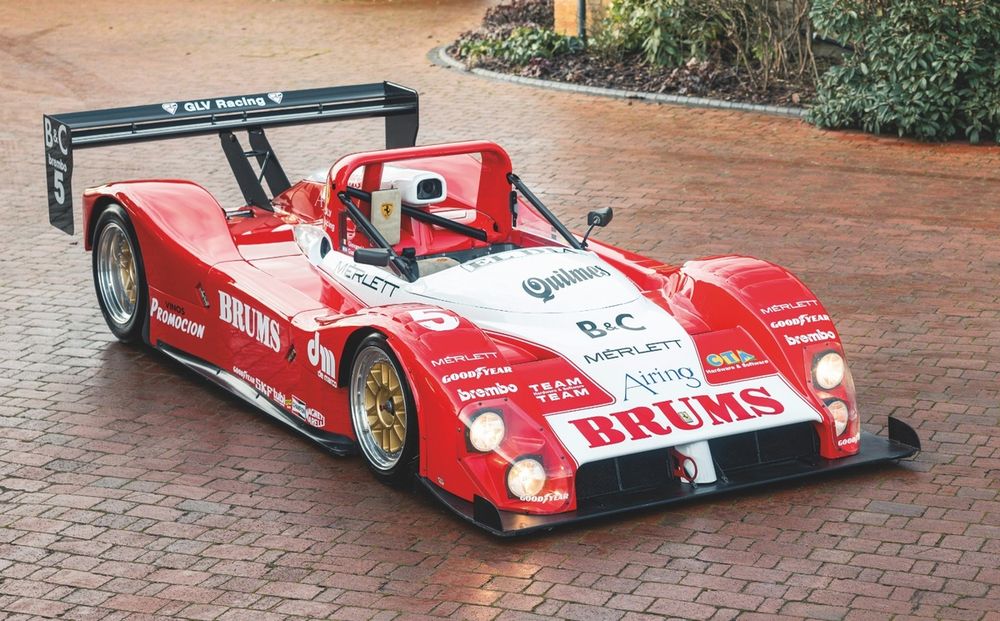
This car was one of the four F333SPs produced by Ferrari at Maranello – it was sold by Girado in 2025
Photo by: Girardo
We want to hear from you!
Let us know what you would like to see from us in the future.
– The Autosport.com Team