
Optoma has added a new entry to its 4K laser projector range with the launch of the UHZ36, priced at A$1,299 and aimed at buyers who want a single device for films, television and gaming without turning their room into a dedicated cinema. With a rated brightness of 3,500 lumens in a compact корпус, the model is designed to cope with everyday viewing conditions rather than demanding complete darkness.
The UHZ36 builds on foundations laid by earlier models such as the UHZ35 and UHD35x, but its focus is clearly mainstream home entertainment. Instead of catering to custom installers or specialist theatre rooms, it is pitched as a flexible option for lounge rooms and mixed-use spaces.
At its core is a 0.47-inch 1080p DLP chip from Texas Instruments. Like many projectors in this price range, it does not use a native 4K panel. Instead, it relies on high-speed pixel shifting to deliver a full 4K UHD image. The chip contains around 2.1 million microscopic mirrors, and the projector rapidly shifts each pixel horizontally and vertically at up to 240Hz. This process produces the 8.3 million addressable pixels required for UHD resolution once the image is projected on to the screen, with the switching happening too quickly for the eye to detect.
Optoma continues its move away from traditional lamp-based systems by using a solid-state laser light source. The company rates the engine for up to 30,000 hours of use, which removes the need for lamp replacements typically required every 2,000 to 5,000 hours in older designs. The laser system is intended to maintain consistent brightness and colour performance over its lifespan, avoiding the gradual dimming often associated with lamps. Start-up and shut-down times are also shorter, and the light source contains no mercury.
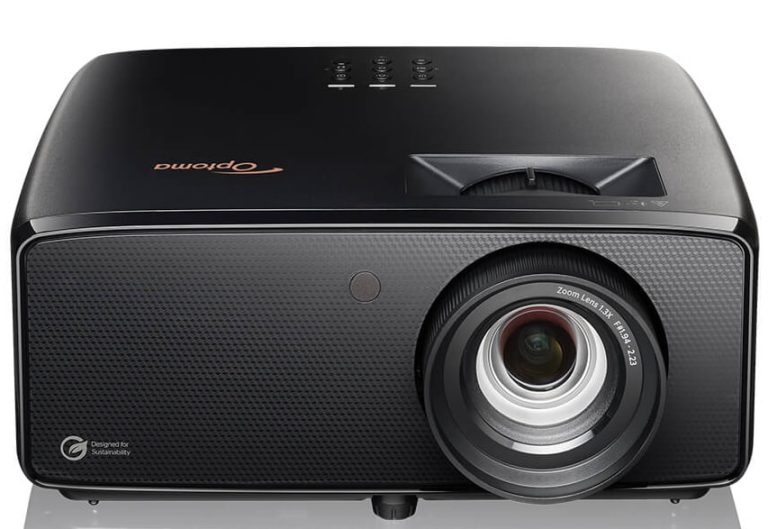
The optical engine is sealed and carries an IP6X rating, which is designed to prevent dust from entering and affecting image quality. This approach is aimed at reducing maintenance while supporting long-term reliability in everyday environments.
For gamers, the UHZ36 offers support for 4K resolution at 60Hz and 1080p at up to 240Hz. Input lag drops to around 4 milliseconds at 1080p and 240Hz, which should appeal to competitive PC players seeking quick response times. At 4K and 60Hz, lag measures approximately 16 milliseconds, keeping it suitable for current-generation consoles. Motion Estimation and Motion Compensation processing is included to help smooth fast-moving content.
Optoma has also introduced additional image controls intended to improve picture accuracy. Filmmaker Mode is now available, allowing users to disable motion smoothing and other processing that can alter the original look of a film. When activated, it preserves native frame rates and colour balance for a more cinema-like presentation.
The projector also incorporates Optoma’s Pure Engine processing platform. PureDetail is designed to enhance fine textures without excessive sharpening. PureContrast aims to deepen blacks and brighten highlights to increase perceived depth, while PureMotion refines motion handling for smoother action sequences. These tools give users more flexibility to adjust the image according to preference rather than relying on a fixed preset.
The UHZ36 does not include features aimed at high-end installations, such as WiSA certification or advanced control integration. That omission appears deliberate, as the projector is positioned for value-conscious buyers rather than bespoke home theatre builds.
With a maximum image size capable of filling large screens and a bright laser output suited to typical living rooms, the UHZ36 is clearly targeted at households wanting big-screen entertainment without the cost or complexity of premium cinema equipment. For those seeking a versatile 4K laser projector at a relatively accessible price, Optoma’s latest model is intended to strike a balance between performance, longevity and affordability.