
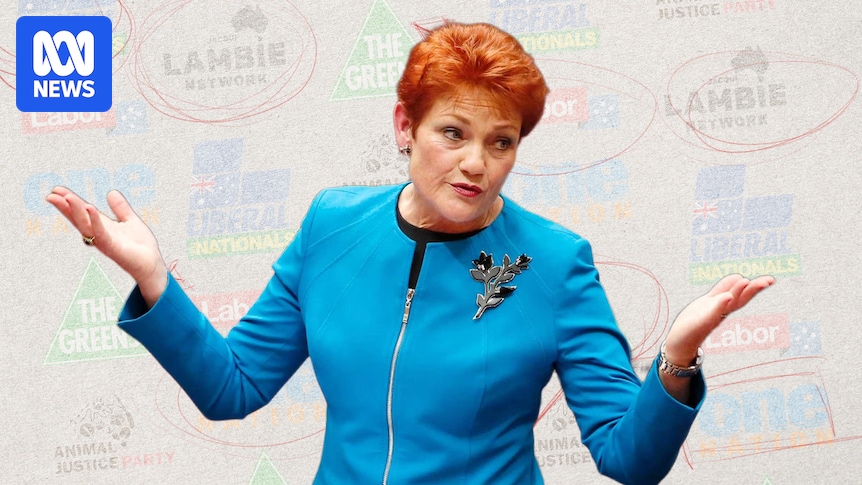
When asked about One Nation’s recent surge in popularity Jasper, 16, says it makes them feel “terrified”.
“I don’t like the idea of the, you know, rise of right-wing culture,” Jasper says.
“It’s a bit threatening.
“I thought that people didn’t really take that party too seriously, but one in five Australians — that’s quite a lot.”
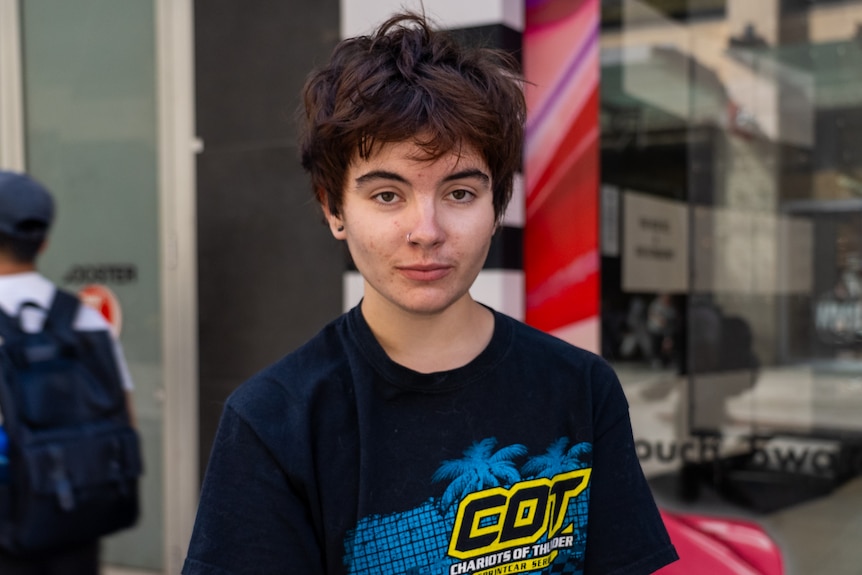
For Jasper, One Nation’s surge in popularity is “a bit threatening”. (ABC Adelaide: Ashlin Blieschke)
One in five Australians is, in fact, a lot, particularly for a minor party.
Some polls are showing even stronger results for One Nation, with support of up to 27 per cent of primary votes.
“If the trend continues and is maintained we are seeing a complete, I would say, restructure of politics in this country, a realignment of conservative forces,” Kos Samaras, a pollster at Redbridge Group, told 7.30.
“That’s how significant these numbers are.”
Amaia, 17, is aware of the growing support for One Nation but says the party doesn’t reflect her values.
“One Nation literally goes against what Australia should be as a country,” she says.
“I feel like Australia is such a multicultural and diverse place and they’re [One Nation] just so against that.
“Oh, my grandma’s going to see this and be so mad at me.”
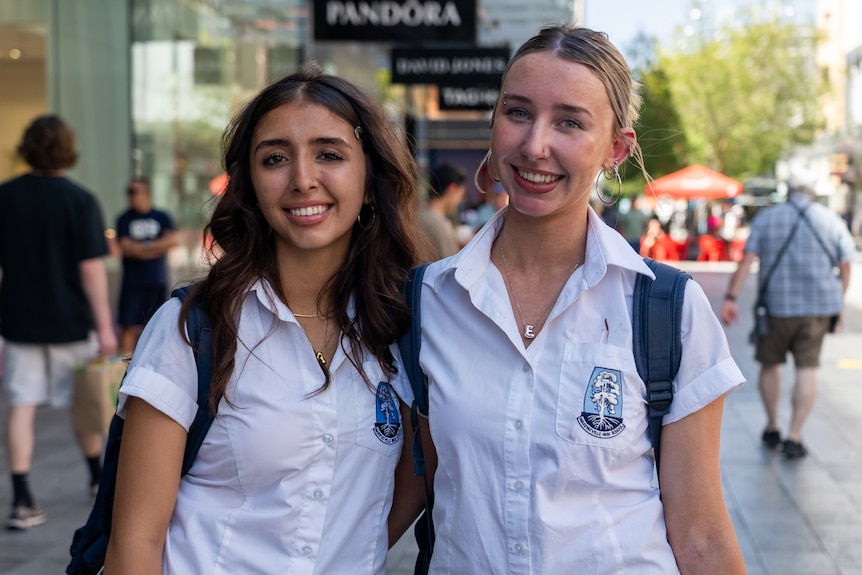
Amaia, 17, (left, pictured with Emma), says One Nation is not aligned with her values. (ABC Adelaide: Ashlin Blieschke)
Here, Amaia references a generational divide that is seen in the recent polling as those shifting their support to One Nation are predominantly baby boomers or gen Xers.
“These are people who have voted for the Coalition or for the Liberal or National parties at previous elections,” says Jill Sheppard, an associate professor in politics at Australian National University.
“They feel conservative and they feel loyal to that side of politics, but right now they’re looking at these parties and they’re saying, ‘You guys are a mess.’
“That’s all created this environment where One Nation, with its really simple messaging around migration and the problems that causes Australia, is quite popular right now.”

Jill Sheppard says young people tend to be the least supportive of the major parties. (Supplied)
While young people generally sit on the progressive side of politics, with the Greens being the most popular party for most young voters, some buck this trend.
“What’s happening increasingly — and not in huge numbers, but it’s a really interesting phenomenon, I think — is that conservative young people are moving to One Nation, at least in these opinion polls,” Dr Sheppard says.
“I think a lot of it is because One Nation is giving them those easy answers on things like housing affordability and the job market.”
“I do know young people that are voting for One Nation,” Amaia says.
“I think it’s a cultural split,” Jack, 16, says.
“I have some mates that think strongly about One Nation – they support it – and some don’t, especially with the immigration in the country.”

Jack, 16, (left, pictured with Isaiah and Ewan) says he knows people who support and oppose One Nation. (ABC Adelaide: Ashlin Blieschke)
Whether or not they align with the party’s values, young people such as Darcy, 17, know what One Nation stands for.
“The clearer and the more simple your messaging is, the better it is,” he says.
“Pauline Hanson, the politics, I completely disagree with – but she’s done a good job of marketing her own party.”
Loading…
Over the party’s almost 30-year history, migration has remained a key focus of One Nation’s platform.
“The things that she [Pauline Hanson] says about Muslims and that I don’t necessarily support,” says Ewan, 15.
“But I do think it’s a bad idea to keep bringing too many people into our country.”
Young people, including Ewan, want topics such as migration tabled, and Dr Sheppard says this is where minor parties, such as One Nation or the Greens, are vital for our democracy.
“Without minor parties the major parties would get super lazy. I think they’re already quite lazy,” she says.
“They don’t want to have to talk about housing affordability because a lot of them own houses.
“They don’t want to talk about climate change because they get money from mining industries.
Subscribe to the BTN Newsletter
“They don’t really want to talk about the good elements of migration because they worry that that will upset some voters, [and] they don’t really want to talk about the bad elements of migration because they have a lot of migrants who vote for them.
“Minor parties, both on the right and left of politics, force them to talk about these issues.”
One Nation’s increased popularity is happening at a time when Australians, particularly young voters, are fed up with the major parties.
“I definitely think that people are feeling less represented by bigger parties like Labor and Liberal,” Amaia says.
“I personally can’t really relate to either of them.”
What does One Nation stand for?
At the last federal election 35 per cent of Australian voters voted for a party or candidate that wasn’t Liberal or Labor.
“Young people tend to be the least supportive of Liberal and Labor generally, but most of those voters go to the Greens,” Dr Sheppard says.
This is something Ewan has noticed among his friends.
“They’re all saying that they’re going to vote for the Greens,” he says.
“They’re [the Greens] more aiming for a younger demographic. I’m in support of that. I mean, otherwise I won’t be able to buy a house.”
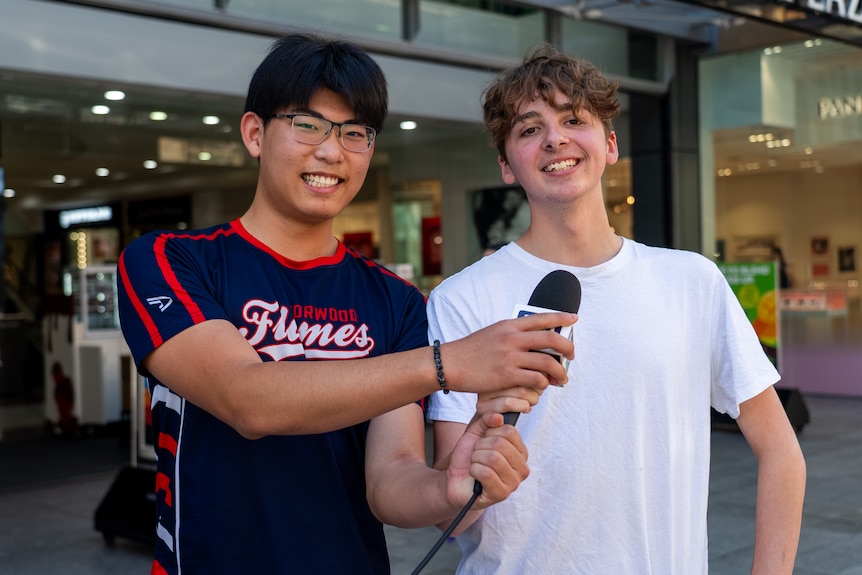
Darcy, 17, (right, pictured with Ethan) says he disagrees with One Nation but it is clear what the party stands for. (ABC Adelaide: Ashlin Blieschke)
For Darcy it’s no surprise that young people want something outside of the two major parties.
“We don’t want to deal with the people that made the problems beforehand, so let’s try something new,” Darcy says.