

I’ll be honest: being a SaaS CEO is one of the loneliest jobs I’ve ever had. And I say that having worked in advertising, which wasn’t exactly a warm hug in the early days (although it could be a lot of fun).
I’m venture-funded, running a company that’s growing fast, and I’m doing this for the first time. There’s no manual for me to read. There are an extraordinary number of things I don’t know — things that conventional CEOs probably handle before their second coffee. The hiring decisions (which I often get wrong), the board dynamics, the capital strategy, the product calls. I’m figuring it out in real time, and mostly in the dark.
And it’s lonely. Almost none of my peers my age are running their own companies. The few who are — other founders — are obsessively lost in their own businesses. We occasionally surface to swap war stories, but for the most part, we’re all drowning in our own private oceans.
The capital paradox
The private capital markets are the lifeblood of companies like ours. But there’s a tension that nobody talks about: every time you raise capital, to some degree, it’s because your business model hasn’t yet achieved the breakout you need.
ADVERTISEMENT
No entrepreneur wants to raise capital. We need to because we need to keep trying to solve the problem — and we need capital to back us while we solve it. But every raise, despite the Linkedin celebration posts and the champagne emojis, is really an admission: we haven’t yet solved the problem we set out to solve in a sustainable way.
I think the market knows this. It just doesn’t say it out loud.
The collapse
So when SaaS multiples collapse — and they have, brutally — you have to ask yourself some uncomfortable questions. What does this actually mean for the economics of our business? Because to some degree, the lifeblood of any venture-funded company is the private capital markets. And those markets are dictated by the public ones. When public multiples crater, the whole ecosystem feels it.
Last week, traders were literally saying “get me out.” The S&P North American Software Index dropped 15% in January alone — its worst monthly decline since October 2008. Bloomberg coined the term SaaSpocalypse. That’s not hyperbole. That’s the mainstream financial press.
It’s a scary time. I won’t pretend otherwise. Although, honestly, I think the market was massively overheated anyway.
Why it happened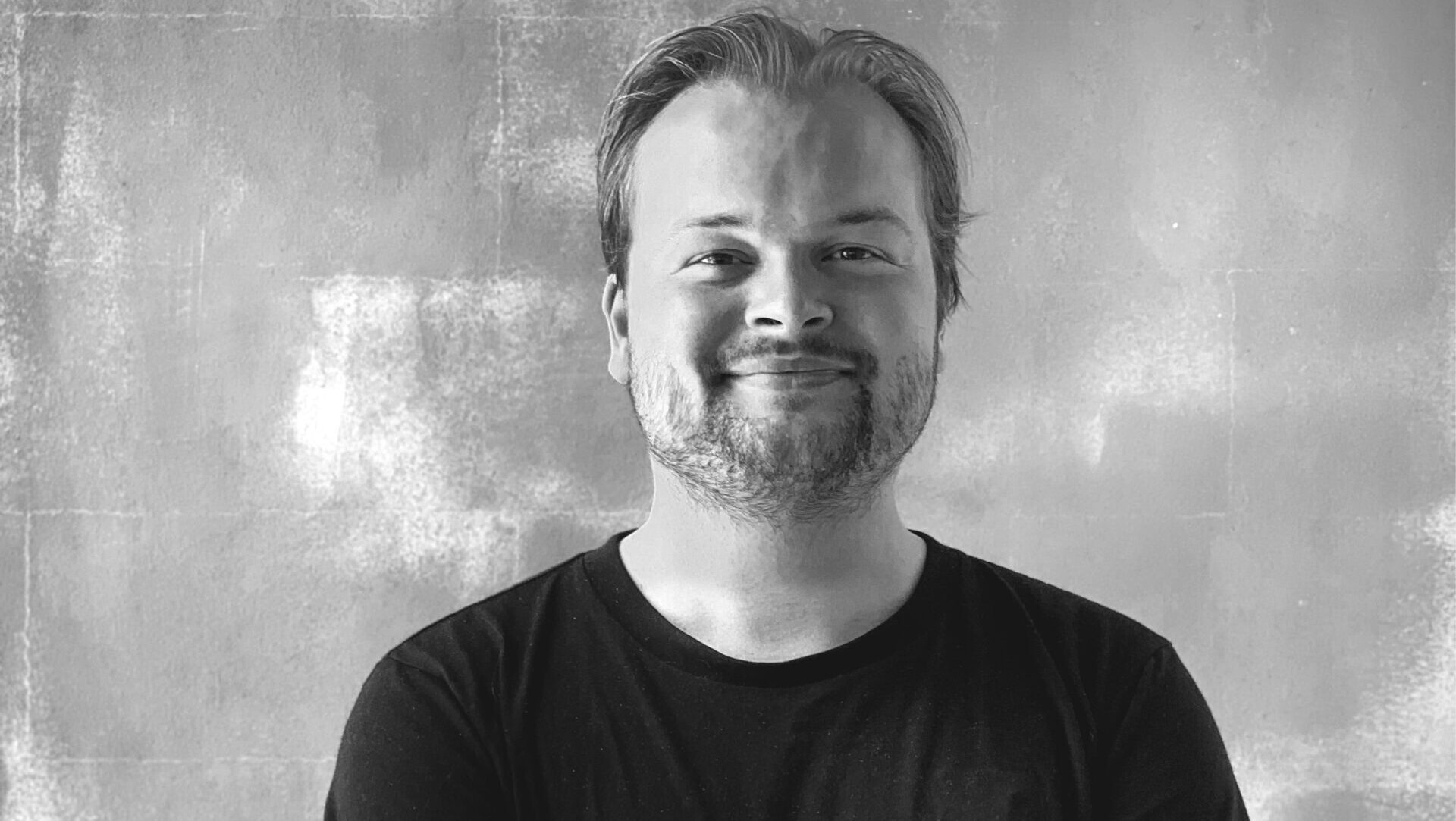
The author Henry Innis
Two things drove this, and neither should surprise anyone who’s been paying attention.
First, interest rates have stayed too low relative to inflation for too long. The whole market was running hot. SaaS wasn’t immune to that — if anything, it was the poster child.
Second — and this is the one that really matters — AI is demonstrating that the current paradigm of designed screens stitched together is an increasingly defenceless moat.
Think about what most enterprise software actually is. It’s a complex set of UI screens, carefully designed and painstakingly maintained, that guide a user through a workflow. The moat used to be the sheer engineering effort required to build and maintain all of that. It was expensive to write all of that code. It was expensive to hire all of those people. It was expensive to keep it all working.
That’s not true anymore.
Stitching screens together is easy now. A prompt can do in minutes what used to take a team months. And that makes the economics of most SaaS businesses suddenly look very poor. Enterprises are unlikely to keep paying millions of dollars for UI screens that can be generated in a conversation.
One of my earliest hypotheses at Mutinex has been that we must become a system of action — not just a system of screens — within a matter of years. A system of integration, a system of intelligence, a platform that doesn’t just display data but knows what to do with it. If we were just building screens, I’d be terrified right now. We’re not, but I’d be lying if I said every market shift like this doesn’t induce waves of anxiety that are hard to describe.
SaaS isn’t dead … but it is evolving
Here’s where I think the narrative gets lazy. The hot take is “SaaS is dead.” It makes a great headline. It’s also wrong.
The content industry gives us a useful analogy. Yes, magazines (basically) died. That’s the easy version. But content didn’t die — it evolved. And employment evolved with it. At the peak, magazines employed roughly 180,000 people. In 2025, there were 1.5m working full-time as digital creators. That’s not a dying industry. That’s an industry that exploded in a direction nobody predicted.
I think the same thing is about to happen to software.
Software won’t become less ubiquitous. If anything, it’ll become dramatically more so. But the form it takes is going to change radically.
What any SaaS CEO already knows
A few things are obvious to anyone running one of these businesses:
SaaS is rarely standstill. It’s easy to characterise as “buy X subscription.” But the reality is that most SaaS platforms are continually rebuilding themselves — adopting new technologies, shifting their architecture, evolving who they are. The ones that survive are the ones that change. The ones that don’t are the ones you’ve forgotten about.
The skillsets we hire are going to shift dramatically. I think it’s really unlikely that the current hiring profiles that have dictated SaaS for years will continue — particularly in engineering. Engineering may be going the way of the print journalist. Laptops made it easy to write. AI makes it easy to code. The great ones will be venerated. The mean won’t be.
From SaaS to IaaS
So what does all of this mean for those of us actually running these businesses?
I think the old Andreessen line — “software is eating the world” — is about to accelerate in ways even he didn’t anticipate. But software is going to move from building and stitching together screens to platforms with deep intelligence and real connections to data. Platforms that are genuine systems of record — that generate data, log actions, and recommend courses of action — are the ones that will increasingly win.
The per-seat model breaks when AI agents do the work of ten people. The screen-stitching model breaks when a prompt replaces your product. What doesn’t break is owning the intelligence layer: the data, the models, the decisions.
To my mind, it’s on us as SaaS businesses to become something new. Not Software as a Service. Intelligence as a Service.
SaaS 1.0 was really Screens as a Service. We built interfaces. We charged for access. It worked.
SaaS 2.0 — call it IaaS — is about creating intelligent systems that can think and act on a human’s behalf. Systems that don’t just show you a dashboard, but tell you what the dashboard means and what to do about it.
That’s where things are going. And for those of us who’ve been building towards that, this isn’t the SaaSpocalypse. It’s the starting gun.