
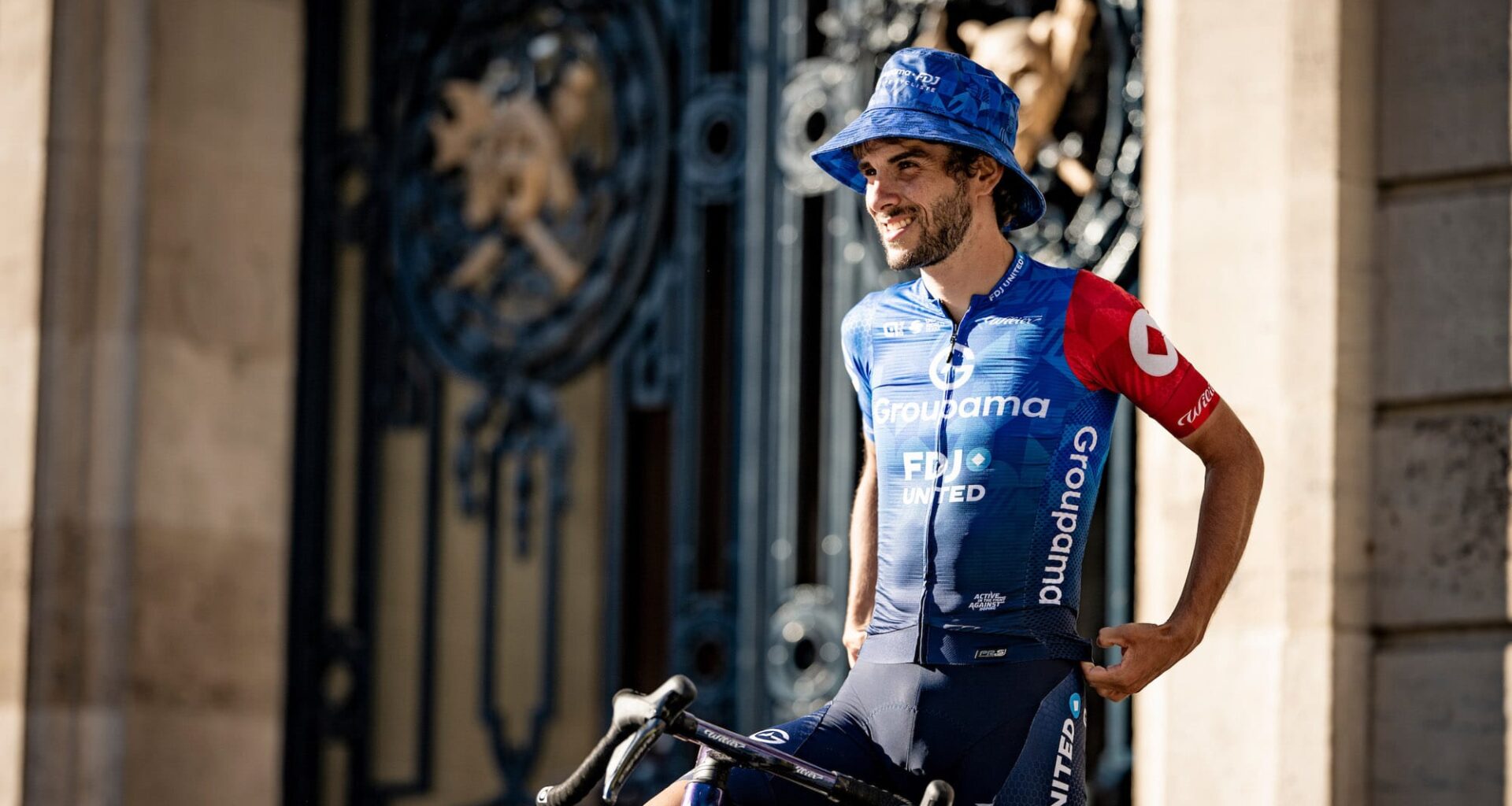

Scene: The lobby of the Crowne Plaza Hotel, Geelong. It’s a short walk from the press room at Cadel Evans Great Ocean Road Race, and it’s early in the running of the women’s event where nothing much is happening other than a brave but futile solo breakaway.
For the Australian racing bloc, Groupama-FDJ United, perhaps the definitive French cycling team, has made its way to the other side of the world along with the rest of the WorldTour peloton, looking for results and early season form. Guillaume Martin-Guyonnet is one of their riders here, and after a bit of back and forth on Whatsapp with the team press officer and later Guillaume himself, I’ve teed up an interview.
So: the lobby. There are blue velvet benches and armchairs everywhere and there’s a constant burbling background hum of generic hotel lobby kind of music, insistent beats and squiggly little melodies that leave very little impression in the moment other than filling the silence and making for a challenging transcript. And then Guillaume Martin-Guyonnet arrives: climber-skinny, long-haired, perma-stubbled, warm, and, as the interview unfolded, open to following the conversation wherever it flowed.
For those who don’t know Guillaume Martin-Guyonnet: over a decade-long pro career, he has made a name for himself as one of France’s top GC riders. At the 2021 Tour de France, he was the best placed home rider, finishing in eighth; the previous year he won the climber’s classification at the Vuelta a España. He’s not a prolific winner, with 11 victories over his career, but he’s consistent: in the 10 Grand Tours he’s completed since 2019, he’s never finished outside the top 20. At 32 years old, he’s of a similar generation to Thibaut Pinot and Romain Bardet but has avoided some of the crushing scrutiny that weighed down their careers.
Maybe you know all of this, in which case, Guillaume Martin-Guyonnet won’t need an introduction – although you may know him better as just ‘Guillaume Martin’, a name he’s changed to incorporate his mother’s surname as well (“I have two parents and I want to highlight both of them … it’s an old vestige of patriarchy to keep only the father’s name,” he has said of the change). In that comment alone, I feel you can learn something meaningful about the rider.
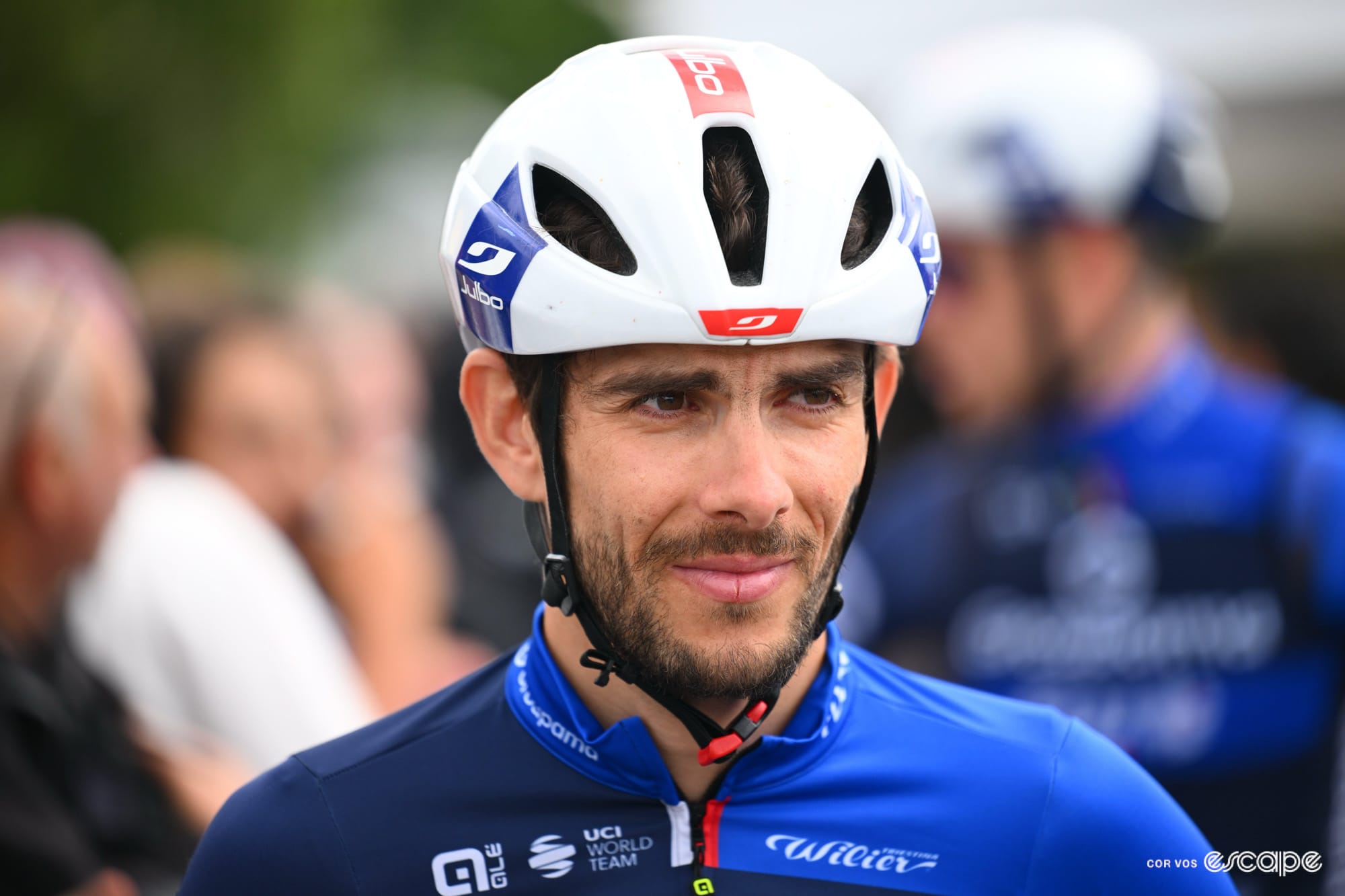
There are a couple of hundred riders in a bike race, but there’s only one Guillaume Martin-Guyonnet, and it’s his cerebral mindset that makes him such an interesting figure in the sport. He’s the author of three books; two are extended philosophical essays exploring cycling through that lens, building on his Masters in Philosophy from the prestigious Université Paris Nanterre. And unlike the single-minded existence many pro cyclists seem to have, Martin-Guyonnet seems conscientious about maintaining a vibrant life with interests away from cycling.
I’d only spoken to him once before, in the pressure-cooker of the Tour de France – I was mostly just trying to get to grips with one very particular aspect of his life at the time – but that was enough to learn that his English was excellent, and that there was more to discover. This time, in Australia, offered a different opportunity – a more relaxed context in which we could sit in a hotel lobby for the better part of an hour to unpack all of the above and more.
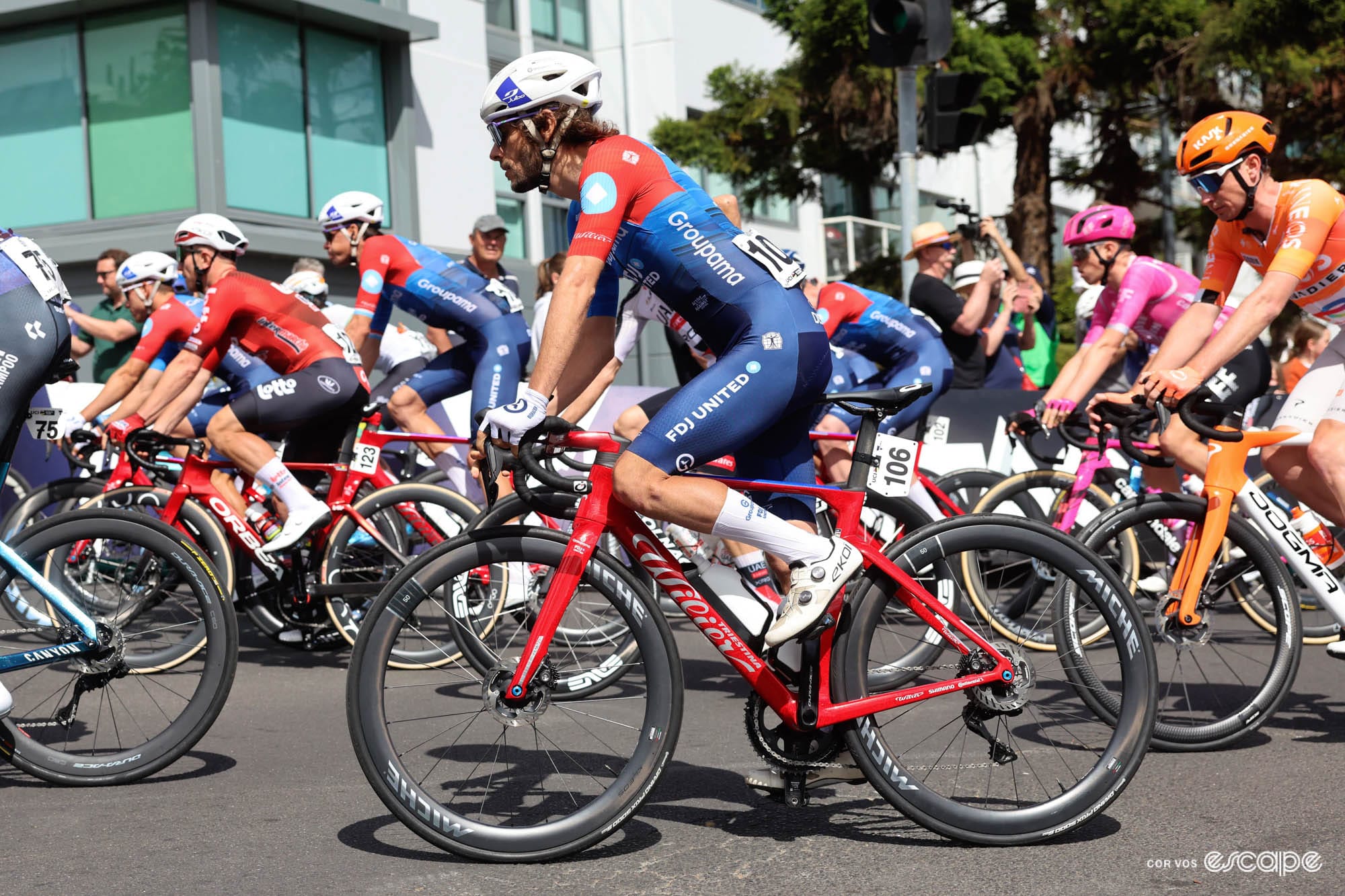 Guillaume Martin-Guyonnet rolling out at Cadel Evans Great Ocean Road Race.
Included below is the bulk of our discussion, with Guillaume generously opening up not just about his cycling but his philosophical and literary interests. Coming up at some point in the next week or so, there’ll be a more whimsical part two (Guillaume ranking his donkeys and explaining the democratic process in his farm’s annual animal elections, of course).
This conversation has been edited lightly for fluency and flow.

Iain Treloar: I appreciate you taking the time to talk, Guillaume. This is your 11th season as a pro, and your first time in Australia. How are you finding it? Is it what you imagined, or different to your expectations?
Guillaume Martin-Guyonnet: It’s really the image I had of Australia. My brother was here a couple of times, on a working holiday permit, and he told me a lot about how he really loves the country. And I have to say, I’m not disappointed.
I wanted to mostly break the routine. As you said, it’s been more than 10 years that I’m a pro, and winter in my place is pretty hard, so it’s good to have three weeks in the sun with nice races. For me, it’s not hard enough to really compete, and last week, my legs were also not so good. But I think for the preparation of the season, it can be helpful, and I’m happy to have the experience.
IT: You were in the breakaway at the Tour Down Under. Was this just to tune your legs up? Were you bored? Were you just looking for an adventure or something different?
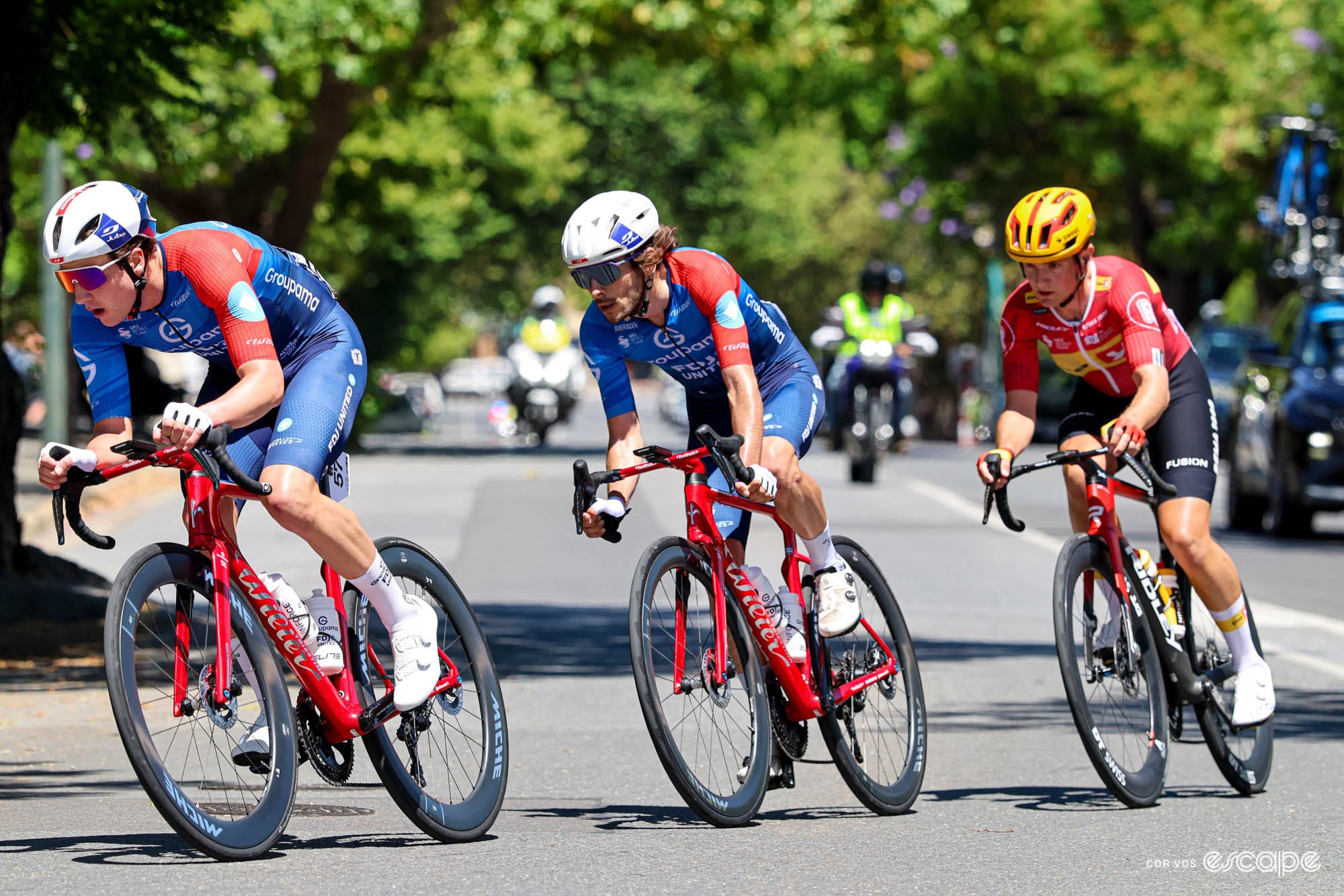
GMG: I actually didn’t think about it until an hour before the start of the race, and my sport director told me about the bonus seconds we could have after 10 kilometres. My prologue the day before was not good, so I was thinking maybe I can easily get a few seconds like this. And then I was involved in the breakaway, and I said, ‘why not? It’s a good preparation. It’s a good training.’
I haven’t done this that often in my career – I think it was the first time that I was in a really, you know, early breakaway like this. So that was fun.
IT: It’s nice that there’s still time for something new, even 11 seasons into your career – something different. I like that.
This is your second season with Groupama-FDJ, and you’ve previously been with Cofidis and Wanty. What are the differences between those teams and the levels of professionalism, or the way that those teams approach racing? Is that all pretty much the same?
GMG: It’s always hard to compare, and I don’t want to … [pauses, smiling]
IT: … to shit on the other teams?
GMG: [chuckles] Yeah. So when I arrived in Wanty, it was also a really small team with a small budget at that moment, so it’s hard to compare. But of course, in Wanty, it was more international, and I liked it – to speak English, to meet different nationalities, experience a different way of thinking. In Groupama, it’s more of a French team, a bit like Cofidis, but much more professional.
IT: And I guess Cofidis has a little bit more Spanish influence?
GMG: Yeah, I could learn Spanish in Cofidis – that was a really good point. But now it’s very professional in Groupama, and they do the things the way it should be. So it’s good to be in the team.
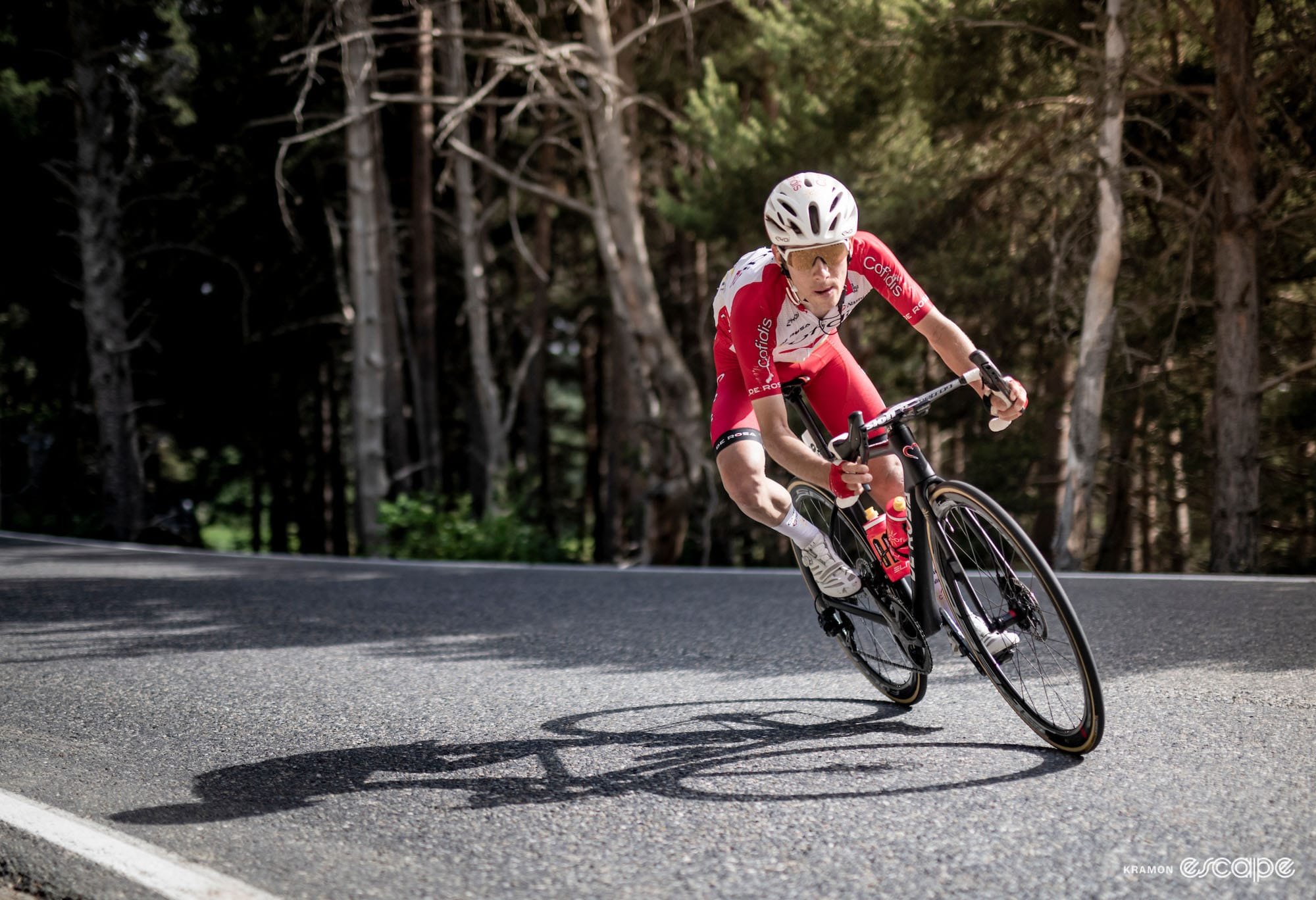 Martin-Guyonnet had his career-best Tour de France result at the 2021 edition.
IT: Groupama does have this very sort of French identity, and seems like a natural place for … well, maybe this is just a stupid way that an English-speaking audience looks at it. But there are certain riders that you’re like, ‘Well, this is a definitively French rider – a representation of France, within an athlete.’ And for me, you strike me as one of these classically French riders, and it feels like a good fit.
Does that comment reflect your reality, or is this just Anglophile observations from afar that maybe don’t match up to reality?
GMG: I don’t know – as I said, I really like the experience of being in a team with a lot of different cultures, and sometimes I feel that in this team, we are too French – so, it can be a danger, when we are just all together, thinking the same way. But it is true that there is a French identity in Groupama. It’s also a good thing, that talks are even more easy at lunch or dinner. So it has some good points – positive things and bad things.
IT: Is there a feeling of increased pressure during races like the Tour de France, for instance? Not just for French riders, but for Groupama specifically – is that something that you’ve noticed?
GMG: Hmm … Actually, I haven’t. So I’ve done nine Tours de France, and that’s not the race where I feel the most pressure – because, you know, the whole thing is so big that at some point you’re not yourself, you know. It’s like you’re playing a part; it’s like you have your own identity, and then there is the rider in front of the media, with the public. And we are not the same.
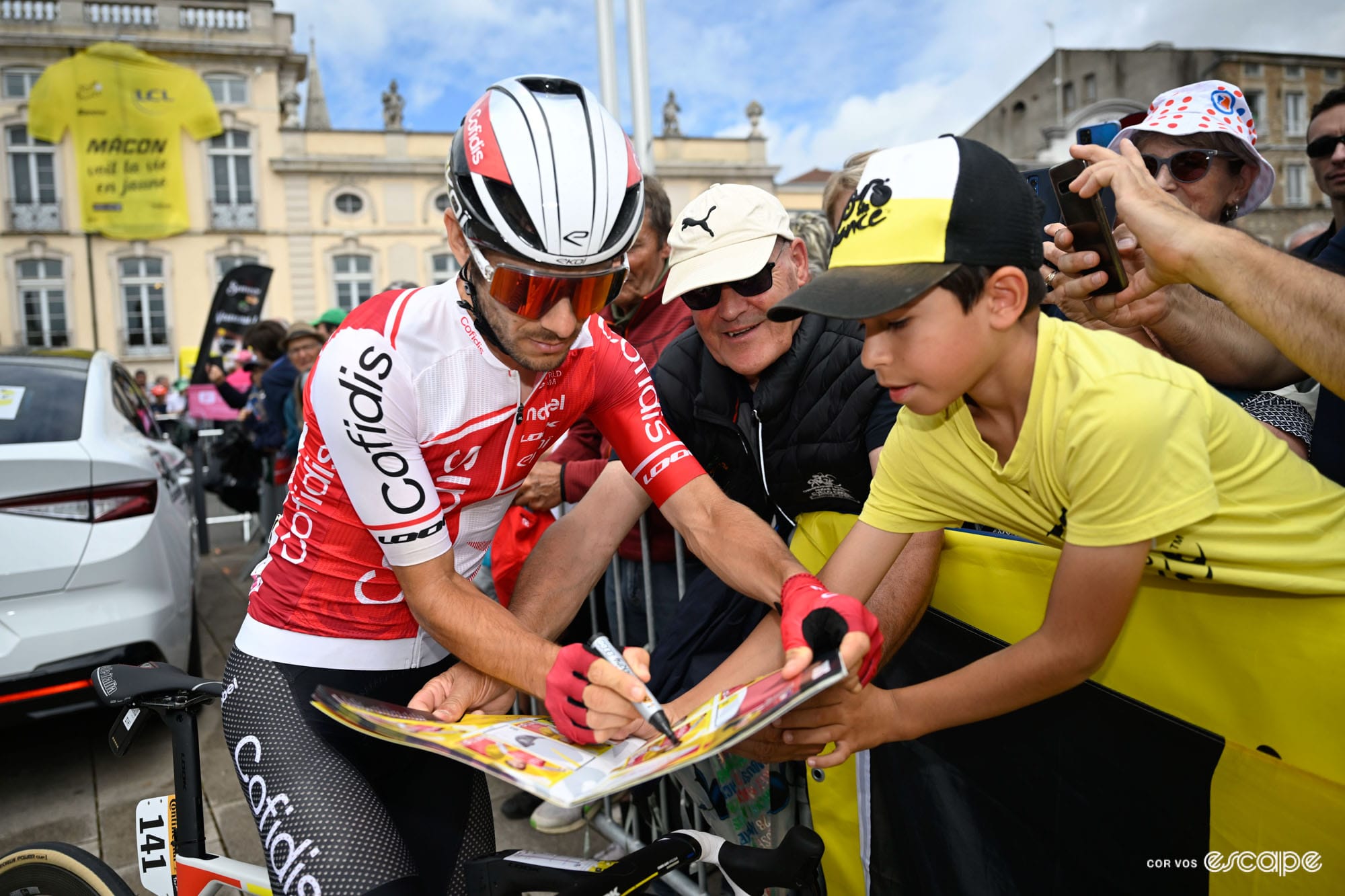
So I hide myself behind that guy – the rider. So that’s why I don’t feel pressure, especially, in the Tour. I think I have more pressure starting the season – I always feel more pressure when I start the season in any course, any race, compared to at the Tour. And now, as we’re talking about pressure, we also feel more pressure coming from the race for UCI points rather than any specific race.
IT: And for your individual targets, are there races that you go into and feel a weight of expectation on you, that you need to do really well in such-and-such race, or is it, again, kind of split into these two versions of yourself – the private self and the rider?
GMG: The Tour is really the mediatic thing that splits yourself into two parts. But it’s hard to talk about pressure, because, you know, we are so used to dealing with it, and in the end it comes – it’s easy to say, but it’s true – it comes mainly from ourselves. It’s not from what the team expects from me. It’s what I expect from me.
Especially after 10 years of my career, I am able to listen with one ear what the team says, but focus mostly on what I want and what are my personal goals. So that’s what motivates me right now.
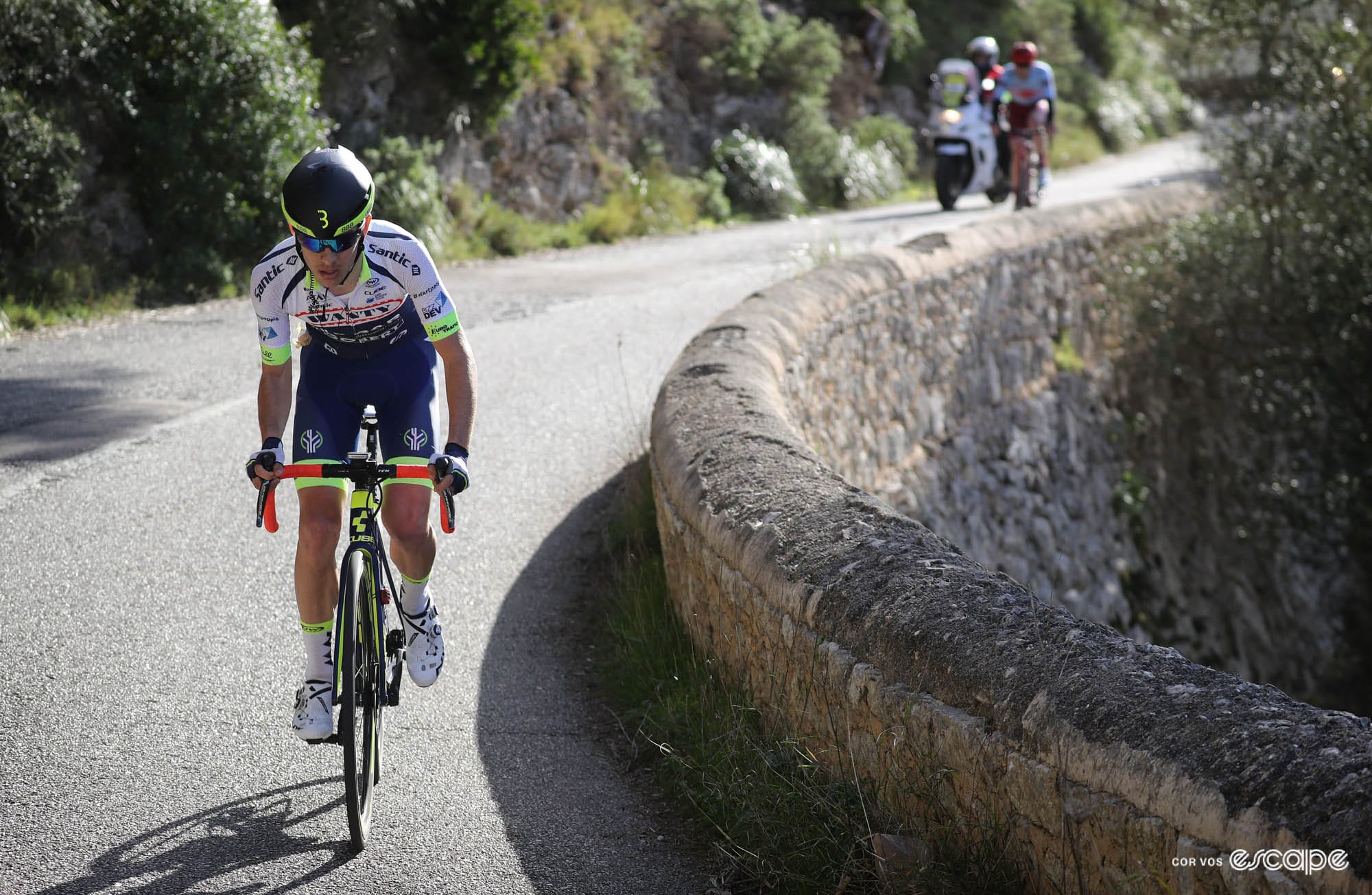 An early-career Guillaume Martin, in Wanty colours.
IT: That feels like there needs to be a good level of self-awareness and self-understanding, like you need to know yourself to be able to get to that point. How long did it take to reach that point where you knew what you needed to do for yourself, versus what was expected of you from the team, or from the public?
GMG: It’s always … You never achieve it. It’s always something to build. You always learn [about] yourself. Sometimes you make mistakes, you learn, and next time, don’t do the mistake, but two years later you do the same mistake, and you start again from zero. So of course, over the years, you avoid a few certain mistakes, but it’s so hard. You have to start again from zero every year, like a renewal, almost every year.
IT: Do you think that this kind of self-reflection is common in cycling? It sounds like with you there’s a more psychological journey you’re on rather than physical goals that you need to hit, or whatever.
GMG: Yeah – I think a lot of riders have their own tricks to deal with pressure, to keep motivation. Maybe the difference is that I can formulate it, or I’m conscious of it – but I think we all develop our techniques to avoid the routine, to keep motivation, to put pressure away and do things. You have to.
IT: I think that you’re also able to articulate things in a way that maybe some others can’t, or don’t feel comfortable sharing. You mentioned that there are these separate versions of yourself within different contexts, and you have this intellectual background – a master’s degree in Philosophy, and interests that appear quite different to a lot of the others within the peloton. Do you find it difficult to balance these sides of yourself – not just within a bike race, but in life?
GMG: As an individual?
IT: Yeah.
GMG: [thoughtful pause] No, actually. Because I have my moments where I’m fully a cyclist, where I’m completely devoted to my job, because it’s a job. And when I ride, I feel completely involved with the team and with my teammates’ conversations.
And I need, also, the moments where my other life – other lives, because there are several – are expressed. For example, this week, two times I went alone into Melbourne just to enjoy the city. And yeah, I need those moments to just breathe. But it doesn’t mean that I don’t like the life in a cycling team, just that I need those two things, and – I know we’re going to talk about the donkeys too [laughs] – that’s also a moment where I don’t think about cycling, I don’t think about a lot of things, and I’m just there enjoying the moment with my animals.
This post is for subscribers only
Subscribe now
Already have an account? Sign in
Did we do a good job with this story?
👍Yep
👎Nope