
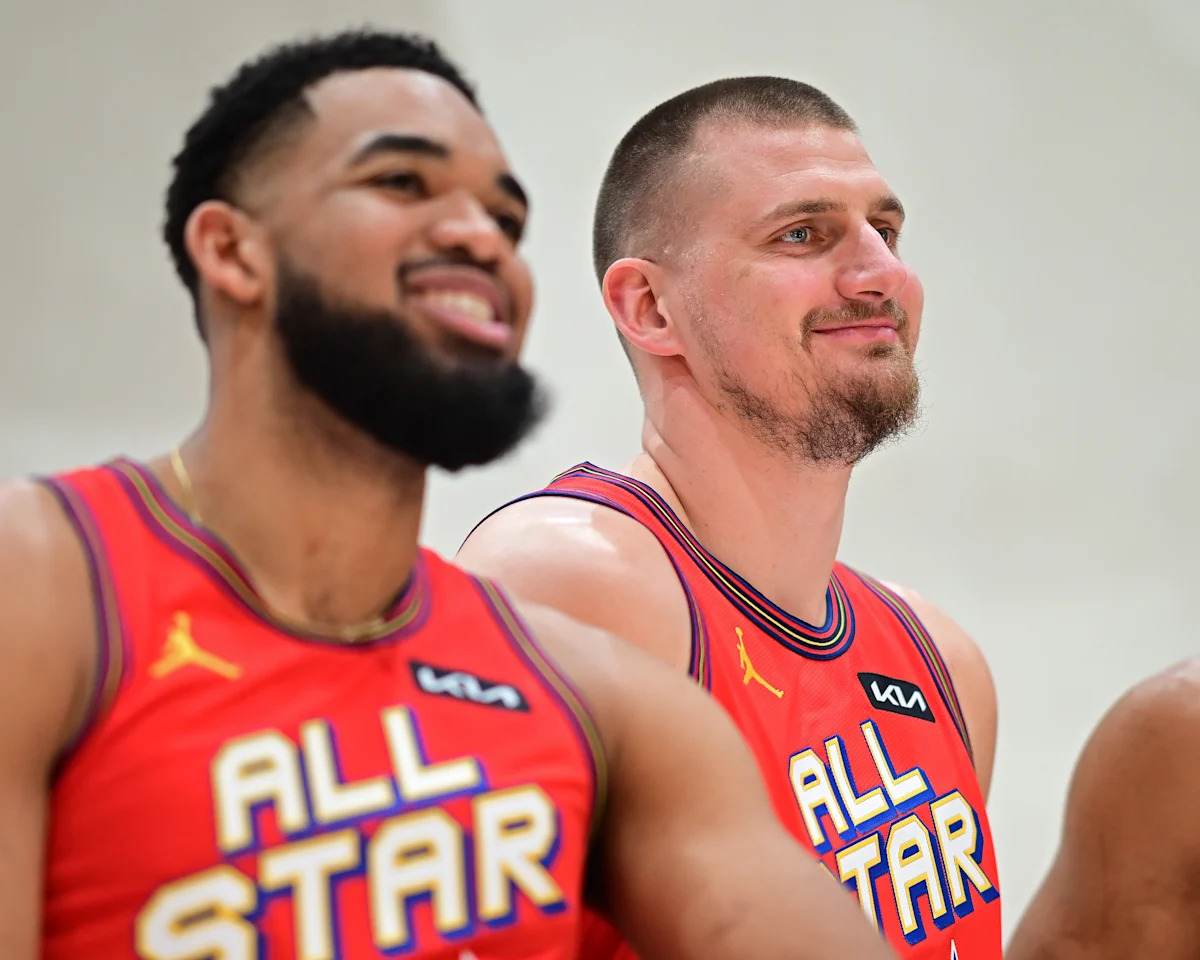
You have questions about the 2026 NBA All-Star Game, which for the first time pits the USA vs. World in a round-robin tournament of three teams across four 12-minute games.
It is confusing, and the story of how we got here is a long and winding one, featuring a ton of wrinkles to the format, each of which has failed to inspire competition from the players.
Advertisement
Let us summarize that story for you, as we answer your questions.
When is the 2026 NBA All-Star Game?
The 2026 NBA All-Star Game is on Sunday at 5 p.m. ET on NBC.
Prior to that: The celebrity game, Rising Stars competition and HBCU Classic will be held in succession on Friday, beginning at 7 p.m. ET; and the slam dunk and 3-point contests, as well as the return of the Shooting Stars competition, will highlight All-Star Saturday, which begins at 5 p.m. ET.
NBC will air all events for the first time since 2002.
[Subscribe to Yahoo Sports NBA on YouTube]
Where is the 2026 NBA All-Star Game?
The Los Angeles Clippers will host the 2026 NBA All-Star Game at the Intuit Dome, which opened its doors to fans in 2024. The arena features a unique wall of stands on one end.
Advertisement
An interesting wrinkle: Steve Ballmer’s Clippers are currently under investigation by the NBA for allegedly circumventing the salary cap. Kawhi Leonard, whose alleged no-show job at Ballmer-funded Aspiration is central to the investigation, is an All-Star this season.
Who is in the 2026 NBA All-Star Game?
The rosters, as selected by conference, in alphabetical order:
EASTERN CONFERENCE
WESTERN CONFERENCE
Giannis Antetokounmpo, Milwaukee Bucks
Deni Avdija, Portland Trail Blazers
Scottie Barnes, Toronto Raptors
Devin Booker, Phoenix Suns
Jaylen Brown, Boston Celtics
Stephen Curry, Golden State Warriors
Jalen Brunson, New York Knicks
Kevin Durant, Houston Rockets
Cade Cunningham, Detroit Pistons
Luka Dončić, Los Angeles Lakers
Jalen Duren, Detroit Pistons
Anthony Edwards, Minnesota Timberwolves
Brandon Ingram, Toronto Raptors*
Shai Gileous-Alexander, Oklahoma City Thunder
Jalen Johnson, Atlanta Hawks
Chet Holmgren, Oklahoma City Thunder
Tyrese Maxey, Philadelphia 76ers
LeBron James, Los Angeles Lakers
Donovan Mitchell, Cleveland Cavaliers
Nikola Jokić, Denver Nuggets
Norman Powell, Miami Heat
Kawhi Leonard, Los Angeles Clippers*
Pascal Siakam, Indiana Pacers
Jamal Murray, Denver Nuggets
Karl-Anthony Towns, New York Knicks
Alperen Şengün, Houston Rockets*
Victor Wembanyama, San Antonio Spurs
* Alperen Şengün was named as an injury replacement for Shai Gilgeous-Alexander (abdominal strain). Brandon Ingram was named as an injury replacement for Stephen Curry (knee). NBA commissioner Adam Silver also selected Kawhi Leonard to the game in order to balance the rosters under the new USA vs. World format.
Advertisement
What is the new All-Star Game format?
The new format will feature a round-robin tournament between three teams — two made up of players from the United States (USA Stars and USA Stripes) and a third consisting of international competitors (Team World). Each roster must include at least eight players.
Because the original 24 All-Star selections resulted in nine international players and 15 from the U.S., the commissioner added Leonard to the U.S. player pool.
Here’s how the teams have been divided for the 2026 All-Star Game:
USA STARS
USA STRIPES
TEAM WORLD
Scottie Barnes
Jaylen Brown
Giannis Antetokounmpo
Devin Booker
Jalen Brunson
Deni Avdija
Cade Cunningham
Kevin Durant
Luka Dončić
Jalen Duren
Brandon Ingram
Nikola Jokić
Anthony Edwards
LeBron James
Jamal Murray
Chet Holmgren
Kawhi Leonard
Alperen Şengün
Jalen Johnson
Donovan Mitchell
Pascal Siakam
Tyrese Maxey
Norman Powell
Karl-Anthony Towns
Victor Wembanyama
Each team will face each other once in the elimination stage:
Game 2: Stripes vs. Game 1 Winner
Game 3: Stripes vs. Game 1 Loser
The two teams with the best records will advance to the championship game. If all teams finish the round robin with a 1-1 record, the two teams with the highest point differential will play each other for the title.
Advertisement
Each game will be 12 minutes.
In last year’s All-Star Game round-robin tournament, each member of the winning team received $125,000 and each member of the runner-up team received $50,000.
So why is there a new format, and why is it so confusing?
The All-Star Game was once held between teams from the Eastern and Western conferences, facing each other in what looked a lot like an NBA game — four 12-minute quarters and intense competition among the greatest basketball players in the world.
Somewhere along the way, most likely as parties and corporate sponsorships took greater priority throughout the weekend, the players stopped caring as much about competition.
Advertisement
As players took the game less seriously, scores for the first time soared into the 190s in 2016 and 2017, and in 2018 the NBA changed its All-Star Game format for the first time.
For six years, the NBA named two captains who selected their 12-man teams from the 24-player field. That stretch featured a number of wrinkles, including an Elam Ending and a playground-style draft, each meant to inspire more competition among the players, and each failing most every year.
2018: Team LeBron 148, Team Stephen 145
2019: Team LeBron 178, Team Giannis 164
2020: Team LeBron 157, Team Giannis 155
2021: Team LeBron 170, Team Durant 150
2022: Team LeBron 163, Team Durant 160
2023: Team Giannis 184, Team LeBron 175
The January 2020 death of four-time All-Star Game MVP Kobe Bryant, who epitomized effort across 18 appearances in the exhibition, did inspire an uptick in intensity that year, when a team captained by LeBron defeated one captained by Antetokounmpo 157-155.
The resurrection of the All-Star Game was short-lived, however, and in 2024 Silver reverted to the East vs. West format. It did not go well, as the East beat the West 211-186.
Advertisement
So, Silver instituted a just-as-confusing round-robin tournament last year, featuring three teams of All-Stars and a fourth of Rising Stars, and that, obviously, did not go well, either (Shaq’s OG’s beat Chuck’s Global Stars 41-25).
Rather than scrap the game entirely, ending what was once one of its signature events, Silver made another effort to inspire the same from the players in this confounding USA vs. World round-robin format.
The only thing that will truly change the level of competition is care from the players, who are more incentivized to remain healthy for the teams that pay them millions. If — and that’s a big if — the new format inspires increased competition from players who want to represent their countries, much like the Olympics elicits effort, bring it on.