
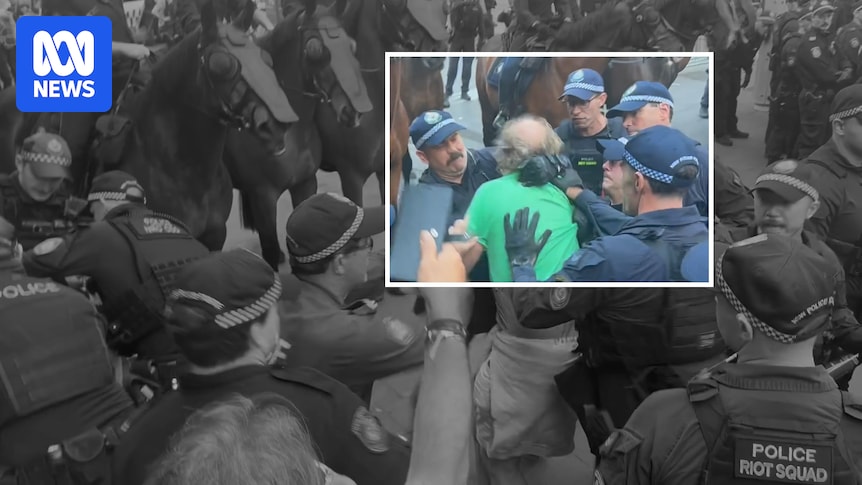
ABC NEWS Verify has obtained fresh video of the arrest of a 76-year-old protester who says he sustained injuries and was taken into police custody before being released without charge.
Australian filmmaker James Ricketson was forced to the ground by several police officers on Monday evening in a scuffle that began with a touch on the shoulder.
Mr Ricketson told the ABC he had spoken to lawyers, who said that his prospects of receiving compensation for being locked up were slim.
On February 7, NSW Premier Chris Minns declared the visit of Israeli President Isaac Herzog to be a major event, giving the government special powers to restrict protests.
A clause in the 2009 Major Events legislation could make it difficult for protesters like Mr Ricketson to pursue compensation in the courts for unlawful arrest.
Do you know more? Contact ABC NEWS Verify.
Six on one
In the video, police have established a line of officers facing protesters on George Street.
A group of officers brings a protester from behind the line and pushes them up against a low wall at Sydney Town Hall, brushing past Mr Ricketson.
Mr Ricketson’s hand is seen on the left of the frame as he puts it on the shoulder of one of the officers scuffling with the protester.
It’s not clear what, if anything, is said, but another police officer grabs Mr Ricketson’s hand, pulling him into the middle of a group of six officers.
Mr Ricketson struggles against the officers, and is then put in a headlock and pulled to the ground.
A group of officers remains on top of him.
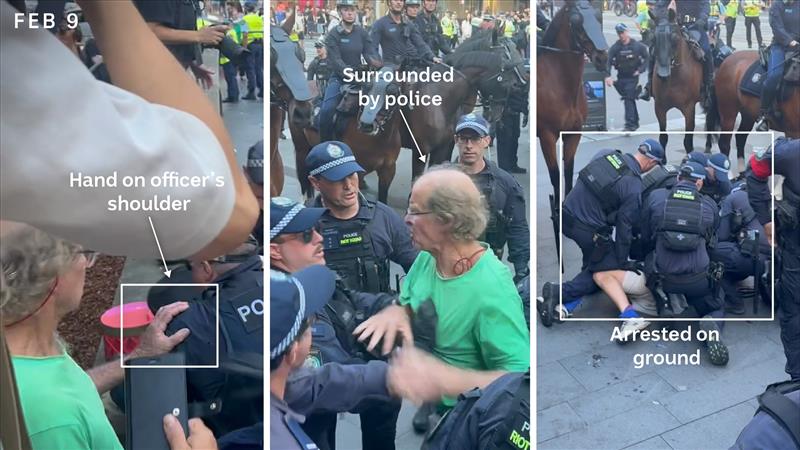
New video of the arrest of a 76-year-old man shows him being wrestled to the ground at Sydney’s anti-Herzog protest. (ABC NEWS Verify)
“The next thing I know I was lying on the ground, facedown … then they hog-tied me with tie things they use, not handcuffs. They did it so tightly I’ve still got the bruises on my hands from those.”
Mr Ricketson provided the ABC with photos of cuts to both of his arms that he says he sustained in the process.
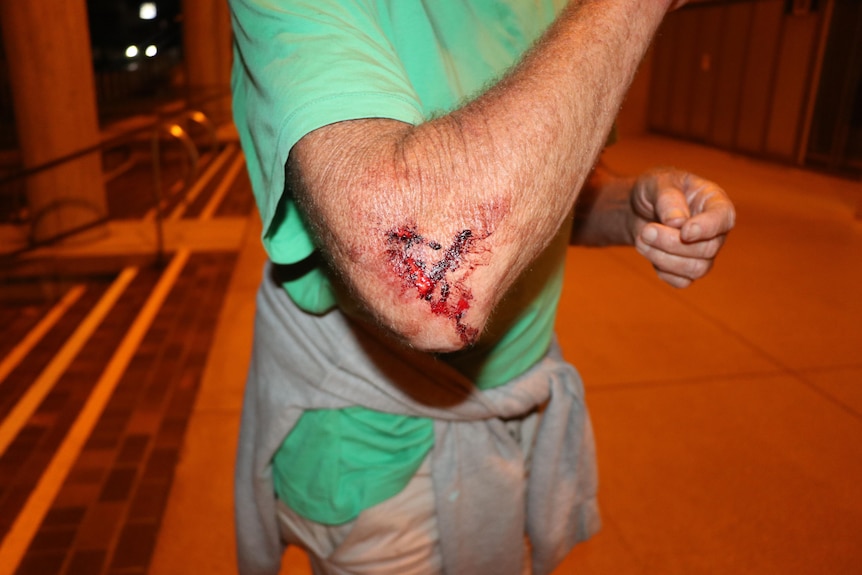
Mr RIcketson provided ABC NEWS Verify with images of injuries he says he sustained during the incident. (Supplied: James Ricketson)
“Then they dragged me to my feet and walked me to the police wagon and said I was under arrest for assaulting a police officer. It was just nonsense,” he said.
Mr Ricketson said he was taken to Darlinghurst Police Station, where he ended up in a further scuffle with another police officer, who tore his shirt.
After several hours, Mr Ricketson said police reviewed the body cam footage and told him he was free to go, releasing him without charge.
Little recourse?
A clause in the Major Events Act 2009 could make it difficult for protesters like Mr Ricketson to seek compensation for unlawful arrest or false imprisonment.
Under the act, compensation is “not payable” by or on behalf of police officers or the state for “an act or omission that is a major event-related matter or that arises (directly or indirectly) from a major event-related matter”.
Greg Barns SC, criminal justice spokesman for the Australian Lawyers Alliance, told ABC NEWS Verify that the clause was untested and unclear.
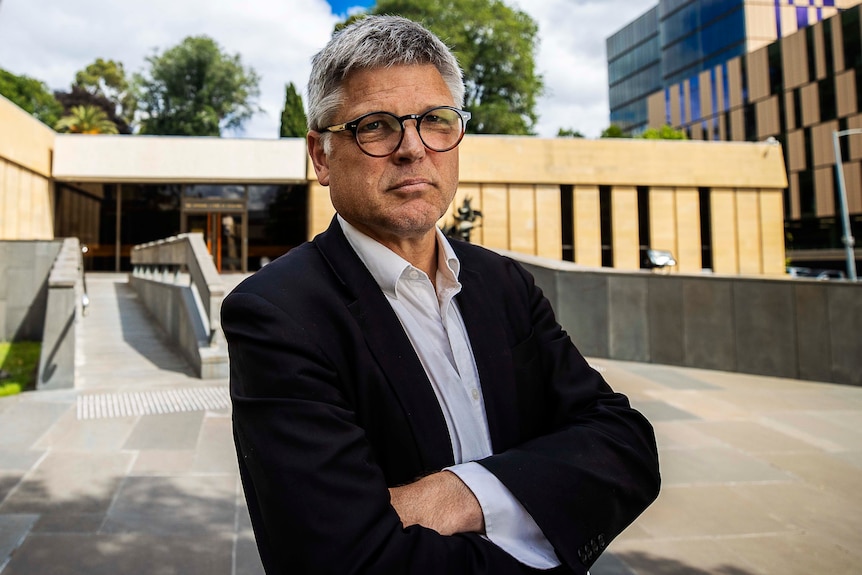
Greg Barns SC says the law is “poorly drafted”. (ABC News: Luke Bowden)
“We are in new territory,” he said.
“These restrictions need to be tested by the court, but they appear to stop people bringing a civil action for false imprisonment and unlawful arrest.
“In a democracy, police must always be held accountable for their actions and one of the effective means of doing that is through citizens having the capacity to seek compensation when police wrongdoing affects them.”
He said the law allowed for compensation when injury occurred, but that it was “poorly drafted” and the circumstances under which compensation could be sought were unclear.
“For example, in section 62 it says that compensation is available for actions taken by, in this case police, if they were not done in good faith and caused personal injury,” he said.
“It’s unclear if a person who is injured by police punching them have to first show police did not act in good faith in order to get compensation for an injury.”
A sense of impunity?
Asked on Thursday about whether his declaration of a major event meant police went into the protest with a sense of impunity, Mr Minns said he did not believe that was the case.
“I think a fair-minded person would look at the job of a NSW police officer and say, ‘It is almost impossible,'” Mr Minns said.
“They’re charged with keeping public order. We don’t have the counterfactual. We can’t show you what would happen if there was thousands of protesters, smashing up against thousands of mourners on the streets of Sydney.
“But my view is that would have been horrifying. And I’m grateful that those lines weren’t breached.”
NSW Greens MLC Sue Higginson, who was present at the protest on Monday, told ABC NEWS Verify she laid the blame for the violence seen at the protest on the premier and his declaration.
“It was clear for all of us to see that the police were emboldened, they were acting with either explicit or implied authority to break up the protest, and the premier rushing the major event declaration just days before was fuel on the fire.
“The actions of the police … could only have happened if those officers felt they had been given permission.”
Criticism of the law has not been limited to the Greens.
On ABC Radio on Tuesday, NSW Labor MLC Stephen Lawrence raised the prospect that the law would extinguish civil liability.
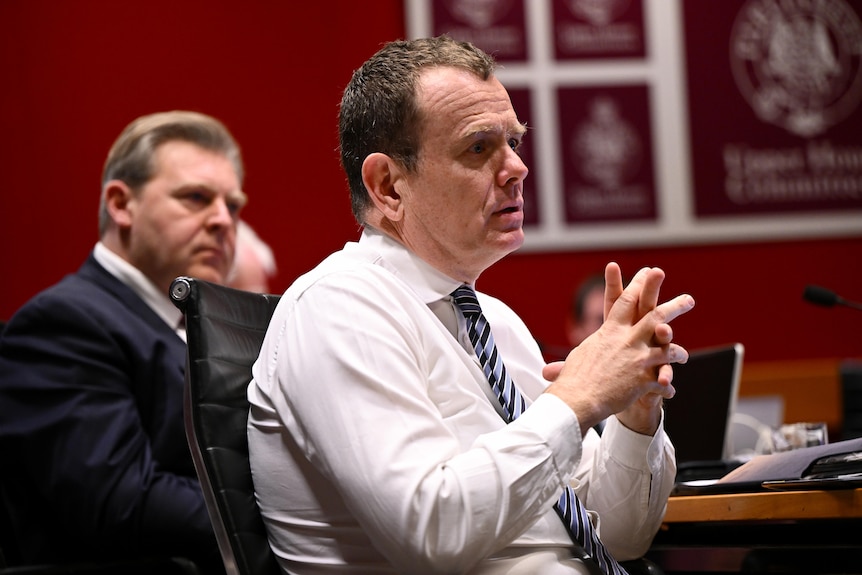
Stephen Lawrence has raised issues with the law. (AAP: Bianca De Marchi)
He told ABC NEWS Verify that he assumed the Palestine Action Group’s failed challenge to the police’s powers would be appealed, and so it was “probably too early to know whether people’s rights to sue arising from Monday night will be extinguished in part”.
“If the decision is not overturned and it becomes common practice to apply these declarations to political events there may well be a case to amend the act.
“I intend to write to the Attorney-General and suggest he consider looking at the issue.”
For his part, Mr Ricketson said he would prefer not to pursue legal action.
“I would much rather see the police and demonstrators sitting down over a cup of coffee and talking about how do we guarantee this will never happen again,” he said.
Loading…