
Consumers say they want country-of-origin labelling on wood products sold in Australia, as more timber is shipped in from overseas.
Timber imports have hit record levels, continuing to rise after the pandemic-era jump in demand for building materials.
A recent survey by consumer group Choice showed nearly all buyers want information about the timber they are purchasing.
“People care about making choices that benefit the environment and are less destructive than other options,” Choice reporter Jarni Blakkarly said.
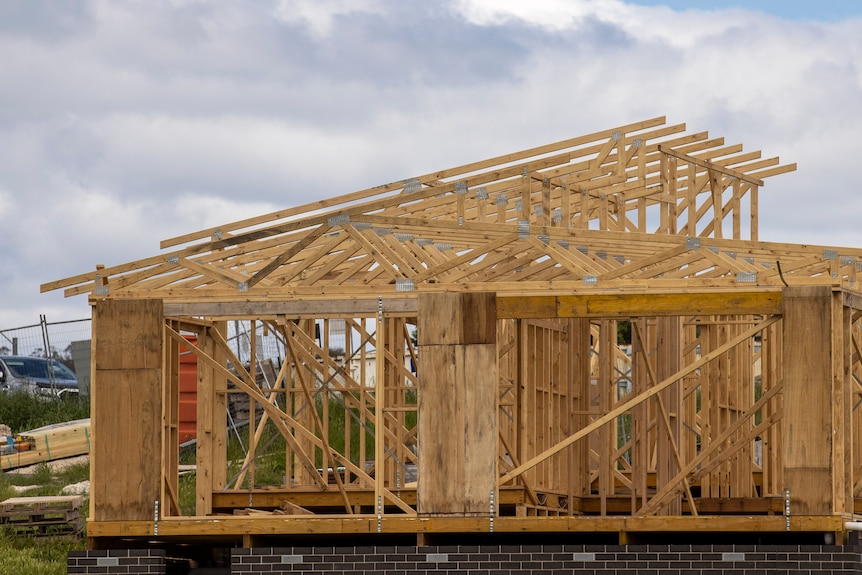
Demand for construction material remains high in Australia. (ABC News: Luke Bowden)
Choice surveyed more than 7,200 people, with 99 per cent of respondents wanting to know where and how a timber product was sourced.
Nearly all of those surveyed said country-of-origin information would sway their buying behaviour.
Mr Blakkarly said clear labelling laws allow shoppers to vote with their wallets.
“Our survey showed people care about this information,” he said.
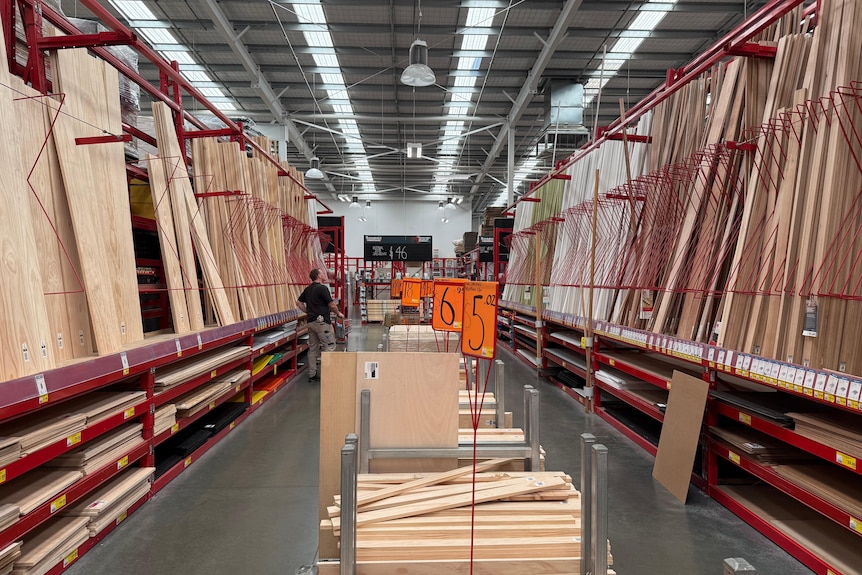
Choice says consumers want to know where their timber originates from. (ABC Rural: Warwick Long)
Laminated veneer lumber (LVL) is a widely used engineered wood product made up of layers of timber.
In Senate hearings this week, Australian Bureau of Agricultural and Resource Economics and Sciences (ABARES) staff reported that LVL imports alone had risen 40 per cent in the year to 2023-24.
About 120,000 cubic metres of LVL were imported in 2022-23, and 167,000 cubic metres the following year.
ABARES said about half the imported LVL came from China, while Malaysia and Indonesia each supplied about 10 per cent.
Origin labelling ‘urgently needed’
The Australian Forest Products Association (AFPA) has been calling for timber labelling reform for several years and is encouraged by the Choice survey.
“If consumers are the loudest voice in this, then I’m sure we’ll get there,” AFPA chief executive Diana Hallam said.
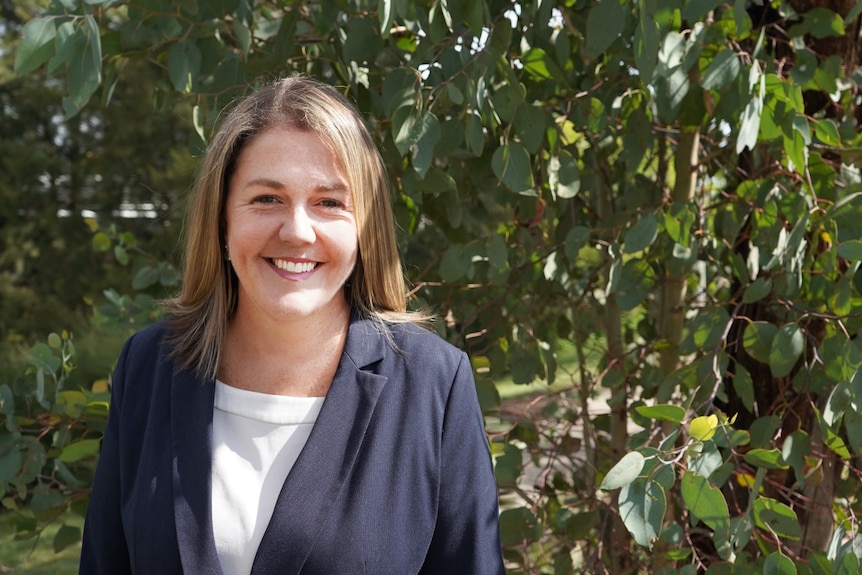
Diana Hallam says better timber labelling gives buyers more information and supports the local industry. (Supplied: Australian Forest Products Association)
Ms Hallam said the current laws are not strong enough and it was clear that consumers and commercial builders want more.
“There will always be demand for both hardwood and softwood in Australia,” Ms Hallam said.
“If we aren’t supplying those types of timbers, then their only options are to be imported.
“In the case of hardwood timbers, if you don’t want to harvest them from sustainably managed forests in Australia … then which forests do you want them to come from?”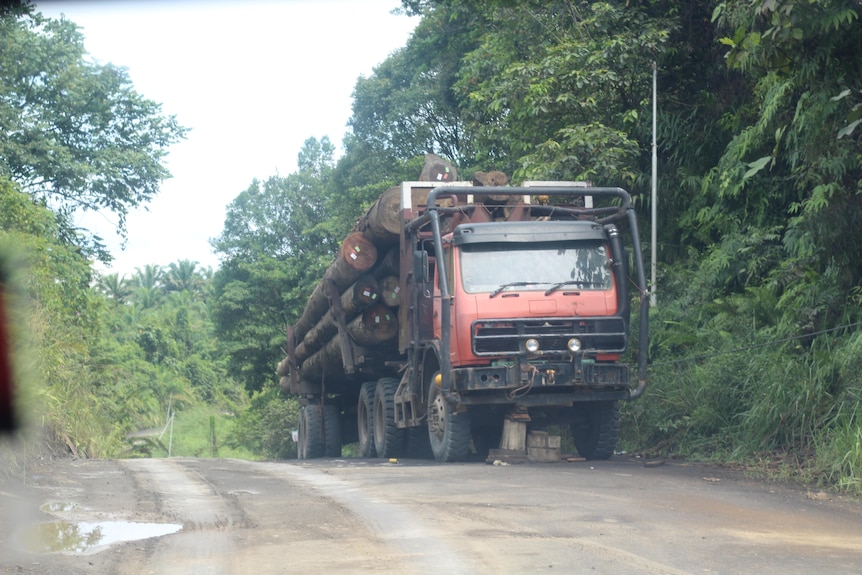
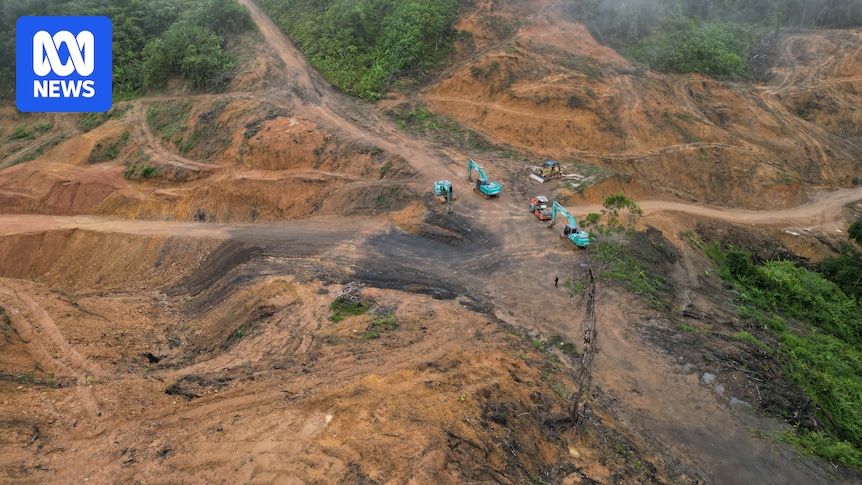
A significant volume of timber is imported to Australia from Malaysia. (Supplied: Jarni Blakkarly, Choice)
Australia introduced laws in 2012 to combat illegal logging, and timber importers must maintain records and meet due diligence requirements.
But wholesalers and retailers are not required to provide that information to buyers.
Ms Hallam said recent federal government surveys uncovered imported timber that failed traceability testing.
“We also found a survey that revealed five layers of laminated veneer lumber coming in from China actually contained Russian timber — a banned product,” she said.
Imported wood products were also stamped to indicate they met Australian standards, a practice that Ms Hallam said obscured the timber’s origins.
Logging has ‘real-world’ impact overseas
Malaysia once had one of the world’s highest rates of deforestation.
While tree loss has fallen to near-record lows and the Malaysian government has cracked down on illegal logging, communities are still feeling the impact of timber harvesting.
Mr Blakkarly travelled to the Malaysian state of Sarawak, on Borneo, to trace the origins of timber products sold in Australia.
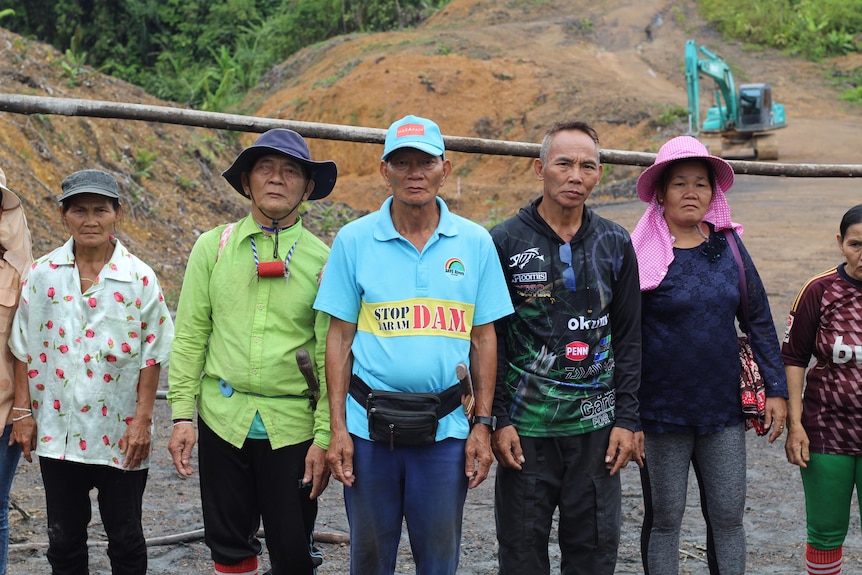
Villagers in the Baram region of Sarawak, in Malaysian Borneo, say their timber comes at a social cost. (Jarni Blakkarly: CHOICE)
Loggers often operate with government permits, but without the consent of communities, Mr Blakkarly said.
He said he saw villagers forming blockades to stop machinery from taking more of the jungle.
“These are Indigenous communities that are trying to live and maintain a traditional way of life; they gather a lot of food and medicines from the jungles,” Mr Blakkarly said.
“They’re really wanting to push back and try and stop that logging.
“They’re wanting to highlight to people like Australian consumers that there is this real-world impact to them and their livelihoods.”