
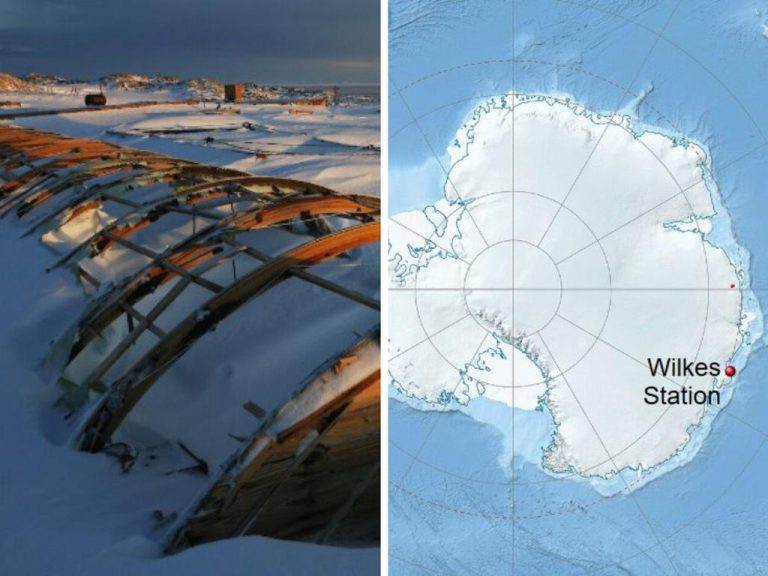
Australia may just own the coldest ghost town on Earth – a frozen, toxic fixer‑upper slowly rotting under ice.
Welcome to Wilkes Station, a 33‑hectare waterfront “suburb”, located more than 3000km away from Australia, where the roofs poke through metres of snow and the backyard is a minefield of asbestos and leaking fuel.
Once a bustling Antarctic outpost for about 25 expeditioners and their huskies, Wilkes now reads like a doomsday property listing.
Ocean views, yes – but the “streets” are entombed, black tar streaks the rocks where meltwater pools, and the lawns of lichen (a type of algae) and moss have died back under a dusting of corroded metal.
MORE NEWS
‘Costly, but worth it’: Aus’s forgotten flying billboard
The luxury reef resort Australia forgot about
The Aus city that cost millions – then vanished
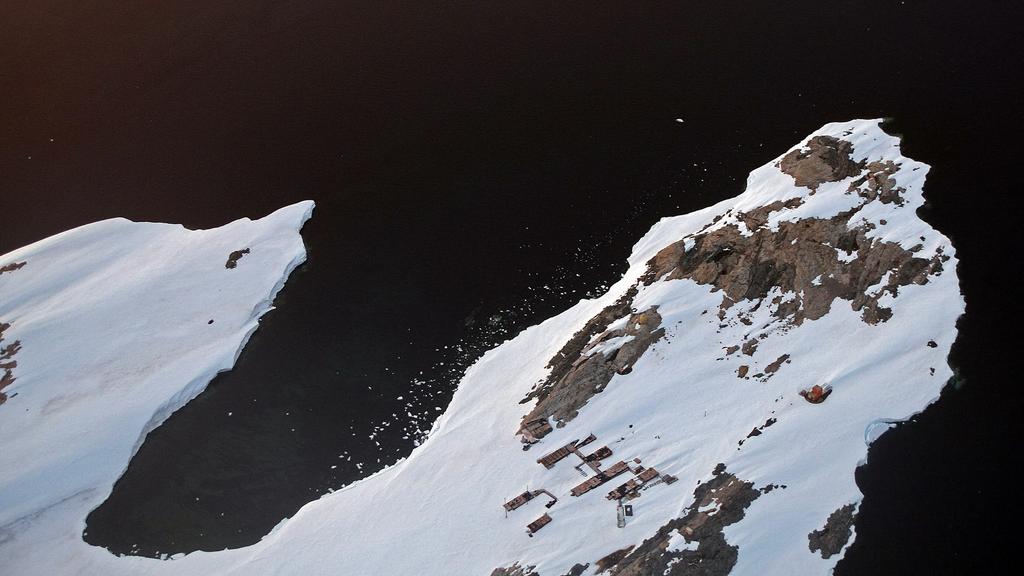
The abandoned American Antarctic research station of Wilkes overlooks Vincennes Bay, and lies 65 kms from the purpose-built Wilkins glacial blue ice runway where the first Airbus A319 jet to carry passengers from Hobart to Antarctica landed, 11 January 2008. Photo: Torsten Blackwood.
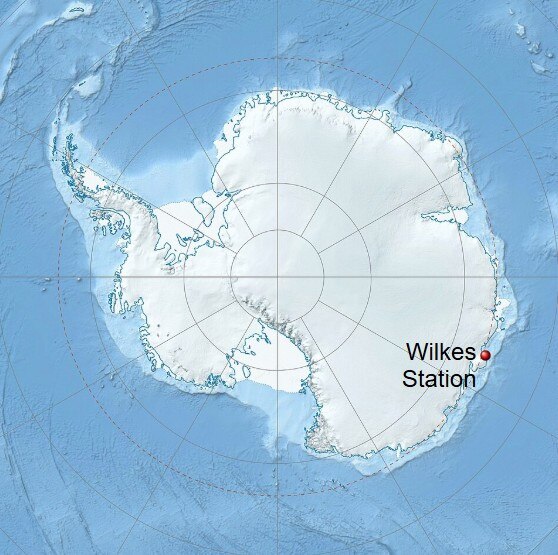
Wilkes Station is located more than 3000km from Australia
Roughly 3000 rusting drums – some still holding diesel, petrol or solvents – sit scattered or buried, alongside batteries, decades‑old tins of fruit and condensed milk, and animal carcasses. And that’s just kerb appeal.
The real liability is hidden.
Experts say only 3 to 5 per cent of the waste is visible; the rest is entombed beside the shoreline in a snow‑covered dump with several thousand barrels underneath.
Melanie Borup, a terrestrial ecologist from the University of Tasmania, is part of the Australian Antarctic Division’s science team within the A Cleaner Antarctica program.
“We all think that Antarctica is a completely pristine environment,” she told the ABC.
“But it has a long history of human presence here in Antarctica.
“And with that, localised contamination to the environment.”
MORE NEWS: ‘Enough is enough’: Aus farm sales eclipse 148 countries
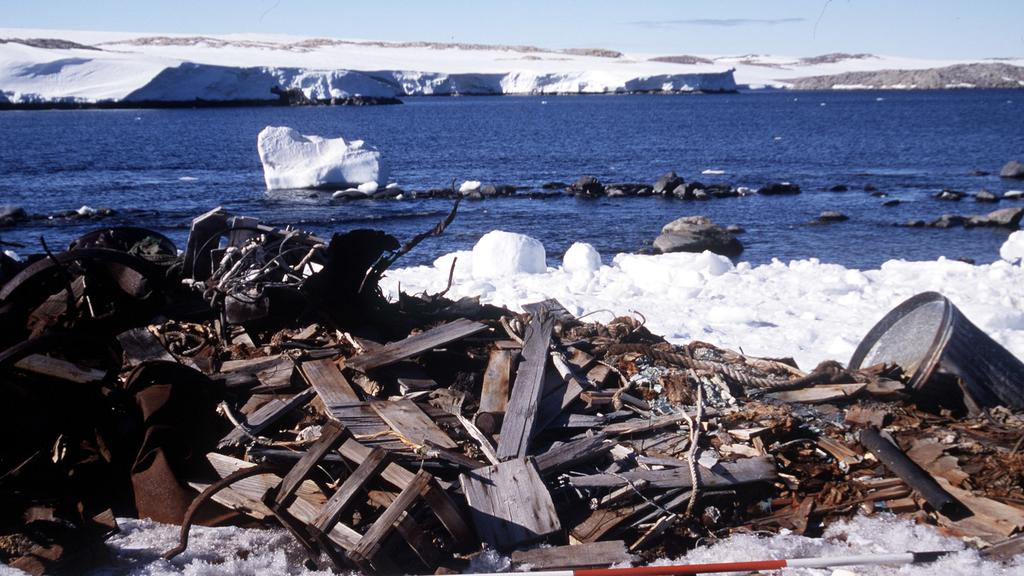
A pile of rubbish at the tip at the old Wilkes Station in the Antarctic. Picture: Robert Vincent/Australian Antarctic Division
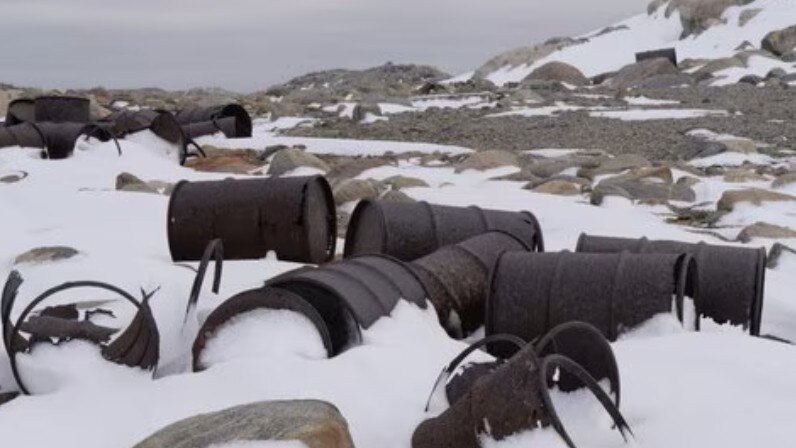
Australia abandoned the station due to environmental challenges and logistic difficulties. Picture: Maude Jolly
In warm years, oily sheens have been spotted on the ocean just a few kilometres from major penguin colonies.
A big thaw in 1992 peeled the lid off and exposed buildings and fuel caches.
With the climate warming, another melt could unlock a toxic flow straight into the bay – the ultimate flood‑prone basement.
This didn’t start as Australia’s problem
Built by the US Navy in 1957 and handed over two years later, the station was thrown up in just over a fortnight with about 11,000 tonnes of supplies.
Bare rock looked sheltered then but in reality, the site was a snow trap.
By the mid‑60s, fuel seepage made wooden buildings a fire risk and drifting drifts smothered structures for most of the year.
Australia cut its losses, commissioned a replacement across the bay in 1969, and walked away. Back then, “clean‑up” wasn’t even in the plans.
Today the bill lands on our desk.
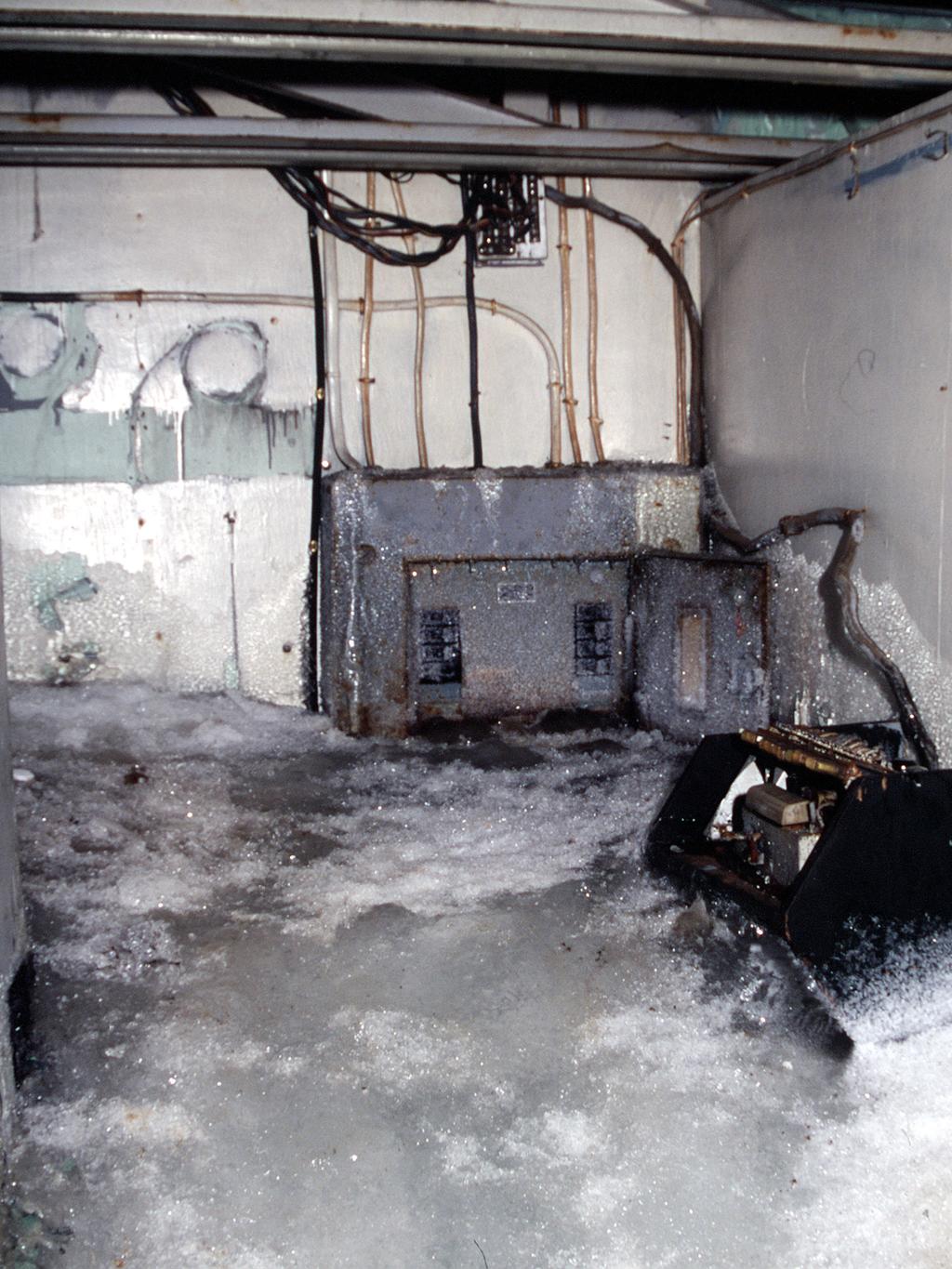
A partially de-iced hut at the old Wilkes Station. Picture: Robert Vincent/Australian Antarctic Division
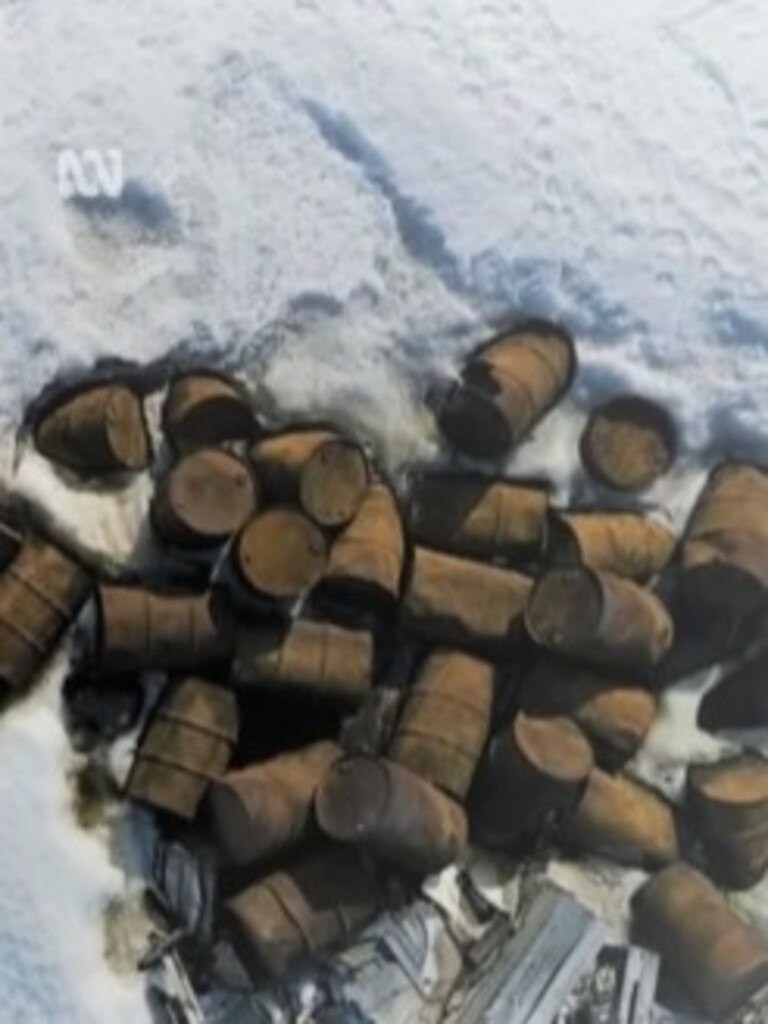
Roughly 3000 rusting drums – some still holding diesel, petrol or solvents – sit scattered or buried. Source: ABC/Facebook
According to the ABC, The Australian Antarctic Division calls legacy sites an “enduring environmental problem” and estimates Wilkes holds around 20 Olympic swimming pools’ worth of rubbish and contaminated soil.
Four years ago, a French inspection team labelled it a “clear risk”.
Meanwhile, a parliamentary inquiry last year urged full remediation by 2030.
In 2022, Canberra tipped in $14 million for an A Cleaner Antarctica program across all stations and field sites, but there’s still no locked‑in timeline or funding to finish Wilkes.
A 2014 report put the broader clean‑up at about $136 million for Wilkes and several smaller abandoned sites but the current figure will likely be higher.
The reality is, you can’t just bring in the excavators.
Antarctica punishes haste: brutal weather, long planning lead times and logistics that make every move costly.
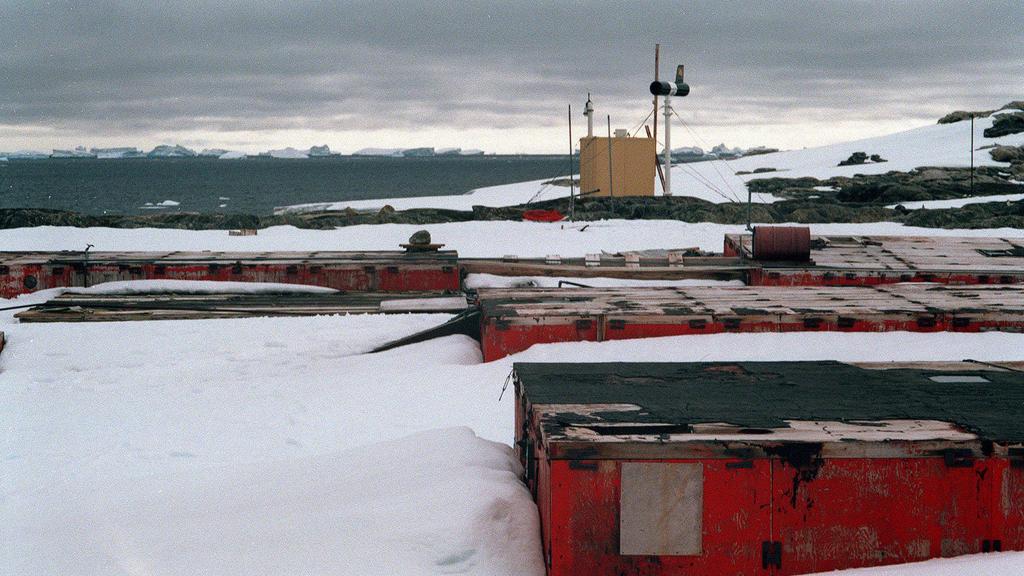
Wilkes Station in 1998. Image supplied.
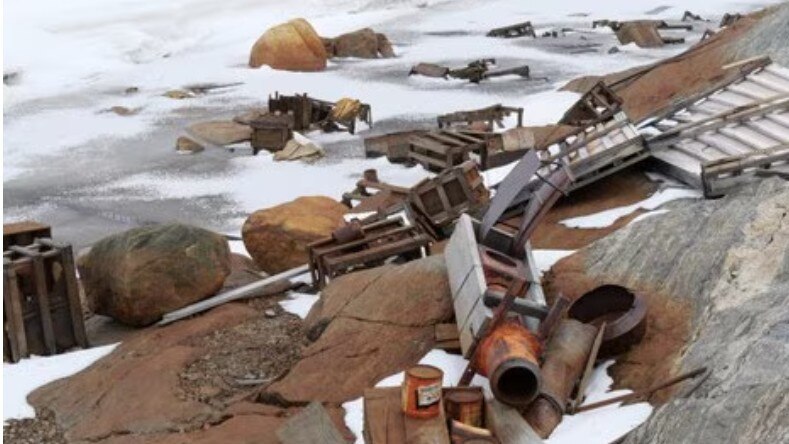
Snow and ice build-up meant the station often became buried, causing structural issues and making it unsafe for continued use. Picture: Maude Jolly
The Antarctic Treaty System also says historical waste should only be removed if the clean‑up doesn’t create more pollution – think renovating a condemned house without collapsing it into the neighbours’ yard.
So the AAD is doing its due diligence first: drone‑mounted ground‑penetrating radar to map what’s buried, lab work to test the microbes living there and how much contamination they can tolerate.
If Wilkes were a listing, the fine print would read:
Sold as‑is, no warranties. Structures include Clements huts and semi‑cylindrical Jamesway stores, mostly embedded in ice.
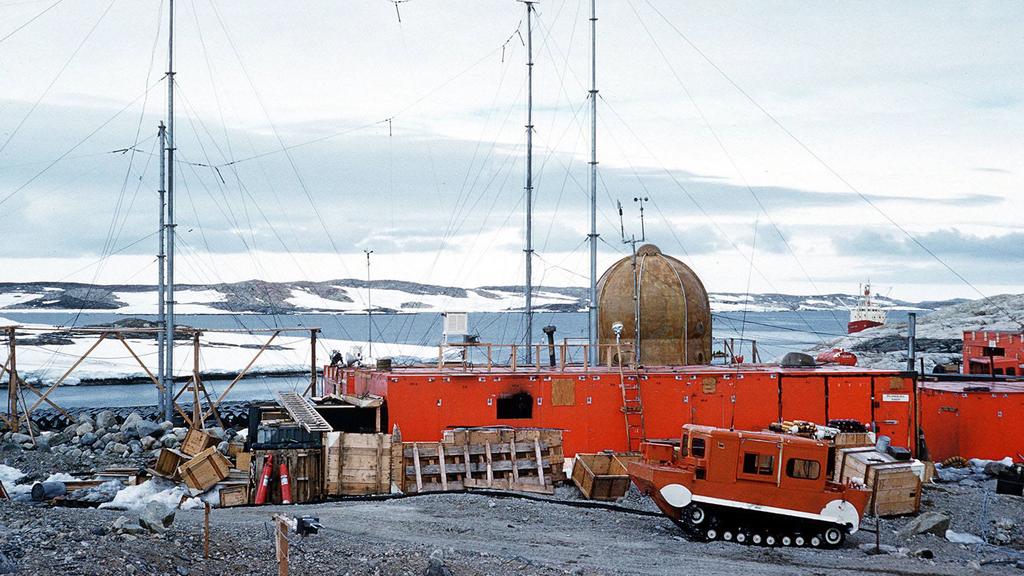
Wilkes Station in 1998 has turned into an environmental disaster. Image supplied.
Known issues: asbestos, leaking hydrocarbons, corroded metals, batteries, historic food waste, animal remains.
Access: by icebreaker and heavy plant, subject to weather and seasonal windows.
Open for inspection: briefly, every four to five years during a big thaw.
But all jokes aside, until there’s a funded, dated plan to physically remove and neutralise the worst of Wilkes, our most remote “estate” sits in negative equity.
The smartest time to tackle a bad house is before the storm hits.
In Antarctica, the storm is another warm summer away.