
Adolescence writer Jack Thorne hopes the UK will follow Australia in introducing a social media ban for children under 16.
“I think it’s amazing that Australia is ahead of the world in terms of the social media ban,” Thorne says.
“It’s hopefully going to spread like wildfire through the world, because I think it’s an incredibly important thing.”
Adolescence, the story of 13-year-old Jamie being arrested for the murder of his classmate Katie, won a slew of Golden Globes and Emmys and landed on many lists of the best TV shows of 2025.
It sparked conversations around the world about toxic masculinity, boyhood and how social media can be used to disseminate harmful ideas.
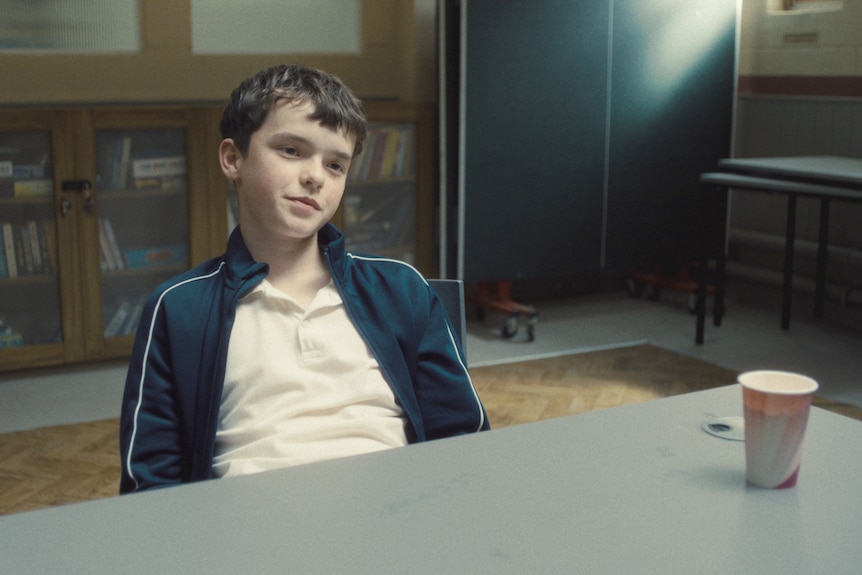
Thorne and his Adolescence co-creator Stephen Graham are talking to Netflix about a possible second season. (Supplied: Netflix)
Thorne — who won an Emmy for writing Adolescence — has long supported a ban like the one in Australia, where social media companies face fines of up to $49.5 million, to address some of the issues raised in the show.
In an opinion piece last year, he called for the introduction of a “digital age of consent” in the UK, which would restrict access to social media for children under 16.
“Spend any time on most social media platforms and you end up, quite quickly, in some dark spaces,” he wrote.
“Parents can try to regulate this, schools can stop mobile phone access but more needs to be done.”
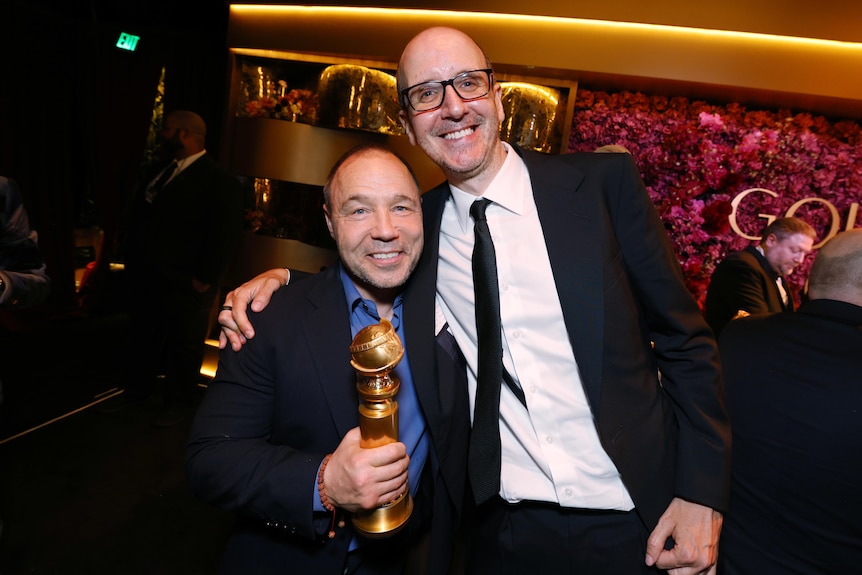
Graham and Thorne at the Golden Globes in January, where the show won four awards. (Getty Images: Jesse Grant)
But while Australia’s eSafety commissioner says 4.7 million under-16s social media accounts have been deactivated or removed since the ban was implemented in December, many, including young people, have concerns about its efficacy.
The conversation about social media, childhood and ideas of masculinity spurred by Adolescence continues this month, as Thorne releases his next project, a new TV adaptation of British author William Golding’s 1954 novel Lord of the Flies.
Today’s crisis in masculinity
Thorne’s new TV show is another harrowing story that sits at the intersection of vulnerability, violence and masculinity.
“In Adolescence, we were looking at the context in which teenage boys currently live,” Thorne tells ABC Arts.
“At the moment, teenagers are navigating a world where hate has been given an outlet in all sorts of different places: in government, in social media spaces and everywhere else.”
Thorne sees resonances between today and the “climate of populism and hate” in which Lord of the Flies author William Golding was writing during the 50s, in the wake of World War II, where he served in the navy, and in the early days of the Cold War.
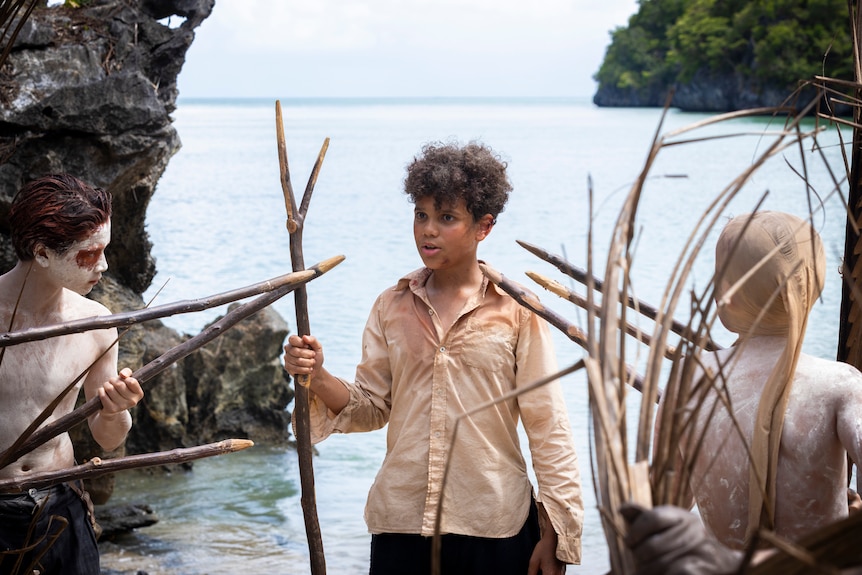
Lord of the Flies and Adolescence were written and filmed at the same time. (Supplied: Stan)
“He was terrified by it,” Thorne says. “Obviously, we are not living in as extreme a moment as that.
“But it does feel like we are living at a time when opposition to others is more attractive than agreement.”
When Thorne set out to write Adolescence with actor Stephen Graham, the pair were thinking about that climate and the influx of knife crimes perpetrated by teenage boys against girls in the UK.
Thorne and Graham started the process of writing by talking about masculinity and their younger selves.
“We talked about our rage, our cruelty, and moments when we weren’t the people we wanted to be,” he says.
It was an interesting exercise — partly because the two are so different, even just in terms of their physicality.
Online misogyny in Netflix’s Adolescence
“If someone was asked to draw a man, I think they would draw some version of Stephen,” Thorne says. “They wouldn’t draw me.”
Still, they found similarities between their experiences — particularly their relationships with shame.
“It wasn’t healthy for us and certainly wasn’t healthy for the people around us.”
Those feelings of cruelty and shame fed into Adolescence — and now Lord of the Flies.
Why adapt Lord of the Flies in 2026?
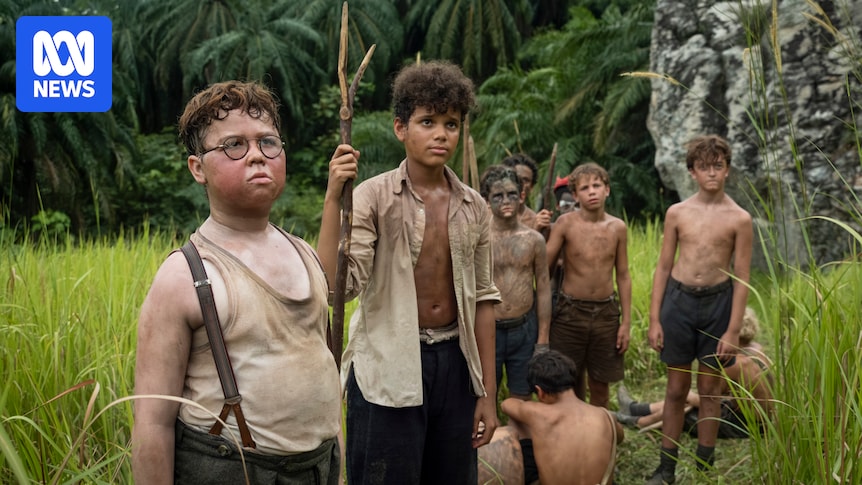
Lord of the Flies is the story of a group of boys left stranded on a remote island after they survive a plane crash.
First, they work together to survive, after they elect the kind and fair Ralph as their leader. But their camp soon descends into warring factions, violence and brutality.
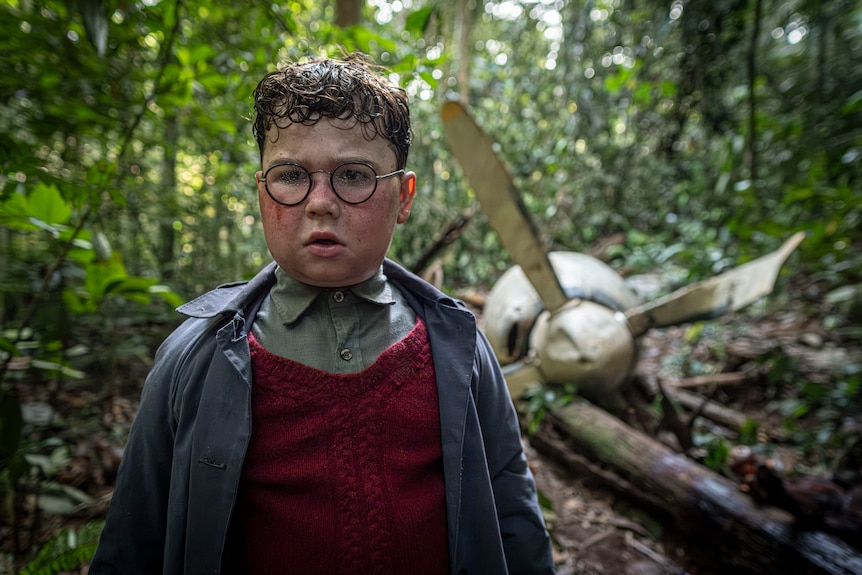
Lord of the Flies was going to be shot in Australia, until director Marc Munden relocated the production to Malaysia. (Supplied: Stan)
Though Golding’s book has been adapted for cinema and stage before, Thorne’s new version is the first for TV.
It’s something the 47-year-old writer has wanted to do for almost 20 years, first pitching it to a British TV channel when he was in his early 30s.
He was nine years old when he first read the book and over-identified with Simon, the dreamer of the group of castaways, who is drawn to nature, rather than either faction.
“I was quite an emotional kid, but quite a privately emotional kid,” Thorne says.
“I found huge understanding in the book for the kid I was then, which is sort of an outsider.”
Like many young readers, Thorne was reminded of school bullies when he encountered the character of Jack, who uses his strength and arrogance to encourage the other boys to hunt and follow their base instincts.
Returning to Lord of the Flies as an adult Thorne felt a lot more empathy for Jack, something he attributes to Golding’s writing.
“[The book is] full of a lot of care for all of the boys,” he says.
“People see this book as being about opposition and hate and, actually, it’s a lot more complicated than that and a lot more beautiful than that.”
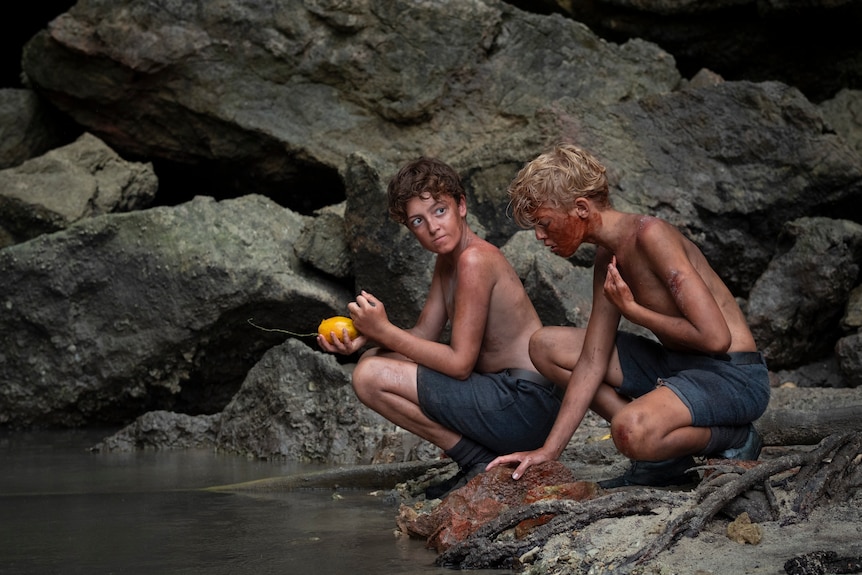
Thorne wanted to create a conversation around the book and its themes: “People talk about books without reading them.” (Supplied: Stan)
The audience for the Lord of the Flies TV show is invited to care for each of the boys by hewing closely to one per episode, starting with Piggy (David McKenna). He’s a chubby, bespectacled, somewhat anxious boy who tries to establish order and structure in the camp but soon finds himself bullied.
In the following episodes, the focus moves to Jack (Lox Pratt) in his efforts to hunt a wild pig and overthrow Ralph, to dreamer Simon (Ike Talbut), and finally, Ralph (Winston Sawyers) as the camp falls further into chaos.
It was especially important, Thorne says, to get inside the mind of Jack.
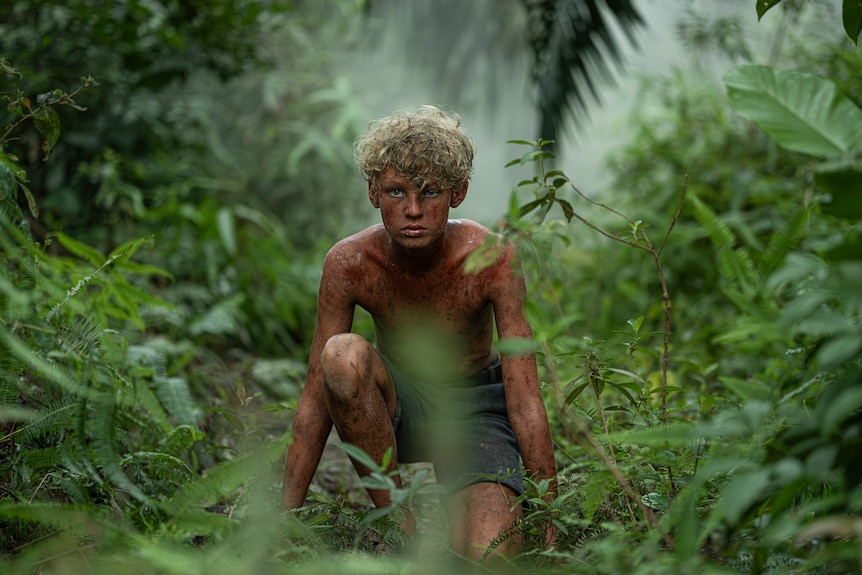
“The way [Golding] writes Jack is like a symphony,” Thorne says. (Supplied: Stan)
“Faces are the way we tell stories in our medium,” he explains.
“Just spending that much time on Lox’s face, on Jack’s face, you do get brought into his view of the world, and you do, I hope, care for him in the way that Golding cares for him.”
A distinct voice
Thorne is best known for his shows tackling social issues in the UK.
The Hack, released last year, stars David Tennant (Doctor Who) as a journalist determined to get to the truth of the News of the World phone hacking scandal.
Robert Carlyle on the hacking scandal that brought down a Murdoch paper
In Toxic Town, released on Netflix last year, Jodie Whittaker (also Doctor Who) plays Susan, a mother of a child with a congenital birth defect, who becomes one of the main organisers behind the Corby toxic waste case in England in the 00s.
Thorne recalls reading the brief for Toxic Town and thinking, “My dad is Sam Hagen”, the Corby council worker who leaked documents to Susan’s legal team.
He says he’s drawn to shows where “there’s something of me that can play a role”.
“I knew people like Susan,” he says. “I felt like there was enough there for me to grapple with.”
In 2021, Thorne and Graham, as executive producer, collaborated on the TV movie Help, about Sarah (Jodie Comer) who works in a care home during the COVID-19 pandemic.
The telemovie won an International Emmy in 2022, but Thorne says it was difficult to find international distribution.
“I was told, ‘The accent’s too strong, it’s about British issues that don’t travel, and it’s about British governmental institutions that aren’t interesting to the rest of the world’,” he recalls.
He says an international streamer like Netflix, meanwhile, has celebrated the distinctness of the stories he tells.
“What Netflix have done — not just with Adolescence, but with Baby Reindeer, Squid Game, Narcos — is realise that when you tell a story with detail and with precision, then people can get it wherever they are in the world.”
Lord of the Flies is streaming on Stan.