
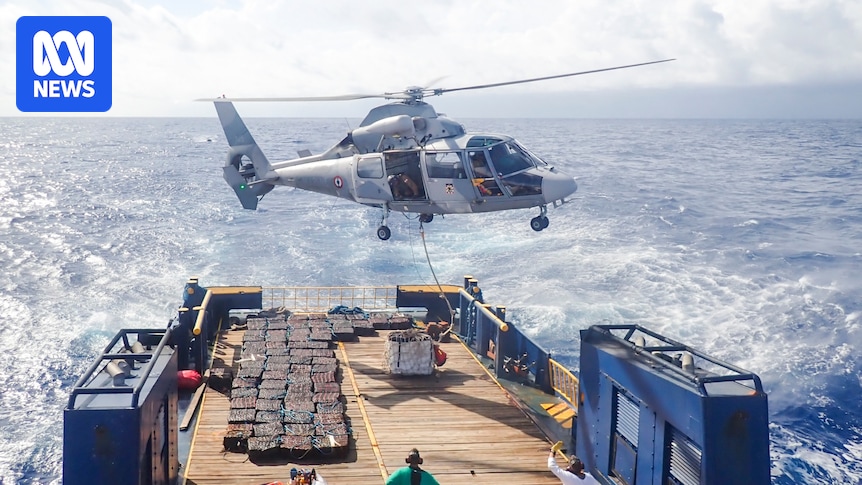
A ship that was caught carrying close to five tonnes of cocaine en-route to Australia is now heading towards Sydney after being sent on its way without its cargo.
It is unclear what will happen if the vessel arrives and Australian authorities have refused to comment.
The vessel MV Raider was intercepted and then released by the French Navy in international waters near French Polynesia on January 16.
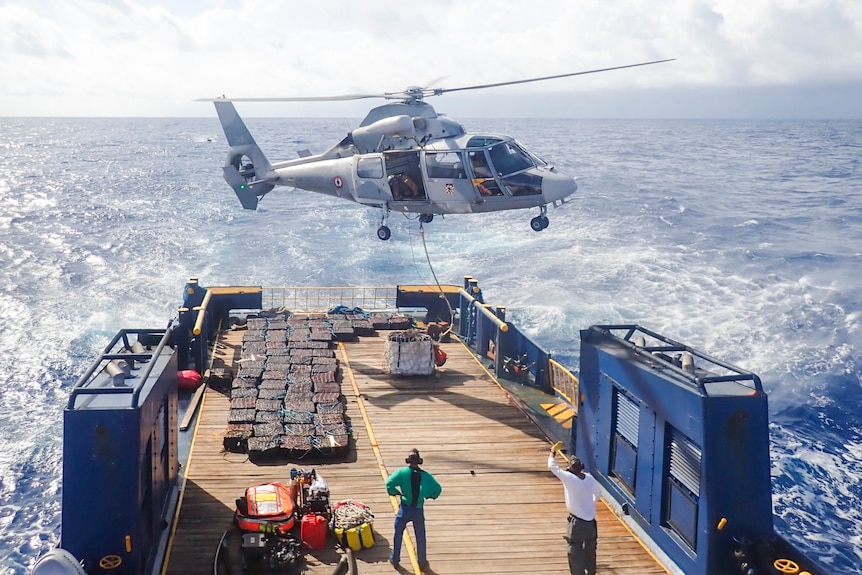
French armed forces seized five tonnes of cocaine from the MV Raider on January 16. (Facebook: French Embassy in Australia)
Last week French Polynesian President Moetai Brotherson told the ABC the cocaine had been dumped in the sea.
He said overcrowded prisons prevented the French territory from prosecuting the crew.
After stopping in the Cook Islands, the ship is now just north of New Zealand’s North Island and is bound for Sydney, according to ship tracking website VesselFinder.
If the ship continues at its current speed and trajectory it could be in Australian waters by early next week.
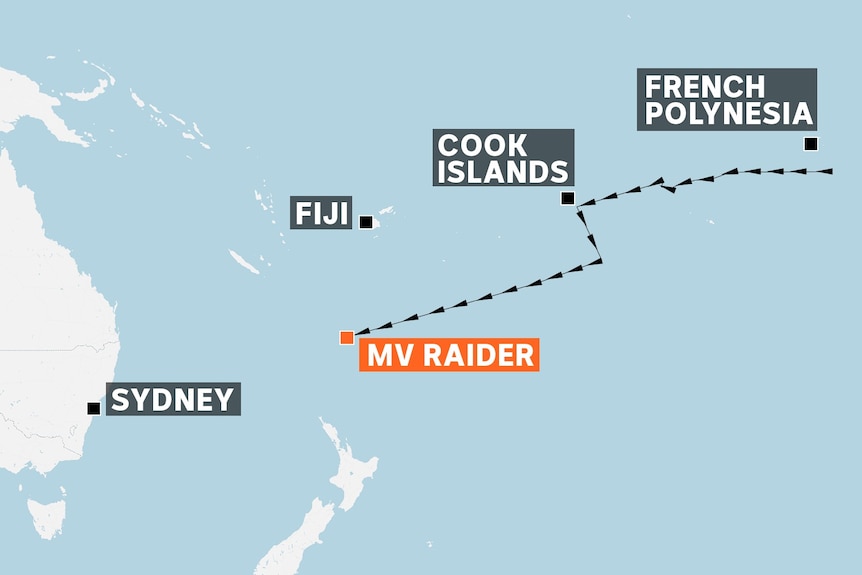
This map shows the MV Raider’s journey after it was caught carrying five tonnes of cocaine in French Polynesia. (ABC News)
The Australian Federal Police responded with “no comment” when asked by the ABC if it was tracking the boat.
The agency also refused to comment on whether it planned to detain the vessel or the crew.
The New Zealand Customs Service said it was monitoring the vessel, although it had not indicated an intention to go to New Zealand.
“If that were to change, it would be managed by New Zealand Customs as part of our standard border management responsibilities,” a spokesperson said.

Noam Rabinovich says the pattern of use of the MV Raider aroused her firm’s suspicion. (Supplied)
Noam Rabinovich, director of product marketing for maritime intelligence and analytics firm Windward, said the organisation had alerted authorities to the MV Raider before it was intercepted.
She said government agencies and private firms subscribe to Windward’s platform, which assesses the risk posed by vessels by analysing patterns and behaviour over time.
“In the case of the Raider, it wasn’t a single moment that was the red flag, it was actually a sequence of behavioural changes,” Ms Rabinovich said.
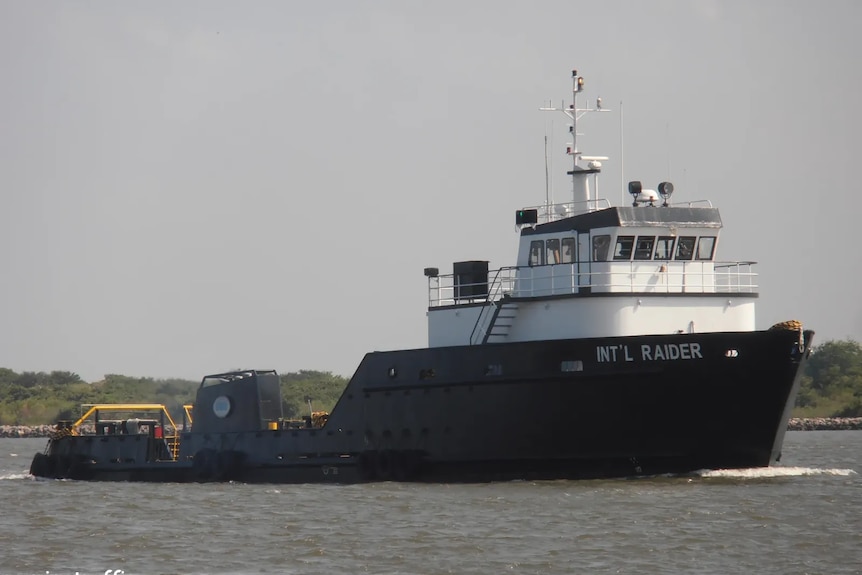
The MV Raider, pictured in 2011. Windward says its whereabouts were unknown for several years before 2025. (Supplied: Marine Traffic)
She said the vessel disappeared in August 2021 and resurfaced in November 2025 with a new name.
Ms Rabinovich said it previously flew the United States flag and that that had changed to that of the West African country, Togo.
Ms Rabinovich said Togo was considered a “flag of convenience” state, meaning it registered foreign-owned ships, often with lower costs and lighter regulatory oversight.
“These flags tend to have lower oversight and can be exploited to obscure criminal activity,” she said.
“Those shifts together — the dormancy period, the identity change, the pattern-of-life change — strongly alerted us to a possible smuggling risk.”
The ABC has reached out to the Togo government for comment.
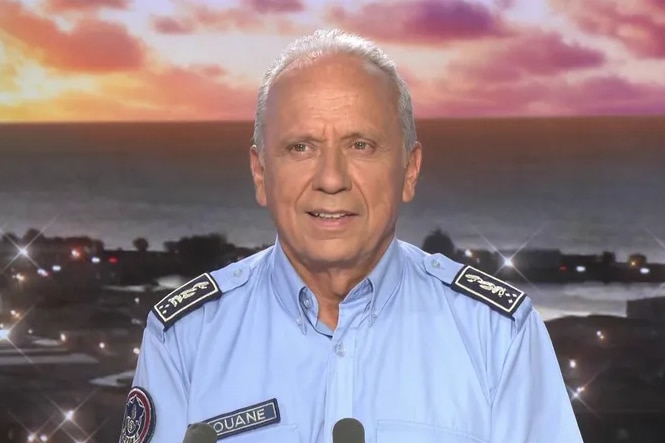
Serge Pucetti says the seizure of the MV Raider highlights the issue of the drug trade in French Polynesia. (Supplied)
Jurisdictional complexities
French Polynesian customs director Serge Pucetti said the seizure of the MV Raider illustrated how the territory had become a front line in the Pacific’s war on drug smugglers seeking access to lucrative Australian and New Zealand markets.
“For Australia, some drugs flow in from South-East Asia, but in the Pacific, access is from east to west,” he said.
“By intercepting these shipments, we are protecting the streets of Sydney, Melbourne or Auckland.”
It is still unclear if the crew could face prosecution in Australia or other jurisdictions.
According to Jen Parker, an expert associate at the Australian National University’s National Security College, crimes committed at sea generally fall under the jurisdiction of the vessel’s flagged state.
However, flags are not reliable indicators of origin because many ships operated under falsified information.
“Just because that vessel is reporting that it is flagged to Togo doesn’t mean that it is actually registered to Togo,” Ms Parker said.
“However, if it was legitimately registered, the French would have needed approval from Togo, which they likely would have got.”
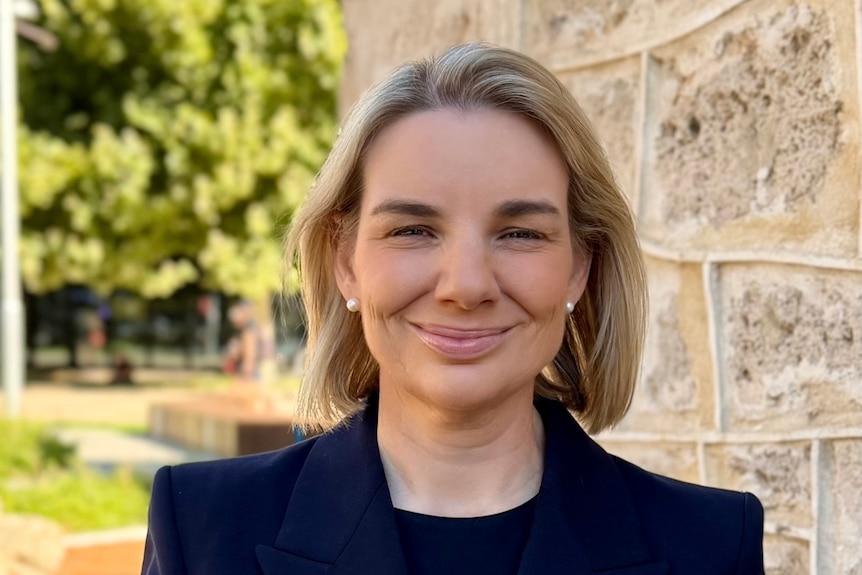
Maritime law expert Jennifer Parker says Australia has no jurisdiction to take action. (Supplied: Jennifer Parker)
Complicating matters further is the fact that arrests are often dictated by domestic legislation, which prevents many countries from making arrests outside their own territory.
“The Cook Islands, for instance, would have needed jurisdictional nexus and agreements with France to prosecute people handed to them by the French Navy in order to make an arrest,” Ms Parker said.
She said Australia would not have the power to prosecute the MV Raider under the current circumstances.
“It wasn’t in Australian waters, it’s not an Australian-flagged vessel, Australian naval members didn’t detain them — so you would need jurisdictional nexus to prosecute them,” Ms Parker said.
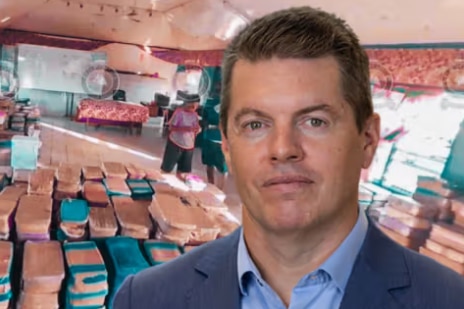
Steve Symon says research suggests that the majority of drugs in the Pacific are coming from places such as Mexico. (Supplied: Steve Symon)
Steve Symon, chair of New Zealand’s Ministerial Advisory Group on Transnational, Serious and Organised Crime, said countries such as Australia and New Zealand needed to do more.
He said dumping drugs at sea and letting suspected smugglers go free was not the best approach long-term.
“I think what we’re seeing is Pacific nations struggling with the introduction of large quantities of drugs coming through the Pacific and those trying to help them, such as France, are struggling with what to do when there aren’t places to detain these people,” Mr Symon said.
He said unless authorities moved to reduce the profits from smuggling drugs into Australia and New Zealand, the flow would continue.
“If I use the analogy of the old game Battleship — we can get together our different pieces and try and block out these superhighways for drugs coming down through the Pacific to our countries,” Mr Symon said.