
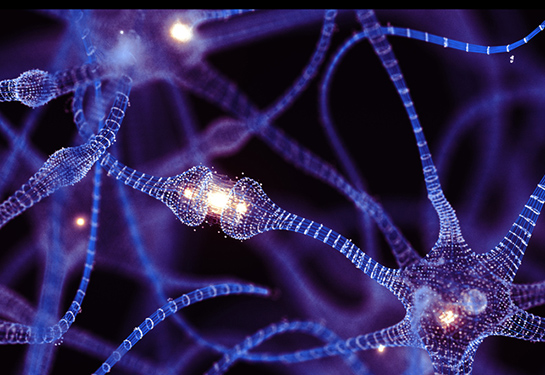
UC Davis Comprehensive Cancer Center scientists are testing “smart” nanotechnology that could transform cancer treatment by delivering drugs directly into tumors while sparing healthy tissue. The research is being conducted at the cancer center’s new Experimental Therapeutics Laboratory.
The lab team has designed transformable nanoparticles (ultrafine particles) that travel through the body as tiny particles and then reshape into nanofiber networks when reaching the cancer sites. These fibers cling to tumors but naturally fade away much more quickly in healthy organs, creating a built‑in targeting system.
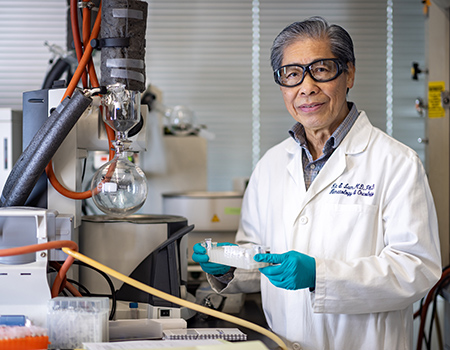 UC Davis Distinguished Professor Kit S. Lam in his lab.
The work is being led by Distinguished Professor Kit S. Lam with the UC Davis HealthDepartment of Biochemistry and Molecular Medicine and the Division of Hematology and Oncology. The research recently received a boost from a prestigious $3.1 million National Institutes of Health (NIH) R01 research project grant. R01 federal grants are given through the NIH’s National Cancer Institute to mature research projects that have strong preliminary data.
“This NIH (NCI) grant opens the door to accelerating this whole new way of treating cancer,” said Lam. “Instead of flooding the entire body with medicine, we can now ‘park’ these nanoparticles at the tumor sites and activate treatment only when we choose to.”
Once the nanoparticles form a web of tiny fibers around a tumor, researchers can deliver therapeutic molecules using a highly specific “click chemistry” reaction. This refers to chemical reactions that are fast, efficient and reliable.
This second step allows clinicians to add medicines on demand — including small-molecule drugs, toxins, and immune‑boosting molecules or proteins — that can augment the anti-tumor effects of the immune system.
The nanoparticles can stay in the tumor areas for up to a week, Lam said, but they fade from healthy organs like the liver and lungs within just two days.
“That gives us a unique advantage,” Lam said. “We can use this long‑lasting presence in tumors to introduce cancer‑fighting treatments only when and where we want them.”
Phased-in approach to pursuing drug development
The UC Davis team refers to this as a two‑component, two‑step strategy:
Step one: The nanoparticles locate the tumor and transform into a long‑lasting molecular framework.Step two: Doctors administer therapeutic agents that lock onto the drug delivery system and begin working within the tumor microenvironment.
Main goals
The project includes three major goals:
Design and refine nanoparticles that target receptors found in cancers such as non‑small cell lung cancer.Use advanced imaging to understand how the nanoparticles behave in living systems.Test the safety and effectiveness of this approach in preclinical cancer models.
If successful, the technology could dramatically change how oncologists deliver effective treatments, reducing side effects and increasing precision.
“This platform gives us the flexibility to deliver multiple treatments in sequence or combination for whatever the patient needs at that moment,” Lam said. “Our goal is to create a robust, long‑lasting immune response that helps the body fight the cancer on its own.”
/Public Release. This material from the originating organization/author(s) might be of the point-in-time nature, and edited for clarity, style and length. Mirage.News does not take institutional positions or sides, and all views, positions, and conclusions expressed herein are solely those of the author(s).View in full here.