
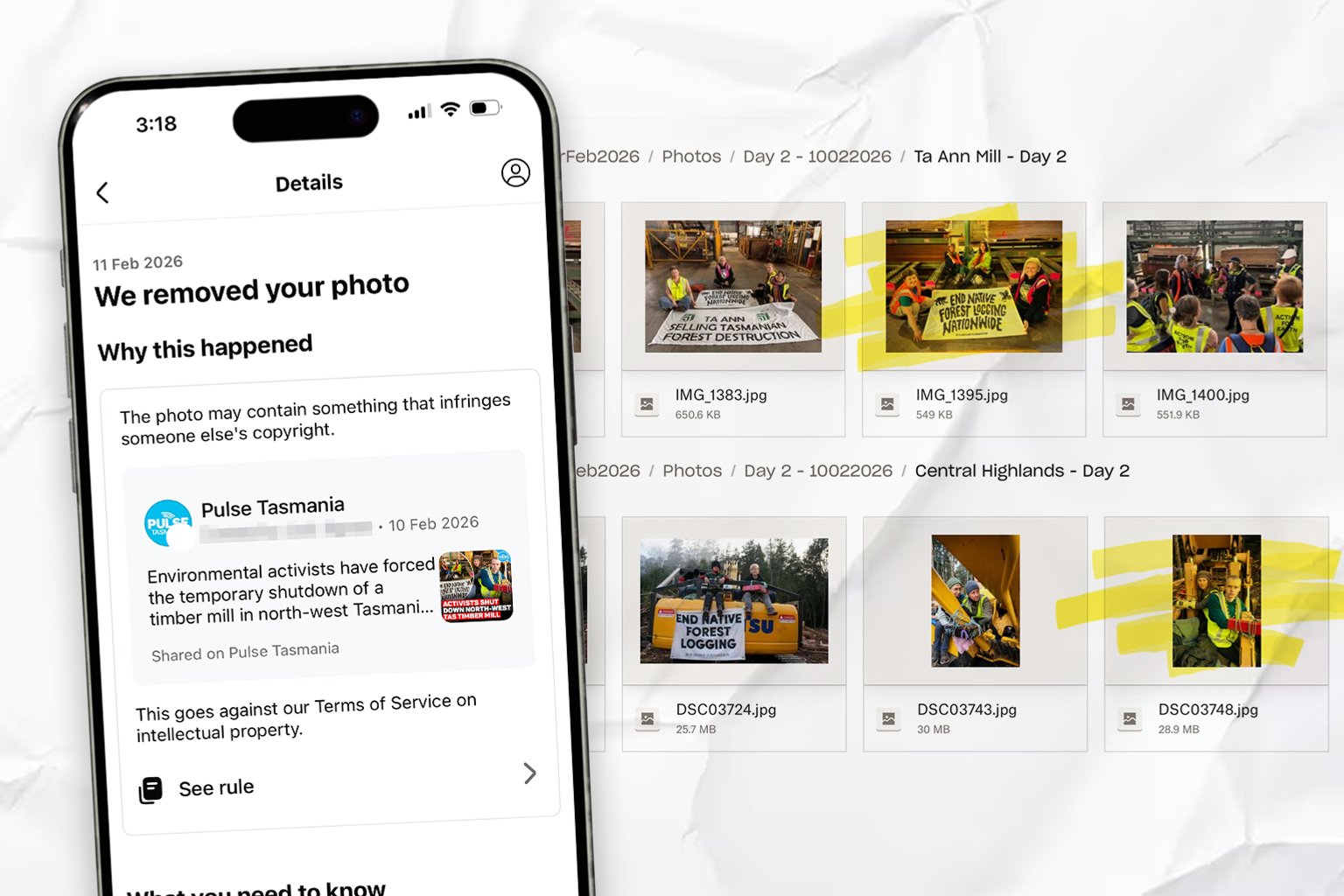
The Bob Brown Foundation has used a copyright complaint to shut down news coverage of its own protest, despite actively distributing the same images it claims were stolen to media outlets for publicity.
Facebook this week removed a post by Pulse Tasmania after receiving a copyright infringement notice from the activist group’s media manager.
The takedown triggered restrictions on Pulse’s social media accounts, preventing the state’s most widely accessed free news outlet from publishing on Meta platforms for several hours.
The organisation had earlier supplied the images as part of a media release promoting its “Forest Resistance Tour” protest at Ta Ann Tasmania’s Smithton mill.
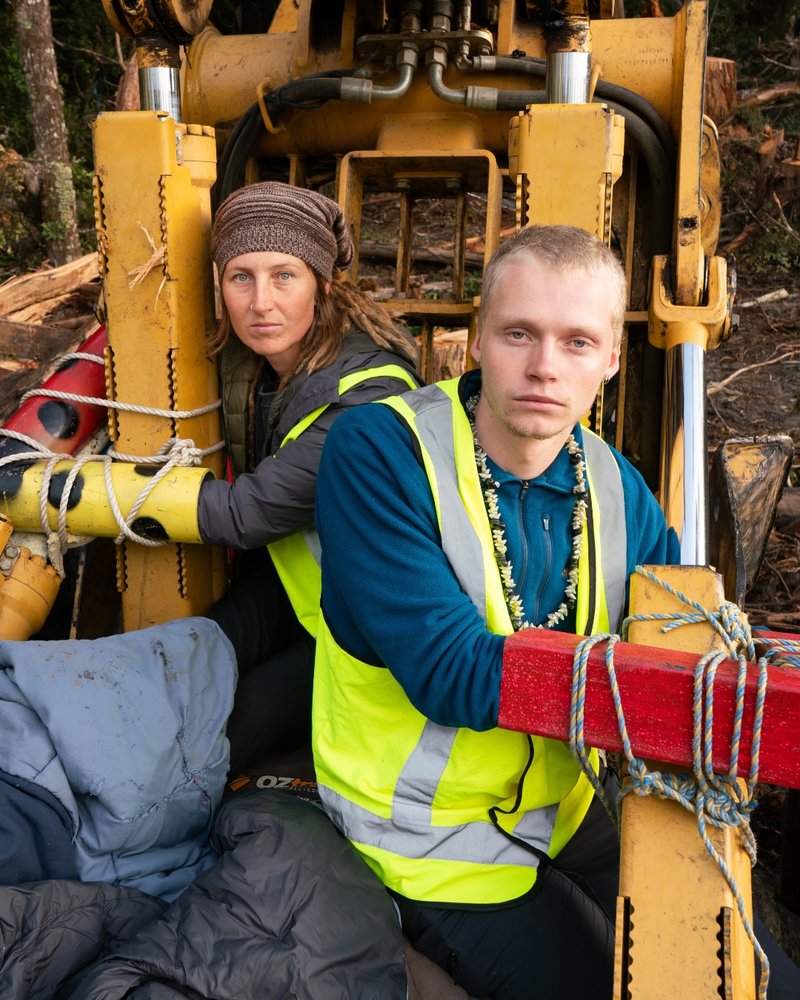 One of the photos sent to news outlets that was later the subject of a copyright complaint. Image / Bob Brown Foundation
Several protesters were arrested during the action, with two interstate activists charged with trespass earlier this week.
The foundation’s campaign director Jenny Weber said in a statement on Wednesday the protest was driven by a desire to see Ta Ann evicted from Tasmania.
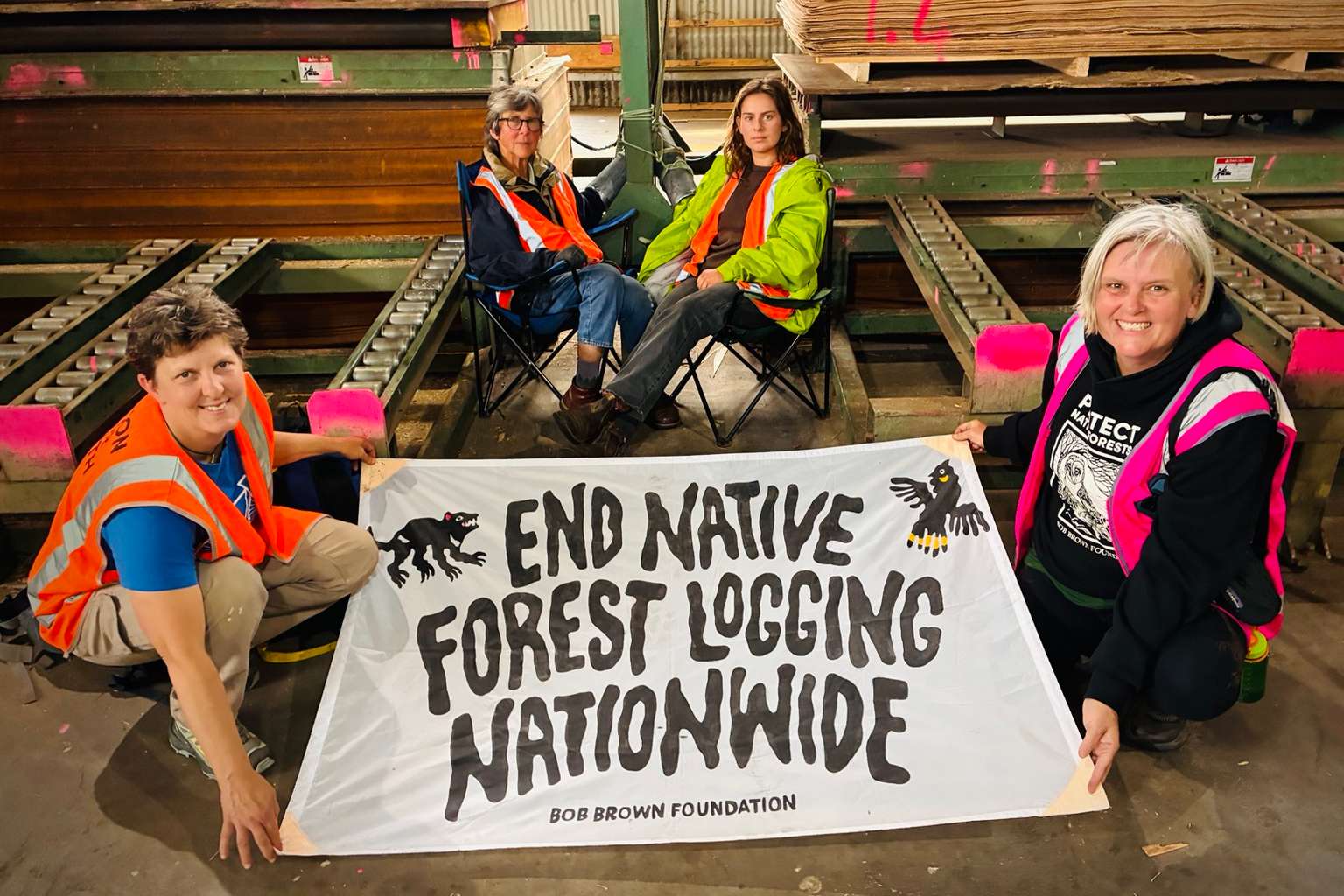 One of the photos sent to news outlets that was later the subject of a copyright complaint. Image / Bob Brown Foundation
“It’s time for an immediate end to native forest logging and for Ta Ann to be shut down,” she said.
The complaint was lodged after public reaction proved negative, with commenters criticising protesters for ‘not having jobs’ and ‘hurting people’s livelihoods’.
The organisation has previously argued such comments may amount to discrimination and hate speech.
Australian Lawyers Alliance spokesman Greg Barns, a Hobart barrister and human rights lawyer, rejected that characterisation.
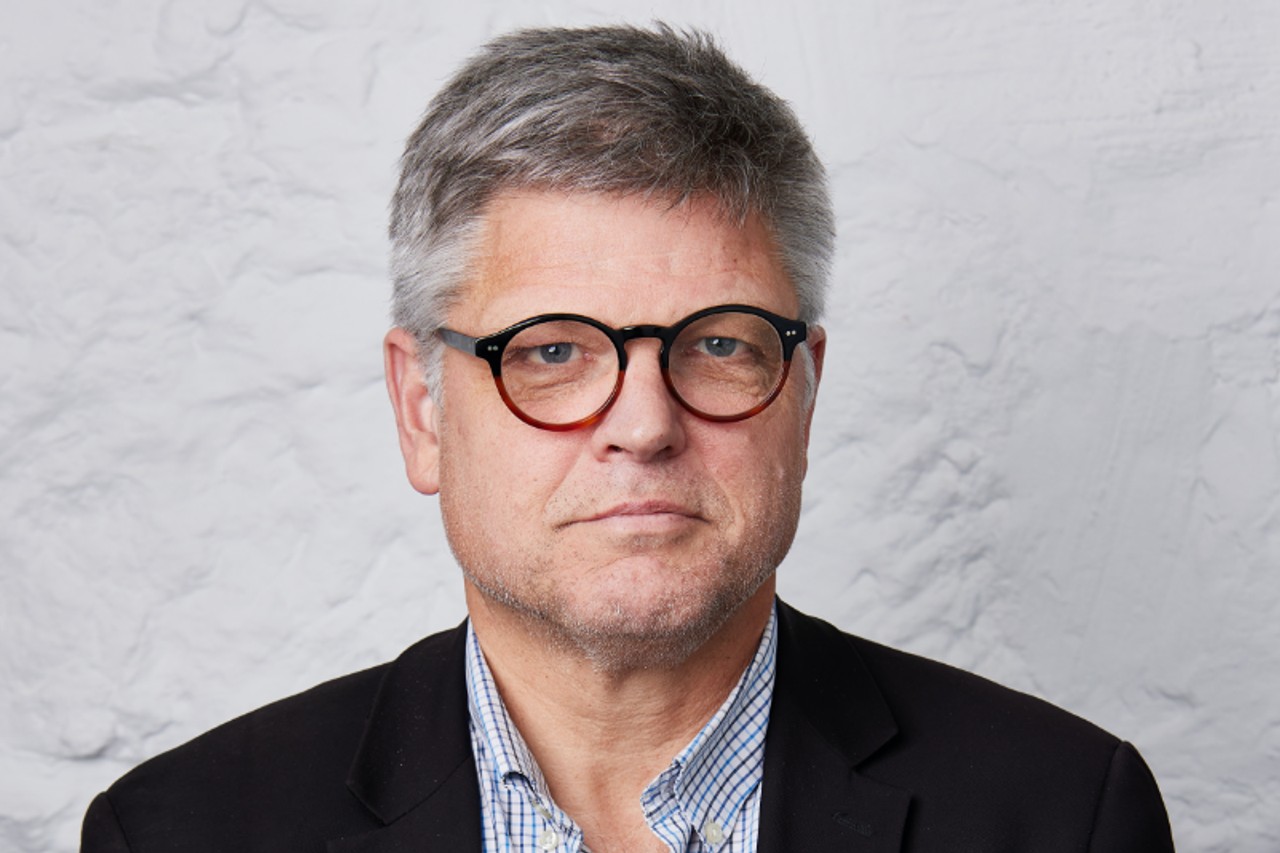 Australian Lawyers Alliance spokesman Greg Barns criticised the lack of accountability from social media platforms. Image / Supplied
“To say that you’re discriminating against an individual on the basis that you don’t agree with their political views is not per se discrimination,” he said.
“Generally speaking, we’ve got sufficient armoury in our law through defamation laws, discrimination laws to deal with circumstances where comments could lead to a person being hurt in a material way, or alternatively, where they’re inciting hatred or inciting violence.”
“But outside of those measures, freedom of speech needs to be given a very broad scope.”
Barns said organisations should not be able to “shut down an opponent” through platform complaint systems.
 Pulse Tasmania faced automatic social media restrictions after the copyright complaint. Image / Pulse
“Meta and other organisations, if they are going to remove material because there has been a complaint, ought to give that organisation that’s going to be adversely impacted the opportunity to quickly respond,” he said.
“Sadly, we see it across society in so many areas now where there’s a knee-jerk reaction to complaints to simply impose some form of sanction or ban without bothering to get the other side of the story.”
Under Australian copyright law, fair dealing provisions permit the use of material for news reporting, particularly when attribution is provided. Pulse attributed the images to the activist group.
The Bob Brown Foundation has previously used the same tactic against other coverage of its protests.
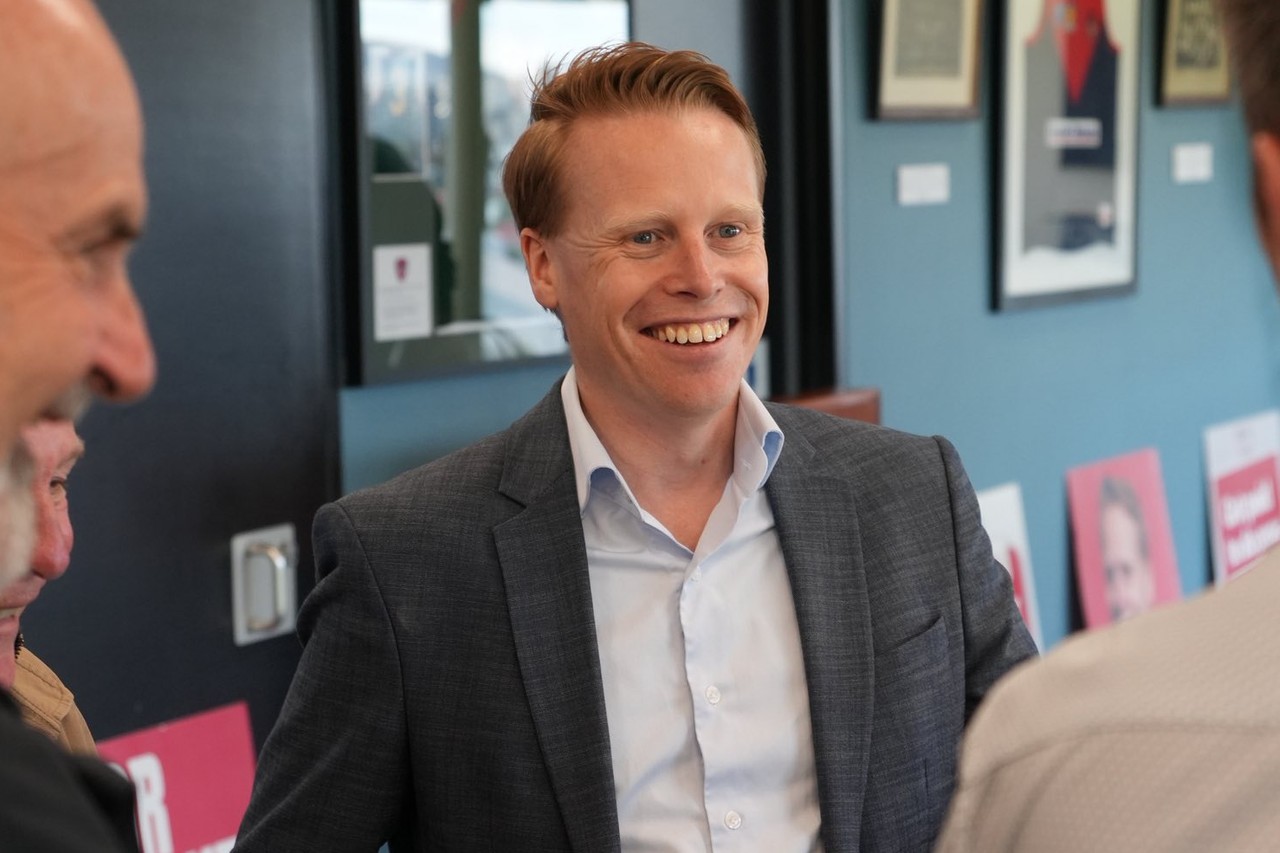 Tasmanian Labor senator Richard Dowling previously served as Meta’s director of public policy
Tasmanian Labor senator Richard Dowling, a former director of public policy at Meta, said organisations that put themselves in the public eye should expect scrutiny from all.
“If an organisation is confident enough to issue a media release, it should be confident enough to face scrutiny from all media,” he said.
State Business, Industry and Resources Minister Felix Ellis, who shared the same image on his Facebook page this week, has criticised the actions of the foundation.
“Not only is the Bob Brown Foundation stopping forestry workers from getting on with their job, now it is attempting to censor the media for reporting on these wild antics,” Ellis said.
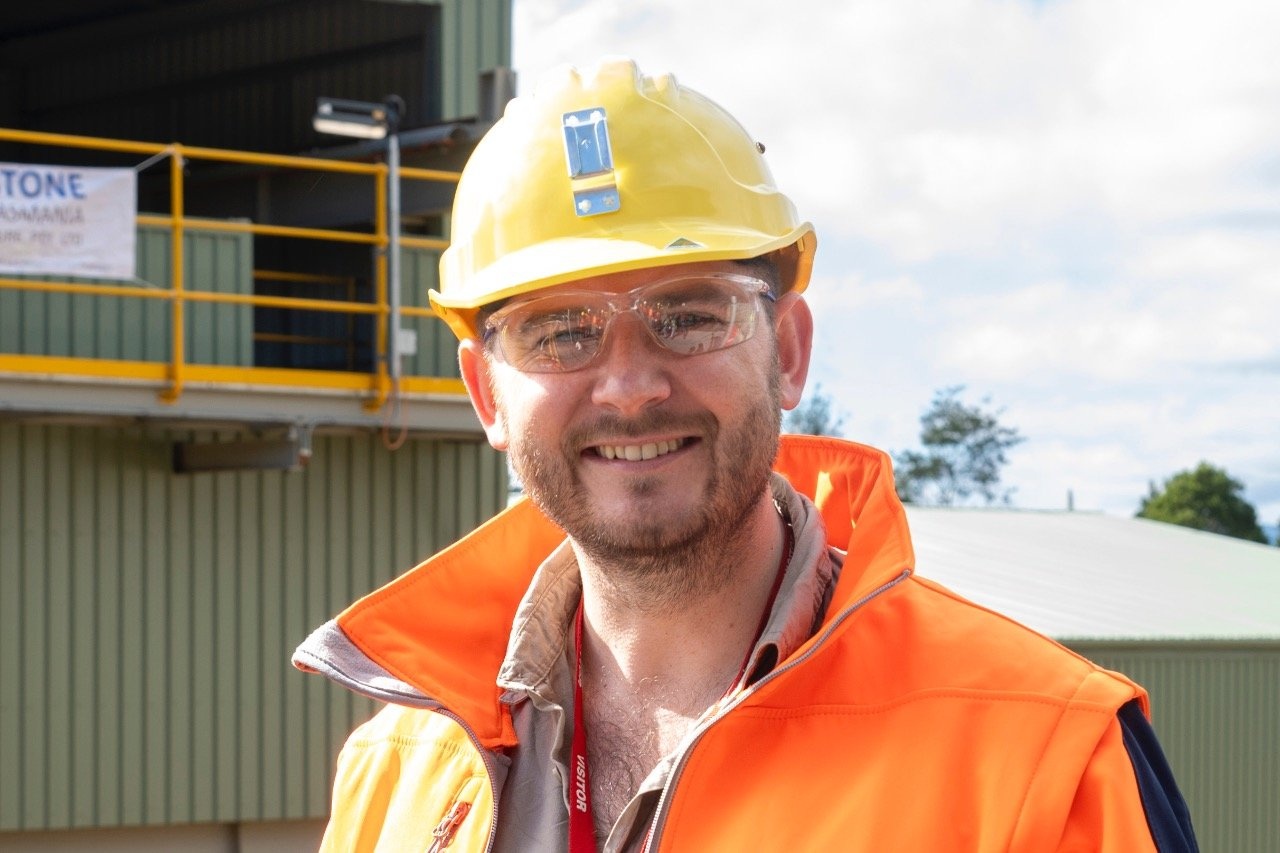 Resources Minister Felix Ellis. Image / File
Barns said the lack of accountability from social media platforms was a “global problem”.
“The lack of responsibility that’s shown by social media organisations when it comes to reputational risk is appalling,” he said.
Both the Bob Brown Foundation and Meta have been contacted for comment.