
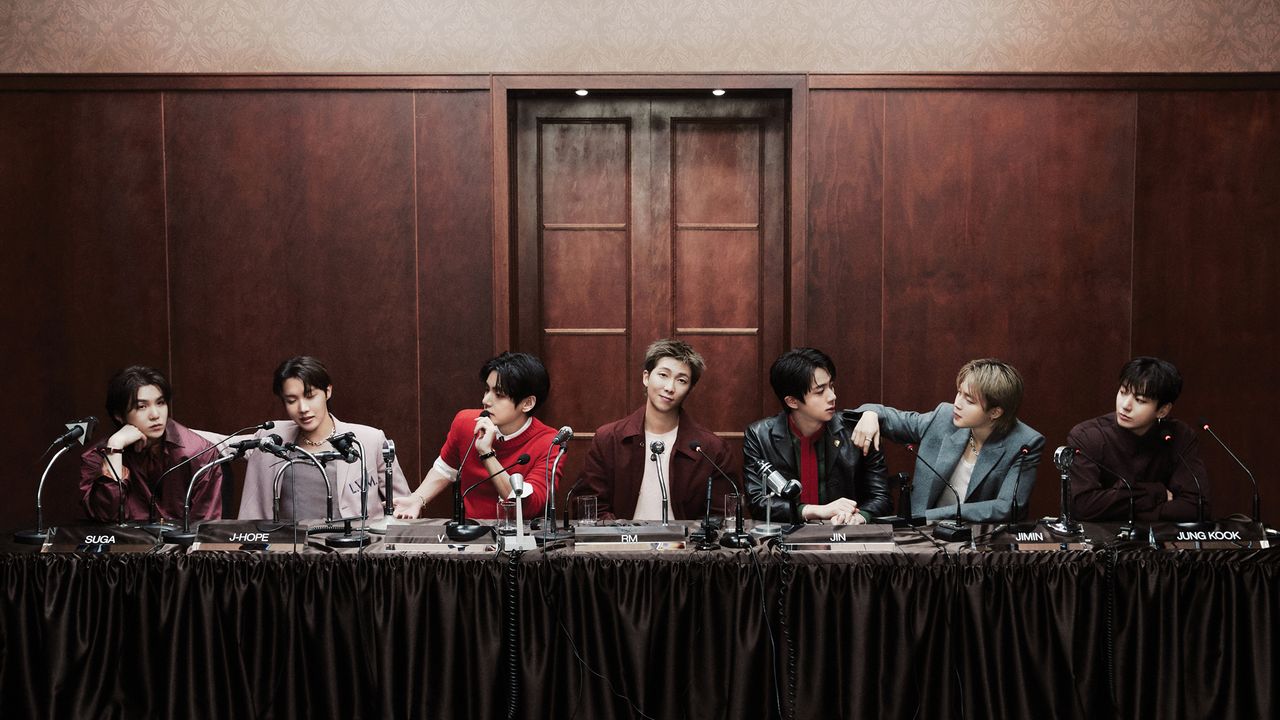
In mid-2025, right after the final member of BTS, the biggest band in the world, had served out the mandatory military service required of every able-bodied male in South Korea, the seven members of the group decamped for Los Angeles to reunite under one roof.
The seven—RM, Jin, Suga, J-Hope, Jimin, V, and Jung Kook—had been in the band together since the early 2010s, when they were all still teenagers, but had not lived in the same place since 2019. After a few years apart, fulfilling their service and tending to solo careers, it was time to get back to work.
“We’d do six days a week, like businessmen,” says RM, the band’s leader. They followed a strict routine: training together in the gym in the morning, coming back home for lunch, reporting to the studio by 1 pm, and working with various songwriters and producers on new songs until about 8 pm, after which they’d all go back home.
Living in one house as roommates once again, BTS were inadvertently doing a simulation of life before superstardom, back to their days as trainees for Big Hit Entertainment (later rebranded as Hybe Corporation) when they would’ve given anything just to debut. This was before they sold over 500 million units and racked up over 104 billion streams worldwide. Before they became the first Korean band to be nominated for a Grammy, to top the Billboard 200 album chart and the Billboard Hot 100 singles chart, to speak at the United Nations. Before they became a global cultural force, the best-selling Asian act ever, and one of the best-selling groups—of any genre, any nation, any time—period.
By now, the BTS mythology is well-worn: In 2010, Big Hit Entertainment, then an underdog record label in Seoul, signed a 16-year-old RM, who was already making a name for himself as a prodigious rapper in the local underground hip-hop scene. Suga, a songwriter and rapper who also had a presence in that scene, and J-Hope, a B-boy dancer turned rapper, joined shortly after. Sensing a more lucrative opportunity, the company changed its plans and turned the hip-hop trio into a K-pop band—eventually creating a unique seven-member lineup that bridged the edginess of the underground rappers with the shiny commercial appeal of a more traditional idol group.
Jin, an aspiring actor, eventually proved himself a strong vocalist (and earned the tag Worldwide Handsome). Jung Kook, the youngest and one of its most versatile singers, soon grew into an all-around performer. And then there was V, with his deep baritone and model-esque good looks, adding a cosmopolitan polish to the proceedings. Rounding out the group was Jimin, a trained dancer, who brought his performance skills and a higher-pitched, utterly distinctive voice to the mix. In a few short years, the scrappy underdog act was giving groups from South Korea’s big three entertainment companies—SM Entertainment, YG Entertainment, and JYP Entertainment—a run for their money, before becoming the local industry’s number one band and, later, transcending the scene altogether, becoming a worldwide phenomenon.