
It was the depths of the COVID pandemic when Sydney beer maker Yulli’s was approached by the Japanese hi-fi brand Audio-Technica about a collaboration.
Time on the couch meant drinkers had more time to try something new and different, said Yulli’s head brewer James Harvey.
“We thought we’d just have a little stab at one batch as a limited release and see how it goes,” he said.
The beer was a hit.
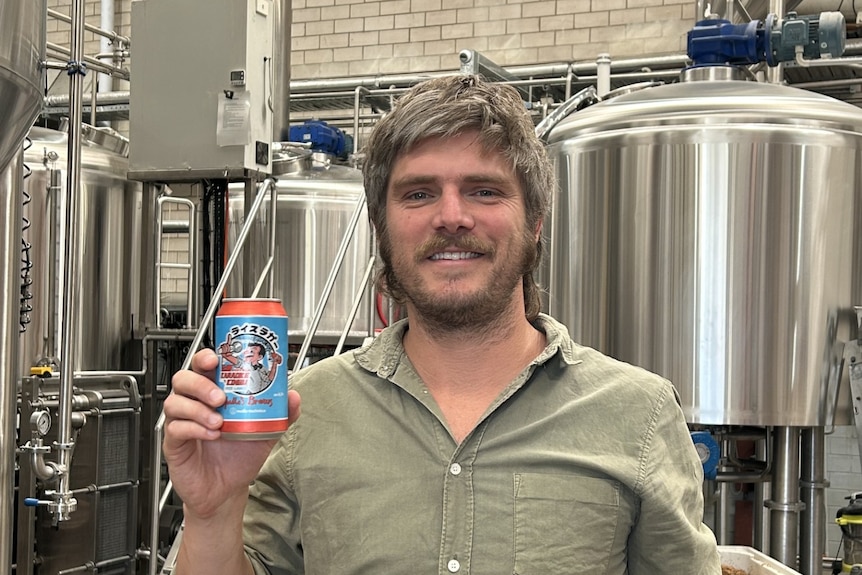
The appeal of Japanese lager is that it makes for “clean and easy drinking”, James Harvey says. (Supplied)
Yulli’s Karaoke Kingu Rice Lager soon became a staple of the craft brewer’s offering and is now distributed to Japanese restaurants.
It’s a microcosm of a broader trend.
Beer brewer Asahi told the ABC that sales of its Super Dry variety in Australia had increased 40 per cent since 2020.
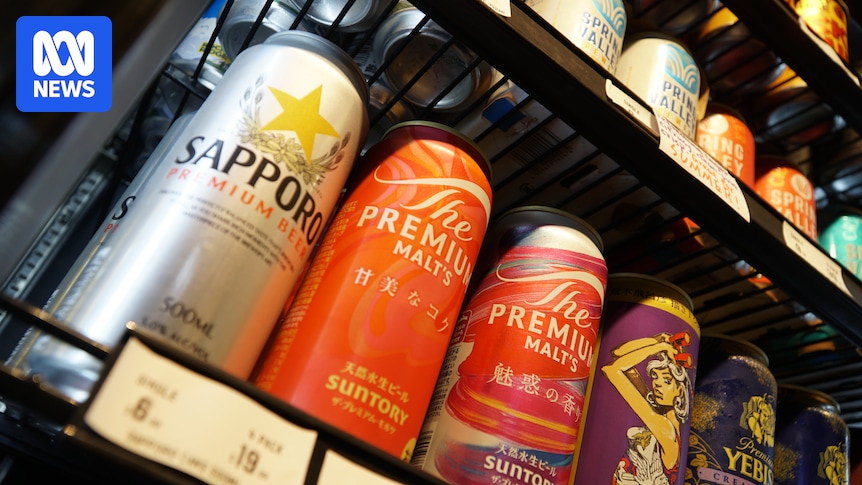
Australians, who have flocked to Japan over the past two decades, are falling in love with the country’s dining culture and along with it — Japanese beer.
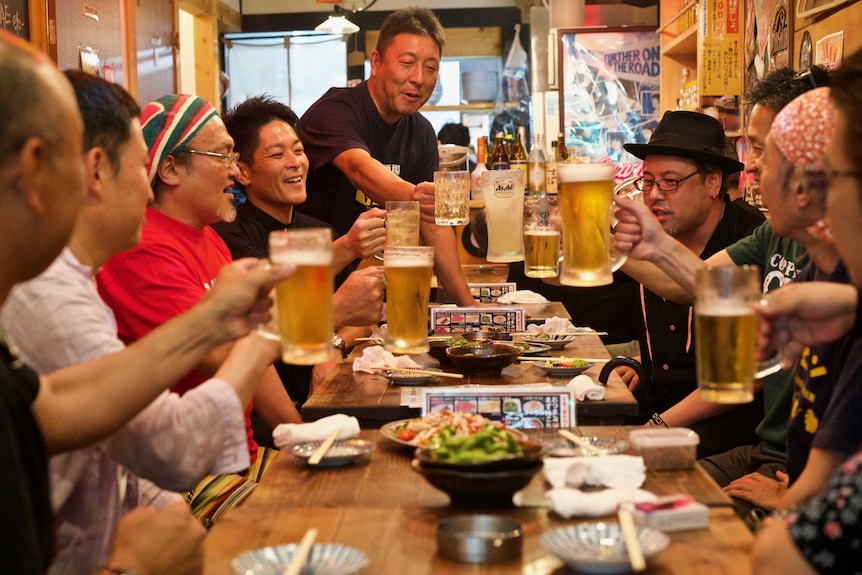
Beer remains popular with older Japanese but young people are less interested. (ABC News: Yumi Asada, file)
While only 101,000 Australians travelled to Japan during the whole of 1997, more than 121,000 Australians visited in the month of December 2025 alone.
The Japan National Tourism Organization reported a record 1 million Australian visitors last calendar year.
IBISWorld market analyst Michael Doyle said it was likely travel was having “quite a big impact” on consumer preferences.
“It has coincided with these two Japanese giants pretty much taking over our beer industry,” he said.Kirin and Asahi buy up Australian beer
Japanese young people aren’t drinking beer like their parents did.
A survey by restaurant information site Gurunavi last year found that 42 per cent of Japanese people over 60 said they liked beer.
But only around one in 10 aged 20 to 29 reported to enjoy it.
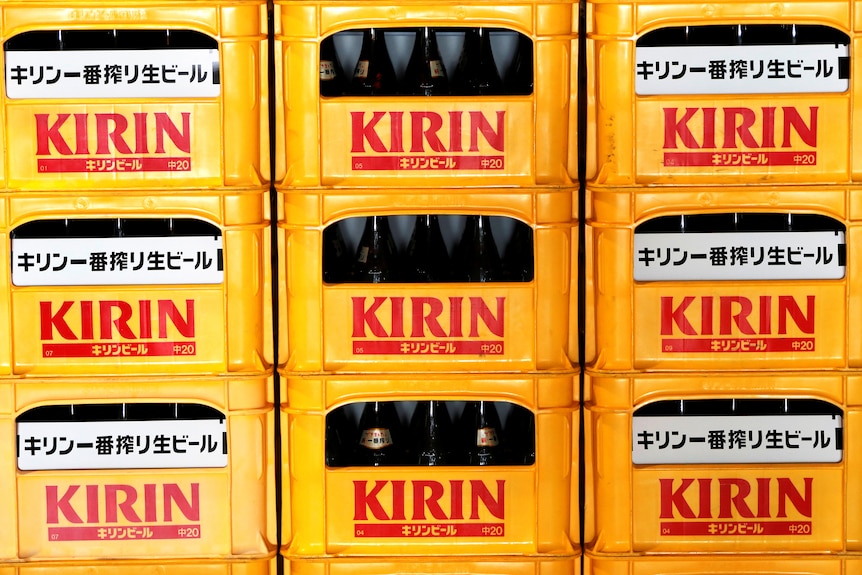
Japanese beverage manufacturer Kirin owns Lion, which produces many of Australia’s most popular beers. (Reuters: Issei Kato, file)
As drinking habits change in Japan, beverage giants Kirin and Asahi have looked elsewhere for growth.
By some estimates, the two companies now account for up to 85 per cent of all beer produced in Australia.
Asahi defied concerns over decreased competition and completed its takeover of Carlton & United Breweries in 2020.
The company told the ABC it employs almost 4,000 Australians across 17 manufacturing sites.
Kirin had entered the Australian beer market earlier, purchasing Lion Nathan in 2009, which it rebranded as Lion.
“Lion is always looking to offer consumers new products that are relevant for our market, whether through our own innovation or borrowing from international markets,” a company spokesperson told the ABC.
At the same time, travel by Australians to Japan has surged.
“This sustained outbound travel boom is now translating into stronger domestic demand,” said Andrew Gerrard, a senior consultant on liquor and tobacco at market research firm Circana.
Consumers were looking to “recreate those overseas experiences at home”, he said.
The Lion spokesperson said the Japanese beer segment was “now the #1 country of origin beer segment in Australia, in terms of both value and volume, overtaking Mexico”.
Truman Ng has seen these trends play out at his boutique bottle shop, Sessions at Arden, in Melbourne’s inner north.
They stock between 200 and 300 different beers at any given time, with around 15 per cent coming from Japan.
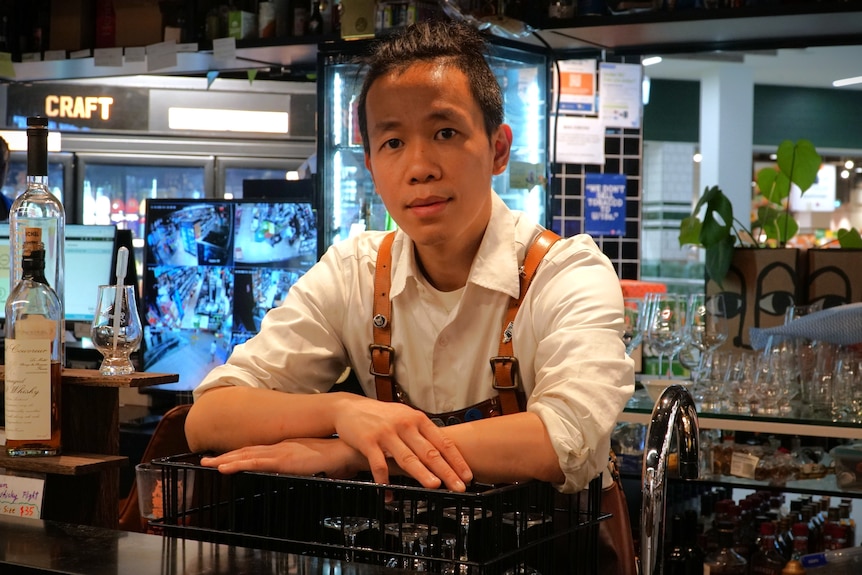
Truman Ng says many consumers are moving away from heavy, craft-style beers towards easy drinking lagers. (ABC News: Lachlan Bennett)
“More and more people are demanding imported stuff or Japanese beer and sake,” he said.
“That’s why we bring in a lot of interesting beer from overseas.”
Japanese beer still only represents 4 per cent of beer imports into Australia.
But IBISWorld’s Mr Doyle said imports of beer from Japan had doubled over the past decade.
Australia’s thirst for sake surges as imports and local brewing boom
Import numbers don’t accurately capture how popular they are because most Japanese beer brands are now made in Australia.
And Mr Gerrard of Circana said while beer consumption in Australia had decreased year-on-year in terms of litres sold, the Japanese beer category was instead growing.
“Two of the fastest-growing brands by value growth over the past year are Japanese,” he said.
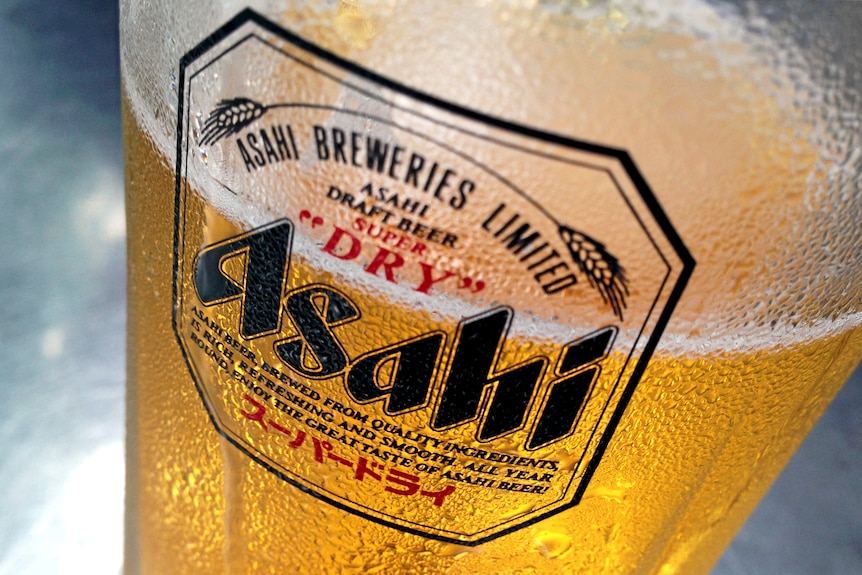
Sales of Asahi Super Dry in Australia have increased 40 per cent since 2020. (Reuters: Tim Wimborne, file)
Mr Ng said many Australian drinkers were “getting sick of the super heavy, craft style IPAs” that had dominated trends in recent years.
They were now seeking the “crisper, lighter, more refreshing” taste of Japanese beer, he said.
An Asahi spokesperson said their range was expanding as Australian consumers grew more familiar, including a lemon yuzu variety that was “enormously popular in Japan”.
Its also launched new mid-strength and zero alcohol varieties “as Australian drinkers increasingly embrace moderation”, they said.
Is ‘Japanese beer’ actually Japanese beer?
In the aisles of your local, not all Japanese beers are equal.
While some are brewed in Japan and shipped to Australia, many well-known brands such as Asahi Super Dry, Kirin Ichiban and Sapporo are manufactured Down Under.
Mr Ng said discerning drinkers can tell the difference — and not just because imported beers tend to be more expensive and have a much shorter shelf life.
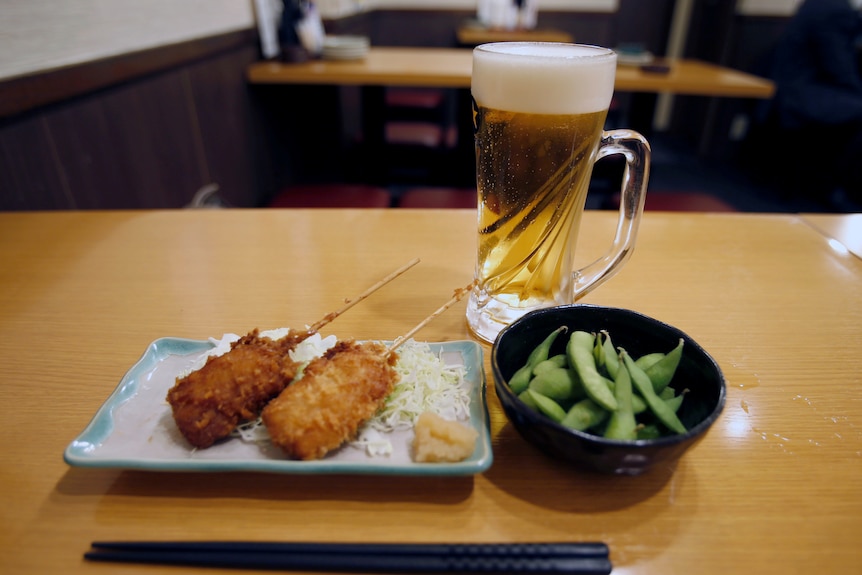
Australian appreciation of Japanese dining culture and beer has grown. (Reuters: Kaori Kaneko)
A key factor is the differing mineral content in local water supplies, with Japan known for its “soft” water.
“Minerality in Japanese water is much less, so the flavour is more attached to the water,” Mr Ng said.
“And the texture, the flavour, the bubbles are just all more refined.”
Sydney water was “particularly soft and clean and easy to work with”, Mr Harvey from Yulli’s said.
Australia’s largest independent brewery, Coopers, produces Sapporo under licence and distributes Yebisu.
Sapporo has seen strong sales growth for Coopers over the past two years. (ABC News)
“We saw an opportunity back in 2011 to partner with Sapporo to grow their sales across Australia and diversify our international portfolio,” Coopers managing director Michael Shearer told the ABC.
Sales growth in Sapporo and Yebisu had been particularly strong over the previous two years, he said.
It’s a trend seen across the industry.
Monsuta Okinawa Supreme is brewed on the Japanese island of Okinawa, yet owned by Endeavour — the parent company of BWS and Dan Murphy’s.
Enthusiast blog Beer Rankings Australia describes Monsuta Okinawa Supreme as “perfect for when you want a beer that tastes like a holiday in a can (without the airfare)”.
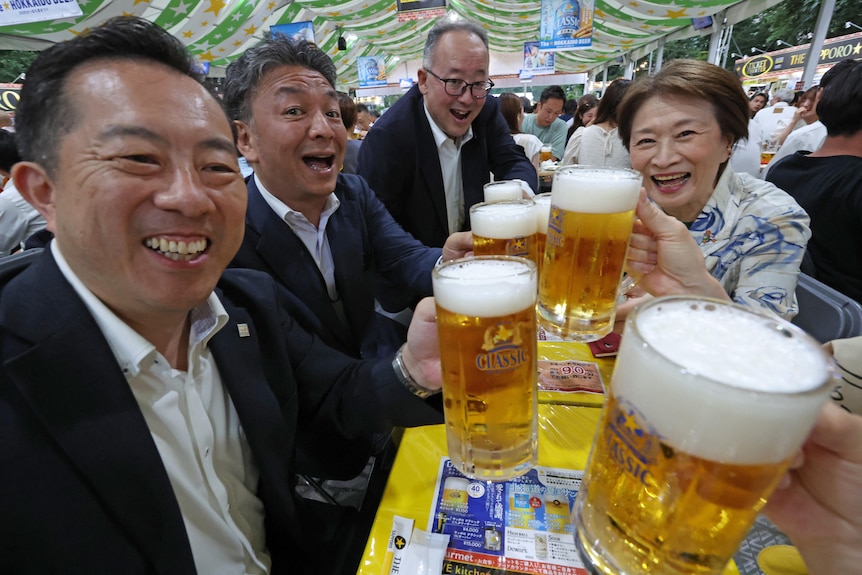
Japan is known for “soft” water, which shapes the taste of its beer. (AFP: Ryoichiro Kida / The Yomiuri Shimbun)
Mr Harvey said it was the care that went into Japanese products that made the difference.
“There’s such beautiful detail put into everything they do,” he said.
“As a Japanese lager, something that again is such a clean and easy drinking product but done with such precision.
“It’s just so damn appealing.”