
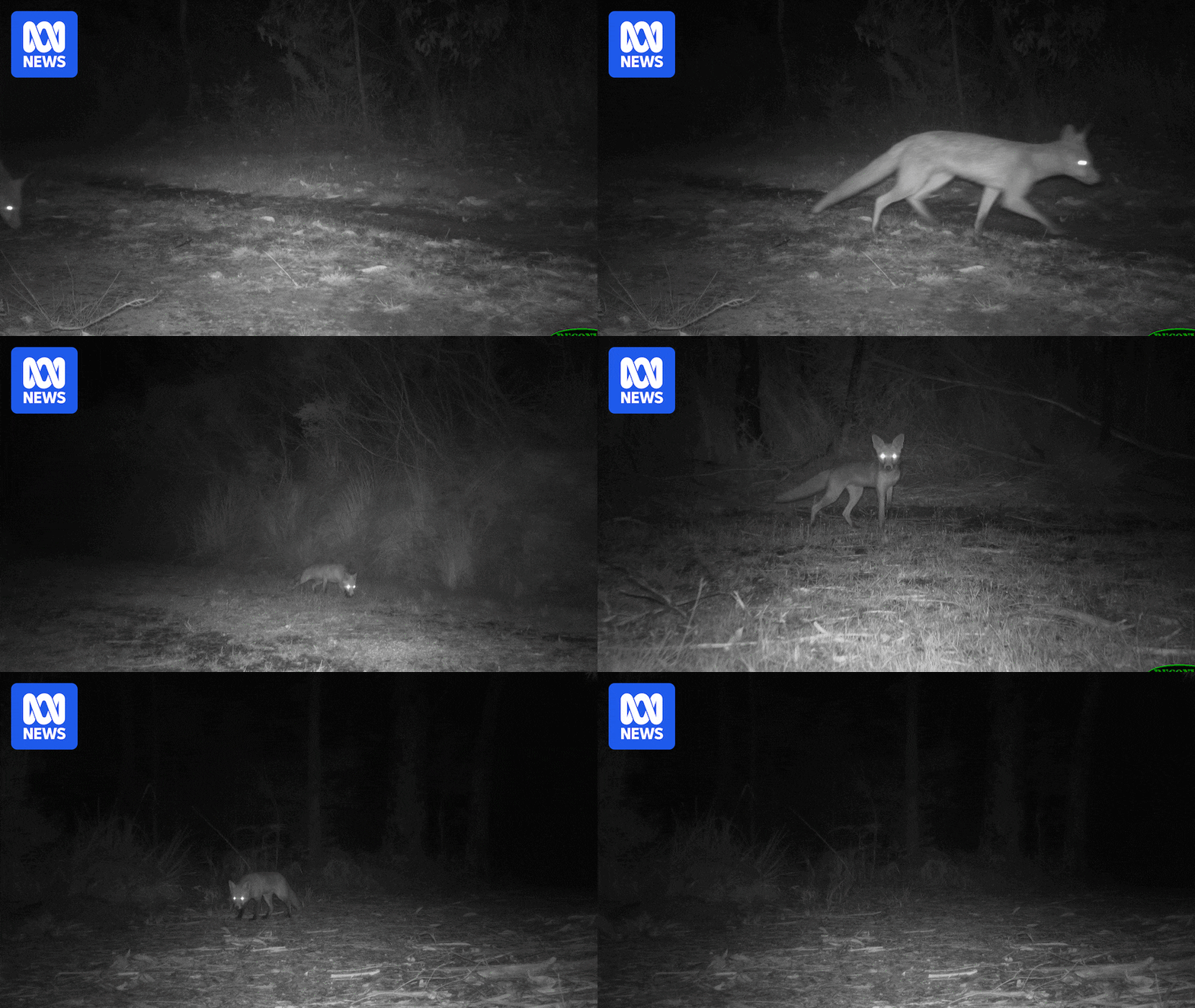
Fox researcher Paul Meek says he suspects the “cunning” creature has taken to using waterways at a New South Wales national park, but needs to know for sure in order to get a handle on them.
His team has tagged six of the animals with GPS collars and set up more than 70 camera traps in Booderee National Park to map their every movement.
It is a far cry from his methods 25 years ago, which used radio signals and daily checks for fresh paw prints in the sand.
“We get a fix on where that fox is so we can actually piece together their movements every 15 minutes,” he said.
“It’s incredible to understand how foxes are using the landscape.”
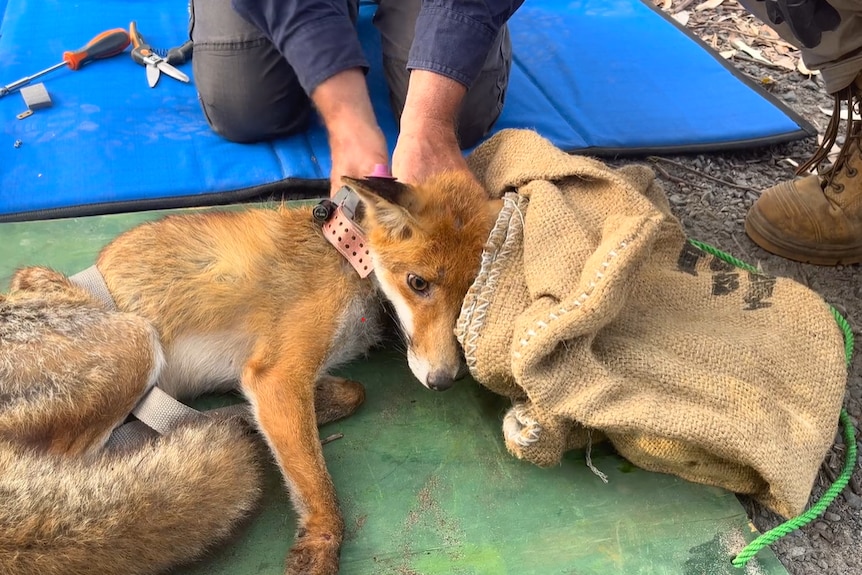
The program is hoping to collar about 30 foxes to gain an understanding of how the population is using the park to get around. (Supplied: National Environmental Science Program)
He said the ideal number of foxes collared would be closer to 30 to “iron out” their movements.
“If we have foxes swimming across Sussex Inlet, then that’s a whole new aspect of management that we need to start thinking about,” Dr Meek said.
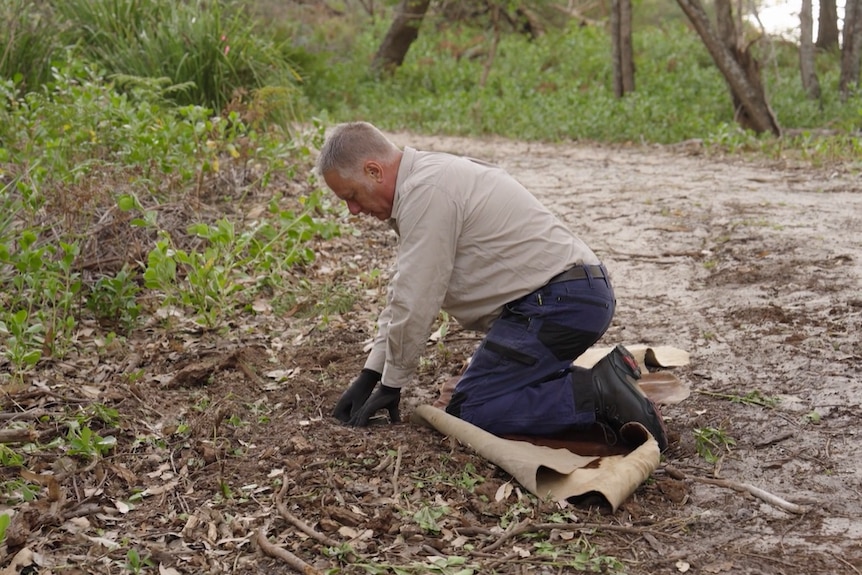
Paul Meek uses gloves and a mat to kneel on when setting up and checking fox traps due to the animals’ high level of intelligence. (Supplied: National Environmental Science Program)
“What are the things we need to do and change in the management regime we’ve currently got to stop immigration, because that’s the weak point at this stage.
“You can never learn enough about foxes — they’re so smart.”
’21st-century technology’
The work is part of the National Environmental Science Program’s Resilient Landscapes Hub, which aims to improve its understanding of fox behaviour for more effective conservation efforts.
The extinction of several native species at Booderee, including the long-nosed potoroo, the eastern quoll and the southern brown bandicoot in the 90s, has been attributed to fox predation.
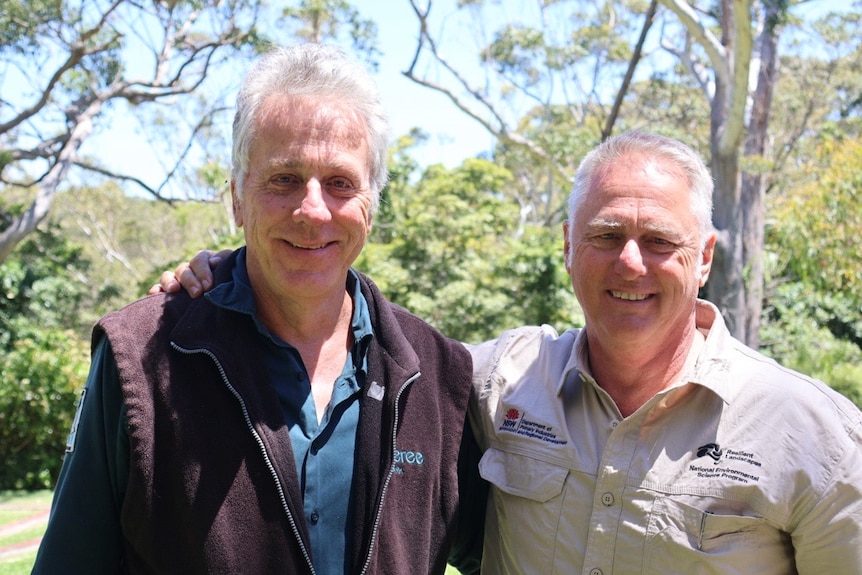
Nick Dexter (left) and Paul Meek have worked together in fox management for more than 20 years. (ABC Illawarra: Romy Gilbert)
Parks Australia conservation and country manager Nick Dexter said Booderee had experienced significant loss over 100 years.
“There were a number of animals we know were here from early records and archaeological sites,” he said.
That included the once-abundant greater glider, which has not been detected since 2006.
In 1995, the park became jointly managed by Parks Australia and Wreck Bay traditional custodians, which ramped up efforts to protect small mammals.
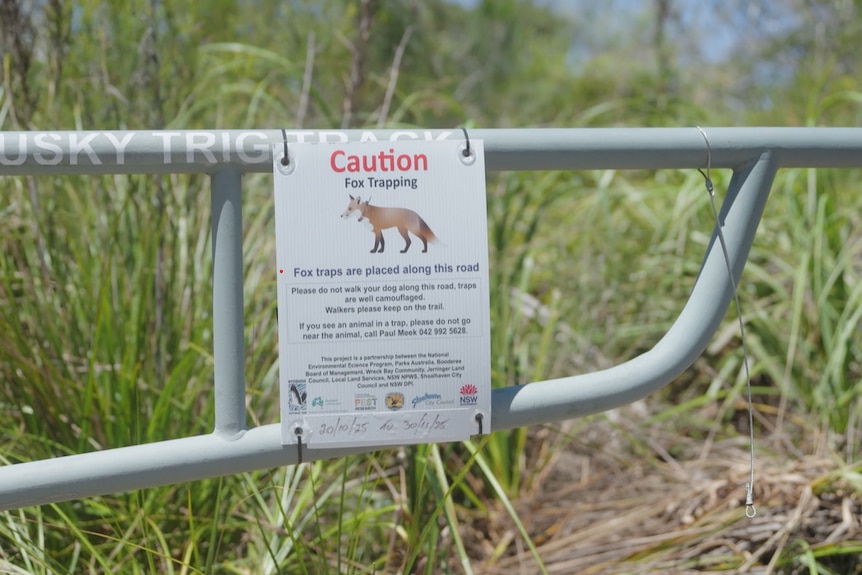
More than six foxes have been trapped and fitted with a GPS collar so far. (Supplied: National Environmental Science Program)
“We’ve been baiting to protect the wildlife here intensively for over 20 years, and we’ve had some great results for creatures like long-nose bandicoots and brush-tailed possums,” Dr Dexter said.
“We believe they’re in high numbers now because of our intensive fox control — but we wanted to do more.”
In 2024, just over a dozen eastern quolls were released into the park’s botanical gardens in a predator-proof fenced area.
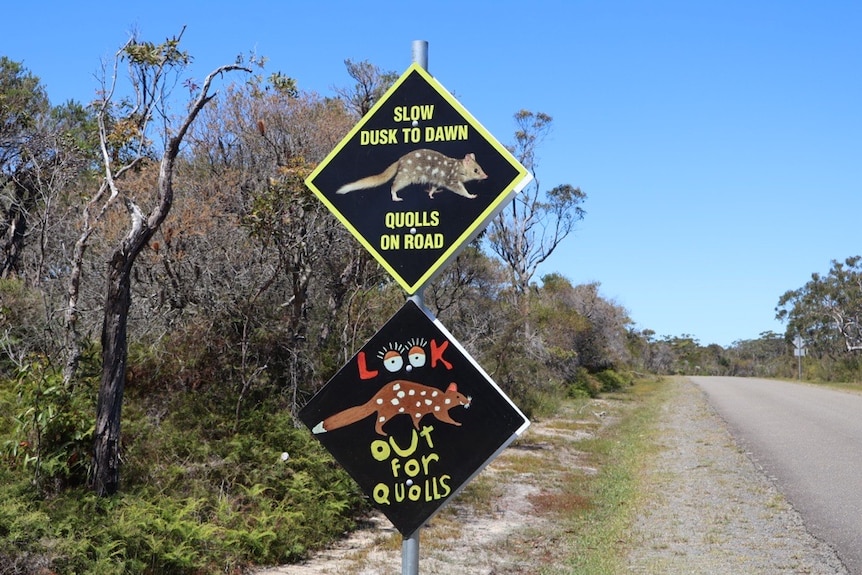
Booderee Botanic Gardens guests are reminded to keep an eye out for the newly reintroduced population of eastern quolls. (ABC Illawarra: Romy Gilbert)
A recent census of the reintroduced species found the population had doubled inside the predator-free zone.
Dr Dexter welcomed the “high-tech wildlife management of the 21st century”, but said he understood the reality of dealing with the invasive creature.
“Obviously, the dream goal would be to have no foxes, but I don’t believe that’s possible given how widely distributed they are and how they can move,” he said.
He said he would like to see them removed entirely, but if not, “better the devil you know”.
“Do they move in and out of the park? How big of an area are they occupying?” he said.
How will it work?
The camera traps are used in conjunction with GPS collars to improve detection of where the foxes are entering the park.
The traps use a sensor that detects heat from an animal against a background temperature that is cooler or hotter than the animal.
When the sensor is triggered, photos or videos are recorded onto memory cards for scrutiny by park staff.
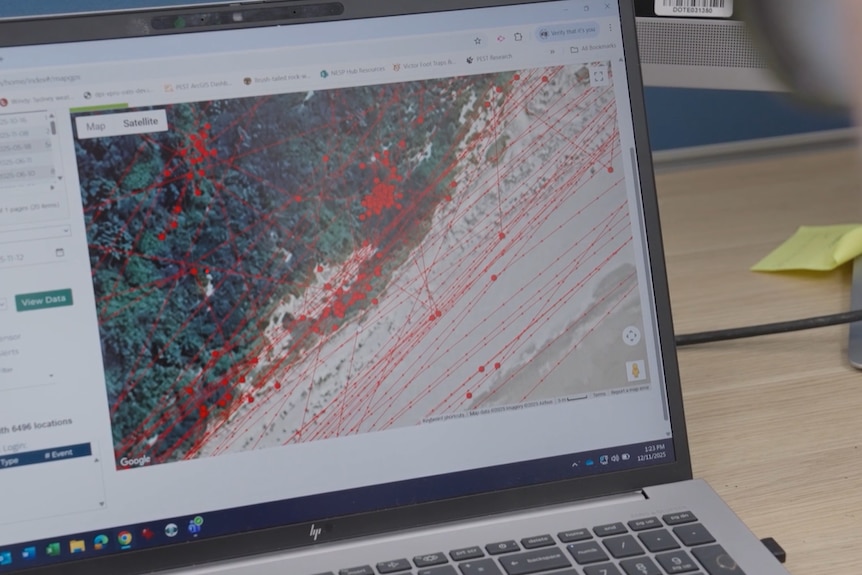
More than six foxes with GPS collars are creating “incredible” data highlighting how they are using the landscape. (Supplied: National Environmental Science Program)
The collars bolster the data by being able to track the animal’s location every 15 minutes.
The team is also collecting DNA from the animals collared in the park, as well as some of the foxes from across the water at Sussex Inlet.
“We can look at relationships in DNA to see if the genetics of the foxes here are related closely to family genetics on the other side,” Dr Meek said.
“If the foxes that are coming into the park are coming down through there, that then makes you think, ‘Well, how are we going to stop them?'”