


February 14, 2026 — 6:00am
Save
You have reached your maximum number of saved items.
Remove items from your saved list to add more.
Save this article for later
Add articles to your saved list and come back to them anytime.
Got it
AAA
A Brisbane-based hypersonics start-up is preparing to go suborbital, with a launch window later this month to test its scramjet technology over the Atlantic Ocean.
Hypersonix Launch Systems, with its origins in the University of Queensland’s Centre for Hypersonics, has designed an engine with no moving parts capable of propelling a vehicle up to 12 times the speed of sound.
The company will face its moment of truth late this month in the United States, when its Dart AE is launched 50 kilometres into the atmosphere from NASA’s Wallops Flight Facility in Virginia, about 175 kilometres south-east of Washington, DC.
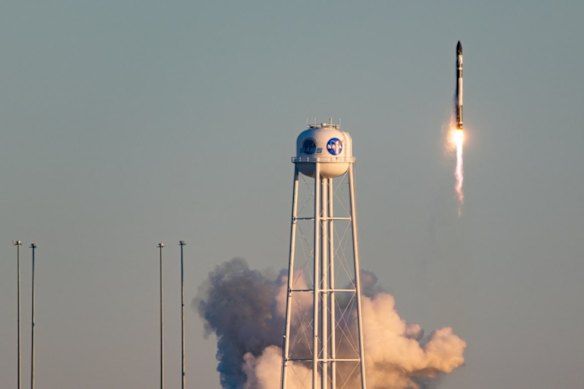 A Rocket Lab HASTE rocket will have a Queensland payload later this month when it lifts off from NASA’s Wallops Flight Facility in Virginia. Rocket Labs
From there, it will demonstrate its potential to the United States’ Defence Innovation Unit, which selected the Queensland-based company from a field of more than 60 for the program.
If successful, the NASA-backed test flight would mark the world’s first sustained hypersonic flight using green hydrogen. Along with the defence and travel applications, the technology could also be used as part of staged payload deliveries to Earth’s orbit.
But getting the 3.5-metre Dart AE to the launch site proved more challenging than Dr Michael Smart, the co-founder of Hypersonix, had anticipated.
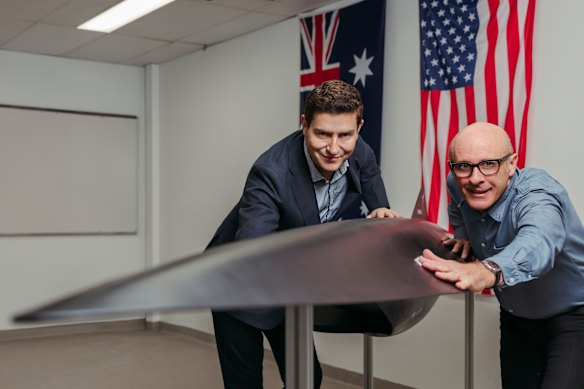 Hypersonix co-founder Michael Smart (right), with CEO Matt Hill and a model of the Dart AE scramjet. Sarah Keayes/The Photo Pitch
“We shipped the vehicle and all its equipment over here to the US, and then it got caught in that snowstorm that was here two weeks ago,” he said.
“It sat at an airport on the west coast at some sort of import-export place for a week – we couldn’t get it on a flight, so we had to truck it across the States.”
The exact timing of the launch would not be known until about 24 hours beforehand, allowing for weather, but it was expected to lift off in late February.
And once it is launched, Smart and his crew will never see this particular Dart AE again.
“It is just a sacrificial lamb,” he said.
“It’s too small to have a parachute or a or landing gear. Our next vehicles, which are more than twice as big, they’ll be able to land on a runway and be reusable.”
While the vehicle was destined for the bottom of the Atlantic Ocean, the test flight would help inform the further development of the technology.
Related Article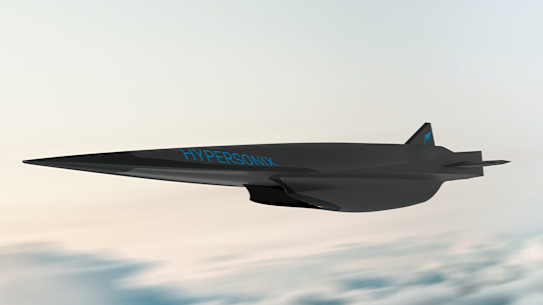
And the mission and launch names contain a touch of home. The mission will be known as “Cassowary Vex”, while the launch will be “That’s Not a Knife”.
“It really appealed to the Americans, actually,” Smart said.
“When they think of Australia, they still think of Paul Hogan and Crocodile Dundee, so that was a bit of fun.”
Save
You have reached your maximum number of saved items.
Remove items from your saved list to add more.
From our partners