
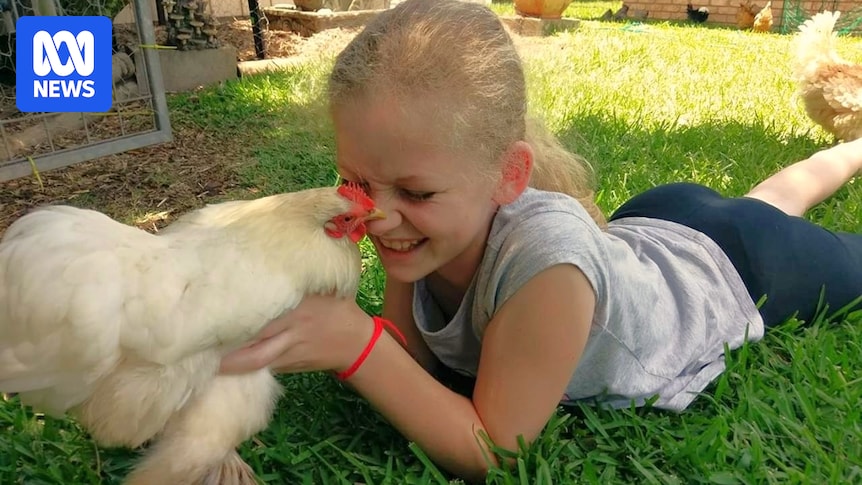
While growing up, people didn’t make much sense to Summer Farrelly, but chickens always did.
Living with autism had often left Summer feeling like an outsider at school.
“My motivation to get through the school day would be being able to see my chickens again,” Summer said.
“And I know that they also looked forward to being able to see me at the end of the day, too.
“They hug you back. It’s adorable.”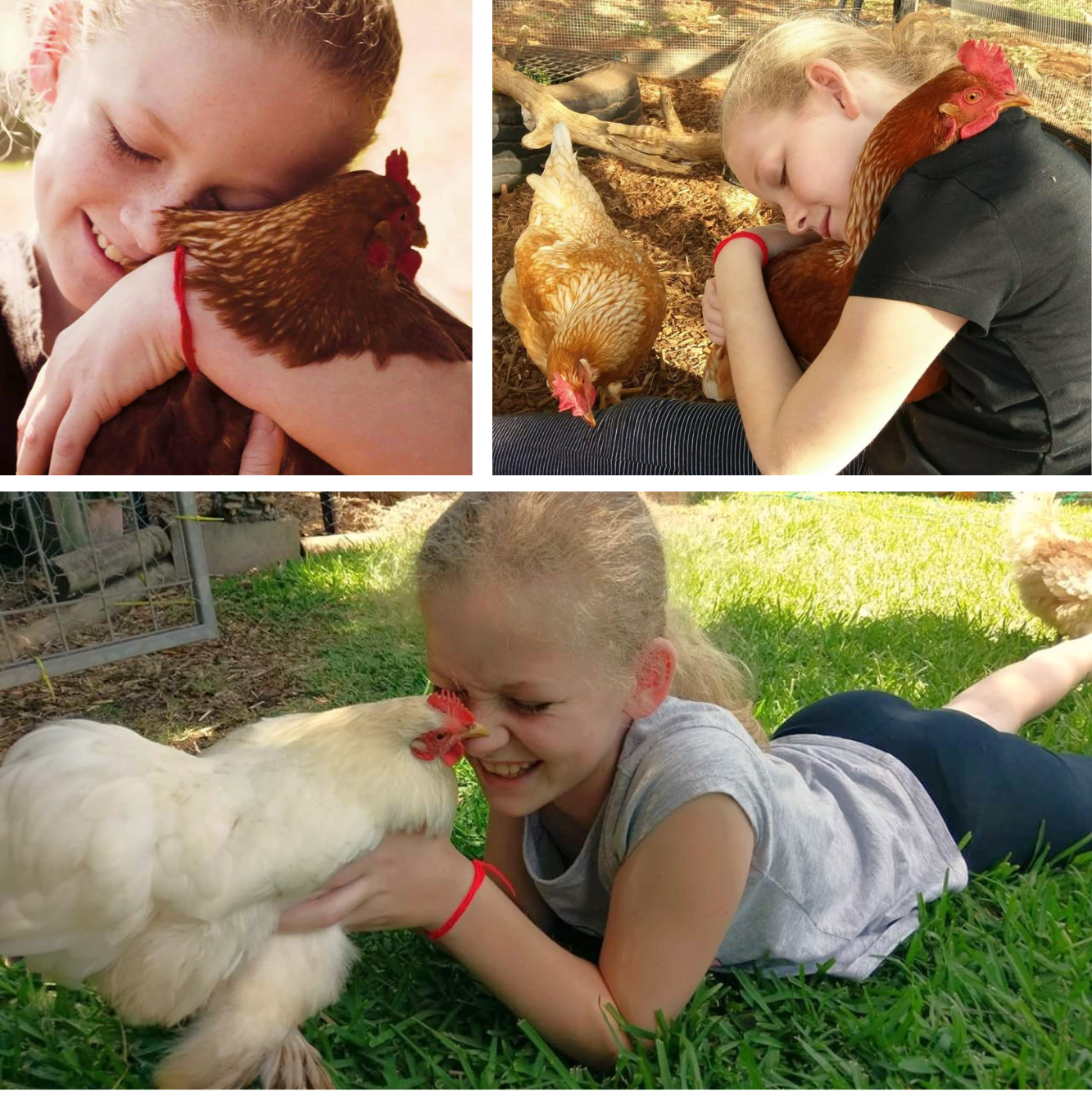
Summer Farrelly rushed home from school each day to see their chickens. (Supplied)
Summer was just an 18-month-old toddler when they were given their first chicken. In that moment, a lifelong love was born.
At one stage, Summer found themselves surrounded by a flock of 20 feathered friends.
But over the years, the family’s chickens provided more than friendship; they became Summer’s teachers.
“I realised they had this social hierarchy that was really intricate, and they all had these little personalities,” Summer said.
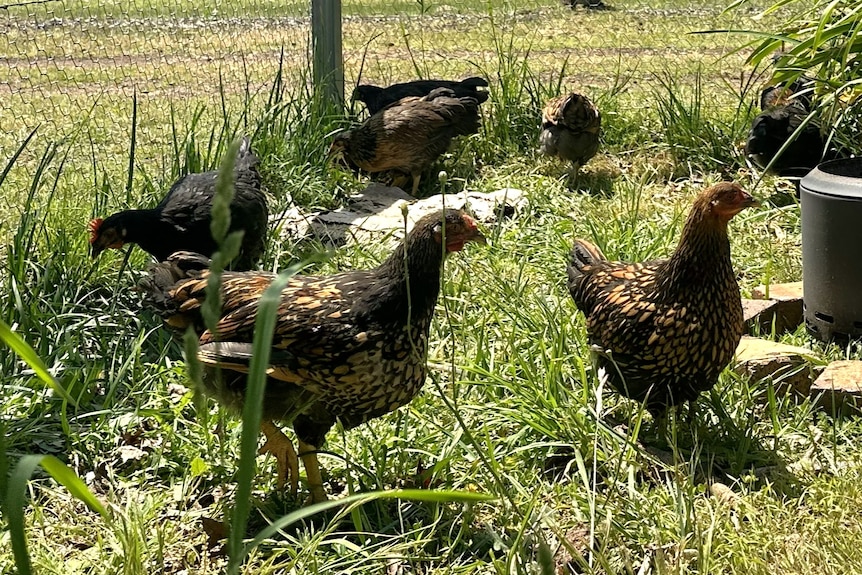
The way chickens interact has helped Summer Farrelly understand the social dynamics of humans. (ABC News: Amal Wehbe)
“Watching the way they interacted with each other, I realised it was really similar to the way that the kids on the playground interacted.
“With my little autistic brain, I made all these connections and … I began to interact with the kids on the playground in that similar manner.”
Loading…Helping other children
Understanding playground politics made life easier for Summer, who grew up in Bundaberg but now lives in Armidale in New South Wales, where they are studying zoology at the University of New England.
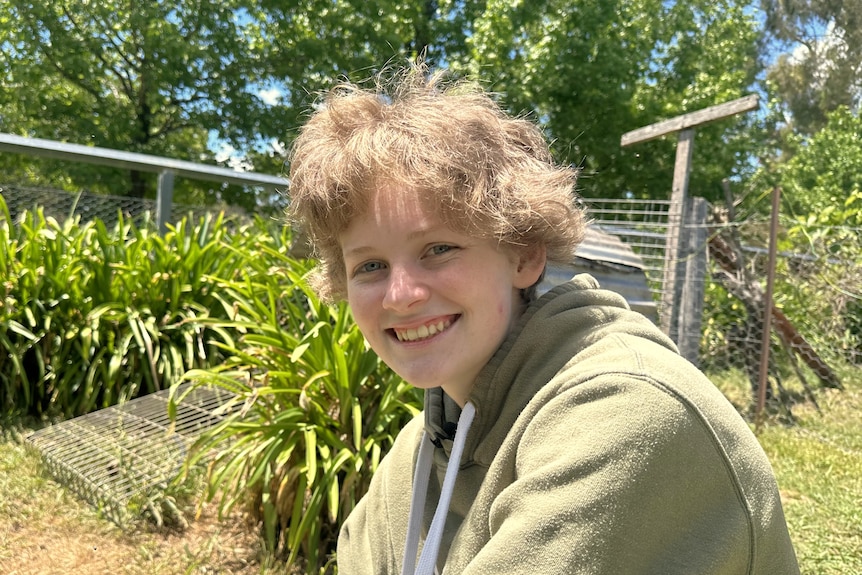
Summer Farrelly has written a book and developed an animal-assisted learning program to help others living with autism. (ABC News: Amal Wehbe)
Now 19, Summer says they realised that this chicken-based recipe for understanding human social dynamics would be helpful for other children with autism.
So at the age of 12, Summer wrote a book, Chickens to Love, and created an animal-assisted learning program to help other kids.
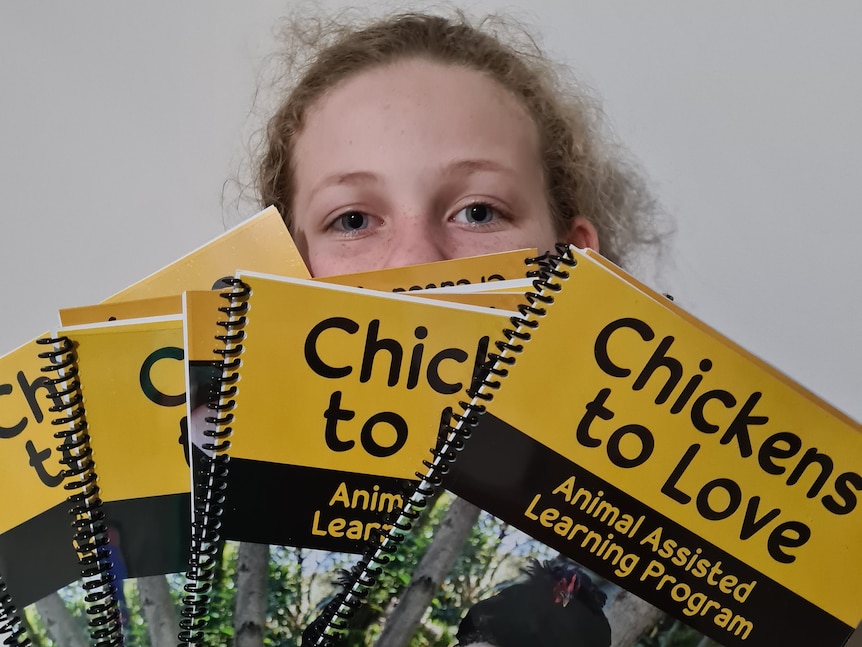
Summer Farrelly’s book, Chickens to Love, is helping other children. (Supplied)
They began delivering the program — which uses chickens to help teach social dynamics, self-advocacy, and emotional self-regulation — with a Bundaberg-based disability group that works with young autistic people.
One of the components of the program is observing signs in chickens to help identify your own emotions, something Summer had struggled with as a neurodivergent person.
“When you’re with animals, they can tell how you’re feeling, and when they back off from you, it helps you realise that the way you act impacts other people,” they said.
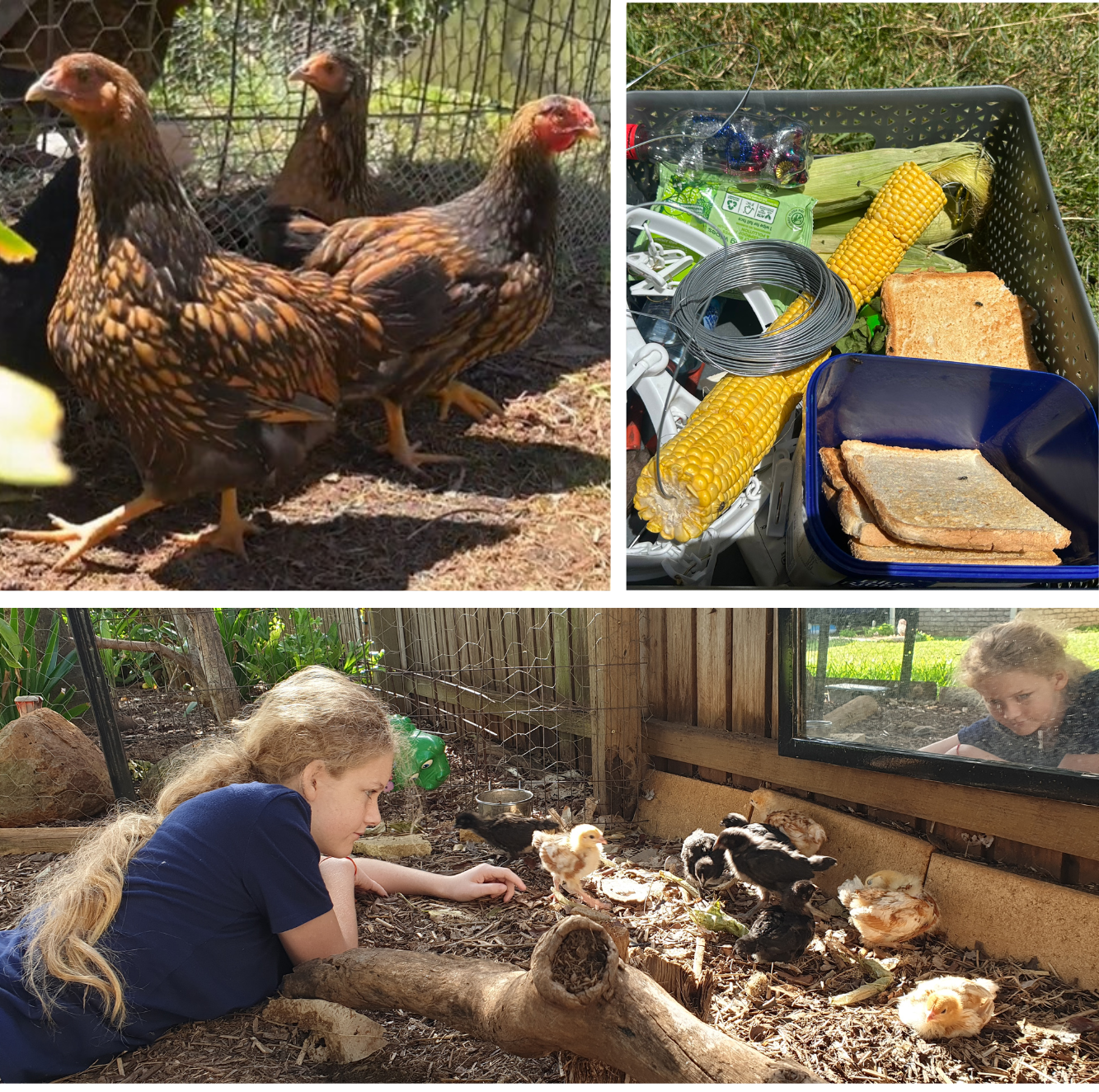
Summer Farrelly learned how to understand social dynamics by observing chickens. (Supplied)
‘Everybody has different thought processes’
Summer highlights that the program is not about making “neurodivergent people understand how to be neurotypical”.
“It completely can be flipped around, and it’s on neurotypical people, understanding neurodivergent people better,” they said.
“Being able to understand that … everybody has different thought processes and different communication styles.”
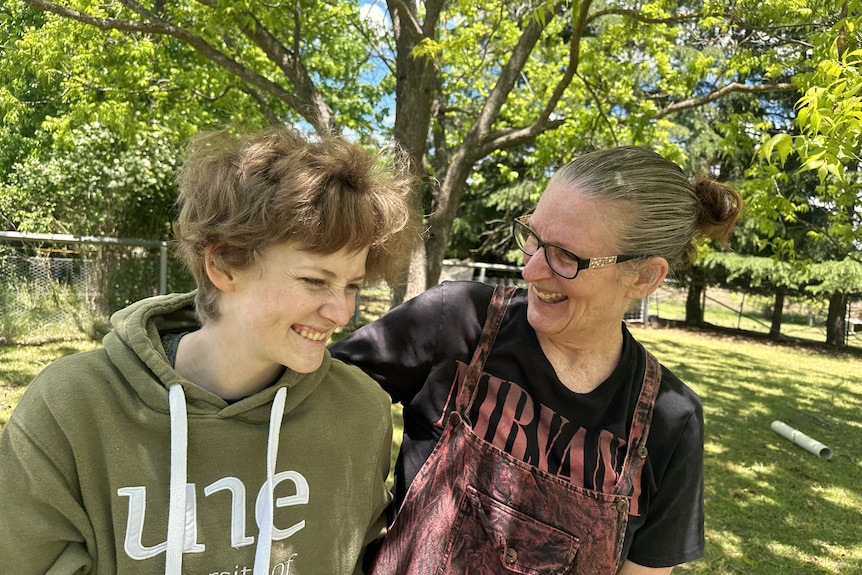
Summer and Cynthia Farrelly have both been diagnosed with autism. (ABC News: Amal Wehbe)
Summer’s mother, Cynthia Farrelly, admits that she was “not a fan of chickens” at first, but grew to love them.
And, over time, as Summer forged their path with autism, Cynthia embarked on her own self-discovery journey.
“As my children were starting to get diagnosed, it was then that I delved into my own diagnosis,” Cynthia said.
At 39, Cynthia, too, was diagnosed with autism.
Summer now works virtually with disability support groups and individual disability support workers to help them deliver the Chickens to Love learning program.
They said other animals can be substituted for chickens.
“Most people do want to keep the chicken element, though, because they’re such an amazing animal,” Summer said.
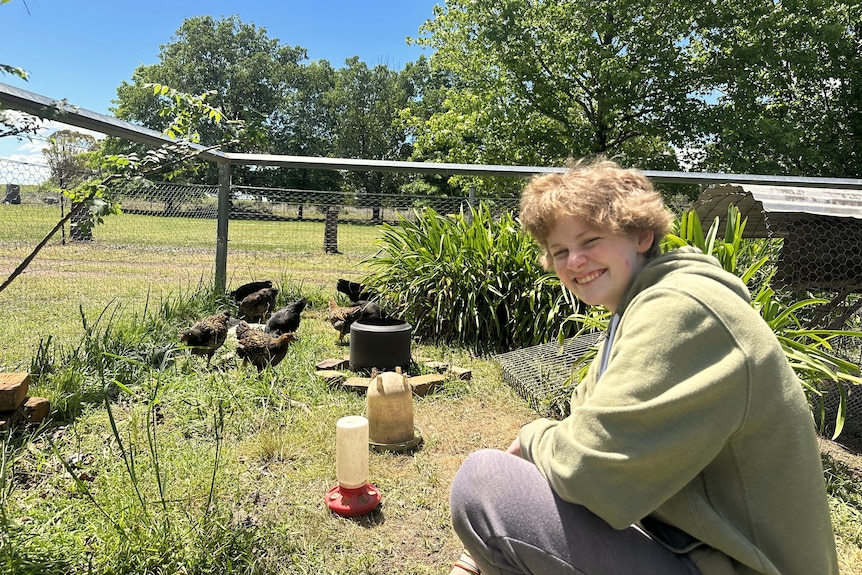
Summer Farrelly with their beloved chickens. (ABC News: Amal Wehbe)