
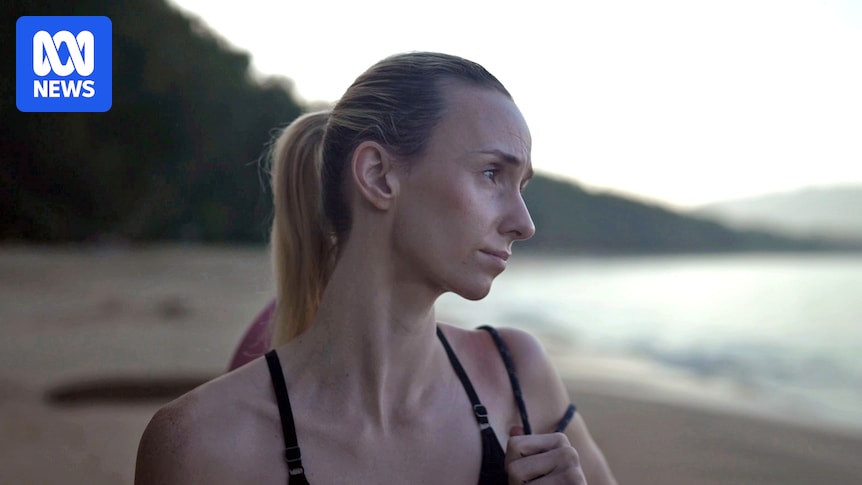
Why did top Melbourne gynaecologist Simon Gordon perform seven surgeries for “severe” endometriosis on Courtney Paton, when her pathology results from his operations repeatedly showed no signs of endometriosis?
Why did Dr Gordon remove both Courtney’s ovaries and her uterus by the time she was 25?
Why did he keep referring to endometriosis in Courtney’s operation notes and his correspondence with her GP when this was completely at odds with the pathology findings?
Why, indeed, did he keep billing Medicare for an operation designed for “severe endometriosis” ― the most expensive item number in laparoscopies for endometriosis?
Why didn’t the multiple managers at Melbourne’s Epworth Hospital who were notified between Courtney’s second ovary being removed and her ultimate hysterectomy raise the alarm about what experts have now told the ABC was a pattern of unwarranted surgery?
These are the questions that keep rolling around in the minds of the Four Corners team that has been investigating Courtney’s doctor Simon Gordon’s practice for the past seven months.
Courtney is just 28 years old and is now medically infertile.
The federal health minister has described the allegations as “physically sickening”.
“I feel completely betrayed by not only Simon Gordon, but by Epworth, by the healthcare system, as obviously other doctors who were seeing me … would’ve known what he was doing,” Courtney told Four Corners.
There will be more on that in our program about the man who was one of the busiest laparoscopic surgeons at Victoria’s largest private hospital on Four Corners on February 23, but first, we want to tell Courtney Paton’s story.
Surgery after surgery
Courtney first had laparoscopic surgery with another Melbourne surgeon in 2018.
That is the only one of her eight surgeries which definitively shows that she had endometriosis, a disease affecting about one in seven Australian women where cells similar to the lining of the uterus typically grow in other parts of a woman’s pelvis, causing extreme pain and in many women, infertility.
She went to see Simon Gordon in 2019 when she was 21, because, like so many other women who have surgery for endometriosis, the first operation with the other doctor didn’t make her pelvic pain go away.
“You’re in chronic pain all the time, your menstrual cycles are extremely painful. You almost pass out from the pain each month,” Courtney remembered.
“You’re going to believe the trained gynaecologist you’re speaking to and trusting with your care.”

Simon Gordon billed himself as the guru of laparoscopic surgery.
Simon Gordon seemed the perfect person to trust with her health: his practice was branded as “Endo Health”. He charged more than other gynaecologists we’ve spoken to and was recommended by endometriosis influencers online.
He billed himself as the guru of laparoscopic surgery — keyhole surgery for endometriosis ― and in one set of records from Epworth seen by Four Corners, he was twice as busy as the next busiest gynaecologist performing these procedures at the hospital.
Courtney’s parents would go on to pay more than $32,000 to Dr Gordon just for the surgeries he performed on their daughter.
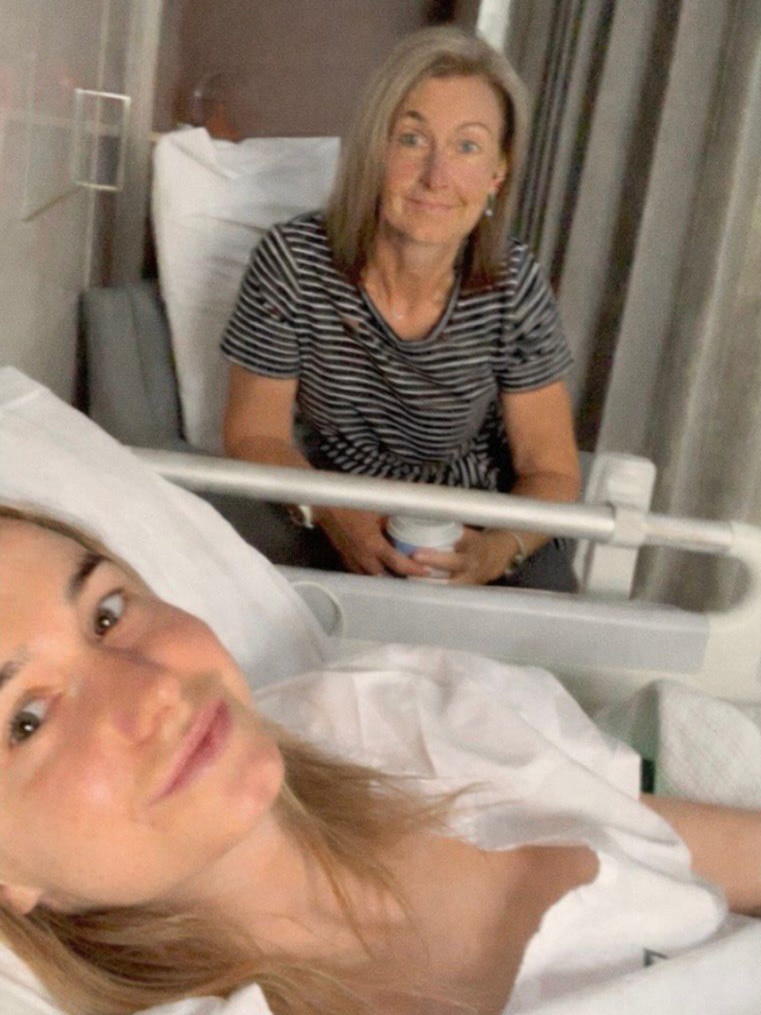
Courtney with her mum. (Supplied)
It’s a decision that Courtney and her family now bitterly regret.
When Four Corners first contacted Courtney in October last year, we suggested she request what’s known as her histopathology for all seven of her operations. These are the tests done on the day of a laparoscopy to show how much disease has been found and where.
Courtney says Dr Gordon had never provided this information to her before, and she’d never thought to ask for it. When she emailed him to request it, Dr Gordon’s reply caused Courtney some concern.
“Hi, Courtney. It’s been a while. Hope you are well, unfortunately, I cannot locate any histopathology for you. Your file appears to be missing or has been culled. Regards. Simon.”
“I’ve seen the correspondence that Courtney received,” said Courtney’s solicitor, Emily Hart from Arnold Thomas and Becker, “and obviously a cull of medical records would not be consistent with the requirement under law to keep material for seven years”.
When the records were eventually handed over, Courtney was shocked.
In a letter to Courtney’s GP written after her first operation with him, Dr Gordon wrote that what he found was “entirely consistent with endometriosis”.
But the pathology records she has received tell a very different story.
“Specimen 1, no evidence of malignancy, specimen 2, no histological evidence of endometriosis. Specimen 3, no evidence of endometriosis is identified. Specimen 4, no endometriosis is identified. Specimen 5, no endometriosis is identified. Specimen 6, there is no evidence of endometriosis.”
It makes for hard reading for Courtney.
“[I feel] violated,” she said.
Pathology results went to Dr Gordon following every surgery, after he wrote his operation reports, but there is no record of Dr Gordon correcting his initial statements.
The billing for that surgery is a Medicare item number, 35641, which is the billing code intended to be used by doctors when carrying out surgery for “severe” endometriosis.
The surgery continued in February 2020. The initial histopathology showed no sign of endometriosis but a supplemental pathology report, sent to Dr Gordon five days after the initial report, found one sample showed “small foci”, or tiny deposits, consistent with “focal endometriosis”.
A gynaecologist who reviewed this report for Four Corners says that in her opinion, the sample was a “probably clinically insignificant amount of possible endometriosis”. This was the only time in Courtney’s surgeries with Dr Gordon for “severe” endometriosis that the post-operative pathology reports showed any evidence of possible endometriosis.
Dr Gordon wrote in his operation report that “her current symptoms and findings today at surgery showed what appeared to be recurrent disease deep in the pelvis”.
In her third surgery, just under four months later, Dr Gordon again billed Courtney and Medicare with the item number for severe endometriosis, when the histopathology from that day cited “No endometriosis identified in multiple levels”.
“Courtney has had a number of challenging surgeries for endometriosis,” Dr Gordon wrote to Courtney’s GP.
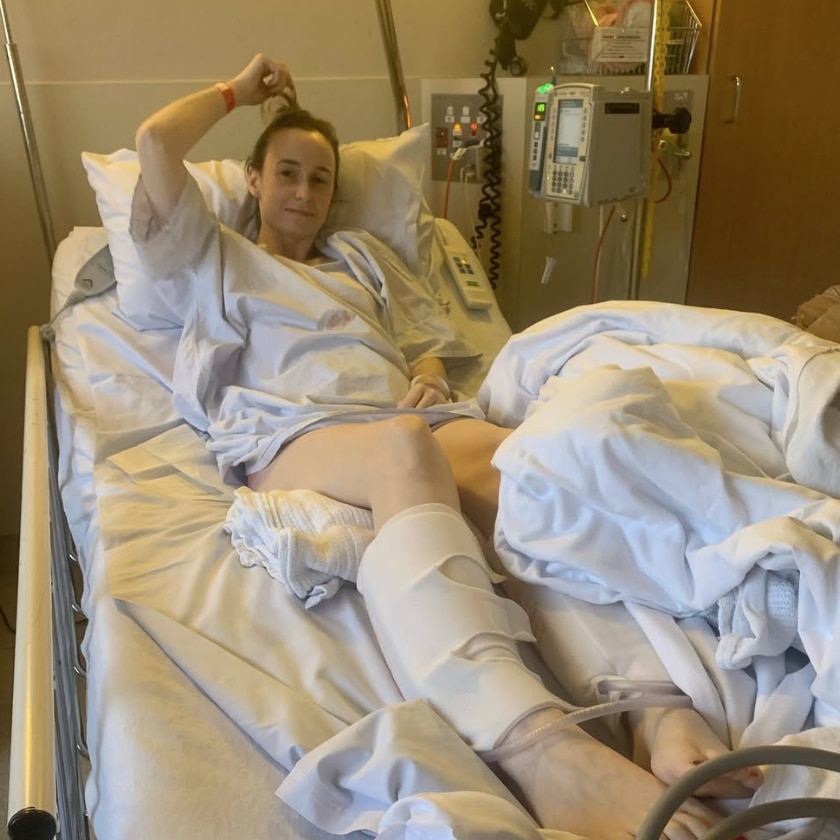
Courtney says she put her trust in Dr Gordon. (Supplied)
In February 2021, Dr Gordon operated again, this time removing one of Courtney’s ovaries which he said was bound to her pelvic wall. According to his surgery report, this was after a six-month trial of Zoladex, a medication which can help with pelvic pain by mimicking the hormonal effects of ovary removal.
Four Corners sent the histopathology report from that surgery to a Melbourne gynaecologist, who provided their opinion: “That’s a normal, young ovary. It didn’t need to be removed. And that’s heartbreaking.”
The histopathology again showed no endometriosis, and again, Dr Gordon wrote to Courtney’s GP and said, “Courtney has a long history symptomatic of endometriosis.”
“It’s shattering,” Courtney said, “because I put my trust with this doctor, thinking he knew best, he knew what was best for me.”
Multiple guidelines suggest that it’s not appropriate to take ovaries from young women who may consider having children.
Courtney says she was anxious to have children.
It was the beginning of the end of Courtney’s fertility. She had not had children. And she was only 23.
Surgeries five and six were the same as the first four: Courtney was told by Dr Gordon she had endometriosis. After the sixth surgery Dr Gordon told Courtney’s GP her “biopsy [was] consistent with endometriosis”.
Surgery number six was when Simon Gordon removed Courtney’s second ovary. And yet again, there was no evidence of disease on the histopathology report.
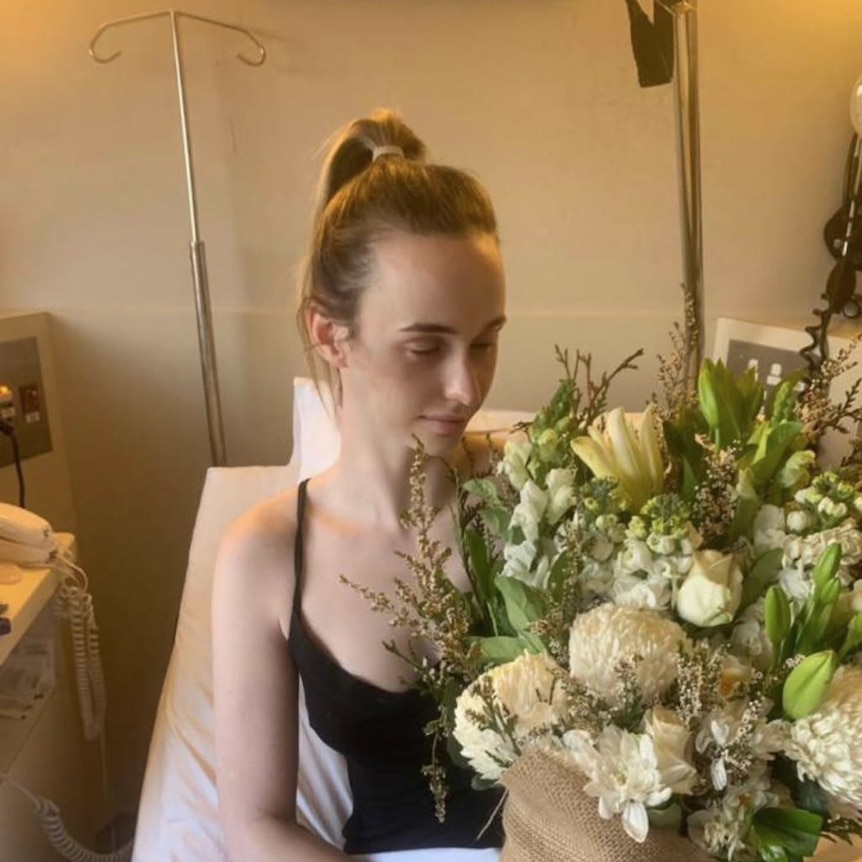
Courtney says she was anxious about not being able to have children. (Supplied)
With Courtney’s permission, we sent her operation notes and photographs, histopathology and billing to Sydney gynaecologist and pain specialist, Professor Thierry Vancaillie. He is considered one of the fathers of laparoscopic surgery in Australia and is deeply respected by gynaecologists around the country.
He was shocked at what he saw and told Four Corners that he could not see a justification for Dr Gordon removing Courtney’s ovaries.
“The treatment or rather the mistreatment received by this poor patient is unbelievable. How on earth could anyone justify this?” Professor Vancaillie wrote to us when he received the records.
He said that in his opinion none of the seven surgeries Courtney had with Dr Gordon were necessary.
“I was really depressed, really, it was unbelievable,” Professor Vancaillie later said.
“Something should have happened after the second laparoscopy. In other words, the diagnosis was not correct anymore.
“I was sick to the stomach ― it was sickening to look at.
“Beautiful pelvis to start with. And what happened afterwards, it was just incredible. Totally unnecessary.”
Red flags
As time wore on, there were serious concerns amongst the other medical professionals who were seeing Courtney.
In June 2022, a clinician raised the alarm to Epworth management that Simon Gordon had removed a second ovary, first speaking to Dr Kate Tyson, the head of the hospital’s endometriosis centre, who suggested it be escalated to Epworth’s Director of the Women’s and Children’s Institute, Dr Julie Lamont.
Dr Lamont then wrote to the hospital’s Director of Medical Services, Dr Vivek Nigam.
Dr Nigam, who has now moved on from the hospital says he does not recall this, but doesn’t necessarily dispute it happened. Four Corners understands it is recorded in an internal hospital email.
Hospital records don’t show what happened from there. The medical regulator AHPRA, which is now conducting an investigation into Dr Gordon following separate complaints from another Professor of Gynaecology and other patients, was not notified.
Another specialist who saw Courtney has told Four Corners she was so disturbed by the removal of that second ovary, that she had to leave a consultation with Courtney and she burst into tears.
“I had no idea,” Courtney says of the fact that doctors were concerned about her treatment.

Courtney says she had no idea other doctors were so concerned about her treatment. (Supplied)
“Well, it’s unacceptable, really,” Professor Vancaillie told Four Corners of the failure of the hospital and medical regulators to stop Dr Gordon before now.
“Feels like nobody wants to take responsibility or knows whose responsibility it is,” he said.
“But someone, some organisation, needs to come forward and say we need to look into monitoring certain practices a little bit closer.”
An Epworth HealthCare spokesperson said while the hospital can’t comment on the cases of individual patients, “the experiences being described are deeply distressing”.
“For any patient who feels harmed, unheard or let down, we acknowledge how significant that experience may be,” they said in a statement.
Courtney was so traumatised, she was admitted to a private psychiatric hospital with severe post-traumatic stress — which she said was from the loss of her fertility.
By that stage, she said, she felt as if she’d spent her entire twenties at Epworth — as there were often complications after the surgeries.
For Courtney, the trauma was compounded by the tragedy that this was her last shot at fertility — albeit she would have had to have egg donation.
But Simon Gordon told Courtney to address her ongoing pain she needed to have a hysterectomy to remove her uterus.
Courtney was concerned enough to get a second opinion from another Melbourne gynaecologist, who told her the hysterectomy was not necessary and suggested other options for her pain like physiotherapy and naturopathy — which Courtney said Dr Gordon had never discussed with her.
When Courtney was hospitalised with a kidney infection Simon Gordon came to see her on the ward.
“When you are in my position, when someone’s seen your insides multiple times over and over, and when you get so desperate for help, something in you just goes, ‘oh, OK. I’ll trust him.'”
Courtney’s uterus was removed in 2023. She was 25. Again, the histopathology did not show endometriosis.
“No woman should ever have to endure what I’ve endured over the last seven years ― I’ve had the opportunity to have a family taken away from me,” she said.
“I’ll never be able to get that back.”
‘Beyond simple human error’
Courtney has engaged solicitor Emily Hart to sue Dr Gordon.
“I don’t think there is an amount of money that can properly compensate someone for the loss of their fertility, particularly at such a young age,” said Ms Hart, who specialises in medical negligence cases involving women’s health.
“Generally speaking, women of Courtney’s age, women who haven’t completed families, are encouraged to consider delaying the removal of ovaries or the uterus if appropriate medically and certainly would be given a lot of support around fertility maintenance.
“So freezing eggs, potentially freezing embryos.
“The fact that that did not happen at an early stage in this case is very alarming.”
Ms Hart said the fact that there was no action after clinicians raised concerns with their superiors about Dr Gordon’s patients warrants a “very, very serious investigation”.
“The outcome of that investigation should be made available to the patients who have been impacted. Because this goes beyond simple human error.”

Courtney has engaged a solicitor to sue Dr Gordon. (Four Corners: Ryan Sheridan)
Courtney now lives in Thailand and is slowly coming to terms with what has happened to her ― she never would have discovered the truth about her medical records if Four Corners had not asked her to request all her histopathology and shown these to experts.
“It’s just something I never thought I’d hear, that ‘you don’t have endometriosis, you didn’t need your ovaries taken out, you didn’t need your uterus taken out,'” Courtney said.
“It’s devastating. He’s taken the trust of a young, vulnerable woman and completely betrayed it.”
Simon Gordon suddenly retired from Epworth Hospital in early November. This was several days after Dr Gordon sent an email asking Four Corners to send him questions as he’d heard via Epworth about our investigation into him.
After being informed of our investigation, Epworth’s Chief Medical Officer, Professor Owen Roodenburg, asked Dr Gordon to go on leave. The hospital’s CEO, Professor Andrew Stripp, informed the hospital’s board of this development.
Dr Gordon cleared out his rooms at the hospital that weekend and notified his patients that he was cancelling all of his surgeries and appointments for the following week.
An Epworth spokesperson said the hospital referred the matter to the regulator after concerns were raised with senior management in October.
“As the independent regulator, AHPRA is responsible for assessing practitioner conduct, including clinical decision-making and any related matters,” they said.
“That process is ongoing, and it would be inappropriate for Epworth to pre-empt or comment on the outcome.”
Simon Gordon declined an interview with Four Corners and did not comment on Courtney’s case (despite Courtney providing her consent for him to do so), but said more generally in a statement:
“Across my entire career, I never performed surgery to treat endometriosis, or any other condition, unless I was absolutely convinced it was in the patient’s best interests and to improve their overall quality of life.
“Individual patients are typically very complex with very detailed histories,” he said in the statement.
“Unfortunately in gynaecology, there are conditions and treatments which can compromise fertility — adenomyosis and endometriosis are some of those conditions.
“In my practice I took the concerns of female patients about ongoing pain, and associated loss of quality of life, very seriously.
“For generations, the pain suffered by women was ignored, downplayed and untreated.
“My concern was to try and alleviate pain and restore quality of life for female patients, a cohort once neglected and dismissed.
“Throughout a life in gynaecology, I’ve always acted ethically and responsibly with my patients.”
Federal Health Minister Mark Butler said he found the allegations in Courtney’s story “physically sickening” to read.
“It’s one of the worst cases I’ve seen, one of the worst stories I’ve read as a health minister about care being delivered in what is otherwise a terrific healthcare system.
“I mean, it’s incredibly distressing.”
Four Corners’ full investigation into Simon Gordon and the treatment of endometriosis will be broadcast on Monday February 23. Watch from 8.30pm on ABC TV and ABC iview.
Loading…