
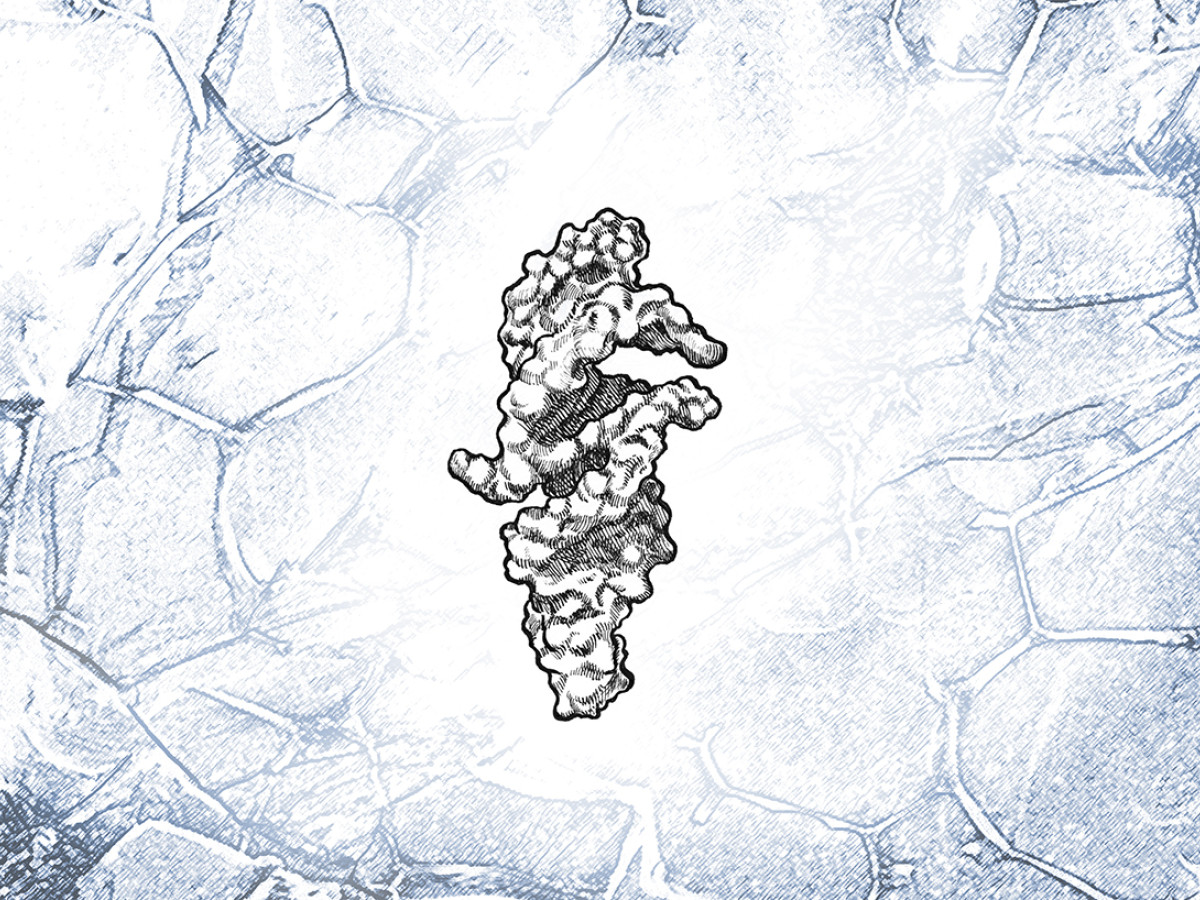
Arguably one of science’s greatest unanswered questions is how life got started here on Earth in the first place, about 4 billion years ago. Our present “best guess” is that a cocktail of chemicals simmering in a warm rock pool spontaneously cooked up some of the molecules that are the building blocks of genetic materials like DNA and its close relative, RNA. According to the hypothesis, some of these building blocks then hitched themselves together into a chain that folded up in such a way that it became a miniature machine capable of copying itself. The fly in the ointment was that, although scientists had discovered RNA molecules capable of doing this, they are so large and complicated, that the odds of them cropping up by chance in that warm little pool seem impossibly small. But now researchers at the MRC Laboratory of Molecular Biology in Cambridge have found a much smaller RNA molecule that can do this, making this “RNA world hypothesis” of life’s origins much more plausible. Chris Smith went to meet Edoardo Gianni and, speaking first Philipp Holliger, to hear how they did it…
Phil – The origin of life is really one of the big kinds of unsolved questions in both chemistry and biology, kind of how did this transition happen sometime long, long time ago on the early Earth, where chemistry turned into biology, so to speak. And one top candidate molecule for this transition is RNA, a molecular cousin of DNA. And it is thought that at some point in time, RNA acquired an ability to make copies of itself and sort of grow a little bit like cells in biology grow, and that that is the key step in the transition. Nobody has found such an RNA molecule. So the question is, can such a molecule exist? And the task we set ourselves, kind of, can we build such a molecule in the laboratory?
Chris – I suppose then you’re saying, if you could make a molecule in the lab that could do this, it makes the likelihood that that happened four plus billion years ago here on the early Earth, that bit more likely.
Phil – Yeah, that’s exactly our thinking.
Chris – How on Earth did you do it, Edoardo?
Edoardo – For many years, people have been trying to find a molecule that could make copies of itself, and already in the 90s, other labs had found an RNA that could copy RNA. The problem with it is that it’s a very long RNA molecule. What that means is that for it to make copies of itself, the task is made much more complicated by the length. And also, if we imagine a scenario on Earth four billion years ago, where RNA has to spontaneously come out of chemistry and form, if the molecule is smaller, this process is more likely to happen. If the molecule is very long, this process is much less likely to occur.
Chris – As Phil’s saying, RNA is a chemical relative of DNA. It’s a series of building blocks strung together, and it winds itself up into interesting shapes, which can then confer interesting chemical abilities, like you’re saying, the ability to copy itself. But you’re saying, statistically, the chances of something huge emerging just like that, and having these abilities, makes it that much less likely this happened. But if you had a short one that could do all this, we’d be much more convinced.
Edoardo – That’s exactly right. So what we set ourselves to do is look for a shorter one than the one we had been working with, because that would make the whole hypothesis of this RNA world much more likely. So instead of continuing in the incremental work on the previously existing one, we set out to search for a completely new RNA molecule that’s smaller from the get-go.
Chris – How did you hunt for it, Phil?
Phil – It’s a little bit like finding a needle in a haystack. We make a huge number, kind of millions and millions, well, actually trillions, kind of like of RNA molecules. And then we sieve through them, looking for that capability to make itself. And there were a few molecules within that pool that could do that. And we could fish those out and then study them much more closely.
Chris – And how big, Edoardo, is the one that you’ve got that appears to have this ability?
Edoardo – So the one we found is 45 nucleotides, so 45 letters of RNA long, whether the previous generation was at least 150 nucleotides long.
Chris – In essence, then, if you make this molecule and you put it into a tube with a soup of the genetic building blocks of RNA, it will knock out more copies of itself just like that on its own?
Edoardo – Kind of. We’re not quite at the point where it makes a lot more of itself. It makes a tiny, tiny amount that we can start detecting. But it’s the first time we can even see that first touch of self-synthesis, of the ability of making itself happening in the laboratory.
Chris – Can you look at the structure of it to understand what’s special about it, that’s giving this tiny molecule the ability to self-replicate in this way? Does that give you clues about what else might be out there that might do this even better?
Edoardo – We’d love to have a look at the structure. We don’t know the structure yet. We’ve tried predicting it with AI tools such as AlphaFold, and it gives a sense of the size and the shape, but it’s not quite producing the correct structure we think yet. Hopefully, once we have the structure, it will be very helpful in understanding how an RNA can fold up in a three-dimensional shape that allows it to have this specific activity. We have guesses, but we still don’t know.
Chris – And back to where we began, Phil, which is you were saying, if we could create something that had this ability, it would convince us or be a more compelling argument that that’s how life might have got started on the early Earth. Do you think this nails it?
Phil – I think it’s a significant step to a better understanding of how that crucial step could have happened, because what we’ve discovered just makes that whole process so much more plausible than it was before. Do we have the exact kind of molecule? No, we don’t, but we have sort of something that we can study by proxy. Maybe we can further improve its properties, maybe shrink it even further, make it even smaller, and we can start to study how this molecule might interact with other molecules that were there on the early Earth, and how you could have maybe some form of molecular symbiosis, kind of going to bootstrap life out of the primordial soup.