
A new study has found that root microbes could help much-loved oak trees adapt to drought. The research – which was carried out in natural woodland – found that the trees showed subtle changes to their root microbiomes during warm and dry conditions. This suggests that the oaks are able to recruit beneficial bacteria when they are under stress. And if we can find out what these microbes are, it might be possible to use them to protect other vulnerable species in future. James McDonald is a microbial ecologist at the University of Birmingham, and he’s been Chris Smith about his study…
James – Trees are very long-lived; they’re large organisms, so they can’t move away from the extreme kind of environmental changes they’re facing, and so microorganisms that live on the trees are one of the major adaptations that they have to cope. And so we’re really interested in trying to understand which microbes are present in oak trees and how they might help them to navigate that drought stress. And if we can identify some of those organisms, there’s potential that we could utilise those microbes to help boost the health of oak trees, particularly as we now look to plant large numbers of oak trees across the nation. And it’s important that these kinds of young saplings and seedlings that are planted actually establish and grow into mature trees.
Chris – How have you gone about this, then, trying to find out what the magic mixture of microbes is to give the trees the greatest resilience?
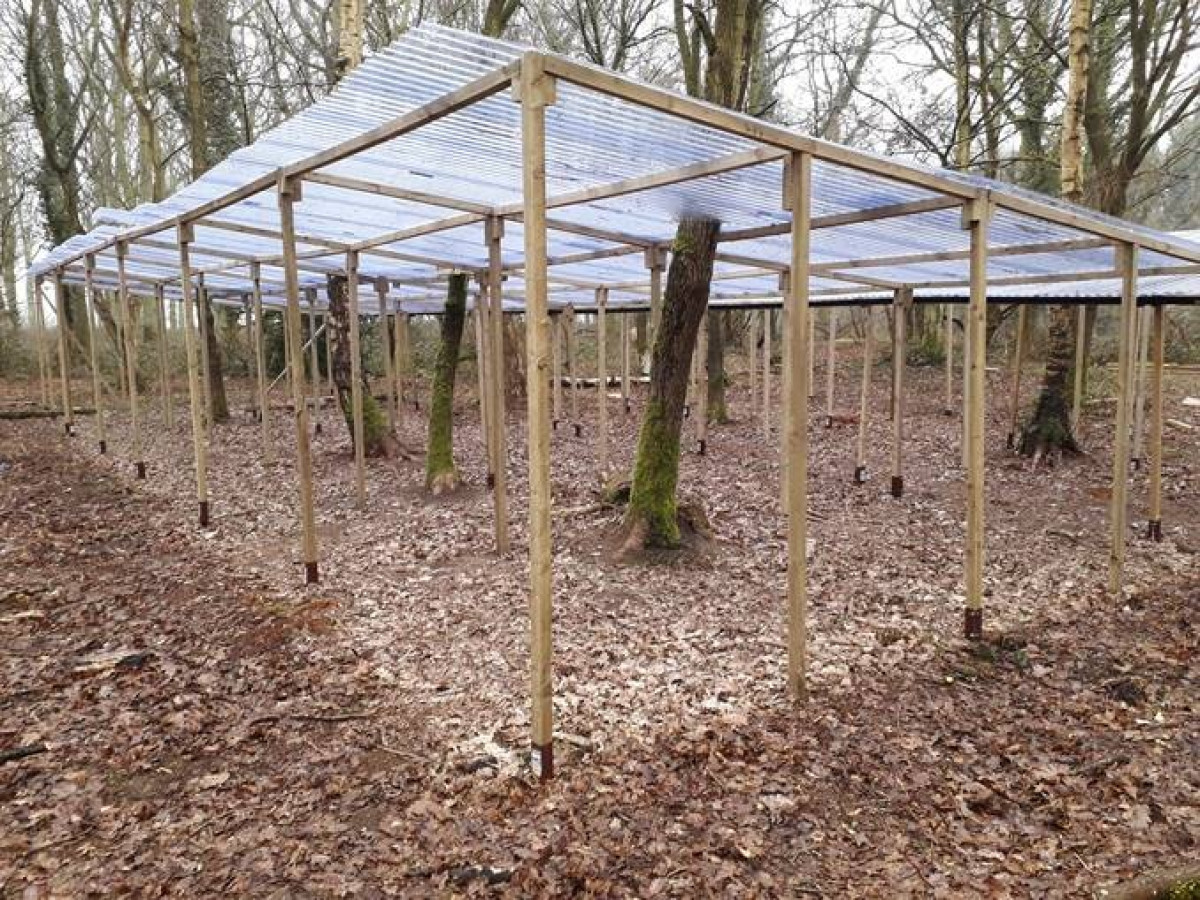
James – So working with mature trees is a real challenge. Lots of the research on plant microbiomes has been focused on very small, fast-growing kind of herbaceous plants, like agricultural crops. Mature trees are extremely large, and some of them can be 30, 35 metres tall, and this actually makes studying them a real challenge. So we were quite lucky in that we had access to a woodland where there was a large number, several hundred trees that were around 35 years old. And this was a great opportunity because it enabled us to conduct a large-scale experiment on fairly mature trees, where we could manipulate the experimental sites to kind of introduce drought onto those sites. So the way that we did this is we built, we call them rain shelters, around the stems of these trees. So it was almost like a roof and a gutter underneath the canopy of each tree, and there were ditches around the bottom, so this basically stopped the rain from reaching the roots of those trees. And another treatment that we had involved ring barking, where we use a chainsaw to cut a small piece of stem from around the tree, and this limits the transport of water and nutrients across the tree, and again, mimics one of the impacts of drought, where they become nutrient-stressed and water-starved. So we were able to do this on a large scale, and then we also had trees that we didn’t impose these treatments on, which we could then compare them.
Chris – And what you’re looking at, what that does to the assemblage of microbes that are associated with the tree in response to those challenges.
James – Yes, absolutely. So what we then did was we took samples from the trees over a period of two years, and we were able to extract DNA from those samples and sequence the DNA to look at which microorganisms were present. So we predicted that in the trees where we had excluded the rain from reaching the roots, they would be drought-stressed, and this would drive changes in the composition of the microorganisms that you find in the roots of the trees and in the other parts as well.
Chris – And did it stress the trees out doing this?
James – It did stress the trees. So some of the other measurements that were taken, looking at the kind of physiology, the biology of the tree, showed that the drought and the ring barking were having an impact. But what we were surprised to find was that the microorganisms that we found on those trees didn’t change very much, and it took about five months for the bacteria to change, and they only changed slightly. And it took about 17 months for the fungal communities in the roots to change, and this was the opposite of what we expected to find. And it suggests that the microorganisms that are found on these trees are actually quite stable, and they maybe help the tree to kind of mitigate some of the stresses that they’re experiencing.
Chris – Could you see evidence that the trees were responding to the drought? They were becoming stressed, but were they changing their physiology in any other way that was then in turn changing the relationship with the microbes? The microbes are still there. They’re the same microbes, but the relationships changed. Perhaps the numbers have changed, the density, the relative densities of the microbes were shifting. So, although they’re the same individuals, it’s a different crowd, as it were, in terms of relative proportions.
James – Yes, absolutely. We did see this happen. So we know that the treatments had an impact on the trees because we could measure factors like stem humidity, which gives us a sense of whether drought is affecting the stems of the trees, and we know that that did happen. We could see changes in the leaves and the nutrient levels in the leaves as well. But interestingly, although there weren’t major changes in the microbial communities, we did find that some bacterial species in the roots changed in abundance, so they became more dominant. And when we looked into the other published literature on what is known about these species, it was shown that they’ve been associated with drought tolerance in other plants like wheat and other tree species as well. So this is an interesting finding, and it suggests that it could be a number of things. One explanation could be that these microbes are just better at surviving the drought conditions that they experience, or it could be that the tree is actually directly trying to associate and recruit those bacteria to the roots to help tolerate the stress, and it has been shown that this is the case in other plant species.
Chris – Indeed, so the tree is manipulating the environment around the root to enrich for things that give it the best chance of survival under those particular circumstances.
James – That’s right, yes. And it’s already well established that plants secrete carbohydrates that they produce via photosynthesis out of their roots to recruit beneficial microbes to their root system, which help the plant to grow. So in the same way, the trees could be secreting some sort of metabolite or compound that actually recruits the beneficial bacteria to their roots and helps it to navigate this drought stress that they’re experiencing.
Chris – And do you get any sense that there are some trees that are better at doing this than others? And so if you look at the ones which are succumbing to more stress, are they less good at harnessing the right microbes to defend themselves? And is that one of their vulnerabilities?
James – We don’t have concrete data to support that idea, but I think it’s a logical conclusion to make, and I think it does require some further research.