
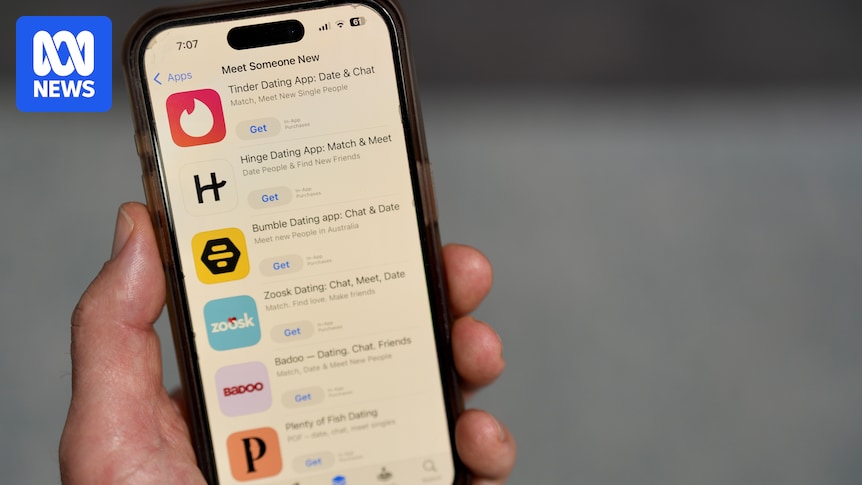
WA authorities have used the occasion of Valentine’s Day to issue a warning about online romance scams, and revealed several “red flags” they say could indicate a new relationship may not be what it seems.
Sixty-three West Australians found themselves caught up in online romance scams last year, losing approximately $3.8 million between them.
Attorney General Tony Buti said while that figure was not as high as recent years, it was still unacceptable.
He urged people not to send anyone money until there has been a real-life meeting, as there is always a chance the person you are speaking to does not really exist.
Romance scams commonly begin on dating websites and apps, where scammers set up an account with a fake picture, name and life story, Mr Buti said.
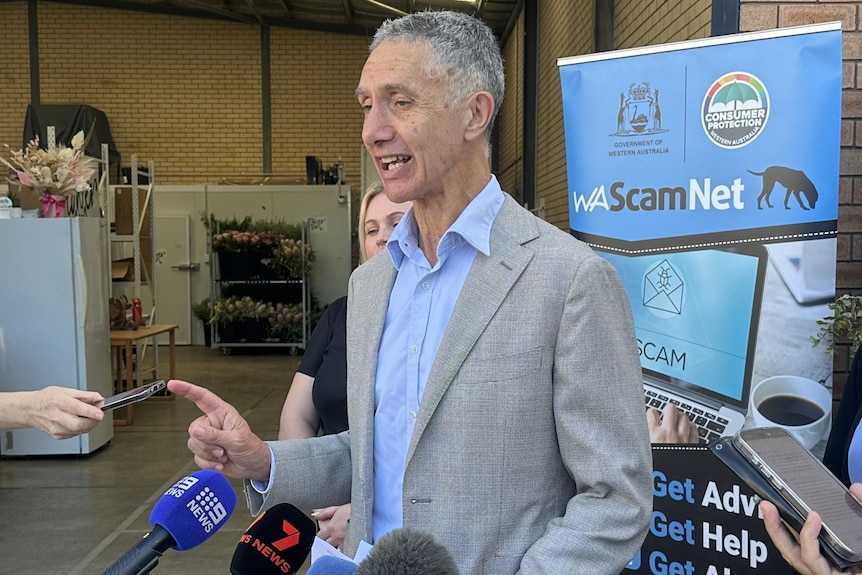
Tony Buti says romance scammers often try to isolate their victims. (ABC News: Blake Kagi)
“Often, they’ll start with what they call ‘love bombing’, so there’ll be a constant stream of messages to suck you in and [they] try and form a friendship,” he said.
“And then they may ask you to send them money.”
Red flags
Scammers often come up with excuses as to why they cannot meet in-person, saying they work on an oil rig or they’re in the military.
They may also urge you not to tell your friends and family about the new ‘relationship’.
“What they’ll try and do is isolate you,” Mr Buti said.
“They’ll try and get you on an encrypted message [platform], they’ll say don’t speak to your family — this is a very romantic, secretive relationship that we are forming.
“That is a red flag. If anyone asks you to send them money online, if they ask you to move onto an encrypted platform to keep your new relationship secret; they are all red flags.”
Mr Buti also warned that AI will present a serious threat going forward, as deepfake technology could allow scammers to replicate real people.
WA’s Consumer Protection Commissioner Trish Blake said a woman last year was almost fooled by an AI deepfake, even over a video call.
“[She] thought she was talking on FaceTime to somebody that had the appearance of the person that she was seeing on the dating app, only to find that when the AI glitched, it was a completely different man hiding under a blanket in a cupboard.
“Often their line is ‘if you love me, give me money.’ My response to that is ‘if you love me, you wouldn’t ask.'”
The National Anti-Scam Centre said online romance scams disproportionately affect people over 35, people with disabilities or diverse backgrounds, as well as people who are divorced, widowed, or actively seeking relationships.
Men are more likely to report romance scams, but women report higher losses.
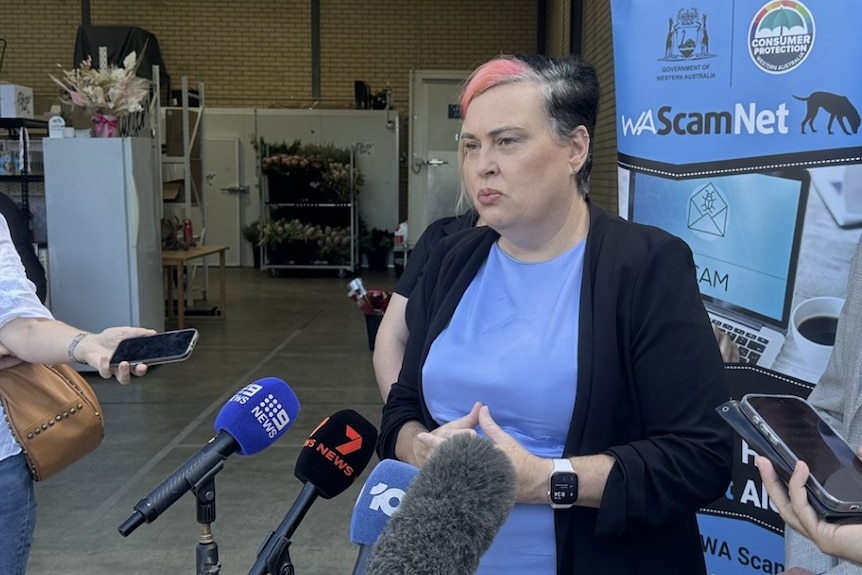
Trish Blake warned people to be wary of others asking for money in the early stages of a relationship. (ABC News: Blake Kagi)
Nationally, between January 2024 and May 2025, women lost $20.1 million compared to $13.3 million for men. On average, women lost $36,091 per scam, compared to $17,089 for men.
People aged 65 and over had the highest total losses, at $11.7 million.
Mr Buti said most figures were affected by under-reporting, as there is a “shame factor” which deters people from reporting that they have been scammed, or admitting the true amount of money they had lost.
Other tips for helping avoid romance scams were to use reverse image searches, such as Google or TinEye, to verify profile photos, to take time to get to know someone and to trust their instincts.
Loading