
February 14, 2026 — 5:00am
Save
You have reached your maximum number of saved items.
Remove items from your saved list to add more.
Save this article for later
Add articles to your saved list and come back to them anytime.
Got it
AAA
Australia’s industrial watchdog has received more than 1000 complaints about the behaviour of the CFMEU – including death threats, nepotism and even the blocking of a delegate’s ex-girlfriend from work – on major projects around the country, particularly Victoria’s $100 billion Big Build.
The data, compiled from reports to the Fair Work Commission’s hotline since mid-2024, has come to light as a veteran trade union figure conceded efforts to combat corruption in the building industry over many years had failed.
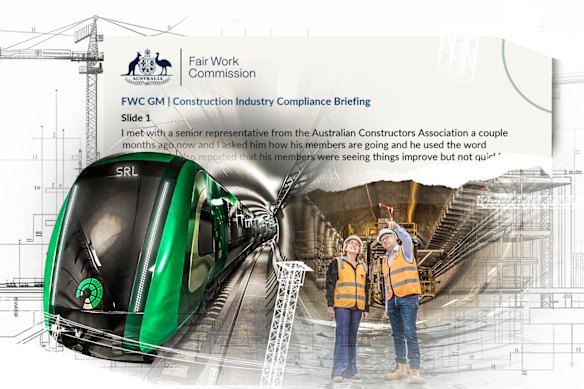 The Fair Work Commission has released documents detailing complaints about the CFMEU on public projects.Michael Howard
The concession by Michael Flinn, a lifetime union movement figure, that criminal elements still hold power in the industry contrasts with claims from Labor politicians, including Victorian Premier Jacinta Allan, and the federal government that recent responses to the decades of corruption that have engulfed the construction industry have been adequate.
“For over a half a century, we have, as a nation, been trying to eradicate criminal influence and corruption from the construction industry. And we have failed,” Flinn said in a letter to Fair Work Commission chief Murray Furlong.
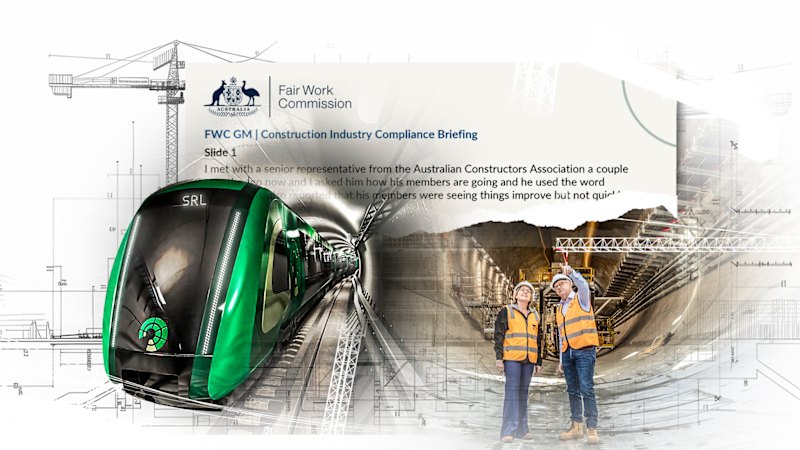
The Fair Work Commission data details alarming complaints to its dedicated website portal and phone line to allow the reporting of concerns about the CFMEU.
This complaints function, set up two weeks after this masthead’s Building Bad investigation was first published in July 2024, received 1050 submissions between then and mid-October 2025. Of those, 600 related to allegations on Victorian construction sites.
The complaints come after the release of a bombshell report from corruption-busting lawyer Geoffrey Watson, SC, which found the CFMEU’s intimidating and corrupt conduct had resulted in billions of dollars being poured into the pockets of criminals and bikies. He also found the Victorian government had turned a blind eye to the problem.
In a December presentation obtained by this masthead, Furlong said the complaints were as yet unproven but were still “very important in shedding further light on the scale of the issues”.
“There is significant similarity, or consistency, about the alleged conduct across hundreds of individual reports,” he said.
Among the complaints were allegations in August 2024 that a union delegate used his position to block an ex-girlfriend being employed on the state and federally funded Suburban Rail Loop in outer Melbourne. The same report alleged union delegates with criminal links were working on the project.
Another complaint, also on the rail loop, alleged the CFMEU was bullying and threatening workers on other Victorian infrastructure projects.
It alleged major leading contractors were being forced to provide “cushy” roles for mates or risk their projects being shut down
“The discloser states that if this practice is questioned, CFMEU representatives will make their life hell and shut the job down,” the complaint says.
Editor’s pick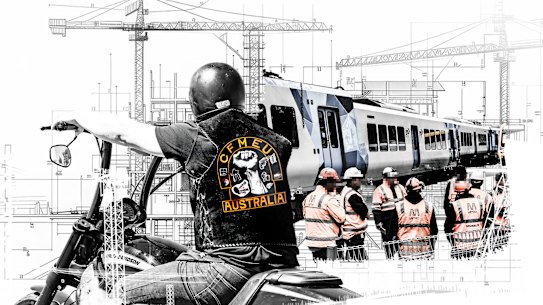
“It is alleged that named officials are known bullies on construction sites, who threaten contractors.”
Another complainant reported “severe bullying, intimidation, threats of violence, and interference with employment” when concerns were raised about preferential treatments and “ghost wages” on the Suburban Rail Loop.
In Sydney, the commission received complaints that a CFMEU member working on St Mary’s Metro Station made threats against another worker’s life, reportedly boasting about gang affiliations.
“Workers have raised safety concerns, with some resigning due to intimidation and bullying involving this individual and the site superintendent,” the complaint says.
On the Cross River Rail project in Brisbane, a delegate is alleged to have broken into a subcontractor’s office, removed all their items and then proceeded to use it for himself despite being told this was not allowed.
Another complaint alleged “under-the-table deals with union officials leading to underpayment of workers” on the project.
Most of the complaints concerned Victoria including one that accused a union-affiliated labour-hire company of employing “individuals with criminal ties and no qualifications, while facilitating nepotism and ghost shifts”.
They also alleged that similar practices were concealed on the North East Link in Melbourne, with accusations of nepotism and concerns about corruption.
Furlong said the alleged conduct across these 1000 or so reports was “entirely consistent” with the behaviour he’d heard about two decades ago when he worked at related agencies such as the Australian Building and Construction Commission.
“Nothing has changed. In fact, we’ve probably gone backwards,” he said.
The commission had referred more than 400 matters to either the Fair Work Ombudsman, Australian Federal Police, Australian Competition and Consumer Commission, Australian Electoral Commission, Victorian Labour Hire Authority and a Joint Agency Working Group into the sector.
In his letter to Furlong, seen by this masthead, Michael Flinn, chief of staff to the CFMEU administrator, said Australia had failed to eradicate criminality and corruption from the sector because it was focused on the wrong things, but the current crisis could be a moment for change.
“We now have a once-in-a-century opportunity to fix the problem,” he said.
Flinn said it was critical that there be ongoing law enforcement to punish wrongdoing and that new rules should be written requiring all companies, unions, contractors and industry groups to follow integrity guidelines.
Flinn said a proposed “joint industry charter” could address these issues by enforcing new standards on the sector.
“Meanwhile, organised criminal influence continues to infect parts of the construction ecosystem,” he said.
“This includes infiltration by outlaw motorcycle gangs and other organised groups into debt recovery, subcontracting, and labour hire networks. Corruption, intimidation and procurement fraud remain significant risks.”
Victorian Premier Jacinta Allan on Friday again rejected calls for an inquiry into the union’s conduct, particularly on public projects.
Furlong this week told Senate estimates the issue shouldn’t go away without accountability, that it impacted every Victorian, and that Victorians had a “right to know”.
Speaking in Bendigo on Friday, Allan responded to these comments by repeating that she had made a referral to the state’s corruption watchdog in July 2024, asked the Fair Work Commission to investigate pay deals, and had commissioned an independent review.
That review, led by public servant Greg Wilson, was tasked with investigating how complaints of illegal activity are handled, and largely reported on issues such as labour hire and the interaction between government agencies, unions and contractors.
It did not have the coercive powers of a royal commission, nor the remit to investigate the scale of graft or criminality on projects that Watson and others have said are necessary.
Editor’s pick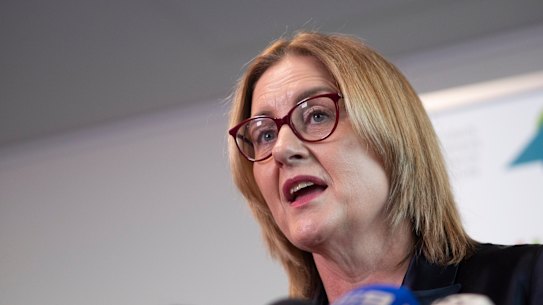
Instead, it recommended an alliance of law-enforcement bodies and regulators who could use their combined responsibilities to address these allegations on government construction sites, which the state government accepted.
“I commissioned the … independent review to really zero in on the areas that we needed to change here in Victoria, and change has been made,” Allan said.
The premier also repeatedly disputed Watson’s and Furlong’s separately issued estimates that CFMEU corruption had added $15 billion to the cost of Victorian projects.
State Opposition Leader Jess Wilson told the ABC that Queensland’s commission of inquiry was exposing issues on Victorian projects.
“We can’t underplay this. This is incredibly significant. This is one of the biggest corruption [scandals], particularly in terms of a financial sense, in Victoria’s history,” Wilson said.
The Morning Edition newsletter is our guide to the day’s most important and interesting stories, analysis and insights. Sign up here.
Save
You have reached your maximum number of saved items.
Remove items from your saved list to add more.
 Nick McKenzie is an Age investigative journalist who has three times been named the Graham Perkin Australian Journalist of the Year. A winner of 20 Walkley Awards, including the Gold Walkley, he investigates politics, business, foreign affairs and criminal justice.Connect via email.From our partners