
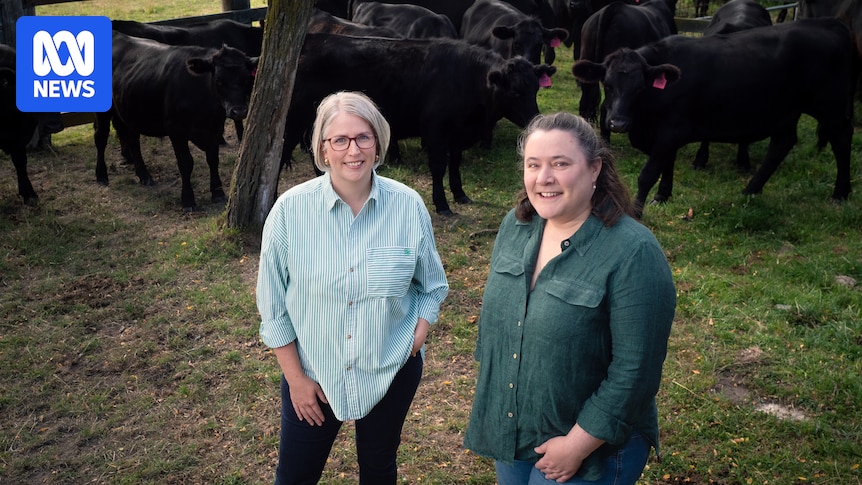
Sylvia Morris was in her second year of veterinary science studies in Townsville when she became seriously unwell with what appeared to be a cold.
The illness quickly progressed to pneumonia, and she was later diagnosed with leptospirosis.
The bacterial disease, which spreads through the urine and faeces of infected animals and contaminated soil, can lead to serious illness and even death.
People can become infected through contact with animals, gardening, swimming in freshwater or wading through floodwater.
New research has found the rare disease is becoming more prevalent in Australia, with rural and agricultural communities particularly at risk as cases go undetected due to a lack of surveillance.
Dr Morris said it was difficult to determine exactly where she had contracted the infection because of her work and because she had multiple pets of her own.
“But it can be just a muddy puddle or having a cut that becomes an issue,” she said.
Dr Morris received a two‑week course of antibiotics and spent six months recovering from extreme fatigue.
“My liver was pretty unhappy at the time and I had pneumonia which took a little while to bounce back from,” she said.
Her university, James Cook, did not find any signs of an outbreak and no other students were infected at the time.
Disease spreading
Leptospirosis is one of the leading zoonotic disease causes of illness globally, according to the US Centre for Disease Control.
It said there were about 1 million cases globally each year, leading to nearly 60,000 deaths.
The new research, led by the University of New England, found greater public testing for the disease was needed, along with increased vigilance beyond the tropical north and further urgent research.

Sylvia Morris was in her second year of veterinary science studies in Townsville when she contracted leptospirosis. (Supplied: Sylvia Morris)
Globally, outbreaks are becoming more frequent and severe, with new subtypes of Leptospira bacteria continuing to emerge.
Associate Professor Jacqueline Epps, a rural GP from the University of New England, said the disease was spreading into regions that had never experienced it before.
“We have seen over time more outbreaks heading further south, particularly in New South Wales,” Dr Epps said.
The research found more frequent storms and flooding linked to climate change were increasing the risk of the disease, and Australia’s rural communities could be unprepared.
Leptospirosis is a notifiable disease but symptoms in humans often resemble influenza or COVID‑19.
Cases can go undiagnosed or misdiagnosed.
Early and accurate diagnosis is critical to prevent severe complications, including organ failure and meningitis.
Although dairy farmers routinely vaccinate cattle for the disease, there is no human vaccine and treatment relies on early use of specific antibiotics.
Australian College of Rural and Remote Medicine president Rod Martin said cases were spreading from coastal areas to central Queensland, where they had never been seen before.
“We may need to educate doctors in emergency departments and patients in rural areas as the weather keeps heading south and the tropics spread beyond Rockhampton,” Dr Martin said.
Rats and mice superspreaders
One of the largest known leptospirosis outbreaks occurred on a NSW berry farm in 2018.
Up to 84 affected workers were exposed to contaminated fruit after rats urinated on crops.
Dr Epps said infections surged during recent mouse plagues.
“The most common form of transmission is from mice and rats and that’s new,” she said.
Dr Epps said the disease survived for months in the environment, making it difficult to identify in livestock.
She called for urgent investment in testing, noting Australia had not conducted human prevalence studies since 2011.
She said people should avoid floodwater, cover cuts, reduce rodent exposure and take precautions in high-risk jobs.
Agriculture remains at high risk
Report co‑author Alison Colvin, from UNE’s Animal Science Discipline in the School of Environmental and Rural Science, said the disease posed an increased threat to farming communities.
“A large range of mammals can carry the disease, and it can lead to some animals continuing to be carriers and shedders for their lifetime,” Dr Colvin said.
She pointed to the dairy industry, where the bacteria could cause devastating abortion storms in herds.
“A report from New Zealand concluded the cost to its cattle, sheep and deer industry was US$8 million annually and another US$6 million in preventative cattle vaccinations,” Dr Colvin said.
The research was published in the Australian and New Zealand Journal of Public Health.