
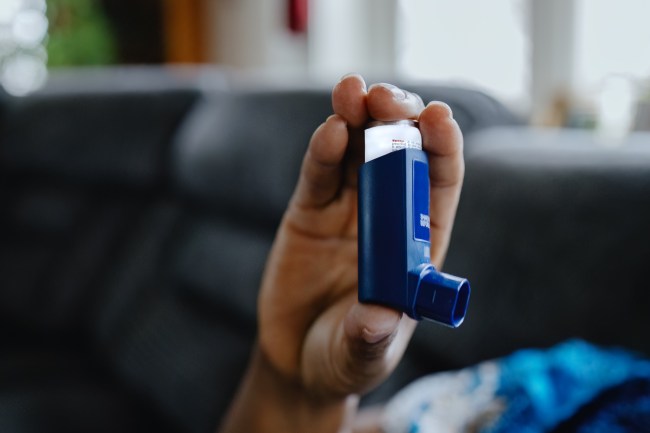
Asthma, a common lung condition that causes wheezing and trouble breathing by narrowing airways, has long been considered a childhood disease. And it’s likely you knew someone growing up who brought an inhaler to school since asthma is the most common chronic disease in children.
But this isn’t the whole truth: Some people get adult onset asthma, which makes itself known later in life. And it’s a something midlife women need to know about because women are overall more likely to get to be diagnosed with adult onset asthma than men, and it can be more persistent and harder to control.

This is because the way women women experience asthma differs from men, according to Dr. Erin Gordon, a pulmonologist and critical care specialist at UCSF Health. Not only do women tend to have more frequent, severe attacks that require hospitalization, but they are also more likely to have their symptoms dismissed.
“During asthma attacks, women tend to have more severe airway inflammation and may experience more intense symptoms relative to objective measures of lung function,” Gordon told Flow Space. “In other words, a woman might feel absolutely terrible and have significant respiratory distress, even when her spirometry numbers don’t look as bad as those of a man with similar test results who feels less symptomatic.”
One challenge with the condition is that there isn’t a great way to screen people for it beyond monitoring those with certain risk factors (more on that below). This means that many women don’t receive help until asthma has already impacted their quality of life.
“We’re not routinely screening asymptomatic women in this age group to predict who will develop asthma,” explained Gordon. “Unlike mammograms or bone density scans that are part of routine midlife health maintenance, there’s no equivalent screening program for asthma risk.”
However, a study published in last month in the journal Nature Communications identified a new way to accurately predict asthma attacks up to five years in advance—by looking at specific biomarkers in the blood.
Researchers analyzed the medical records of over 2,500 people with asthma by using metabolomics, a way to measure small molecules in the blood called metabolites. They found that the ratio of two metabolites called steroids and sphingolipids present in the blood could predict asthma attack risk over five years.
“What really stands out is that ratios between pathways outperformed single metabolites and also outperformed many traditional clinical indicators,” Dr. Kartik V. Shenoy, professor of thoracic medicine and surgery at the Lewis Katz School of Medicine at Temple University, told Flow Space. “This suggests the key signal may be a biological ‘imbalance’ between inflammatory lipid signaling (sphingolipids) and the patient’s own steroid biology rather than an abnormality in only one pathway.”
However, Shenoy said there are several study limitations to consider and that the findings still need to be validated, so women likely won’t be able to take a blood test that tells them if they have an increased risk for quite a while. In the meantime, here’s what midlife women need to know about adult onset asthma.
Who Is Most Likely to Get Adult Onset Asthma and What Causes It?
According to Gordon, certain midlife women are more likely to get adult onset asthma and to experience more severe symptoms.
History of Allergies
Women with a history of allergies—which includes eczema, food allergies and hay fever—are more likely to get it because their immune systems are more likely to respond to irritants by triggering an inflammatory response. A family history of allergies also puts you at higher risk.
Body Weight
Being overweight or obese is another major risk factor—both for developing asthma and for the condition getting worse—but Gordon said the interplay is complex. “It’s not just about weight on the chest, but about how fat tissue produces inflammatory signals that affect the airways,” she said.
Smoking
Like other lung diseases, like chronic obstructive pulmonary disease (COPD), smoking or significant secondhand smoke exposure increases the risk of adult onset asthma.
Hormonal Shifts
Hormonal changes also play a major role and may explain why midlife women are more likely overall to experience adult onset asthma than men. It’s common for adult onset asthma to start around perimenopause and menopause (hormonal shifts can have a major effect on lung health).
Hormones like progesterone and estrogen impact immune responses and inflammation in the airways, which can trigger symptoms for the first time or make existing asthma more severe. Some women even report more intense flare ups during their periods.
“Changes in estrogen and progesterone can increase the body’s immune system response and increase inflammation in the airways leading to asthma symptoms and flare ups,” said Dr. Santhi Iyer-Kumar, a pulmonologist with Keck Medicine of USC.
Gordon said this also suggests these hormones may play a protective role and that their shift decreases that protection.
Environmental Exposures
Exposures to environmental irritants, like air pollution and chemicals, also increases the risk of adult onset asthma.
Women who work in careers that require them to handle chemicals like beauty services, manufacturing, cleaning and healthcare face higher rates of adult onset asthma because of prolonged exposure to irritants. Later onset asthma can happen because of this even if a woman wasn’t previously irritated by them. “Sometimes it takes decades of exposure before patients develop symptoms of disease,” said Gordon.
Gordon added that women who have several of these factors at once tend to have more frequent, severe attacks.
“Additionally, Black and Hispanic women face higher rates of severe asthma, likely due to a combination of environmental factors, healthcare access disparities and potentially genetic factors we’re still working to understand,” she added.
How Adult Onset Asthma Is Treated
One bright spot? Gordon said that adult onset asthma is very treatable and can be managed. Treatment options include daily corticosteroids that are inhaled, inhalers and bronchodilators.
Women with more severe asthma can also take biologic therapies that block certain signaling proteins to reduce inflammation. Adopting certain lifestyle practices and regular visits to the doctor for monitoring are important, too.
Earlier diagnosis means better management, though, and less disruption to your life. “The key is taking symptoms seriously, getting appropriate testing and working with a knowledgeable healthcare provider to find the right treatment approach,” she emphasized. “You don’t have to just live with breathlessness or accept declining activity levels as an inevitable part of aging.”
How to Reduce Your Risk of Adult Onset Asthma
There are ways to reduce the chances of adult onset asthma, many of which are modifiable. Maintaining a healthy weight by seeking treatment for metabolic issues and following lifestyle habits like eating a nutritious diet and getting regular exercise helps. Quitting smoking, or never starting, does too.
Taking steps to limit exposure to potential irritants like chemicals is also important. Use proper protective equipment and ventilation when using cleaning products, for example. If that’s not possible, Gordon said sometimes modifying work conditions or even changing jobs entirely is necessary to protect the lungs.
Look into your family history to see if anyone has a history of asthma, and let your healthcare provider know. Because this puts you at higher risk, it becomes even more important to drill down on prevention.
For midlife women specifically, Kumar said, “hormone replacement therapy appears protective and [may] reduce asthma onset and risk.” Speak with your doctor about whether taking hormones is right for you; they can advise on the proper dosage and type while taking your medical history into account.
Women also need to advocate for themselves. Gordon said too often women’s symptoms are dismissed as normal parts of aging when this isn’t true. For example, women are more likely to have chest tightness as a symptom, which may be misdiagnosed as a sign of anxiety.
“Don’t dismiss persistent cough, shortness of breath, chest tightness or wheezing as just ‘being out of shape’ or ‘getting older,’” she said. If you notice any of these signs, contact your doctor for a respiratory evaluation.