
By Auto Action
Date posted: 15 February 2026
The past 24 hours in global motorsport have been shaped by regulation debate in Bahrain, final grid-setting action at Daytona and a notable manufacturer return that Auto Action flagged well before the green flag dropped. Here is our Motorsport Overnight Update for 15 February.
Formula 1 – Bahrain Undercurrent Continues
Testing fallout remains the dominant F1 storyline.
Max Verstappen continues to voice frustration with the 2026 cars, while Mercedes leaves Bahrain with encouraging pace signals. Ferrari is seeking clarity rather than confrontation over engine interpretations, McLaren has flagged safety considerations, and Red Bull has admitted it may not start the season as an outright benchmark.
It appears there is a race to be ranked fourth in F1 as the teams prepare for another test in Bahrain before journeying to Melbourne.
NASCAR – Ram Returns
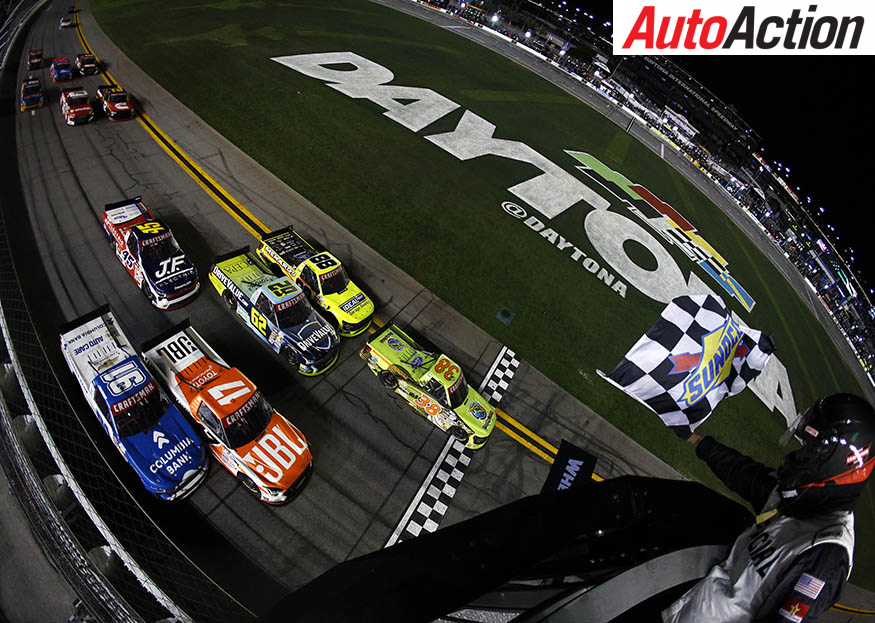
One of the more significant subplots of the Daytona weekend is the return of Ram to the NASCAR Craftsman Truck Series.
As Auto Action exclusively revealed, Ram has partnered with Kaulig Racing for its comeback campaign, the manufacturer’s first sustained presence in the category since 2012.
Daytona marked the first competitive look at that program in race trim. The Fresh From Florida 250 was won by Chandler Smith in a dramatic overtime finish, but from a manufacturer standpoint the spotlight sat firmly on the returning Rams.
The best Ram result came from Brenden “Butterbean” Queen, who brought his truck home in seventh place, delivering a top-10 finish in the marque’s first race back. Other Ram entries showed flashes of pace throughout the event, underlining that this is more than a ceremonial return.
Multiple Ram trucks hit the grid, signalling this is not a token appearance but a structured re-entry. The partnership adds genuine manufacturer depth to the Truck Series and broadens Kaulig’s multi-tier footprint across NASCAR’s national divisions.
It’s early days, but as we told you, the badge is back, and it’s already in the mix.
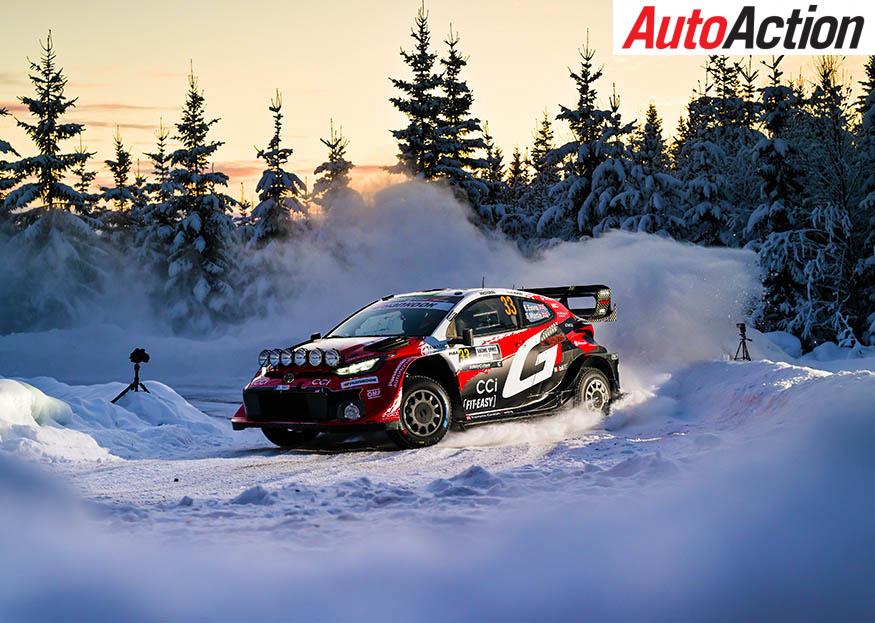
Elfyn Evans of Great Britain and Toyota Gazoo Racing WRT, competes in his Toyota GR Yaris Rally1 during Rally Sweden, Round 2 of the 2026 FIA World Rally Championship on February 13, 2026 in Umea, Sweden. (Photo by McKlein Photography/LAT Images)
WRC – Sweden Taking Shape
Rally Sweden is beginning to take shape, and early signs point toward a calculated Toyota campaign rather than a chaotic Scandinavian shootout.
Elfyn Evans has emerged as the early benchmark, managing tyre wear and road position smartly across the snow-packed forest stages. Conditions have been relatively consistent, meaning the traditional first-on-the-road disadvantage hasn’t been as punishing as in previous editions. That’s kept gaps tight and prevented the dramatic time swings Sweden sometimes produces when ruts deepen.
Toyota’s strength isn’t just at the top — it’s structural. The team looks composed across multiple cars, with clean runs and disciplined pace rather than headline heroics.
Behind the leaders, the margins are slim. A handful of drivers remain within striking distance, but the snow banks are unforgiving. Small mistakes are amplified instantly, and confidence through high-speed frozen sections remains the decisive currency.
Taylor Gill, alongside co-driver Dani Brkic, sits 14th outright at Rally Sweden, running in the Rally2 / WRC2 category. He is currently 10m 33.4s off the overall lead at the latest classification. Importantly, Gill is contesting Sweden in a Rally2 entry — a significant step up from his Junior pathway and valuable experience on one of the WRC calendar’s most technical snow events.
Formula E – Porsche Strength Emerging, Mortara Strikes Again
Formula E continues to build early-season momentum, and the competitive pattern is starting to show some shape.
In Jeddah, Edoardo Mortara secured another pole position, reinforcing Porsche’s one-lap strength in the current package. Qualifying form has been a defining factor in the opening rounds, where track position remains critical due to the narrow racing corridors and strategic energy deployment windows.
Porsche’s consistency across sessions suggests it has found a workable balance between outright pace and energy management — traditionally the tightrope that defines success in Formula E.
Race execution, however, remains less predictable. Energy saving, Attack Mode timing and late safety car interruptions continue to shuffle finishing orders. The margins are thin, and while Porsche appears comfortable on Saturdays, Sundays are still tactical chess matches rather than straightforward sprints.
Recent Storiesarray (
0 =>
WP_Term::__set_state(array(
‘term_id’ => 37,
‘name’ => ‘F1’,
‘slug’ => ‘f1’,
‘term_group’ => 0,
‘term_taxonomy_id’ => 37,
‘taxonomy’ => ‘category’,
‘description’ => ‘An Introduction to Formula One (F1)
Formula One, or F1, is the highest class of single-seater auto racing, governed by the Fédération Internationale de l\’Automobile (FIA) and is owned by Liberty Media. The name “Formula One” refers to the set of rules or formula that all cars and drivers must comply with.
The F1 season consists of a series of races, known as Grands Prix, held on purpose-built circuits or public roads around the world. The results of each race are combined to determine two annual championships: one for drivers and one for constructors (teams).
The history of Formula One can be traced back to the pre-war Grand Prix racing, which featured open-wheel cars with supercharged engines. The first World Championship of Drivers was organised by the FIA in 1950, following the end of World War II. The first race was held at Silverstone, England, and was won by Giuseppe Farina, driving an Alfa Romeo. The first constructors\’ championship was introduced in 1958 and was won by Vanwall.
Formula One has seen many changes and innovations over the years, both in terms of technology and regulations. Some of the most notable developments include the introduction of rear-engined cars in the late 1950s, the use of aerodynamic wings in the late 1960s, the adoption of turbocharged engines in the late 1970s, the emergence of electronic driver aids in the late 1980s, the switch to V10 and then V8 engines in the 1990s and 2000s, and the introduction of hybrid power units in 2014.
Formula One has also produced some of the greatest drivers and rivalries in the history of motorsport. Some of the most famous names include Juan Manuel Fangio, Jim Clark, Jackie Stewart, Niki Lauda, Ayrton Senna, Alain Prost, Michael Schumacher, Lewis Hamilton, and Sebastian Vettel. Some of the most intense battles for the championship have been between Fangio and Stirling Moss in the 1950s, Lauda and James Hunt in the 1970s, Senna and Prost in the late 1980s, Schumacher and Mika Hakkinen in the late 1990s, and Hamilton and Vettel in the 2010s.
Formula One is widely regarded as the pinnacle of motorsport, attracting millions of fans and viewers worldwide. The sport is also a huge business, involving billions of dollars in revenue and expenditure. The teams compete for prize money, sponsorship deals, and media rights, while the drivers earn millions of dollars in salaries and endorsements. The sport is also influenced by politics, regulations, and controversies, such as doping scandals, espionage cases, safety issues, and environmental concerns.
The following is a list of all F1 World Drivers Champions by year, from 1950 to 2020:
1950-1959
1950: Giuseppe Farina (Italy) – Alfa Romeo 158, Alfa Romeo
1951: Juan Manuel Fangio (Argentina) – Alfa Romeo 159, Alfa Romeo
1952: Alberto Ascari (Italy) – Ferrari 500, Ferrari
1953: Alberto Ascari (Italy) – Ferrari 500, Ferrari
1954: Juan Manuel Fangio (Argentina) – Maserati 250F, Maserati / Mercedes-Benz W196, Mercedes-Benz
1955: Juan Manuel Fangio (Argentina) – Mercedes-Benz W196, Mercedes-Benz
1956: Juan Manuel Fangio (Argentina) – Ferrari D50, Ferrari
1957: Juan Manuel Fangio (Argentina) – Maserati 250F, Maserati
1958: Mike Hawthorn (United Kingdom) – Ferrari 246, Ferrari
1959: Jack Brabham (Australia) – Cooper T51, Cooper-Climax
1960-1969
1960: Jack Brabham (Australia) – Cooper T53, Cooper-Climax
1961: Phil Hill (United States) – Ferrari 156, Ferrari
1962: Graham Hill (United Kingdom) – BRM P57, BRM
1963: Jim Clark (United Kingdom) – Lotus 25, Lotus-Climax
1964: John Surtees (United Kingdom) – Ferrari 158, Ferrari
1965: Jim Clark (United Kingdom) – Lotus 33, Lotus-Climax
1966: Jack Brabham (Australia) – Brabham BT19, Brabham-Repco
1967: Denny Hulme (New Zealand) – Brabham BT20, Brabham-Repco
1968: Graham Hill (United Kingdom) – Lotus 49, Lotus-Ford
1969: Jackie Stewart (United Kingdom) – Matra MS80, Matra-Ford
1970-1979
1970: Jochen Rindt (Austria) – Lotus 72, Lotus-Ford
1971: Jackie Stewart (United Kingdom) – Tyrrell 003, Tyrrell-Ford
1972: Emerson Fittipaldi (Brazil) – Lotus 72D, Lotus-Ford
1973: Jackie Stewart (United Kingdom) – Tyrrell 006, Tyrrell-Ford
1974: Emerson Fittipaldi (Brazil) – McLaren M23, McLaren-Ford
1975: Niki Lauda (Austria) – Ferrari 312T, Ferrari
1976: James Hunt (United Kingdom) – McLaren M23, McLaren-Ford
1977: Niki Lauda (Austria) – Ferrari 312T2, Ferrari
1978: Mario Andretti (United States) – Lotus 79, Lotus-Ford
1979: Jody Scheckter (South Africa) – Ferrari 312T4, Ferrari
1980-1989
1980: Alan Jones (Australia) – Williams FW07B, Williams-Ford
1981: Nelson Piquet (Brazil) – Brabham BT49C, Brabham-Ford
1982: Keke Rosberg (Finland) – Williams FW08, Williams-Ford
1983: Nelson Piquet (Brazil) – Brabham BT52, Brabham-BMW
1984: Niki Lauda (Austria) – McLaren MP4/2, McLaren-TAG
1985: Alain Prost (France) – McLaren MP4/2B, McLaren-TAG
1986: Alain Prost (France) – McLaren MP4/2C, McLaren-TAG
1987: Nelson Piquet (Brazil) – Williams FW11B, Williams-Honda
1988: Ayrton Senna (Brazil) – McLaren MP4/4, McLaren-Honda
1989: Alain Prost (France) – McLaren MP4/5, McLaren-Honda
1990-1999
1990: Ayrton Senna (Brazil) – McLaren MP4/5B, McLaren-Honda
1991: Ayrton Senna (Brazil) – McLaren MP4/6, McLaren-Honda
1992: Nigel Mansell (United Kingdom) – Williams FW14B, Williams-Renault
1993: Alain Prost (France) – Williams FW15C, Williams-Renault
1994: Michael Schumacher (Germany) – Benetton B194, Benetton-Ford
1995: Michael Schumacher (Germany) – Benetton B195, Benetton-Renault
1996: Damon Hill (United Kingdom) – Williams FW18, Williams-Renault
1997: Jacques Villeneuve (Canada) – Williams FW19, Williams-Renault
1998: Mika Häkkinen (Finland) – McLaren MP4/13, McLaren-Mercedes
1999: Mika Häkkinen (Finland) – McLaren MP4/14, McLaren-Mercedes
2000-2009
2000: Michael Schumacher (Germany) – Ferrari F1-2000, Ferrari
2001: Michael Schumacher (Germany) – Ferrari F2001, Ferrari
2002: Michael Schumacher (Germany) – Ferrari F2002, Ferrari
2003: Michael Schumacher (Germany) – Ferrari F2003-GA, Ferrari
2004: Michael Schumacher (Germany) – Ferrari F2004, Ferrari
2005: Fernando Alonso (Spain) – Renault R25, Renault
2006: Fernando Alonso (Spain) – Renault R26, Renault
2007: Kimi Räikkönen (Finland) – Ferrari F2007, Ferrari
2008: Lewis Hamilton (United Kingdom) – McLaren MP4-23, McLaren-Mercedes
2009: Jenson Button (United Kingdom) – Brawn BGP 001, Brawn-Mercedes
2010-2020
2010: Sebastian Vettel (Germany) – Red Bull RB6, Red Bull-Renault
2011: Sebastian Vettel (Germany) – Red Bull RB7, Red Bull-Renault
2012: Sebastian Vettel (Germany) – Red Bull RB8, Red Bull-Renault
2013: Sebastian Vettel (Germany) – Red Bull RB9, Red Bull-Renault
2014: Lewis Hamilton (United Kingdom) – Mercedes F1 W05 Hybrid, Mercedes
2015: Lewis Hamilton (United Kingdom) – Mercedes F1 W06 Hybrid, Mercedes
2016: Nico Rosberg (Germany) – Mercedes F1 W07 Hybrid, Mercedes
2017: Lewis Hamilton (United Kingdom) – Mercedes F1 W08 EQ Power+, Mercedes
2018: Lewis Hamilton (United Kingdom) – Mercedes F1 W09 EQ Power+, Mercedes
2019: Lewis Hamilton (United Kingdom) – Mercedes F1 W10 EQ Power+, Mercedes
2020: Lewis Hamilton (United Kingdom) – Mercedes F1 W11 EQ Power+, Mercedes
2021-
2021: Max Verstappen (Netherlands) – Red Bull RB16B, Honda
2022: Max Verstappen (Netherlands) – Red Bull RB18, Red Bull Power Trains Honda
2023: Max Verstappen (Netherlands) – Red Bull RB19, Red Bull Power Trains Honda
2024: Max Verstappen (Netherlands) – Red Bull RB20, Red Bull Power Trains Honda’,
‘parent’ => 660,
‘count’ => 3092,
‘filter’ => ‘raw’,
‘cat_ID’ => 37,
‘category_count’ => 3092,
‘category_description’ => ‘An Introduction to Formula One (F1)
Formula One, or F1, is the highest class of single-seater auto racing, governed by the Fédération Internationale de l\’Automobile (FIA) and is owned by Liberty Media. The name “Formula One” refers to the set of rules or formula that all cars and drivers must comply with.
The F1 season consists of a series of races, known as Grands Prix, held on purpose-built circuits or public roads around the world. The results of each race are combined to determine two annual championships: one for drivers and one for constructors (teams).
The history of Formula One can be traced back to the pre-war Grand Prix racing, which featured open-wheel cars with supercharged engines. The first World Championship of Drivers was organised by the FIA in 1950, following the end of World War II. The first race was held at Silverstone, England, and was won by Giuseppe Farina, driving an Alfa Romeo. The first constructors\’ championship was introduced in 1958 and was won by Vanwall.
Formula One has seen many changes and innovations over the years, both in terms of technology and regulations. Some of the most notable developments include the introduction of rear-engined cars in the late 1950s, the use of aerodynamic wings in the late 1960s, the adoption of turbocharged engines in the late 1970s, the emergence of electronic driver aids in the late 1980s, the switch to V10 and then V8 engines in the 1990s and 2000s, and the introduction of hybrid power units in 2014.
Formula One has also produced some of the greatest drivers and rivalries in the history of motorsport. Some of the most famous names include Juan Manuel Fangio, Jim Clark, Jackie Stewart, Niki Lauda, Ayrton Senna, Alain Prost, Michael Schumacher, Lewis Hamilton, and Sebastian Vettel. Some of the most intense battles for the championship have been between Fangio and Stirling Moss in the 1950s, Lauda and James Hunt in the 1970s, Senna and Prost in the late 1980s, Schumacher and Mika Hakkinen in the late 1990s, and Hamilton and Vettel in the 2010s.
Formula One is widely regarded as the pinnacle of motorsport, attracting millions of fans and viewers worldwide. The sport is also a huge business, involving billions of dollars in revenue and expenditure. The teams compete for prize money, sponsorship deals, and media rights, while the drivers earn millions of dollars in salaries and endorsements. The sport is also influenced by politics, regulations, and controversies, such as doping scandals, espionage cases, safety issues, and environmental concerns.
The following is a list of all F1 World Drivers Champions by year, from 1950 to 2020:
1950-1959
1950: Giuseppe Farina (Italy) – Alfa Romeo 158, Alfa Romeo
1951: Juan Manuel Fangio (Argentina) – Alfa Romeo 159, Alfa Romeo
1952: Alberto Ascari (Italy) – Ferrari 500, Ferrari
1953: Alberto Ascari (Italy) – Ferrari 500, Ferrari
1954: Juan Manuel Fangio (Argentina) – Maserati 250F, Maserati / Mercedes-Benz W196, Mercedes-Benz
1955: Juan Manuel Fangio (Argentina) – Mercedes-Benz W196, Mercedes-Benz
1956: Juan Manuel Fangio (Argentina) – Ferrari D50, Ferrari
1957: Juan Manuel Fangio (Argentina) – Maserati 250F, Maserati
1958: Mike Hawthorn (United Kingdom) – Ferrari 246, Ferrari
1959: Jack Brabham (Australia) – Cooper T51, Cooper-Climax
1960-1969
1960: Jack Brabham (Australia) – Cooper T53, Cooper-Climax
1961: Phil Hill (United States) – Ferrari 156, Ferrari
1962: Graham Hill (United Kingdom) – BRM P57, BRM
1963: Jim Clark (United Kingdom) – Lotus 25, Lotus-Climax
1964: John Surtees (United Kingdom) – Ferrari 158, Ferrari
1965: Jim Clark (United Kingdom) – Lotus 33, Lotus-Climax
1966: Jack Brabham (Australia) – Brabham BT19, Brabham-Repco
1967: Denny Hulme (New Zealand) – Brabham BT20, Brabham-Repco
1968: Graham Hill (United Kingdom) – Lotus 49, Lotus-Ford
1969: Jackie Stewart (United Kingdom) – Matra MS80, Matra-Ford
1970-1979
1970: Jochen Rindt (Austria) – Lotus 72, Lotus-Ford
1971: Jackie Stewart (United Kingdom) – Tyrrell 003, Tyrrell-Ford
1972: Emerson Fittipaldi (Brazil) – Lotus 72D, Lotus-Ford
1973: Jackie Stewart (United Kingdom) – Tyrrell 006, Tyrrell-Ford
1974: Emerson Fittipaldi (Brazil) – McLaren M23, McLaren-Ford
1975: Niki Lauda (Austria) – Ferrari 312T, Ferrari
1976: James Hunt (United Kingdom) – McLaren M23, McLaren-Ford
1977: Niki Lauda (Austria) – Ferrari 312T2, Ferrari
1978: Mario Andretti (United States) – Lotus 79, Lotus-Ford
1979: Jody Scheckter (South Africa) – Ferrari 312T4, Ferrari
1980-1989
1980: Alan Jones (Australia) – Williams FW07B, Williams-Ford
1981: Nelson Piquet (Brazil) – Brabham BT49C, Brabham-Ford
1982: Keke Rosberg (Finland) – Williams FW08, Williams-Ford
1983: Nelson Piquet (Brazil) – Brabham BT52, Brabham-BMW
1984: Niki Lauda (Austria) – McLaren MP4/2, McLaren-TAG
1985: Alain Prost (France) – McLaren MP4/2B, McLaren-TAG
1986: Alain Prost (France) – McLaren MP4/2C, McLaren-TAG
1987: Nelson Piquet (Brazil) – Williams FW11B, Williams-Honda
1988: Ayrton Senna (Brazil) – McLaren MP4/4, McLaren-Honda
1989: Alain Prost (France) – McLaren MP4/5, McLaren-Honda
1990-1999
1990: Ayrton Senna (Brazil) – McLaren MP4/5B, McLaren-Honda
1991: Ayrton Senna (Brazil) – McLaren MP4/6, McLaren-Honda
1992: Nigel Mansell (United Kingdom) – Williams FW14B, Williams-Renault
1993: Alain Prost (France) – Williams FW15C, Williams-Renault
1994: Michael Schumacher (Germany) – Benetton B194, Benetton-Ford
1995: Michael Schumacher (Germany) – Benetton B195, Benetton-Renault
1996: Damon Hill (United Kingdom) – Williams FW18, Williams-Renault
1997: Jacques Villeneuve (Canada) – Williams FW19, Williams-Renault
1998: Mika Häkkinen (Finland) – McLaren MP4/13, McLaren-Mercedes
1999: Mika Häkkinen (Finland) – McLaren MP4/14, McLaren-Mercedes
2000-2009
2000: Michael Schumacher (Germany) – Ferrari F1-2000, Ferrari
2001: Michael Schumacher (Germany) – Ferrari F2001, Ferrari
2002: Michael Schumacher (Germany) – Ferrari F2002, Ferrari
2003: Michael Schumacher (Germany) – Ferrari F2003-GA, Ferrari
2004: Michael Schumacher (Germany) – Ferrari F2004, Ferrari
2005: Fernando Alonso (Spain) – Renault R25, Renault
2006: Fernando Alonso (Spain) – Renault R26, Renault
2007: Kimi Räikkönen (Finland) – Ferrari F2007, Ferrari
2008: Lewis Hamilton (United Kingdom) – McLaren MP4-23, McLaren-Mercedes
2009: Jenson Button (United Kingdom) – Brawn BGP 001, Brawn-Mercedes
2010-2020
2010: Sebastian Vettel (Germany) – Red Bull RB6, Red Bull-Renault
2011: Sebastian Vettel (Germany) – Red Bull RB7, Red Bull-Renault
2012: Sebastian Vettel (Germany) – Red Bull RB8, Red Bull-Renault
2013: Sebastian Vettel (Germany) – Red Bull RB9, Red Bull-Renault
2014: Lewis Hamilton (United Kingdom) – Mercedes F1 W05 Hybrid, Mercedes
2015: Lewis Hamilton (United Kingdom) – Mercedes F1 W06 Hybrid, Mercedes
2016: Nico Rosberg (Germany) – Mercedes F1 W07 Hybrid, Mercedes
2017: Lewis Hamilton (United Kingdom) – Mercedes F1 W08 EQ Power+, Mercedes
2018: Lewis Hamilton (United Kingdom) – Mercedes F1 W09 EQ Power+, Mercedes
2019: Lewis Hamilton (United Kingdom) – Mercedes F1 W10 EQ Power+, Mercedes
2020: Lewis Hamilton (United Kingdom) – Mercedes F1 W11 EQ Power+, Mercedes
2021-
2021: Max Verstappen (Netherlands) – Red Bull RB16B, Honda
2022: Max Verstappen (Netherlands) – Red Bull RB18, Red Bull Power Trains Honda
2023: Max Verstappen (Netherlands) – Red Bull RB19, Red Bull Power Trains Honda
2024: Max Verstappen (Netherlands) – Red Bull RB20, Red Bull Power Trains Honda’,
‘cat_name’ => ‘F1’,
‘category_nicename’ => ‘f1’,
‘category_parent’ => 660,
)),
1 =>
WP_Term::__set_state(array(
‘term_id’ => 11,
‘name’ => ‘Latest News’,
‘slug’ => ‘latest-news’,
‘term_group’ => 0,
‘term_taxonomy_id’ => 11,
‘taxonomy’ => ‘category’,
‘description’ => ”,
‘parent’ => 0,
‘count’ => 17553,
‘filter’ => ‘raw’,
‘cat_ID’ => 11,
‘category_count’ => 17553,
‘category_description’ => ”,
‘cat_name’ => ‘Latest News’,
‘category_nicename’ => ‘latest-news’,
‘category_parent’ => 0,
)),
2 =>
WP_Term::__set_state(array(
‘term_id’ => 4811,
‘name’ => ‘NASCAR’,
‘slug’ => ‘nascar’,
‘term_group’ => 0,
‘term_taxonomy_id’ => 4811,
‘taxonomy’ => ‘category’,
‘description’ => ”,
‘parent’ => 660,
‘count’ => 352,
‘filter’ => ‘raw’,
‘cat_ID’ => 4811,
‘category_count’ => 352,
‘category_description’ => ”,
‘cat_name’ => ‘NASCAR’,
‘category_nicename’ => ‘nascar’,
‘category_parent’ => 660,
)),
3 =>
WP_Term::__set_state(array(
‘term_id’ => 1921,
‘name’ => ‘WRC’,
‘slug’ => ‘wrc’,
‘term_group’ => 0,
‘term_taxonomy_id’ => 1921,
‘taxonomy’ => ‘category’,
‘description’ => ”,
‘parent’ => 660,
‘count’ => 246,
‘filter’ => ‘raw’,
‘cat_ID’ => 1921,
‘category_count’ => 246,
‘category_description’ => ”,
‘cat_name’ => ‘WRC’,
‘category_nicename’ => ‘wrc’,
‘category_parent’ => 660,
)),
4 =>
WP_Term::__set_state(array(
‘term_id’ => 2029,
‘name’ => ‘ZZZ-Email’,
‘slug’ => ’email’,
‘term_group’ => 0,
‘term_taxonomy_id’ => 2029,
‘taxonomy’ => ‘category’,
‘description’ => ”,
‘parent’ => 2031,
‘count’ => 8114,
‘filter’ => ‘raw’,
‘cat_ID’ => 2029,
‘category_count’ => 8114,
‘category_description’ => ”,
‘cat_name’ => ‘ZZZ-Email’,
‘category_nicename’ => ’email’,
‘category_parent’ => 2031,
)),
5 =>
WP_Term::__set_state(array(
‘term_id’ => 2031,
‘name’ => ‘ZZZ-RSSFeeds’,
‘slug’ => ‘zzz-rssfeeds’,
‘term_group’ => 0,
‘term_taxonomy_id’ => 2031,
‘taxonomy’ => ‘category’,
‘description’ => ”,
‘parent’ => 0,
‘count’ => 7472,
‘filter’ => ‘raw’,
‘cat_ID’ => 2031,
‘category_count’ => 7472,
‘category_description’ => ”,
‘cat_name’ => ‘ZZZ-RSSFeeds’,
‘category_nicename’ => ‘zzz-rssfeeds’,
‘category_parent’ => 0,
)),
)