
Squeezing a freshly picked hop flower between your fingers releases an unmistakable aroma — the smell of beer.
For growers, it is also a sign that months of careful work are about to come together.
West Australian hop growers are gearing up for the 2026 harvest, with the season so far shaped by generally favourable conditions.
Warm days and cool nights have helped the plants develop, setting up a promising crop for the weeks ahead.
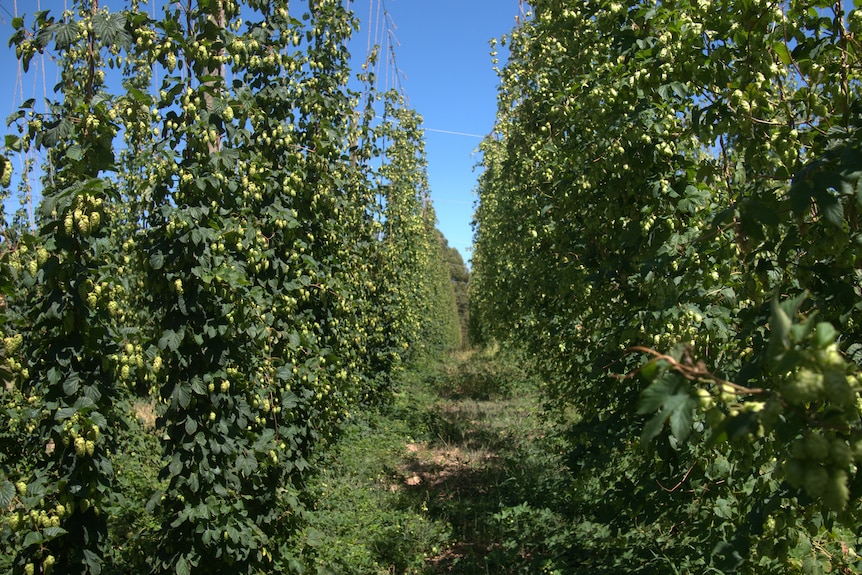
Hops climb tall bines in neat rows, reaching up to 6 metres in a single season before they are harvested for beer. (ABC South West: Rachel Boothman)
What are hops?
Hops are the cone-shaped flowers of the hop plant, a climbing plant that grows into a long, helix-like “bine.”
Once harvested, they are a key ingredient in beer, adding bitterness, flavour and aroma.
The alpha acids in hops balance the sweetness of malt, while essential oils and beta acids create flavours ranging from citrus and tropical fruit to floral or spicy notes.
Hops can be used fresh, dried or processed into pellets, and how they are harvested and handled has a big impact on the final taste of beer.
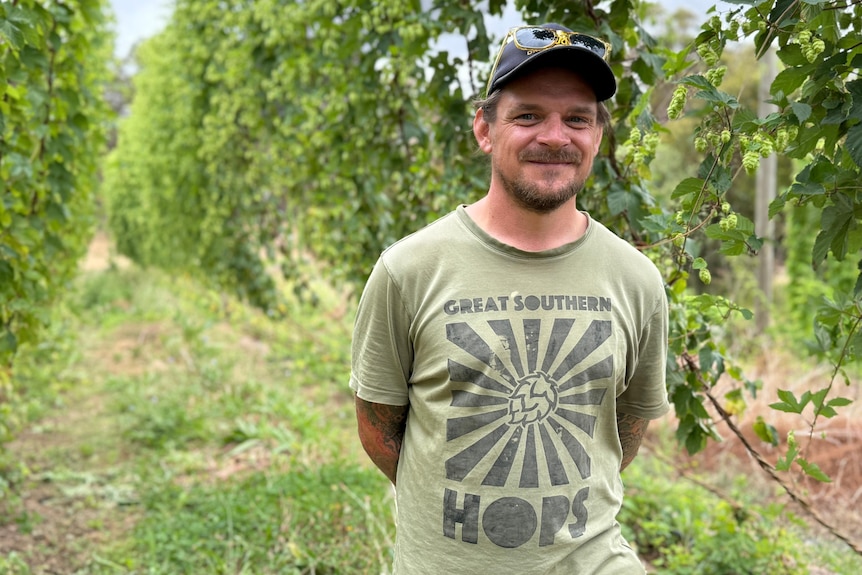
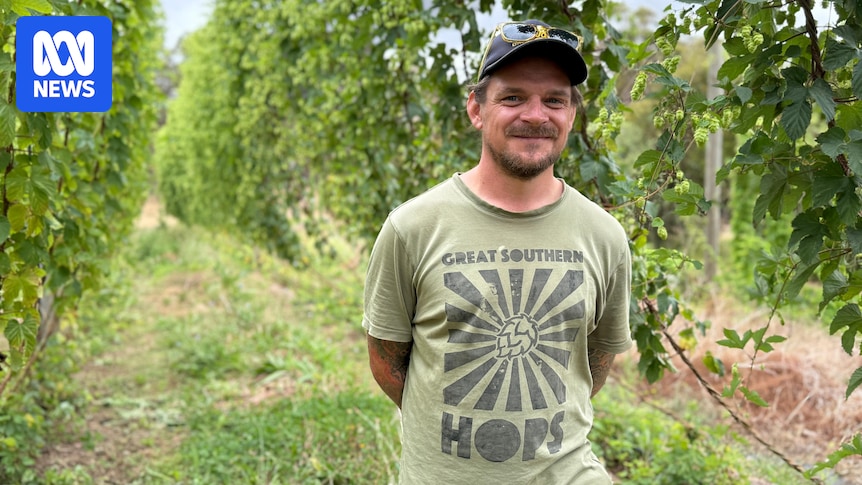
Aaron Alexander has owned Great Southern Hops since 2018. (ABC Great Southern: Kate Forrester)
Preparing for the harvest
Hop grower Aaron Alexander is approaching his sixth consecutive harvest on the family-run farm near Denmark, 450 kilometres south of Perth.
“Between the end of February and start of March is when we typically harvest our hops. It’s a tight time frame, with about a two-week window to get everything off,” Mr Alexander said.
“It’s been a bit mixed with weather, with hot days followed by cool ones that can stall the plants, but it hasn’t compared to the extreme heat we saw over the last two years.”
Mr Alexander said this time of year not only marked the start of harvest, but was also crucial for increasing public awareness about best practices in hop cultivation and harvesting.
“Most people drink beer but don’t understand what hops actually does to the beer,” Mr Alexander said.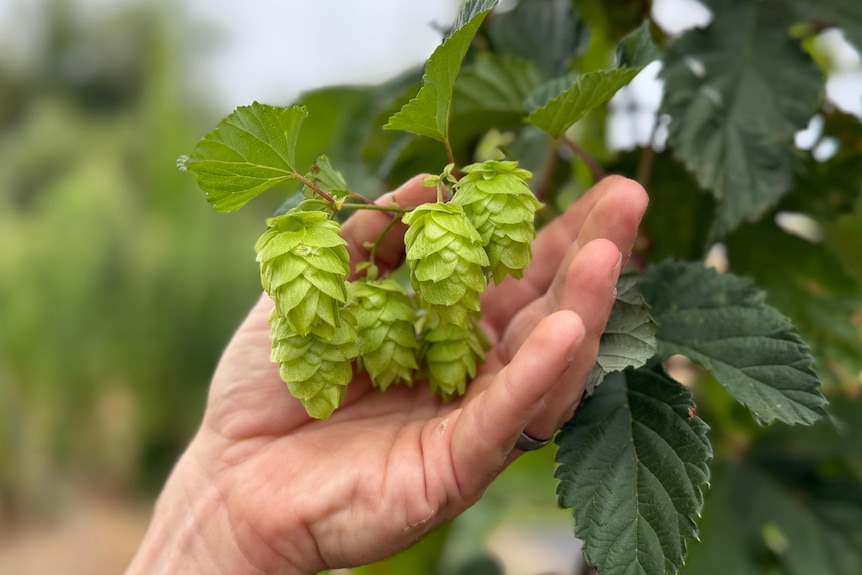
Growers around Western Australia are waiting for their harvest to begin. (ABC Great Southern: Kate Forrester)
Game-changing machinery
Chris Meagher and Megan Richards grow hops in Yornup, about 260km south of Perth, and are expecting this year’s harvest to look much different.
Over the 12 years of operating, they have never been able to hand-pick their entire crop.
It has sparked their investment in a harvester imported from the United States to process their hop yields more efficiently.
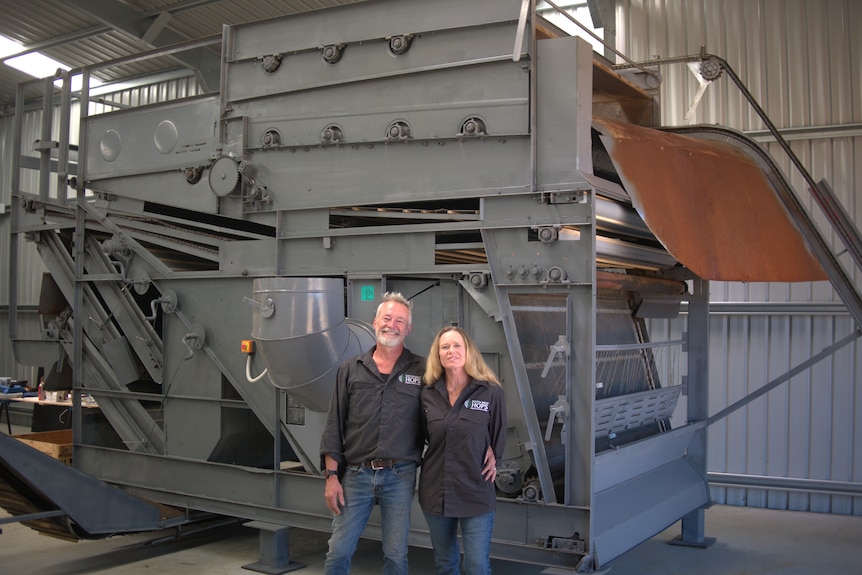
Chris Meagher and Megan Richards have invested in a US machine to amplify the hops’ harvest and production. (ABC South West: Rachel Boothman)
Ms Richards said the couple received almost $300,000 in government funding to support the purchase of the infrastructure and newly built processing shed, marking more than a decade of planning.
“Our rows are 180 metres long,” Mr Meagher said.
“We will be able to harvest a row in two to four hours, and no hand-picking.”
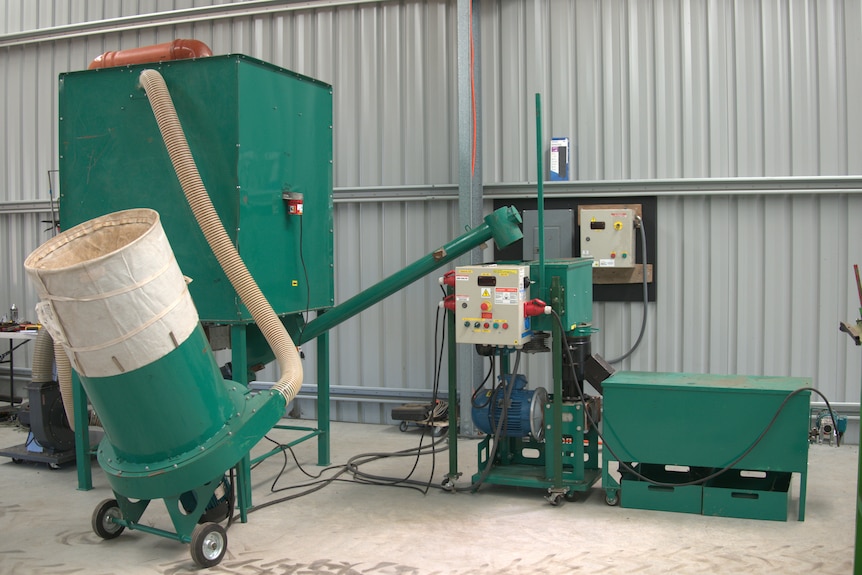
After drying, the hops are fed into a pelletiser, which compresses them into uniform pellets ready for storage and use in brewing. (ABC South West: Rachel Boothman)
How are hops harvested?
The couple said harvest began in their hop yard, where bines were cut from the top and bottom and loaded for processing.
Workers then feed the bines into the harvester, where mechanical pickers strip away leaves, stems and cones.
“We will then put them up into the dryer, and we will dry them at no more than 47 degrees,” Mr Meagher said.
“So that we don’t mess with any of their alpha acids, beta acids, or all their variety of different oils that they have and compounds.”
After drying, the hops are conditioned, baled and cooled before being pelletised and sealed, protecting the compounds that help flavour beer.
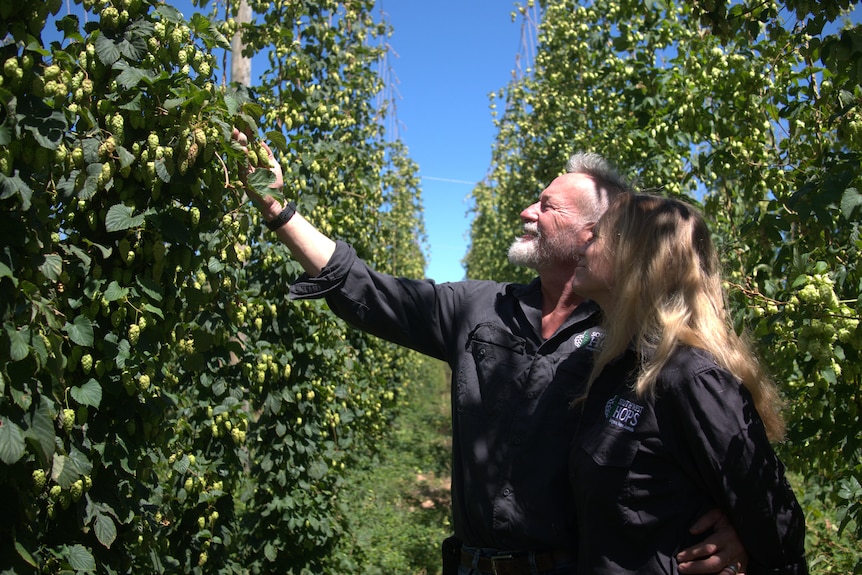
Brewers will be able to collect fresh, wet hops straight from the belt from the South West Hops property. (ABC South West: Rachel Boothman)
The value of local hops
Mr Meagher said the upgraded system would be able to supply brewers with fresh, wet hops picked straight from the bine and used within 24 hours.
“The breweries will say we want X amount of kilos for a wet hop and they can just simply hold a bag underneath that belt,” Mr Meagher said.
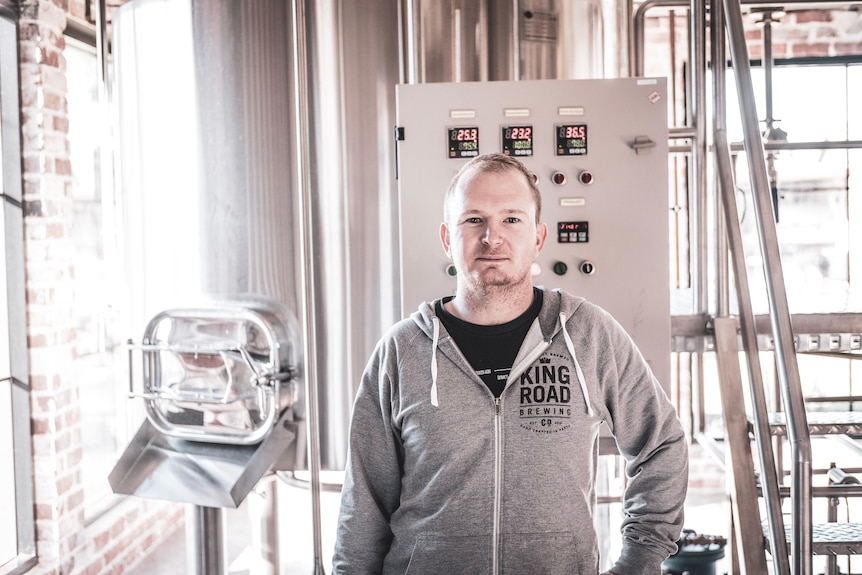
Steve Wearing says using local hops from farms enhances flavour, aroma and supports WA’s growing craft beer industry. (Supplied: Steve Wearing)
Steve Wearing, head brewer at King Road Brewing on the outskirts of Perth, said local hops were valuable to the production of craft beer in WA.
“Without hops, you’re just going to have quite a sweet drink and it’s going to be unbalanced,” he said.
He said brewing with wet hops took extra effort, but the results were worth it.
“To be able to use them in a more traditional, old-school approach … it probably adds an extra couple of hours onto the brew day, and loses the ability to double brew in a single day. But it’s well worth the hassle,” he said.
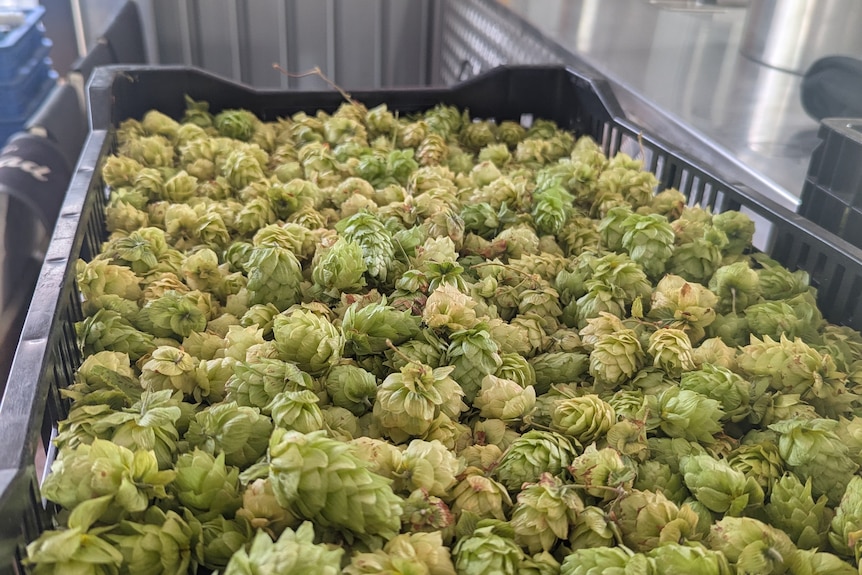
Wet hops are harvested fresh from the bine and used in the brew within 24 hours. (Supplied: Steve Wearing)
Mr Wearing said local growers also helped brewers respond to changing consumer tastes.
“About 10 years ago, IPAs really started to take off … very floral, citrus flavours,” he said.
“We’re now moving more into stone fruit, melon, tropical … low bitterness beers that almost taste like a breakfast juice, very tropical.
“The flavours from local wet hops really come through.”