

From cutting your hair to building your home, apprentices learn key skills to provide vital services.
But the number of Australians taking on an apprenticeship continues to decline.
“For years, young people have been encouraged to see university as the safer, smarter path,” said Australian Institute of Management Western Australia CEO Gary Martin.
“Trades are framed as a second cousin for those seen as not quite good enough to get through higher education.”
It has led to concerns across industries of deepening skill shortages.
“Industries such as construction, manufacturing, automotive and energy are already feeling the strain and shortages drive up costs, slow projects and reduce productivity,” Emeritus Professor Martin said.
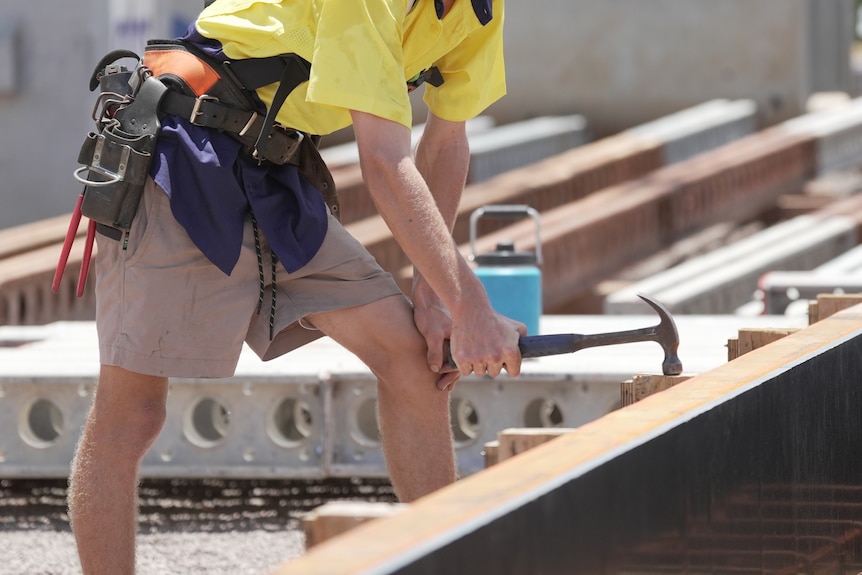
Between June 2024 and June 2025, trade apprenticeships fell by 7.3. (ABC News: Peter Garnish)
Figures show decline
Between June 2024 and June 2025, trade apprenticeships fell by 7.3 per cent and non-trade apprenticeships by 20.2 per cent, according to the National Centre for Vocational Education Research (NCVER).
Softening labour market conditions and an increase in the national unemployment rate are thought to have contributed to the decline in apprenticeship take-ups.

Gary Martin says apprenticeships need to be promoted as credible, respected career pathways. (Source: Unsplash)
The federal government recently reduced incentives for both apprenticeships and employers in a range of industries.
Under the Key Apprenticeship Program (KAP), apprentices in housing construction, clean energy and some automotive occupations will continue to get $10,000 over the life of their apprenticeship and employers will be eligible for up to $5,000.
But other apprentices will see support payments halved, from $5,000 to $2,500, and their employers will also see their incentive payments decrease from $5,000 to $2,500.
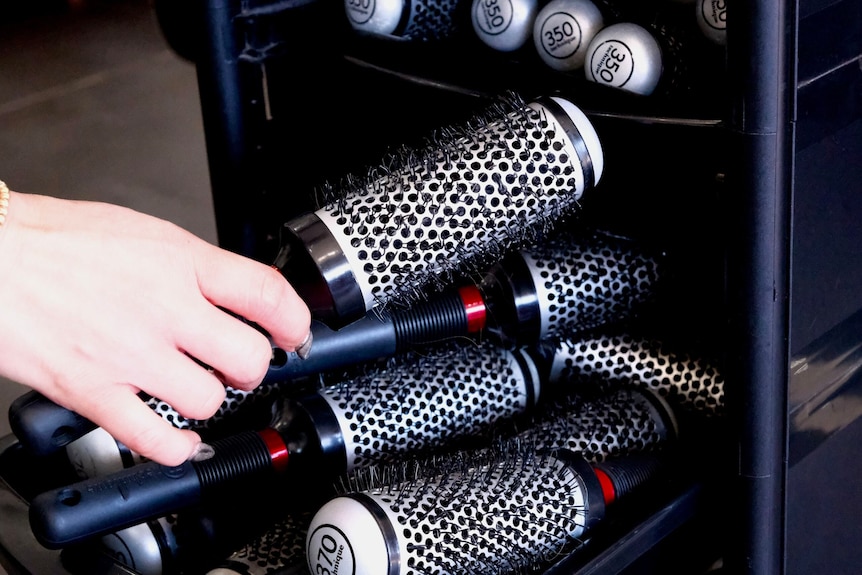
According to Jobs and Skills Australia, there is a shortage of hairdressers across all states and territories. (ABC News: Chantelle Al-Khouri)
Low wages, years of training
Fiona Beamish, chief executive officer of the Australian Hairdressing Council, described the recent reduction in apprentice incentives as “a devastating blow to our sector.”
According to Jobs and Skills Australia, there is a shortage of hairdressers across all states and territories.

Fiona Beamish says it’s “incredibly expensive” to invest in apprentices. (ABC News: Richard Sydenham)
Ms Beamish is calling for more financial support for apprentices and business owners.
“It’s incredibly expensive to invest in apprentices,” she said.
Tasmanian hairdresser and salon owner Mark Trueman hasn’t taken on an apprentice for the last four years.
After employing around 20 apprentices during his decades-long career, Mr Trueman believed the cost of training an apprentice over four years was no longer worth it.
“These days they [apprentices] tend to get bored or tired of it within 6 to 12 months,” he said.
“You’ve spent a lot of time and effort in trying to train someone, only to find that they will leave afterwards and there’s no compensation or anything back for the time you’ve spent with them.”

Mark Trueman says if the current trends continue, customers will find it more and more difficult to book a hairdressing appointment. (ABC News: Luke Bowden)
Mr Trueman said a four-year apprenticeship on low wages was no longer attractive to young people.
He said a shorter, mostly in-salon two-year traineeship that is offered in some states, might attract more people to the trade.
The upsides of an apprenticeship
Hugo Pedder, 16, is excited about embarking on his first year as a fitter machinist apprentice in Burnie.
His work will include rebuilding electric motors and other jobs.

Hugo Pedder is doing a fitter machinist apprenticeship in Burnie. (ABC News: Marc Eiden)
“You get a fair bit of satisfaction,” he said.
“You get a motor that’s all busted up and rusty and it doesn’t even spin. Once you’re done with it’s nice and clean and it spins perfectly.”
Hugo said that while he got decent marks at school, he preferred doing physical work and said the pay was “actually not that bad.”
“It does get better as well as you [get] older.”

Jocelyn Martin says apprentices aren’t “walking out with massive student debt” like university students. (ABC News: Luke Stephenson)
Jocelyn Martin, managing director of the Housing Industry Association, said there was a stigma around apprentice wages.
“I would argue that they’re getting paid to learn and that’s a whole lot better than what their university friends are experiencing,” she said.
“Plus, they are not walking out of these with a massive student debt.”Possible solutions
The Housing Industry Association said more work needed to be done to attract a wider cohort of people to apprenticeships.
“We need to do more to attract females into construction. We also need to cater better for people who want to change careers,” Ms Martin said.
“To meet the government’s target of building 1.2 million homes over five years, we are currently falling about 83,000 workers short.”
At the moment, mature-age apprentices — over 21 years of age — attract higher pay rates, which Ms Martin said could act as a deterrent for employers.
It has led to calls for greater government subsidies for older apprentices.

Gary Martin says apprenticeships have a “big marketing problem”. (Supplied: Nicholas Martyr)
Emeritus Professor Martin said apprenticeships had not gone out of fashion, but they suffered from a perception problem.
“Apprenticeships have a big marketing problem which has just been getting worse over many years,” he said.
“Apprenticeships need to be promoted as credible, respected career pathways from school onwards.
“We also need to consider finding ways to attract more white-collar workers into trades through mature-age apprenticeships, as more are likely to be displaced as artificial intelligence reshapes office work.”
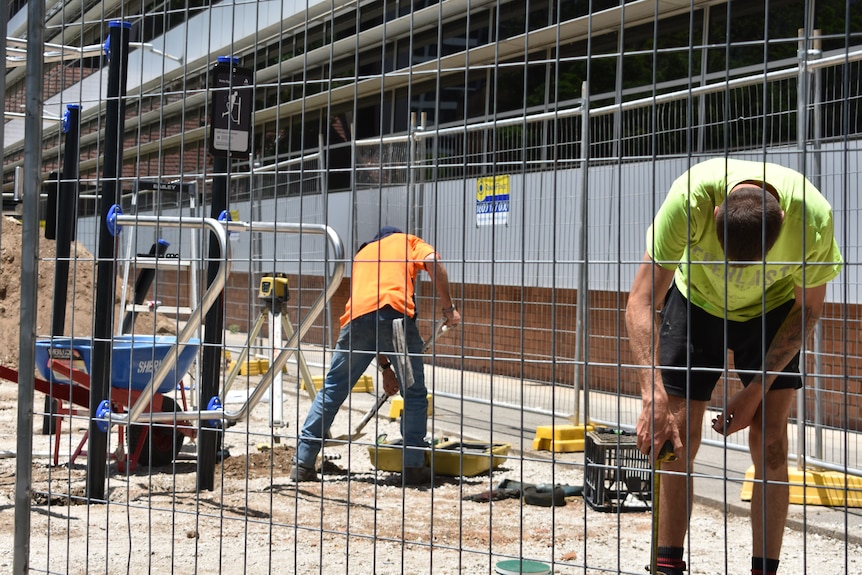
The federal government says its strategy to “rebalance the apprenticeship system towards priority occupations is working”. (ABC News: Sam Nichols)
A spokesperson for the Department of Employment and Workplace Relations said in a statement that the government was “committed to supporting apprentices and employers so we can get the skills we need in the sectors where we need them”.
“Commencements are returning to more typical levels of activity as the apprenticeship system adjusts from a peak period for commencements in response to COVID-19 measures,” the spokesperson said.
“Most of the decline in commencement numbers is in non-trade apprenticeships.
“The numbers show the government’s strategy to rebalance the apprenticeship system towards priority occupations is working.”